A horse that follows you around can seem sweet, curious, or even a little surprising. Sometimes it looks like simple companionship. Other times it feels more deliberate, as if the horse has decided you are worth watching, tracking, and staying near.
That behavior is not always about affection alone. Horses follow people for practical reasons too. They may be looking for food, routine, reassurance, or a way to stay connected to what feels familiar.
The meaning often depends on the horse’s body language, the setting, and how often it happens. A horse that quietly strolls along beside you in the pasture is not sending the same message as one that pins its ears, crowds your space, or becomes tense when you step away. The details matter.
When you pay attention to those details, the behavior becomes easier to read. A following horse can be relaxed and social, but it can also be worried, demanding, or unsure. The context tells the story.
Why horses tend to follow people
Horses are herd animals, so staying close to a trusted figure comes naturally. In the wild, distance and movement both carry meaning. A horse that keeps track of you may simply be treating you like part of its safe social circle.
Many horses also learn that people are connected to comfort. Feed arrives with a person. Turnout, grooming, handling, and relief from boredom often happen when humans are nearby. A horse may start following because it has learned that your presence predicts something important.
Sometimes the reason is as simple as habit. Horses are observant and quick to recognize patterns. If you usually bring treats, lead them to work, or spend time in a favorite area of the barn, they may begin to trail you because your movements are meaningful to them.
A horse following you is not a single behavior with one meaning. It can reflect trust, curiosity, expectation, social attachment, or mild anxiety. The same motion can have very different motives.
How it looks in everyday situations
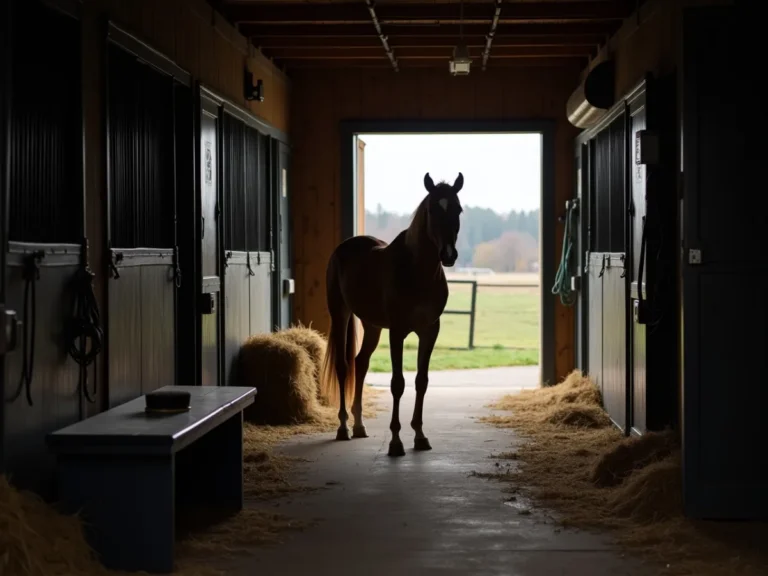
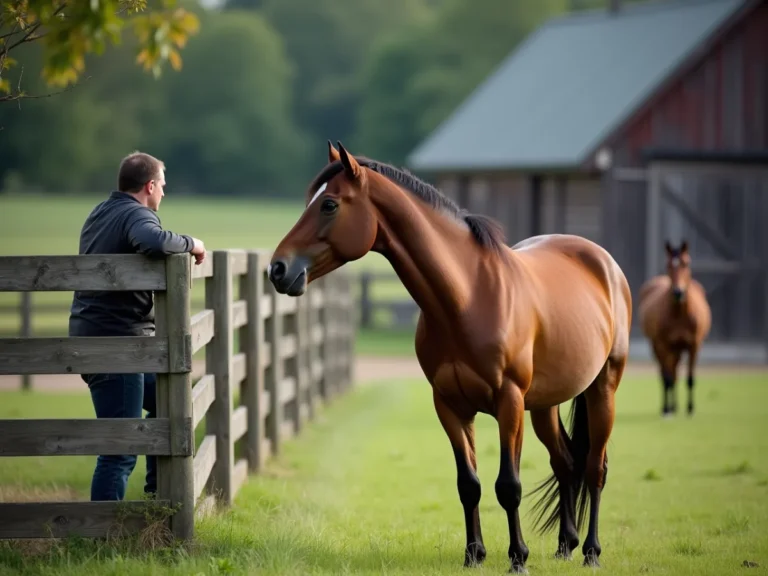
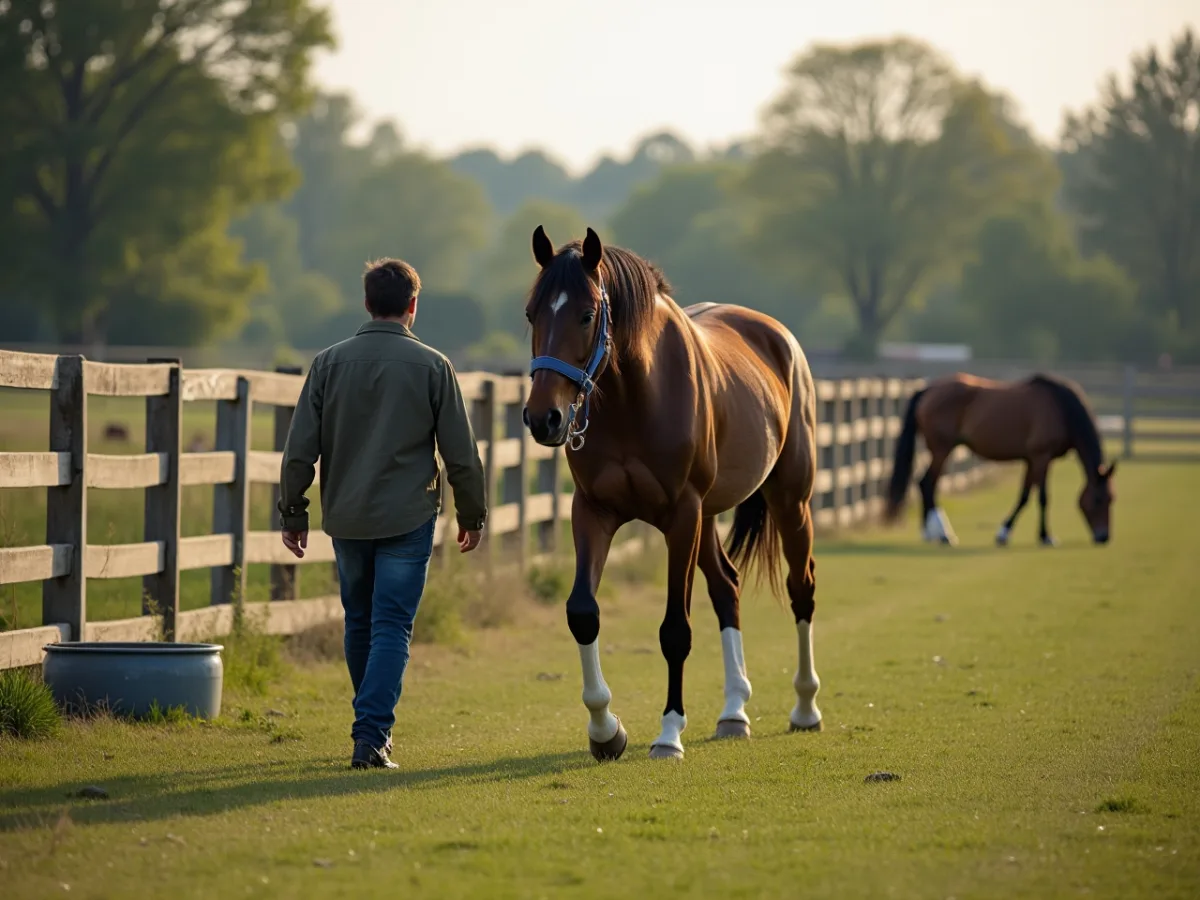
In real life, this behavior shows up in many ways. A horse may walk after you in the pasture and stop when you stop. It may come to the gate whenever you enter the barn aisle. Some horses shadow their owners from stall door to grooming area, then settle once the person is nearby.
At turnout time, the horse may follow a caretaker across the field because it wants to stay with the group. At feeding time, following can become more focused. The horse may track every step you take, especially if it has learned the sound of feed buckets or grain carts.
Under saddle or during groundwork, the same tendency can appear as a horse that keeps its attention on the handler. That is not always a problem. In fact, many well-adjusted horses are naturally attentive. Still, there is a difference between calm interest and a horse that seems unable to disengage.
Common real-world settings
- Pasture: The horse drifts after you, but remains loose and relaxed.
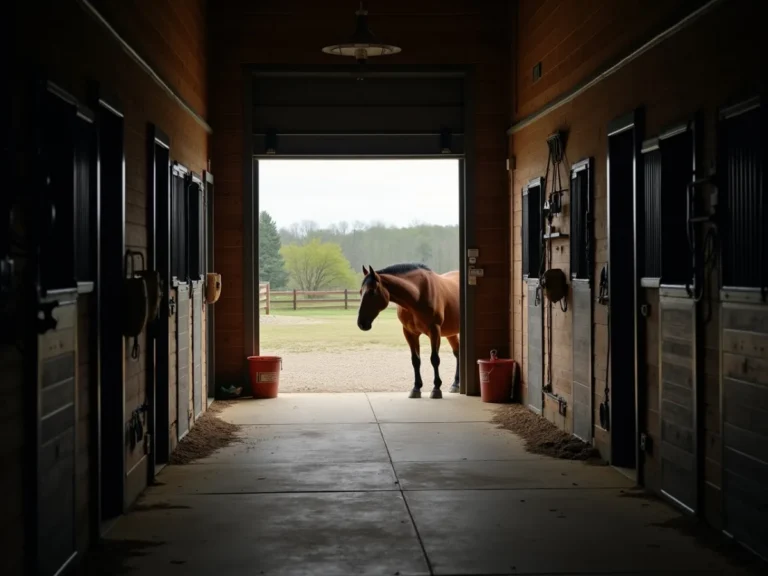
- Stable aisle: The horse walks to the stall door or leans out when you pass by.
- Grooming area: The horse steps forward to stay near you as you move around it.
- Gate or fence line: The horse appears whenever you arrive and keeps pace along the fence.
- Training space: The horse stays focused on your position and follows directional changes closely.
What calm following usually means
When a horse follows in a loose, easy way, it often points to comfort. The head stays level. The neck remains soft. The steps are unhurried. Ears may flick toward you and then away again, showing awareness without tension.
This kind of following often happens with horses that trust people and feel secure in their surroundings. They may want company rather than direction. Some horses simply enjoy moving near a familiar person, especially if the person is quiet and predictable.
A calm horse may also follow because it is curious. Horses explore with their feet, eyes, and noses. If you are doing something interesting, such as carrying tack, opening a tack room door, or visiting a new part of the property, the horse may want a closer look.
Loose posture, soft eyes, and an unhurried walk usually suggest comfort more than concern.
When following suggests social attachment
Many owners notice that one horse follows them more than anyone else. That does not always mean the horse prefers a person in a deep emotional sense, but it does show recognition. Horses are excellent at linking individuals with repeated experiences.
If you are the one who feeds, grooms, turns out, or spends quiet time nearby, the horse may treat you as part of its reliable social environment. It may follow you because your presence feels familiar and safe. Horses often stay near what they know.
In some cases, the behavior reflects a stronger bond. The horse may seek your movement the way it seeks a herd mate’s movement. It may watch where you go, turn with you, and wait near you when you stop. That kind of closeness can be normal and healthy as long as the horse also feels able to relax on its own.
When following is driven by expectation
Not every horse is following out of affection. Some are following because they expect something. Food is the most obvious example. A horse that has learned you sometimes carry treats or grain may begin to trail you with a much sharper focus.
This version of the behavior is usually easy to spot. The horse may stretch its neck toward your pockets, quicken its steps, or crowd into your space. It may become animated before you even reach the feed room. In these cases, the horse is watching for a reward, not just your company.
Expectation can also be linked to routine. If your horse knows you often lead it somewhere pleasant, it may follow because it anticipates turnout, a ride, or a pasture change. The behavior is practical. Horses are efficient learners, and they remember what happens next.
When following may reflect worry or insecurity
Some horses follow because they feel uncertain, not because they feel relaxed. A horse that has lost a pasture mate, entered a new barn, or experienced changes in handling may cling more closely to people. The closeness is a way of managing uncertainty.
In that case, the horse may show more than just movement. It may look tense, keep its head higher than usual, or fail to settle when separated. It may follow with a worried expression, quick steps, or repeated stopping and starting. The body often speaks clearly when the mind is not at ease.
If the horse seems anxious when you move away, the behavior deserves closer attention. A calm companion is different from a horse that is unable to tolerate distance. The first is social. The second may be asking for reassurance.
Following paired with tight muscles, a raised head, rapid movement, or fussing at separation can point to insecurity rather than simple friendliness.
Body language that changes the meaning
The same action can mean different things depending on the rest of the horse’s body. That is why posture matters so much. A horse can follow you with a soft expression or with a hard, focused one.
Look at the ears first. Ears that swivel gently suggest attention. Ears that stay pinned back or freeze in place can signal irritation or defensiveness. The tail may also help. A quiet tail often matches a relaxed horse, while a swishing or tight tail may mean frustration.
Step quality matters too. A horse that walks after you in a free, even rhythm is telling a different story than one that crowds, rushes, or cuts you off. Space matters. Respectful distance usually points to comfort, while invading your space can show pushiness or stress.
Signals to notice together
- Soft eyes and loose jaw: often calm or curious
- Head high and neck tight: often alert or uneasy
- Forward ears and relaxed steps: attentive but settled
- Pinned ears and quick movement: possibly irritated or defensive
- Repeated following plus anxiety when apart: may signal dependence or insecurity
How surroundings influence the behavior
Environment can change a horse’s tendency to follow. A horse that is relaxed in a familiar field may become much more attached in a busy barn with lots of movement, sounds, and distractions. New routines can make a horse track a person more closely.
Weather can matter too. On windy days, horses often become more watchful. In a strange place, they may stay near the person they trust most. Even the presence of other horses changes the picture. Some horses follow people less when herd mates are nearby and more when they feel isolated.
Noise, traffic, and changes in herd structure can all increase following behavior. A horse may look for a person as a stable point in a shifting environment. That is not unusual. Horses prefer predictability, and people often provide it.
How age and experience shape the behavior
Young horses often follow because they are still learning what people mean. They may trail behind out of curiosity, caution, or a mixture of both. Their responses can be uneven. One day they are bold, and the next day they hang back or cling a little too closely.
Experienced horses may show the same behavior in a more measured way. They usually understand the routine and know who is handling them. A mature horse that follows calmly may simply be engaged and connected. It has likely learned that being near a person is predictable and safe.
However, an older horse that suddenly starts following more than usual may be telling you something has changed. Pain, social loss, shifts in turnout, or altered vision can all affect how close a horse wants to stay. New following behavior in a horse that was once independent deserves attention.
When following becomes too intense
There is a point where closeness stops looking social and starts looking sticky. A horse that constantly shadows every move, struggles to stand on its own, or becomes distressed when you leave may be overly dependent or anxious.
This often shows up with other patterns. The horse may call out, pace, paw, or keep its attention fixed on the person rather than the environment. It may have trouble settling if the person is not visible. In some horses, the behavior grows stronger over time because the routine keeps rewarding clinginess.
That does not mean the horse is being difficult on purpose. It usually means the horse has learned that proximity helps it feel safe. The challenge is to understand whether the behavior is social, habit-based, or rooted in discomfort.
A horse that follows you everywhere is not necessarily being affectionate in a simple way. Excessive closeness can be a sign of stress, dependence, or a learned expectation that comfort only comes from one person.
When the behavior is harmless and when it deserves a closer look
Harmless following usually looks relaxed. The horse stays attentive but not urgent. It is willing to stop, graze, or turn away when you do. It does not trap you in a corner or react sharply when you step out of sight.
A closer look is useful when the horse seems agitated, possessive, or unable to relax. A horse that crowds your body, guards you from others, or becomes upset when asked to remain behind may be showing a different issue. The behavior may be social, but it can also be rooted in training history or insecurity.
Changes matter more than labels. If a horse that used to be independent suddenly follows constantly, something in its world has likely shifted. That could be as simple as a routine change or as important as a physical discomfort.
Questions that help with interpretation
- Is the horse relaxed or tense while following?
- Does it respect your space?
- Does it settle once you stop moving?
- Does it act differently when food is involved?
- Has the pattern changed recently?
The role of trust in the horse-human relationship
Trust often sits underneath this behavior, even when the horse is also curious or food-motivated. Horses pay close attention to who feels predictable. A steady person becomes easier to follow, not because the horse is trying to please, but because that person feels understandable.
That is why the same horse may follow one caretaker and ignore another. It is not always about affection in a human sense. It is often about familiarity, routine, and the sense that nothing surprising will happen when that person is near.
Quiet handling tends to encourage calm following. Sudden movements, inconsistent handling, or mixed signals can create a different response. The horse may still follow, but the feeling behind it changes. Watch for that difference. It is often visible long before it is spoken in any other way.
Practical ways to read the behavior
Reading a following horse is easier when you look at the whole picture instead of one gesture. A horse can walk behind you for a harmless reason one day and for a worried reason the next. The setting, history, and mood all contribute.
If the horse seems relaxed, there may be no problem at all. If the horse seems needy or reactive, consider what changed. New herd mates, altered feeding times, more stall time, or less turnout can all influence closeness. Even small disruptions can shift how a horse relates to a person.
It also helps to notice what the horse does after it reaches you. Does it stand calmly nearby? Does it drift away once it has checked in? Or does it keep pressing forward as if it cannot let you out of sight? The answer often reveals more than the following itself.
A quiet pattern that says more than it seems
When a horse follows you around, it is usually communicating something simple, but not always the same thing. It might be saying, “I know you.” It might be saying, “I want what you have.” It might be saying, “I feel safer near you.”
Sometimes it is all three. Horses do not separate social comfort, habit, and practical expectation the way people do. Their behavior often blends those motives into one smooth action. That is why the best interpretation comes from watching the horse over time, not from a single moment.
A horse that follows with a soft body and easy mind is often showing connection. A horse that follows with tension, urgency, or distress is asking for a different kind of attention. The movement is the same. The meaning is not.