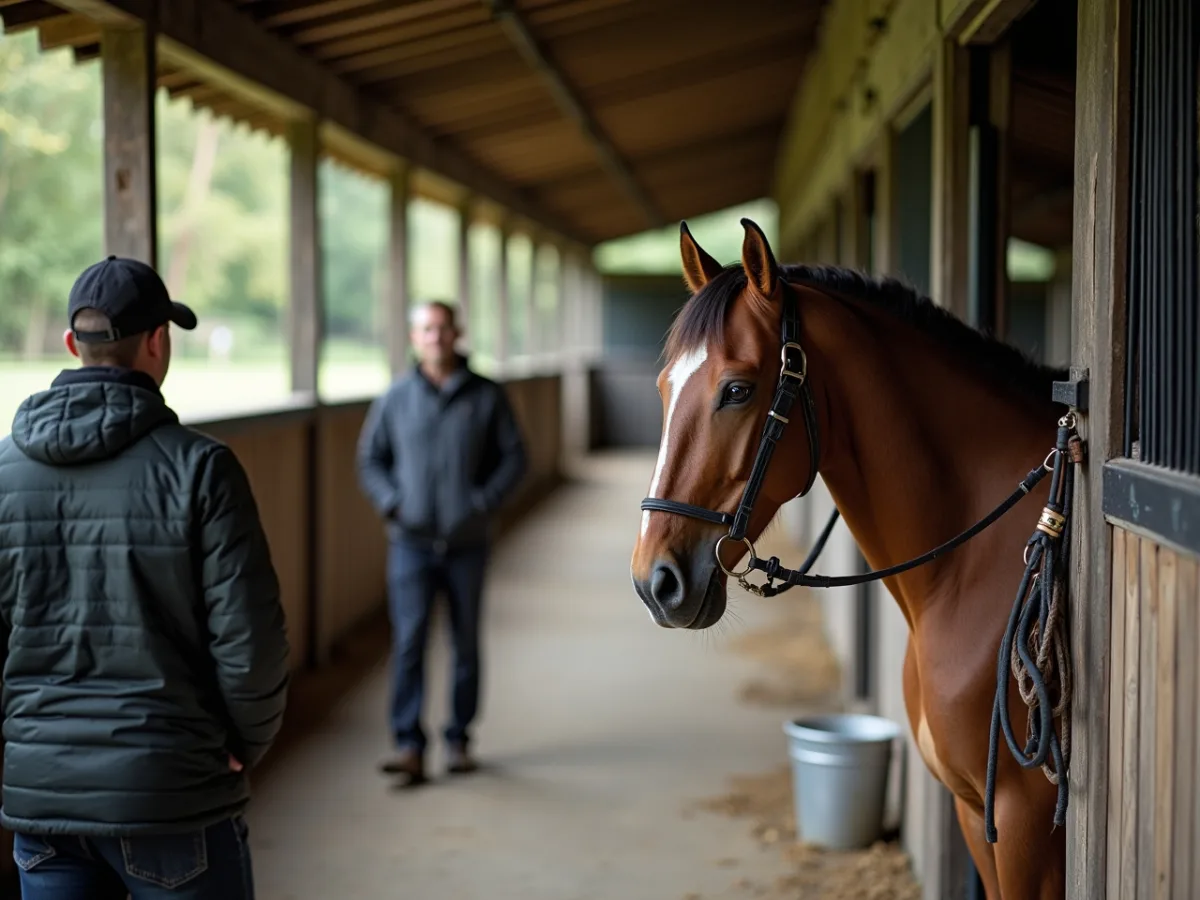
Horses notice more than many people realize. A voice can settle them, tighten their muscles, or simply make them pause and listen. Tone matters just as much as the words themselves, and sometimes more. A horse may not understand the meaning of a sentence, but it can absolutely read the feeling behind it.
That response is not random. Horses have spent thousands of years paying attention to signals that help them stay safe in a herd. Sound is one of those signals. A low, steady voice can suggest calm and predictability, while a sharp or hurried tone may create caution. The reaction may be subtle at first, but it often shows up in the ears, the neck, the eyes, and the way the body holds itself.
In everyday handling, voice and tone shape a horse’s comfort in quiet ways. They can help during grooming, leading, loading, tacking up, groundwork, and riding. Some horses seem to relax the moment they hear a familiar voice. Others respond best to clear, consistent cues without much emotion at all. The pattern depends on the individual horse, its past experiences, and the situation in front of it.
Understanding these responses makes daily life easier. It helps owners notice when a horse is calm, when it is uncertain, and when it may need more space or slower handling. The details are small, but they matter.
How Horses Hear Human Voice and Tone
Horses do not process human speech the way people do. They are not listening for grammar or the exact meaning of a sentence. Instead, they respond to rhythm, pitch, volume, and emotional tension. A horse can often tell the difference between a soft greeting and a tense correction long before a person thinks anything has changed.
Voice is carried through two channels at once. There is the sound itself, and there is the feeling attached to it. Horses are highly tuned to both. If a person speaks steadily but feels anxious, the horse may still pick up on the tension through body language, breathing, and the overall energy around them. Tone is part of a bigger picture.
Many horses become especially attentive to voices they hear often. A familiar handler’s voice can become part of the horse’s daily routine. That familiarity can reduce uncertainty, especially in new or noisy settings. Even horses that do not seem especially affectionate may still orient toward a voice they recognize.
Horses often respond less to the words themselves and more to the emotional pattern carried by the voice.
What a Calm Voice Can Do
A calm voice tends to support steadier behavior. It may not instantly fix fear, but it often lowers the chance that a horse will escalate. In quiet handling, a soft tone can help a horse accept grooming, stand more easily for the farrier, or remain less reactive when new equipment is introduced.
Some horses visibly soften when spoken to gently. Their ears may flick back toward the handler, their breathing may slow, and their feet may become less busy. Others do not show a dramatic reaction, yet they still benefit from the predictability. Calm voice is not magic. It works best when it matches calm body language and patient handling.
In riding, a steady voice can be part of reassurance. A horse may already know the physical cues for walk, trot, or whoa, but the rider’s tone can help support the message. That is especially true for young horses, horses returning to work, or horses in unfamiliar surroundings. The voice becomes another familiar piece of information in a setting that may otherwise feel full of pressure.
Signs a horse is settling into a calm voice
- Loose jaw or softer mouth
- Ears that stop flicking rapidly from side to side
- Lower head carriage
- Less bracing through the neck and back
- Slower breathing
How Sharp or Tense Tone Can Change Behavior
A louder or sharper tone can create a very different response. Some horses freeze. Some step away. Others become busier, moving their feet more quickly or tossing their heads. The exact reaction depends on the horse’s temperament and history, but the underlying effect is similar: the horse notices tension and prepares for something that may feel uncertain.
This matters because tone can affect a horse even when no physical correction follows. A frustrated voice during tacking up, for example, may make a horse more cautious the next time the same routine begins. Repeated exposure to harsh sound can teach the horse to expect pressure before anything else has happened. Over time, that may make simple tasks feel harder.
Not every firm voice is harmful. Horses do need clear information. But there is a difference between clarity and emotional spillover. A brief, confident cue sounds different from irritation, even if the words are the same. Horses usually notice the difference quickly.
A firm voice works best when it is clear and brief, not angry or unpredictable.
How Tone Shows Up in Daily Handling
At the barn, horses reveal their response to voice in ordinary moments. A horse being led from the pasture may walk more willingly beside a handler who speaks in a settled voice. During grooming, a horse may stand quietly when the person talks softly and rhythmically. At feeding time, a familiar call can bring a horse to the gate more quickly than silence.
These responses are not only about obedience. They reflect expectation. Horses learn patterns fast. If a voice usually comes before turnout, a meal, turnout return, or a scratch in a favorite spot, the horse begins to connect that sound with the coming event. The sound becomes part of the routine.
That same sensitivity can create confusion if the tone changes too much. A horse that hears relaxed praise one day and clipped frustration the next may become less certain about what to expect. Consistency is helpful because it makes the world easier to read. Horses rely on readable patterns in people the same way they rely on them in other horses.
Common handling situations where voice matters
- Leading in and out of stalls
- Picking up feet
- Clipping or bathing
- Standing for saddling or bridling
- Loading into a trailer
- First rides in a new place
Why Some Horses React More Strongly Than Others
Not every horse responds to voice with the same intensity. Some are naturally bold and unbothered by noise. Others are watchful and quick to notice small changes in human tone. Breed, age, training history, and daily exposure all shape the response, but individual personality matters a great deal too.
A young horse may react more dramatically simply because it has less experience sorting out what different tones mean. An older, well-handled horse may stay steadier because it has learned that most voices in its life are predictable. A horse with a rough past may brace or retreat when a human voice becomes sharp, even if the current situation is not truly threatening.
Horses also differ in how much they depend on auditory cues. Some are highly voice-oriented and seem to relax when spoken to. Others pay more attention to touch, rein pressure, or body position. Neither pattern is unusual. It just means that the horse’s preferred language is slightly different.
The Role of Memory and Association
Horses build associations quickly. If a certain voice consistently comes with comfort, hay, turnout, or rest, the horse learns to expect something safe. If the same voice often appears during stressful moments, it may trigger caution before anything else happens. The response is based less on the sound itself and more on what the horse has learned to connect with it.
This is why two people can say the same word in very different tones and get different reactions. One may sound like routine and familiarity. The other may sound like pressure. Horses do not separate those features the way people might imagine they do. For the horse, they are part of the same message.
Long-term consistency builds trust. A horse that hears a person speak calmly during grooming, loading, turnout, and riding is more likely to remain relaxed around that person’s voice. The horse is learning that the sound is stable. Stability matters.
How Environment Changes the Response
The setting can amplify or soften a horse’s reaction to voice. A quiet stable aisle is very different from a noisy showground. In a familiar barn, a horse may respond to a whisper. In a busy environment with trailers, barking dogs, clanging buckets, and other horses nearby, the same voice may need to be clearer to cut through the noise. Even then, a calm tone usually works better than a tense one.
Pasture settings can bring out different reactions. A horse may seem less focused on people outdoors because it has more space and more distractions. Yet a familiar call can still catch attention, especially when it signals feed or turnout changes. Horses often respond strongly to voice when it fits a regular pattern.
Transport is another place where tone matters. Loading and travel can be stressful, and horses often become more alert to human emotion in those moments. A handler who sounds rushed may increase the horse’s uncertainty. A steady voice can help the horse keep orienting toward the handler instead of the trailer, ramp, or surrounding movement.
| Setting | Likely Voice Response | What It Often Means |
|---|---|---|
| Quiet stall | Subtle ear movement, soft attention | Horse is listening without stress |
| Busy barn | More focused or distracted response | Horse is sorting through competing sounds |
| Trailer loading | Heightened sensitivity to tone | Horse is reading human confidence closely |
| Riding arena | Mixed response to voice and body cues | Horse is balancing sound with movement and pressure |
How Voice and Body Language Work Together
Voice never acts alone. Horses are watching posture, hands, breathing, and timing at the same time. A person can speak softly and still communicate tension through fast steps, stiff arms, or held breath. The horse may respond to the whole package rather than the sound itself.
That is why some horses seem to “ignore” a calm voice when the human’s body language is mixed. The voice says one thing, but the rest of the body says another. Horses tend to trust the more obvious message. If the person feels uncertain, the horse often notices first.
For everyday handling, it helps to think about alignment. When the voice, posture, and handling all match, the horse receives a clearer message. That consistency can reduce hesitation and make the horse feel less like it has to guess what comes next.
What a Horse May Be Signaling Back
When a horse responds to voice, it is also communicating. A horse that turns an ear toward a person’s voice is showing attention. A horse that softens through the neck may be accepting the interaction. A horse that pins its ears, tightens, or moves away may be saying the sound feels too intense, too close, or too unpredictable.
These signals are worth reading in context. A pinned ear during feeding time may mean excitement, not fear. A horse stepping away during grooming may be avoiding pressure from the brush or reacting to a tone that feels sharp. The behavior alone does not tell the whole story. The rest of the situation matters.
That is one reason experienced horse owners pay attention to small changes. A horse does not need to blow up for the voice to have an effect. Tiny shifts often appear first, and those shifts can guide better timing, better pacing, and calmer handling.
Subtle responses that can be easy to miss
- A brief pause before moving forward
- One ear turning toward the speaker
- Tail tightening or stilling
- Neck becoming rigid for a moment
- Head lowering after a soft cue
Training History Can Shape Tone Sensitivity
Horses that have been handled gently and consistently often become easier to talk to. They have learned that human voices usually come with clear routines and manageable expectations. Horses with inconsistent handling may be more guarded. If a horse has been corrected harshly in the past, it may react strongly to even moderate firmness.
That does not mean a nervous horse is being difficult. It usually means the horse has learned to protect itself. Tone becomes part of the memory. Over time, repeated calm interactions can shift that pattern, but it happens through everyday repetition, not a single moment.
Training style can also affect voice use. Some horses are taught to respond to many spoken cues. Others are kept on a quieter system with fewer verbal signals. Both approaches can work well if they are consistent. Problems tend to appear when the horse cannot predict what a voice means from one day to the next.
Age and Experience Change the Picture
Foals and young horses often react in quick, obvious ways because they are still learning how to interpret human sound. Their responses may be enthusiastic one minute and uncertain the next. As horses mature, many become more selective. They do not ignore voices so much as sort them more efficiently.
Experienced horses often show the clearest pattern. They know the routine. They recognize specific voices. They understand which sounds usually mean nothing urgent and which sounds call for attention. That familiarity can make them easier to manage, but it can also make them more aware of when a voice seems different.
An older horse that suddenly becomes more reactive to voice may be telling you something has changed. Pain, stress, hearing issues, or environmental tension can all affect the response. The shift may be small at first, but long-term horse owners often notice it quickly because they know what is normal for that horse.
How People Often Misread the Response
It is easy to assume that a horse is responding only to “commands” or that it should simply obey the sound of a voice. In reality, most horses are reading a mix of tone, body language, history, and current mood. When the response does not match the human’s intention, the mismatch is usually in the message, not the horse.
Another common misunderstanding is assuming a horse that stays still is comfortable. Sometimes stillness does mean calm. Other times it is a pause that comes from caution. Looking at the whole body helps. Soft eyes, relaxed breathing, and loose movement tell a different story from a rigid neck and tense jaw.
Voice can also be overestimated. A person may think they are being gentle because the words are kind, but the horse may still feel pressured by the pace or volume. The overall pattern matters more than the wording alone.
A horse’s reaction to voice is rarely about the sound alone; it reflects expectation, memory, and the rest of the handler’s body language.
When Tone Becomes Part of Trust
Trust grows in small pieces. A horse that hears a familiar voice during daily care learns that the person is predictable. That can make a big difference in moments that would otherwise feel unsettling. The voice becomes part of a wider sense of safety.
This is especially clear in routine tasks. A horse may stand more willingly for injection prep, hoof care, or clipping when the handler speaks in the same calm way each time. The goal is not to “control” the horse with words. It is to create a setting where the horse does not have to brace against the unknown.
Over time, horses often become surprisingly responsive to the emotional quality of a person’s voice. They know when a handler is settled and when something feels off. That sensitivity can work in the owner’s favor when it is used with patience and consistency.
Reading the Full Picture
To understand how a horse responds to voice and tone, it helps to look beyond one moment. Notice what happens across different places, different moods, and different people. A horse that relaxes to a certain voice in the stall but becomes watchful in a loud arena is giving you useful information. So is a horse that responds well to soft speech but struggles when a person becomes clipped or hurried.
The pattern usually becomes clearer with time. Some horses are highly voice-sensitive and lean into it as a source of reassurance. Others remain more neutral, showing only small changes. Both are normal. The important part is learning which tone helps a particular horse feel settled and which tone creates friction.
That kind of awareness makes everyday handling smoother. It also makes the horse easier to read in moments when something unusual happens. When the voice changes, the horse often notices first. Listening to that response can tell you a great deal about what the horse is feeling before any bigger behavior appears.