Horses notice more than most people expect. A change in voice, a shift in posture, a different route to the paddock, or even a pause before a familiar routine can affect the way they respond. Sensitivity to human emotions is not just a poetic idea; it shows up in everyday moments when a horse seems calmer around one person and more guarded around another.
That sensitivity does not mean horses understand emotions in the same way people do. They are not reading our thoughts. What they do notice is much more concrete: muscle tension, breathing, movement, timing, consistency, and the overall feeling of safety or uncertainty that a person brings into the interaction.
In many barns, the difference becomes obvious very quickly. A horse that is relaxed with one handler may become hesitant when approached by someone who moves abruptly or carries quiet frustration. Another horse may lean into a steady, patient person and stay distant from someone whose body language feels rushed or unpredictable. These reactions can look small, but they often say a great deal.
Understanding this sensitivity helps owners make better choices in daily care, handling, and riding. It also reduces the tendency to label a horse as “difficult” when the horse may simply be responding to something human that is easy to overlook.
How Horses Pick Up on Human Emotion
Horses are built to notice subtle change. In nature, that ability helps them survive. A slight shift in posture, a tightened neck, or a change in movement can signal danger or safety long before the situation becomes obvious. Around people, the same instinct stays active.
Human emotions often show up physically before they are spoken. Stress can make a person hold their breath, move more sharply, or become less coordinated. Calmness tends to create slower, more even motion. Horses respond to these patterns, even when the person is trying to appear composed.
They also pay attention to repetition. If a person approaches with the same rhythm every day, the horse learns what to expect. If the person changes from relaxed to tense without warning, the horse may become uncertain. Over time, the horse is not just reacting to one event. It is reading a larger pattern.
Horses often respond less to the emotion itself and more to the physical signals that emotion creates.
This is why two people may say they feel the same, yet a horse behaves differently with each of them. One person may hide anxiety well in words but still carry that tension in the body. Another may speak firmly but move with quiet steadiness. Horses notice the difference.
What Sensitivity Looks Like in Daily Life
The signs are not always dramatic. In fact, the most meaningful reactions are often subtle. A horse may blink less, lift the head a little higher, hesitate before stepping forward, or turn an ear away from a person who feels emotionally unstable. These details are easy to miss if you expect only obvious fear or resistance.
Some horses become more attentive. They track the handler closely and seem to mirror the person’s mood. If the human is calm, the horse settles. If the human is agitated, the horse may tighten through the body or become more reactive. Other horses respond by withdrawing. They stand still, avoid interaction, or seem emotionally distant.
There are also horses that appear to “test” a person. They may not be challenging in a deliberate sense. Instead, they are checking whether the person’s energy is predictable. A horse that crowds one handler but keeps a careful distance from another may be responding to differences in confidence, clarity, or tension.
In the barn, these reactions can show up during feeding, grooming, blanketing, leading, tacking up, or being caught in the field. A horse that usually walks willingly may stop and plant its feet if the handler arrives upset. Another may become more watchful when someone’s routine changes. The horse is reading the moment, not the story behind it.
Subtle Signs That Often Accompany Emotional Sensitivity
Body language changes
One of the clearest clues is posture. A horse may raise the head, lock the neck, shift weight backward, or keep the body slightly angled away. These are not always signs of fear. Sometimes they are signs of caution, uncertainty, or discomfort with the emotional tone of the interaction.
Other physical changes include a tight mouth, a flicking tail, shallow breathing, or a rigid back. A horse that normally stands soft and balanced may suddenly look “held together.” That change often reflects the mood in the environment as much as any direct handling issue.
Ear position and eye focus
Ears tell a useful story, but they should not be read alone. A horse may pin one ear back toward a tense handler, or keep both ears moving without settling on one point. Eyes may become brighter and more fixed, or softer and less engaged. These shifts often reveal whether the horse feels safe, unsure, or ready to move away.
When a person is emotionally steady, horses often show more relaxed ear movement and a softer gaze. When the human is upset, the horse may scan the area more often, as if trying to decide what matters most. That scanning behavior is part alertness, part emotional caution.
Timing and hesitation
A horse that is sensitive to human emotion often changes timing before it changes behavior in a bigger way. The response may take an extra second, or the horse may start but not follow through. That brief hesitation is important. It can signal that the horse is evaluating the person’s state before acting.
People sometimes mistake this for stubbornness. In many cases, it is closer to uncertainty. The horse is not refusing for no reason. It is waiting for enough information to decide whether the situation feels stable.
Why Some Horses React More Strongly Than Others
Not every horse expresses sensitivity in the same way. Breed, individual temperament, life experience, and handling history all matter. Some horses are naturally bold and recover quickly from human inconsistency. Others are more observant and respond strongly to emotional shifts.
Young horses often show this sensitivity in a louder way because they have less experience. They may react to a handler’s mood with quick movement, tension, or increased anxiety. Older horses can be just as sensitive, but their responses may be quieter and more controlled. They have learned what to expect and often express discomfort through subtle resistance rather than obvious alarm.
A horse with a history of rough handling may be especially alert to emotional cues. If a person’s frustration once led to sharp corrections or unpredictable pressure, the horse may continue to watch for those signals. On the other hand, horses that have consistently been handled with patience often become more tolerant of normal human mood changes.
Past experience shapes how much emotional “noise” a horse can ignore.
Temperament matters too. Some horses are naturally more social and people-oriented. They may seek reassurance from a familiar handler and feel unsettled by emotional distance. More independent horses may seem less affected on the surface, but they still notice tension. They simply show it in different ways, such as becoming less engaged or more difficult to catch.
How Environment Changes the Horse’s Response
The same horse may react very differently depending on where the interaction happens. A calm horse in a quiet stall can become much more reactive in a busy arena or near a noisy gate. That does not mean the horse is inconsistent. It means the environment adds another layer of pressure.
Background noise, unfamiliar smells, movement from other horses, and time pressure all affect sensitivity. When the surroundings are already stimulating, a human’s emotional state matters even more. A rushed handler in a crowded barn aisle may feel harmless to people nearby, but the horse may experience that combination as unstable.
Routine is important here. Horses feel safer when events happen in a familiar order. If a person usually feeds, grooms, and turns out the horse in the same sequence, the horse learns the pattern. When the routine changes because the person is tired, upset, or distracted, the horse may hesitate or become uneasy.
Weather can also play a role. On windy days or during storms, a horse may already be on alert. Add a tense human into that picture and the response can become more pronounced. In those situations, a horse may seem less forgiving of minor handling mistakes.
Stable, Field, Riding, and Transport: Different Places, Different Reactions
In the stable
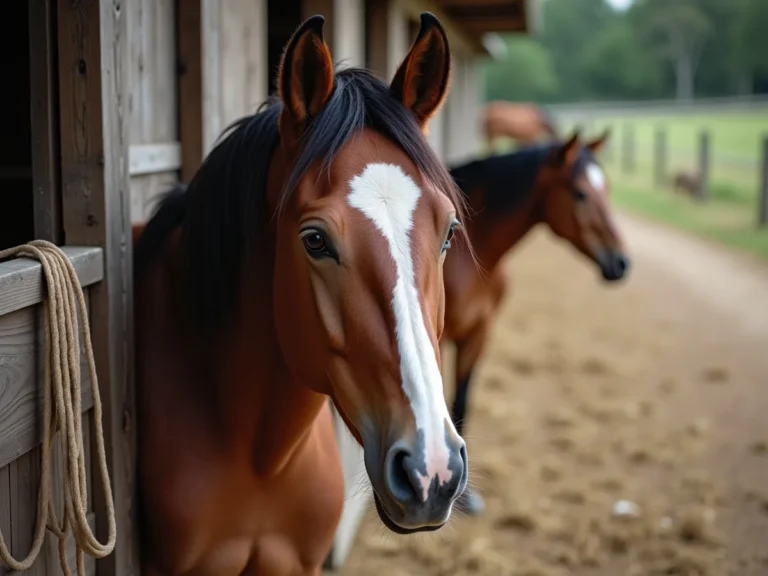
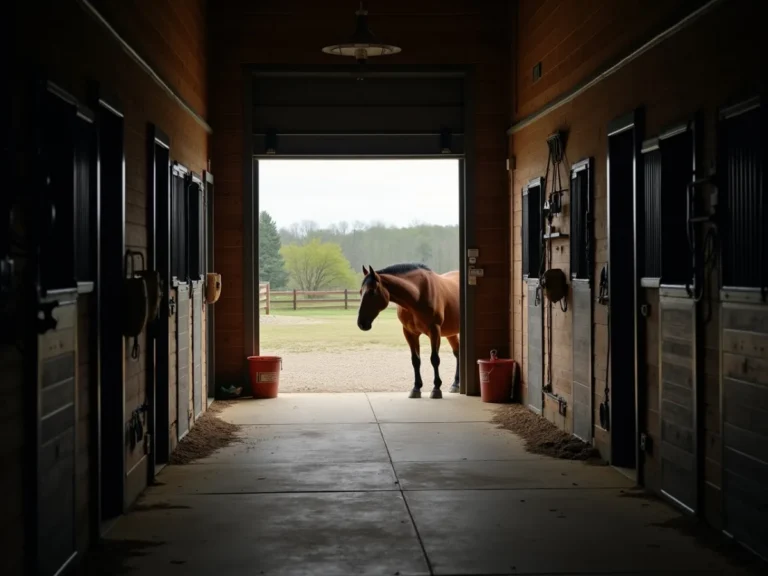
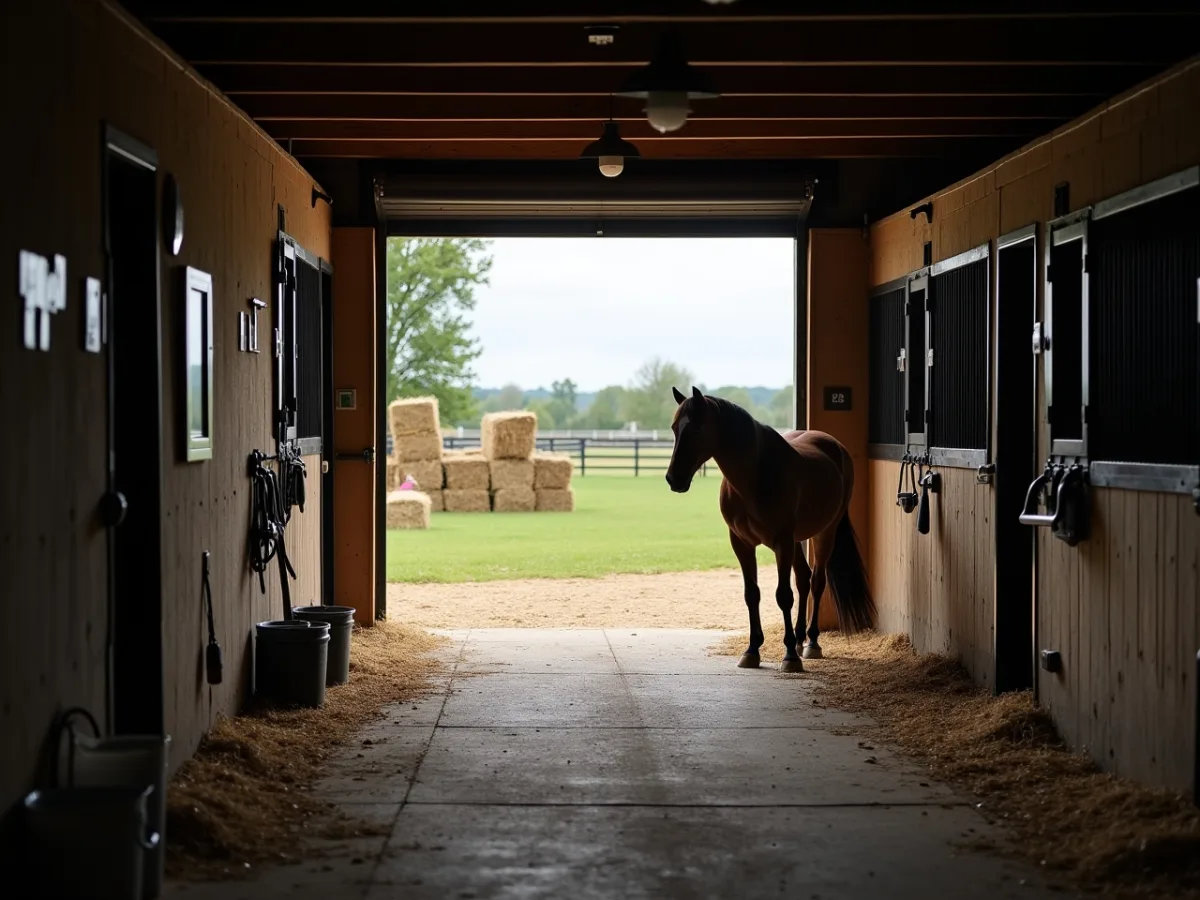
The stable is often where emotional sensitivity becomes easiest to see. Horses are close to people, routines are repeated, and small changes in a person’s mood stand out. A horse may refuse to come forward in the stall, step away during grooming, or stand unusually still when the handler is upset.
This environment gives horses many opportunities to compare one interaction with the next. If a person arrives calm every morning, the horse notices. If that same person comes in tense after a difficult phone call, the horse may sense the difference immediately.
In the field
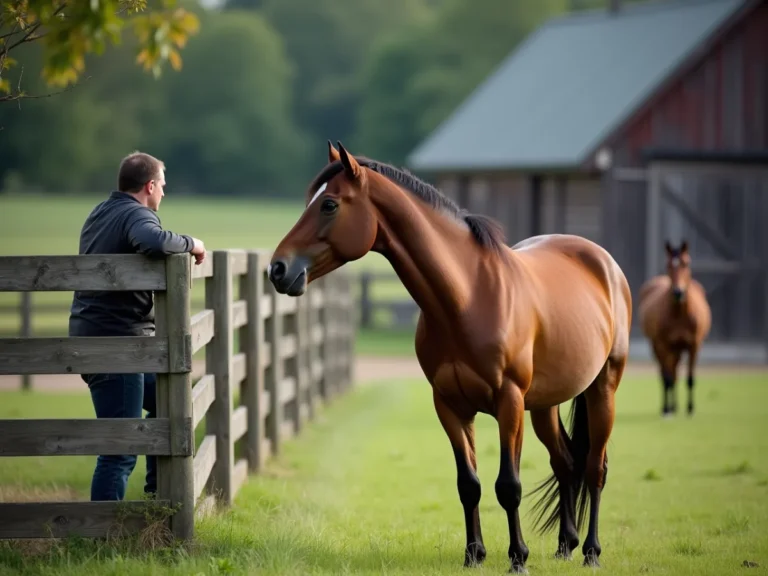
In a pasture, horses often have more space to express themselves. They may choose whether to approach, keep distance, or move with the group. A human’s emotional state can influence whether a horse feels safe enough to come in voluntarily.
Some horses that are confident in the field still become more cautious if the handler appears frustrated. They may not run away, but they may stay with the herd longer or slow their approach. That pause can be a quiet response to human mood rather than a refusal to cooperate.
During riding
Under saddle, sensitivity to human emotion can become especially noticeable because the rider’s body is part of the signal. A tight seat, braced legs, uneven hands, or irregular breathing can all affect the horse. Even when the rider does not feel outwardly emotional, the horse can respond to the physical expression of that state.
A horse may speed up, shorten the stride, resist contact, or lose confidence in transitions. Sometimes the issue is not the exercise itself. It is the emotional tone the rider brings into the work. Horses are often quick to reflect that tone through their own tension.
During transport
Transport can amplify everything. Horses already face confinement, movement, noise, and separation from familiar surroundings. If the handler is anxious, the horse may become even more alert. Loading can take longer, and the horse may hesitate at the ramp or stand stiffly once inside the trailer.
In transport situations, a calm handler matters because the horse has fewer external cues to rely on. The emotional climate can become one of the strongest signals available.
What the Reaction May Be Signaling
A horse’s response to human emotion does not always mean fear. Sometimes it reflects confusion. The person’s body says one thing while the words say another. The horse senses the mismatch and does not know which signal to trust.
Sometimes the response points to discomfort with inconsistency. Horses like clear patterns. If a person is warm one day and abrupt the next, the horse may become cautious not because it feels threatened in the moment, but because the overall relationship feels less predictable.
In other cases, the reaction may be about the horse’s own state. Pain, fatigue, hunger, social stress, or poor sleep can lower patience and reduce tolerance for human emotional noise. A horse that seems especially sensitive during certain days may be more physically or mentally taxed than it appears.
Not every reaction to a human mood is about the human alone. The horse’s own condition often shapes how much it can tolerate.
That is why context matters. A horse that stays relaxed with a tense person after a long turnout may react differently after a day in the stall, a hard workout, or a stressful trailer ride. The same emotion from the human can land differently depending on the horse’s current reserve of comfort.
Common Misreadings
People sometimes interpret sensitivity as dominance, disrespect, or moodiness. Those labels can hide the real issue. A horse that steps away when approached by a frustrated handler is not necessarily being defiant. It may simply be avoiding a situation that feels unstable.
Another common mistake is assuming that a horse should tolerate any human emotion as long as the person is “trying.” Horses do not respond to intentions in the abstract. They respond to what they can observe. A person may feel kind but still move with sharpness, speed, or uneven pressure.
It is also easy to overread one bad interaction. Horses, like people, have off days. A horse that seems reactive once does not automatically have a deep emotional sensitivity problem. Patterns matter more than single moments.
At the same time, repeated reactions deserve attention. If the horse regularly tightens, avoids, or hesitates around one specific person, the pattern is telling you something. The answer may involve handling style, timing, emotional regulation, or a combination of all three.
Building a More Steady Interaction
Horses usually do best when people are clear, consistent, and physically organized. That does not require perfection. It requires enough steadiness that the horse can predict what happens next. Predictability lowers the need to stay on guard.
Simple habits help. Approaching at a steady pace, keeping the same general routine, and avoiding abrupt changes in pressure can make a horse feel safer. Matching your breathing to a slower rhythm before handling can also change the tone of the interaction. Horses often notice that shift before the person realizes it is happening.
It helps to watch the horse before touching or asking anything. A horse that is already tight in the body may need a quieter approach. A horse that is relaxed and curious can usually handle more direct interaction. Reading the horse first prevents unnecessary escalation.
When a horse reacts strongly to human emotion, the response is often not random. It is the result of repeated observation, memory, and immediate physical cues. That makes the relationship changeable. When the human side becomes more stable, the horse usually gets clearer information and can settle more easily.
Conclusion
Sensitivity to human emotions shows up in the details: the pause before a step, the angle of the ears, the way the body tightens, the willingness to approach, and the ease of the daily routine. Horses do not need a dramatic event to notice that a person is carrying stress or calm. They often know from the first few seconds.
That awareness can be useful when it is understood correctly. It explains why one handling session feels smooth and another feels off, even when the basic task is the same. It also reminds owners that emotional consistency is part of good horse care, not an optional extra.
When the horse’s response is treated as information instead of attitude, the relationship becomes easier to read. The horse tells the truth in small ways. The job is to notice them.