Approaching a horse calmly often changes the entire tone of the interaction before a hand ever reaches the halter. The pace, posture, and quiet confidence in those first few steps can tell a horse whether the person in front of them is predictable or unsettling. Horses read movement quickly, and they often respond to the quality of an approach before they respond to words.
In daily life, calm movement is not just about manners. It can affect whether a horse stands quietly, shifts away, watches closely, or decides to keep distance. Some horses soften when approached this way. Others stay cautious, but still show less tension than they would with a rushed or direct walk-in.
What a calm approach signals depends on the horse, the setting, and what has happened before. It may suggest safety, patience, low pressure, or simply a willingness to respect the horse’s space. At other times, it can signal uncertainty, distance, or a person trying not to trigger an already sensitive animal.
Why a calm approach matters to horses
Horses are built to notice movement. In the wild, a fast or direct approach often meant a threat. That instinct does not disappear in a stable aisle or a fenced paddock. Even well-handled horses still notice whether someone is moving with purpose, hesitation, or restraint.
A calm approach usually signals that the person is not demanding a response right away. That matters because horses tend to settle faster when the pressure around them is low and consistent. They do not need to guess what will happen next.
To a horse, calm movement often means: “I am here, I am aware of you, and I am not trying to crowd you.”
This does not mean every horse will immediately relax. Some horses are naturally curious and step toward a person who moves quietly. Others remain reserved even when they feel safe. The signal is still there, though, and over time it often becomes easier for the horse to trust the approach.
What calm body language usually communicates
The horse does not only notice speed. It notices the whole picture. A person who walks steadily, keeps their shoulders loose, avoids sudden changes, and gives the horse room usually sends a different message than someone who comes in stiffly or with quick, uncertain steps.
That message can be read in several ways:
- Low threat level
- Predictable energy
- Respect for space
- Willingness to wait
- Confidence without force
These signals matter because horses often respond to clarity. A calm approach is not the same as a timid one. If the person looks unsure but tries to stay quiet, the horse may still notice the uncertainty. If the person looks steady and unhurried, the horse usually gets a cleaner message.
Small details matter too. A direct stare, a tight jaw, or fast hands can change the meaning of an otherwise quiet approach. Horses often respond to the sum of these parts, not one isolated gesture.
How it appears in everyday handling
In the stable
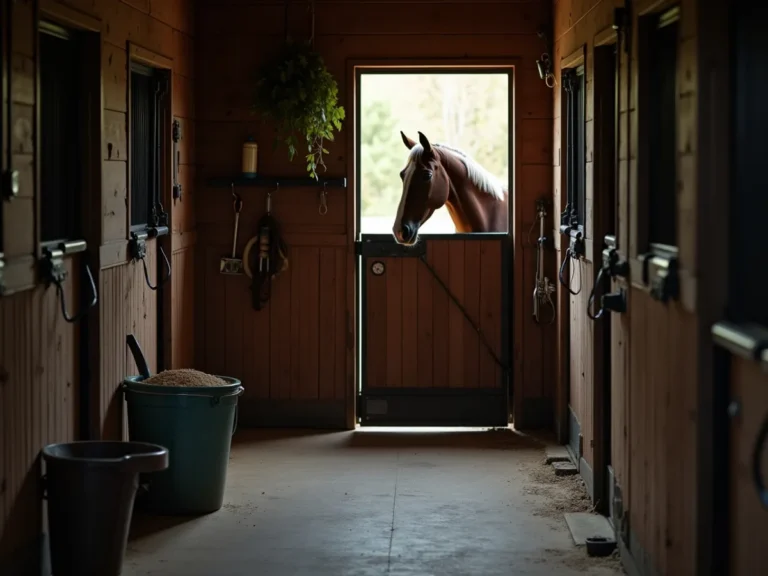
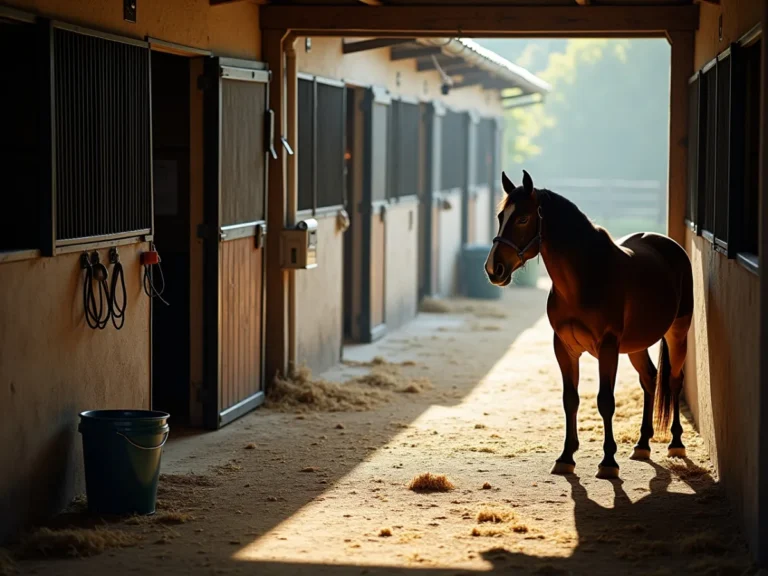
In a stall or barn aisle, calm approaching often shows up as the horse lifting its head, looking over, and then staying in place instead of moving away. Some horses may drop their head a little, blink, or turn an ear toward the person. These are not dramatic signs, but they often show a horse that is paying attention without feeling cornered.
If the horse has had positive handling, it may stand squarely and wait for contact. If the horse is less comfortable, it may keep a small gap between itself and the person. That gap is not always resistance. Sometimes it is simply the horse checking whether the approach will stay gentle.
In the pasture
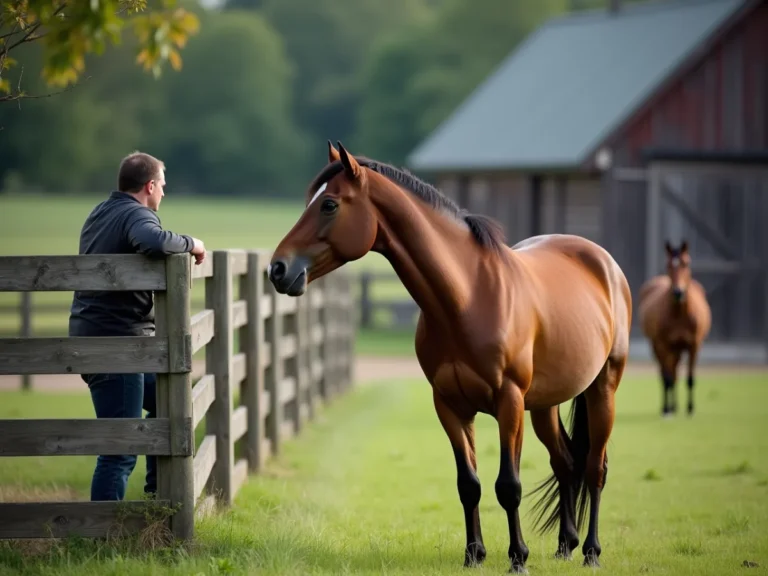
In open space, the same quiet approach can bring a very different reaction. A horse that feels at ease may continue grazing while watching from the corner of an eye, then choose to walk over. Another horse may raise its head and take a few steps away, not because it is frightened, but because it wants time to assess the situation.
Pasture behavior often shows the clearest version of what the approach signals. There is room to move, so the horse can express comfort or caution more freely. If the horse chooses to remain nearby, that is often a strong sign the approach feels acceptable.
At grooming time
Grooming is one of the moments when a calm approach has an especially clear effect. A horse that trusts the setup may lean in slightly, lower its neck, or stay loose through the body. A horse that is still unsure may stand still but with tension in the neck or a lifted tail.
The difference between acceptance and tolerance can be subtle. One horse might stand quietly because it is relaxed. Another might stand quietly because it has learned to tolerate handling but still feels guarded. Watching the whole body helps separate the two.
What a calm approach may signal about the horse’s state
Sometimes the horse is simply relaxed. The ears move softly, the eyes are quiet, and the body stays balanced. In that case, a calm approach is likely signaling that the horse feels safe enough to remain open to contact.
Other times, the same approach may reveal uncertainty. A horse can look calm on the outside while still testing the situation internally. It may hold still, but with a tight neck, a fixed gaze, or muscles that do not fully soften. That tells a different story.
Stillness alone does not always mean relaxation. In horses, calm can look like rest, attention, caution, or learned restraint.
There is also the possibility of mild fatigue or low energy. A horse that is quiet and unreactive may not be deeply relaxed; it may simply not have much interest in the moment. This is especially true after exercise, during hot weather, or in horses that are naturally low-key.
Signs that the calm approach is well received
- Soft blinking
- Loose lower lip
- Unpinned, mobile ears
- Even breathing
- Willingness to stay nearby
- Gentle head lowering
Signs the horse is still guarded
- High neck carriage
- Tension around the muzzle
- Feet ready to move
- Fixed or watchful stare
- Tail held tight or still
- Quick weight shifts
These signs do not always mean a problem. They show where the horse is emotionally in that moment. A calm approach can reveal that a horse is not yet ready to settle, even if the person’s intent is kind.
How environment changes the meaning
The same approach can signal different things depending on where it happens. A horse that stands calmly in its own stall may react very differently to the same person walking toward it in a noisy arena, near a trailer, or beside unfamiliar horses.
Background pressure changes perception. Loud machinery, wind, dogs, traffic, or a busy barn can make even a polite approach feel more significant to a horse. The person may still be calm, but the environment may not be.
Routines matter too. A horse that sees the same person at the same time each day may learn to expect a predictable approach. That consistency makes the signal easier to read. When the pattern changes, the horse may become more cautious, even if the person behaves the same way.
Common environmental influences
| Situation | What the horse may read | Typical reaction |
|---|---|---|
| Quiet stall | Personal space, familiar routine | Relaxed attention or mild interest |
| Busy barn aisle | More noise, more movement | Alertness, quicker assessment |
| Open pasture | More freedom to choose distance | Approach, stay put, or step away |
| Trailer area | Possible pressure or past memory | Caution, hesitation, scanning |
Even a calm person can feel different to a horse in a location linked to loading, separation, or earlier stress. The horse may not respond to the present moment alone. It may also be responding to memory.
When calm signals confidence, and when they do not
A calm approach is not always the same as a confident one. Confidence usually feels organized. The steps are steady, the direction is clear, and the person does not seem to change pace based on the horse’s every small movement. That steadiness is often reassuring.
By contrast, some people try to move quietly because they are nervous. They may keep their body small, avoid eye contact completely, or hesitate at the edge of the horse’s space. Horses often notice that lack of decisiveness. The result can be mixed. The horse may stay quiet, but remain unconvinced.
That is why the meaning of the approach is not only in the fact that it is calm. It is in the quality of that calmness. A horse usually reads whether the person is settled, uncertain, tense, or simply careful.
How calm approach affects nervous horses
Nervous horses often benefit from quiet, non-urgent movement, but they also need consistency. If a horse is already sensitive, a calm approach can reduce the chance of a sudden reaction. It can also give the horse time to observe and decide without feeling trapped.
These horses often show tiny changes first. They may stop pacing, turn one ear toward the person, or let their nose come forward just a little. Those moments matter because they suggest the horse is processing the situation instead of rejecting it outright.
But a nervous horse can also misread calmness if the situation is too close, too fast, or too unfamiliar. Calm does not erase the need for space. In many cases, the horse wants quiet and distance at the same time.
For a worried horse, a calm approach works best when it is paired with patience, room to choose, and no rush to touch.
How calm approach looks in more confident horses
More confident horses often respond differently. They may keep chewing, continue grazing, or walk over with little hesitation. In these horses, a calm approach may signal a familiar, low-pressure interaction. It can also invite them to engage without activating defensive instincts.
Some confident horses are socially curious. They read a quiet approach as a good sign and move toward the person. Others are simply neutral. They notice the approach, decide it is harmless, and continue with what they were doing.
This is one reason it helps not to overread every response. A horse that does not come closer is not necessarily rejecting the person. It may be content to stay where it is. Calm signals do not always create a dramatic reaction, and that is often the point.
How people often misread the reaction
It is easy to assume that a calm approach should always make a horse friendly, relaxed, or eager. Real horses do not work that neatly. Their response depends on history, mood, surroundings, and what they have learned about people over time.
Another common mistake is assuming that a horse stepping away means the approach failed. Sometimes the horse is not upset at all. It may simply be using movement to manage distance. Horses do this naturally. Giving them that option often builds more trust than trying to prevent it.
People also sometimes confuse quietness with consent. A horse that stands still may be comfortable, or it may be choosing not to move because it has learned that staying still is easier. Watching the rest of the body helps avoid that error.
Useful things to notice instead of guessing
- Does the horse soften as you get closer?
- Does it watch you without bracing?
- Does it keep its feet loose?
- Does it allow the distance to close gradually?
- Does it seem more settled after you stop moving?
These details give a fuller picture than a single dramatic gesture. They help show whether the calm approach is being received as safety, caution, or simple background noise.
The role of past experience
Horses remember patterns. A calm approach from a person who has always handled them gently may feel very different from a calm approach from someone who has previously pushed too fast. The horse does not just read the current movement. It connects that movement to what has happened before.
This is why the same horse may respond differently to different people. One handler’s calmness may feel trustworthy because it is paired with consistency. Another person’s calmness may not mean much if the horse has not built confidence with them yet.
Past experience also shapes how long it takes for the horse to settle. A horse with a history of rough handling may need more time to believe that a quiet approach really is quiet. The signal is there, but trust may lag behind it.
Subtle details that change the message
Small adjustments in posture can make a noticeable difference. Approaching on a slight angle often feels less confrontational than walking straight at the horse’s face. Slowing down before reaching the horse can also help keep the interaction from feeling abrupt.
Eye contact matters in a practical way too. A soft, indirect glance is often less intense than a hard stare. Hands held low and movements kept visible tend to feel clearer than sudden reaching or hidden gestures behind the body.
Even the sound of footsteps can matter. Heavy, uneven steps may make the approach feel less calm than the person intends. A steady rhythm often helps the horse make sense of what is coming next.
What calmness signals in everyday horse–human interaction
In ordinary handling, calm approaching often signals respect more than control. It tells the horse that the person is not trying to dominate the interaction through speed or force. For many horses, that is enough to lower the emotional temperature of the moment.
It can also signal good timing. A person who waits for the horse to look, settle, or turn slightly before closing distance often gets a better response than someone who moves in without noticing those cues. Timing is part of the message.
That message becomes stronger when it is repeated. Horses notice patterns. If every approach is predictable, the horse is more likely to relax before anything else happens. If the approach changes from day to day, the horse may stay more watchful.
Calm approach often signals not just kindness, but reliability. Horses tend to notice both.
When calm approach is not enough by itself
There are situations where a calm approach will not fully settle a horse. Pain, discomfort, poor footing, illness, hunger, separation stress, or recent changes in the herd can all shape the response. The horse may still react even if the human stays measured and quiet.
In those cases, the calm approach is still valuable, but it is only one piece of the picture. It may help the horse stay below a stronger reaction, yet the deeper cause remains. A horse that keeps moving away, flinches, or guards a side should not be read as simply “not liking calmness.”
The horse may be signaling that something else is going on. When the reaction changes suddenly, or when calm handling no longer gets the usual result, that shift deserves attention.
Reading the message in context
Approaching people or horses calmly does not create one fixed meaning. It signals different things depending on the setting, the horse’s history, and the emotional state of everyone involved. In some moments, it says “I am safe.” In others, it says “I need time.” Sometimes it simply says “I am not adding pressure.”
That flexibility is what makes calm approach so useful. It leaves room for the horse to decide. It leaves room for observation. It also gives the relationship a quieter start, which often leads to clearer handling later in the day.
When the horse responds well, the signs are usually small and steady rather than dramatic. The body softens. The feet stay relaxed. The attention stays open. Those details tell their own story, and they often tell it before any larger behavior appears.