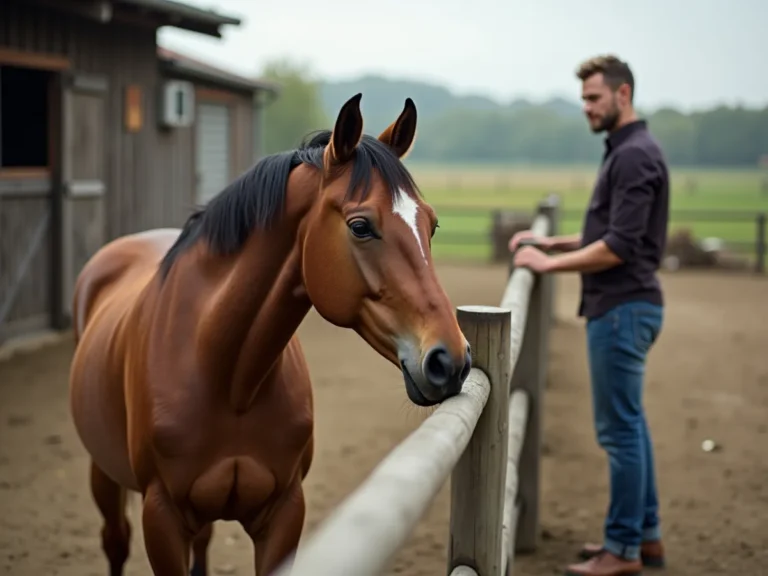
When a horse licks or mouths people, the reaction can feel puzzling at first. A soft lick on a sleeve, a curious lip on a hand, or a gentle mouthing at your jacket can seem affectionate. Sometimes it is. Other times it is a sign of tension, habit, curiosity, or simple exploration.
The behavior is common enough that many owners see it sooner or later, especially around feeding time, grooming, or quiet moments in the stall. It can happen with a relaxed horse, an impatient horse, a young horse, or one that is trying to sort out what is expected. The same movement can mean different things depending on the horse’s posture, face, and surrounding situation.
Because licking and mouthing are easy to notice but hard to interpret, they often get misunderstood. Some people assume it always means friendliness. Others worry it is a discipline issue. The truth is more layered. A horse uses its mouth to investigate the world, communicate discomfort, and release tension, so this behavior deserves a closer look.
What Licking and Mouthing Look Like in Daily Handling
Not every lick or mouth movement has the same shape. One horse may softly touch a person’s hand with the lips and then move away. Another may keep pressing its muzzle toward clothing, pockets, or fingers. Some horses flick the tongue out briefly. Others chew the air, work the jaw, or make repeated mouth movements without touching anything at all.
In routine handling, this behavior often shows up during grooming, tacking up, leading, waiting for treats, or standing quietly in cross-ties. It may appear after a session ends, when the horse is released, or while the handler pauses. In these moments, the horse is often processing information, asking for something, or expressing a state that is not immediately obvious.
Common real-life situations
- Sniffing and mouthing a hand after a treat is offered
- Licking a sleeve while being brushed near the neck or shoulder
- Moving the lips against a lead rope or halter
- Chewing motions after a period of concentration or stress
- Repeated mouthing at a person’s pocket or zipper
Small details matter. A horse that licks once and relaxes may be showing mild curiosity. A horse that keeps working its mouth while tense through the neck or eyes may be telling a different story.
Why Horses Tend to Use Their Mouths
The mouth is one of a horse’s main tools for exploring the world. Horses investigate texture, scent, and taste through their lips and teeth. They also use mouth movements in social interaction with other horses. This is normal horse behavior, not something invented by human handling.
In the wild or in a herd setting, horses use subtle facial and mouth signals to establish comfort, distance, and social contact. A muzzle touch can be part of greeting, curiosity, or low-level tension. When that same tendency appears around people, it may have the same roots, even if the horse is responding to a very different environment.
Licking can also happen when the horse is mentally shifting from alertness to relaxation. Some horses lick after work, after learning something new, or after a moment of pressure has passed. That does not mean the lick itself is a magic sign of obedience. It often means the horse is processing the situation and settling down.
Persistent licking is not automatically affection. It may reflect curiosity, social behavior, relief, stress, or learned habits depending on the context.
Calm, Curious, and Tense: Different Forms of the Same Behavior
One of the biggest mistakes owners make is treating all mouthing as identical. The body around the mouth tells the rest of the story. A relaxed horse will usually have soft eyes, loose nostrils, a level neck, and an easy stance. The mouthing may be light and brief.
A curious horse often leans in, sniffs, explores, and then moves on. The movement is active but not tense. It may happen when the horse is meeting a new person, noticing a different smell, or investigating a strange object. This kind of behavior is usually easy to interrupt without creating resistance.
Tension-related mouthing looks different. The horse may work the jaw repeatedly, chew with no food present, or keep touching objects in a restless way. Ears might pin and swivel, the head may come up or drift away, and the body can feel guarded. In these cases, licking is less about connection and more about discomfort or conflict.
Subtle signs that help separate the meanings
- Soft lips versus tight, busy lips
- Relaxed neck versus raised or braced neck
- Quiet breathing versus shallow, quick breaths
- Even stance versus shifting or stepping away
- Loose eyes versus fixed or worried eyes
These details are easy to miss when someone focuses only on the mouth. The whole horse matters more than the single gesture.
What It May Signal About the Horse’s State
Licking and mouthing can be linked to several internal states, and those states do not always appear one at a time. A horse may be curious and slightly anxious. It may be relaxed but also hungry. It may have learned that mouth movements help it get attention. Observing the full pattern helps narrow down which explanation fits best.
In many cases, mouthing shows that the horse is engaged. That engagement can be good, neutral, or uneasy. A horse that uses its lips to investigate a handler’s hand is paying attention. The question is what kind of attention it is giving.
Sometimes the behavior is tied to anticipation. Horses that expect grain, hay, turnout, or the end of work may lick or mouth in the minutes before that event happens. The motion can look eager and repetitive. If it appears at the same time every day, routine may be driving it more than emotion.
Other times the behavior is a form of self-soothing. Repeated jaw movement, especially after a stressful experience, may accompany a horse settling down. That does not always require intervention, but it does deserve context. If the horse only mouths after a demanding ride or a tense trailer trip, the behavior may be part of recovery.
Any sudden change in mouth behavior deserves attention if it appears with pain, weight loss, drooling, head shaking, resistance to the bridle, or trouble eating.
How Environment and Routine Shape the Behavior
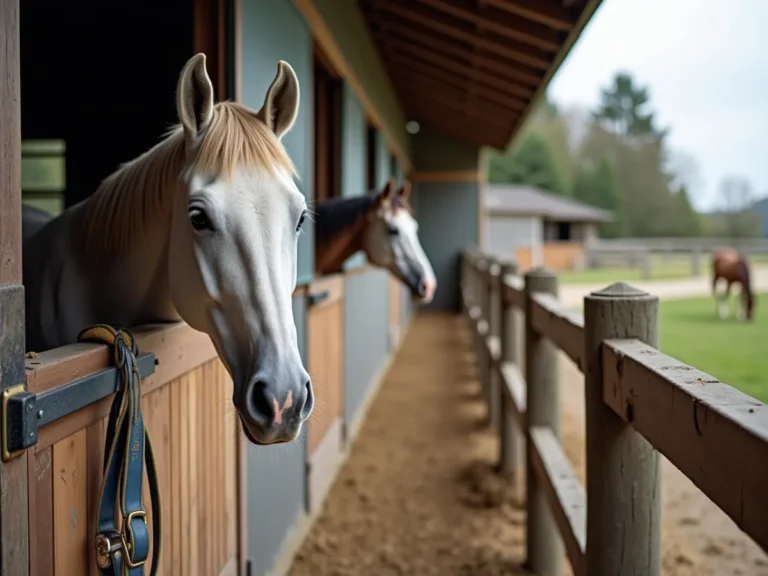
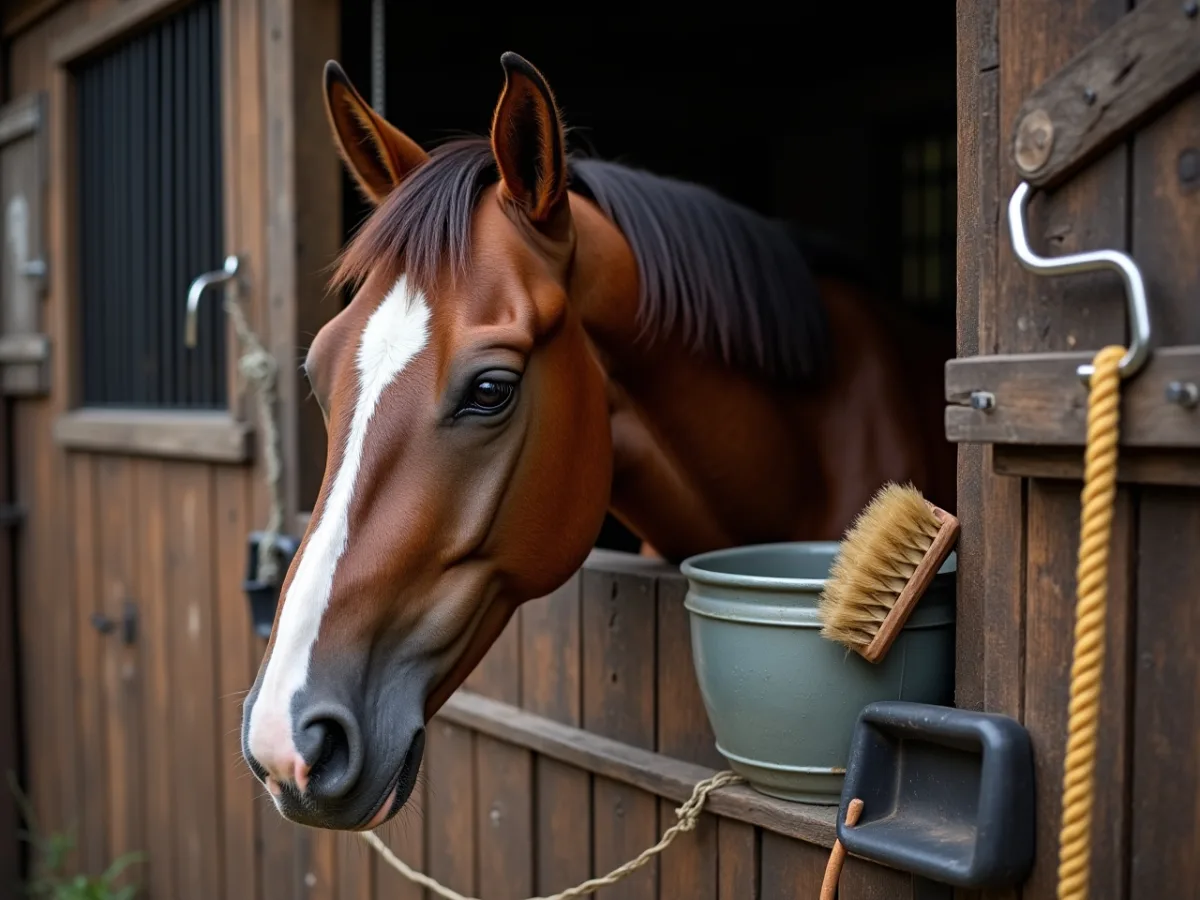
Where the horse is and what has just happened often influence licking or mouthing more than the horse’s personality alone. A stall horse may mouth doors, buckets, or human clothing simply because it spends more time waiting. A pasture horse may show the behavior mostly when being caught, fed, or separated from the herd. A working horse may do it before or after training.
Routine is powerful. Horses quickly learn the rhythm of the day, and many mouth more actively around predictable events. If a horse is always fed after grooming, it may start licking hands or pockets when it sees the grooming tools. If a horse gets attention after mouthing, the behavior can become more frequent because it has been rewarded, even accidentally.
Changes in environment can also bring the behavior out. New barns, unfamiliar trailers, loud surfaces, crowded rings, and long waits can all increase mouth movements. The horse may be trying to manage uncertainty. In a calm, familiar setting, the same horse may barely do it at all.
Environmental factors that often increase mouthing
- Long periods of waiting without turnout
- Feeding anticipation
- New people, horses, or equipment
- Transport and trailer stops
- Busy barn activity and noise
When the pattern changes with the environment, the behavior is telling you something useful. It is less about one fixed meaning and more about how the horse responds to the moment.
How People Often Misread It
Many owners interpret licking as submission or affection because that is the most pleasant explanation. Sometimes they are not wrong. A calm muzzle touch can be part of a friendly interaction, especially with a horse that already trusts the handler. But the same gesture can also be accidental or stress-related, so assuming one meaning every time can lead to confusion.
Another common misunderstanding is to treat mouthing as automatic misbehavior. That view is too narrow. Horses use their mouths naturally, and not every contact is rude or manipulative. If a horse is gently exploring a hand or sleeve, the issue may simply be that the horse is curious and has not yet learned where boundaries are.
The most useful approach is to compare the behavior with the horse’s overall state. Is it relaxed or keyed up? Is it happening once, or over and over? Does it occur only around food, only with one person, or only in one place? Those details often explain more than the lick itself.
The Role of Learning and Human Response
Horses learn fast from the way people react. If mouthing leads to attention, treats, stroking, or conversation, the horse may repeat it. That does not mean the horse is being clever in a human sense. It means the behavior works. Horses tend to keep behaviors that get results.
At the same time, some handlers unintentionally discourage normal curiosity by reacting sharply to every muzzle touch. That can make a horse less relaxed around people without solving the underlying issue. A better response is usually calm and consistent. If the horse is pushing for food or being pushy with personal space, boundaries should be clear. If the horse is simply investigating, the interaction can stay quiet and uncomplicated.
Consistency matters because mixed signals confuse horses. A hand that invites contact one day and pushes the horse away the next can create more uncertainty. Clear handling helps the horse understand which mouth behaviors are acceptable and which are not.
When Licking or Mouthing Becomes More Noticeable
Some horses lick or mouth far more during transitions than during steady work. That includes arriving at the barn, being untacked, waiting before turnout, or standing after exercise. These in-between moments are often when the horse is least sure what happens next.
Young horses may show it because they are still learning how to handle human contact. They test objects with their mouths, explore tack, and investigate people more actively. Mature horses can do the same, but usually with more pattern and less experimentation. If an older horse suddenly starts mouthing more than usual, it is worth looking beyond habit and checking for stress, discomfort, or pain.
In some cases, the behavior appears more strongly when the horse is under-trained or over-faced by the situation. A horse that feels unsure about the task may show mouth movement along with tension through the neck and body. A horse that understands the routine and feels physically comfortable often shows less of it.
| Situation | Possible meaning | What to notice |
|---|---|---|
| After work | Processing or settling | Soft eyes, relaxed breathing, lower neck |
| At feeding time | Anticipation | Focus on buckets, pockets, doors |
| With a new person | Curiosity or uncertainty | Sniffing, hesitating, watching closely |
| During stress | Tension or self-soothing | Repeated jaw motion, tight body, restlessness |
When the Behavior May Point to a Physical Issue
Not all mouth activity is behavioral. Dental discomfort can cause chewing motions, head tossing, or reluctance to eat. Bit pressure, tongue pain, ulcers, or mouth sores can also make a horse work the jaw more than usual. If the horse is resisting bridling, avoiding hard feed, or showing drooling and odor, physical causes should come first.
Digestive discomfort may also affect how a horse uses its mouth. Some horses chew more when stressed or before a colic episode. Others become oddly quiet and avoid food. If the licking is new, persistent, and paired with changes in appetite or attitude, it should not be brushed off as a simple habit.
Another clue is timing. A horse that only mouths after bit work may be telling you the tack is uncomfortable. A horse that mouths around a specific feed or after a long trailer ride may be reacting to digestive upset or stress. Patterns like these are useful because they show where the discomfort begins.
New or frequent mouth behavior paired with eating changes, head tossing, drooling, or tack resistance should be checked for pain or discomfort.
Reading the Whole Horse
The mouth rarely tells the full story by itself. A horse that licks a person’s hand with a soft face and loose body is saying something very different from a horse that mouths while standing tight and alert. Looking at ears, eyes, stance, breathing, and timing gives the behavior context.
It also helps to notice consistency over time. A horse that mouths only when asking for treats is probably learned and situational. A horse that mouths during stress, after work, or whenever pressure increases may be communicating something deeper. The pattern is usually more important than the single act.
Owners who pay attention to these small details often get a clearer picture of what their horses are trying to manage. Licking and mouthing can be polite, practical, anxious, or habitual. The behavior is common, but its meaning is rarely simple.
When the context is calm, the horse is relaxed, and the movement is light, the behavior may simply be part of normal interaction. When the body tightens, the mouth repeats, or the pattern shifts with stress, the same action becomes a more meaningful signal. That is why the best reading comes from the horse’s full expression, not the lips alone.