Horses speak all the time, even when they stay quiet. A flick of an ear, a shift in weight, a tucked tail, or a sudden pause can tell you a great deal if you know what to watch for. These signals are rarely random. They are part of a horse’s everyday language, and they often appear long before a larger reaction shows up.
Understanding horse interaction signals means looking at the whole picture instead of one dramatic movement. A horse may step away, lean in, pin its ears, soften its eye, or change breathing in a matter of seconds. Each detail matters, but the meaning usually depends on what comes before and after it. Context changes everything.
In the barn, in the field, during grooming, or under saddle, horses give layered messages. Some are social. Some are defensive. Some simply show curiosity or uncertainty. Learning to read those signals makes it easier to respond in a way that keeps the horse calm and the interaction clear.
Natural Background Behind Horse Interaction Signals
Horses are prey animals, so their first instinct is to notice, assess, and stay ready to move. That does not mean they are always nervous. It means their bodies are built for quick awareness. Small changes in posture or attention can be part of that natural alertness rather than a sign of fear.
Because horses live in social groups, they also use body language to set distance, maintain order, and stay connected. One horse may lower its head to signal peace. Another may turn a hindquarter slightly to say, “I need space.” These are normal herd behaviors, not unusual habits.
When a horse interacts with a person, the same instincts remain in place. The horse is still reading posture, movement, smell, sound, and timing. A human who walks directly, reaches too quickly, or stands too close may trigger a response that seems subtle at first but becomes stronger if the horse feels crowded.
Horse interaction signals are usually easiest to understand when you watch the full sequence: approach, pause, posture, ears, eyes, feet, and release.
How These Signals Appear in Everyday Handling
Many of the most useful signals show up during routine care. A horse that keeps one ear on you while eating is not necessarily distracted in a bad way. It may simply be paying attention while still relaxed. If both ears lock forward, the body lifts, and the horse stops chewing, the level of interest has changed.
During grooming, some horses lean into the brush, stretch their neck, or lower the head. That often signals comfort. Others may swing their head away, tighten the lips, or step sideways when a sensitive area is touched. Those responses can point to soreness, annoyance, or just uncertainty about the pressure being used.
Leading offers another clear example. A horse that follows with a loose neck and even steps is usually comfortable with the rhythm. A horse that lags behind, crowds the handler, or repeatedly stops to look around may be saying that focus is divided. None of these behaviors should be read too quickly on their own.
Common handling situations and what they may suggest
-
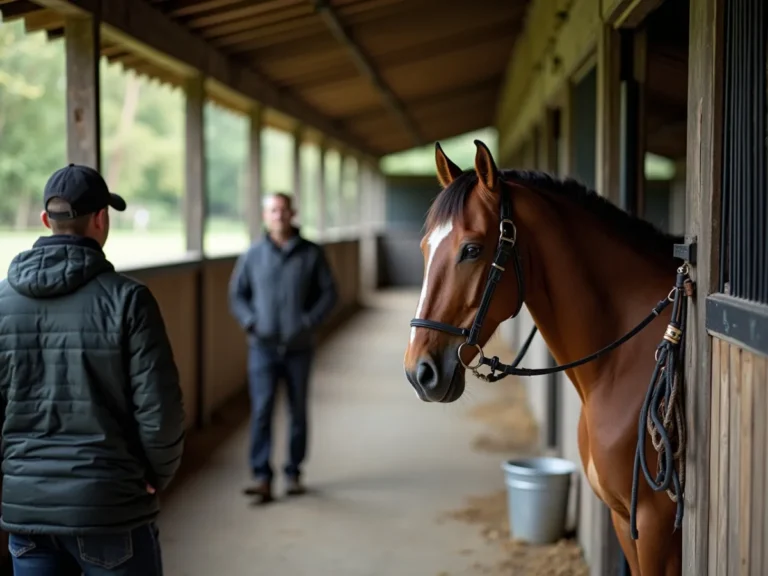
Approaching the stall: A horse that comes forward calmly may be curious or socially engaged.
-
Receiving halter pressure: Soft yielding usually suggests understanding; bracing can suggest resistance or tension.
-
Touching sensitive areas: Ear flicking, skin rippling, or stepping away may indicate discomfort.
-
Standing tied: A relaxed stance with one hind leg resting often shows ease; repeated shifting can show impatience or concern.
-
Loading into a trailer: Looking inside, pausing, and snorting can show caution, while rushing backward can signal stronger worry.
Not every signal needs immediate correction. Some just need patience. A horse that is processing a new situation may look uncertain without being unsafe. The difference lies in whether the tension fades or builds.
What Subtle Signals Often Mean
Subtle signals are easy to miss because they happen quickly. A horse may blink less, stop licking and chewing, or hold its tail slightly tighter than usual. These changes often show that the horse is shifting from relaxed interaction to alert observation.
The ears are one of the most useful clues, but they do not work alone. Forward ears can mean interest, but they can also mean the horse is locked onto something that worries it. Ears that flick back and forth may show divided attention. Ears pinned flat are a much stronger sign and usually indicate irritation, threat, or high discomfort.
Eyes and muzzle matter too. A soft eye and loose lips often go with relaxation. A tight muzzle, hard stare, or visible tension around the nostrils can mean the horse is holding stress. Some horses show concern through silence rather than movement, becoming very still before they react.
Stillness is not always calm. In horses, a sudden freeze can be the first sign of deep attention or rising concern.
Different Signals in the Stable, Field, and Arena
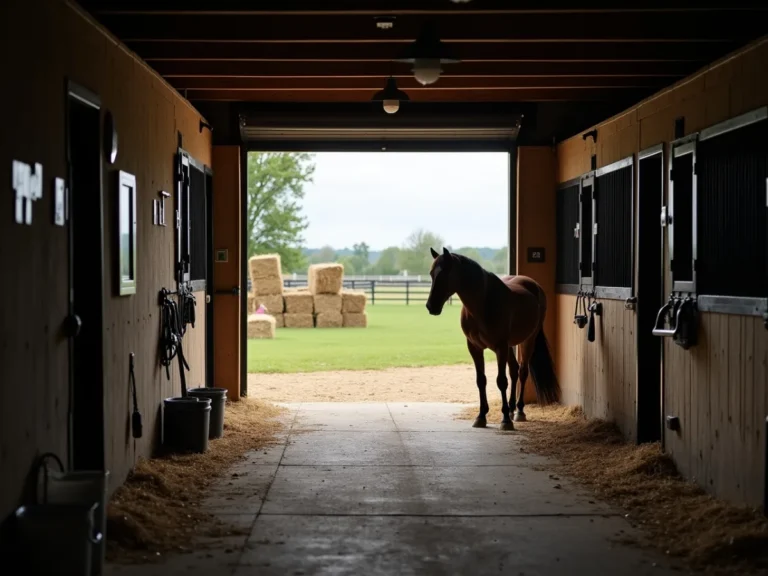
In the stable, horses often show more limited body language because space is smaller. That can make signals easier to notice, but it can also make them stronger. A horse that pins its ears over a neighbor, guards feed, or turns its hindquarters away may be communicating about personal space or resources.
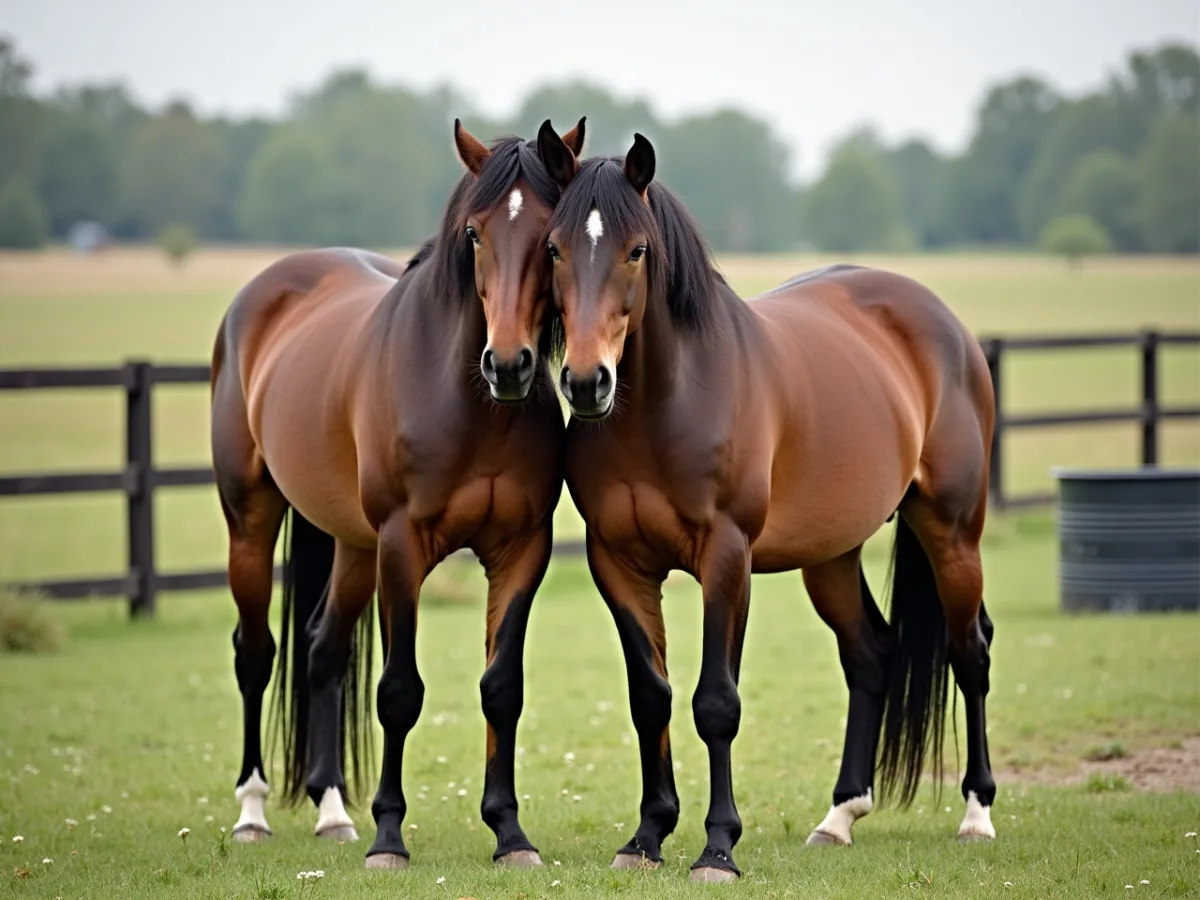
In the field, social behavior becomes more visible. Horses may groom one another, stand head-to-tail to manage flies, or move in loose group patterns. A horse that is excluded from the group may keep trying to rejoin, while one that is lower in the herd may yield more quickly during a conflict. Those exchanges are usually brief and mostly understood by the horses themselves.
In the arena, signals can become more mixed because training, balance, and environment all influence behavior. A horse may look forward but feel stiff through the body. It may respond to the rider’s aids while still showing tension in the tail or jaw. That is why the whole frame matters, not just one obedient step.
What you may notice in different places
| Setting | Common signals | Possible meaning |
|---|---|---|
| Stable | Pinning ears, guarding feed, shifting feet | Space concerns, irritation, or anxiety |
| Pasture | Mutual grooming, following, posturing | Social bonding or herd negotiation |
| Arena | Tail swishing, head tossing, bracing | Confusion, discomfort, or pressure |
| Trailer | Looking in, hesitating, backing up | Caution, uncertainty, or fear of confinement |
How Emotional State Shapes Interaction Signals
A horse’s emotional state affects how clearly it communicates. A relaxed horse tends to move with easier rhythm and softer transitions. Its signals are often broad and easy to read. An anxious horse may become more selective and reactive, responding quickly to tiny changes around it.
Stress does not always look dramatic. Some horses get louder, moving their feet, tossing their heads, or vocalizing more often. Others go quieter and narrower in their behavior. They may look outwardly controlled while showing tension through tight muscle tone, shallow breathing, or a fixed expression.
Discomfort can also appear as inconsistency. A horse that normally enjoys being touched but suddenly flinches away from the saddle area may be showing soreness. A horse that willingly enters a stall one day and hesitates the next may be reacting to a change in experience, smell, sound, or memory. Patterns matter more than isolated moments.
When a horse’s usual behavior changes, the reason is often easier to find in the pattern than in the single moment that stands out.
How People Often Misread Horse Signals
One common mistake is assuming that a quiet horse is automatically calm. Some horses are genuinely relaxed in silence, but others are holding tension and waiting. A horse that stops moving does not always feel safe. It may be watching closely before deciding what to do next.
Another misunderstanding happens with ear position. People often focus on whether the ears are forward or back, but the rest of the body can change the meaning. Forward ears with a relaxed neck may show interest. Forward ears with a rigid body may show concern. Ears back for a moment during grooming may simply reflect attention to contact, not aggression.
Tail movement is also easy to overread. A swishing tail can mean irritation from flies, physical frustration, or discomfort from work. It becomes more meaningful when it appears with other signs such as pinned ears, tension in the back, or a short, hurried stride. One signal alone rarely tells the full story.
Calm, Neutral, and Reactive Forms of Interaction
Horse signals exist on a range. Calm behavior tends to be loose, fluid, and easy to interrupt. Neutral behavior is quieter and more observational. Reactive behavior is sharper, faster, and less forgiving of pressure or surprise.
A calm horse may sniff a new object, lower its head, and return to eating. A neutral horse may stand apart, watch, and decide whether to move closer. A reactive horse may step away quickly, throw its head, or brace its body before the handler even makes direct contact. These forms can shift within minutes depending on what is happening around the horse.
Understanding the difference helps prevent overreaction. Not every step back is defiance. Not every side glance is avoidance. Some horses simply need more time to assess before they engage.
Soft and strong signals that may look similar at first
-
Ear flick vs. ear pin: A quick flick can mean attention shifting; pinned ears usually suggest stronger negative feeling.
-
Step aside vs. evade: A small adjustment may be polite space-making; repeated avoidance can signal concern.
-
Head lift vs. head throw: A head lift may reflect alertness; a sharp throw often carries more tension.
-
Tail swish vs. tail lash: Light movement may be simple irritation; harsh movement often shows greater frustration.
Young Horses and How Signals Develop
Young horses often show interaction signals more openly because they are still learning what different experiences mean. A foal or yearling may approach quickly, retreat suddenly, and then approach again. That back-and-forth is part curiosity and part caution. Their reactions are often honest, even when they look inconsistent.
Inexperienced horses may not yet separate minor pressure from major concern. A soft rope cue, a new surface, or an unfamiliar person can produce a stronger response than it would in a seasoned horse. That does not mean the horse is difficult. It often means the horse has not built enough history to predict what will happen next.
With time, many horses become more economical in their signals. They may stop overreacting to every new sound or movement, but they still communicate clearly when something matters. Mature horses often show more refined body language, not less.
How Trained and Experienced Horses Communicate
A well-trained horse may appear subtle because it has learned how to stay organized under pressure. That does not erase communication. It just changes the shape of it. A trained horse might give a tiny ear flick or a slight shift in weight instead of a bigger reaction.
Experience often helps horses recover faster after brief surprises. A mature horse may glance at an object, then relax again if nothing unusual follows. But if the same horse repeatedly shows the same tension in a particular context, the signal deserves attention. Experience does not cancel discomfort.
Some of the clearest signals appear in very experienced horses because they use less obvious language. The body may be telling you “I’m willing” or “I’m not comfortable yet” through tiny changes in posture. That is why long-term observation is so valuable. The same horse can be easy to read once you know its baseline.
How Environment Changes Interpretation
Noise, footing, weather, and routine all affect how horses communicate. A horse that seems reactive in a busy barn aisle may be much softer in a familiar paddock. Another horse may feel calm in the arena but tense when a tractor starts nearby. The environment often explains more than the behavior itself.
Weather can matter as well. Wind, rain, biting insects, and sudden temperature shifts can make horses more on edge or less willing to settle. A horse rubbing its tail, tossing its head, or shifting constantly may be responding to physical discomfort rather than emotional upset. Fly pressure alone can change body language a great deal.
Routine matters in a quieter way. Horses often feel steadier when feeding, turnout, exercise, and handling happen predictably. When routines change, even well-managed horses may show more scanning, calling, or restless movement. That is not always a problem. It may simply mean the horse is adjusting.
What Consistency Tells You Over Time
Single moments can be misleading. Consistency gives the real picture. If a horse repeatedly shows tension when the girth is tightened, when one person approaches, or when a certain area is touched, there is usually a reason worth checking. The signal is not the issue by itself. It is the pattern.
Some horses are naturally more expressive, while others stay guarded and quiet. Both styles are normal. What matters is whether the horse’s signals stay stable or begin to shift. A horse that used to greet calmly but now avoids contact may be telling you something has changed in body, environment, or trust.
Careful observation over days and weeks makes small details more useful. The horse that swings its head once may simply be annoyed. The horse that does it every time the same tack is used is giving a more specific message. The more often you see the same response, the more likely it is to have meaning.
Repeated signals deserve more attention than dramatic one-time reactions, especially when they happen in the same situation.
Reading the Whole Horse, Not Just One Signal
Horse interaction signals are most useful when seen together. Ears, eyes, mouth, feet, neck, and breathing all add something. A relaxed horse usually shows softness in several areas at once. A concerned horse may show tension in one place and stiffness in another before the reaction becomes obvious.
That is why patient watching works better than quick assumptions. Horses rarely speak in single-word answers. They use combinations. A small backward step, a fixed look, and a tightened tail can mean much more together than any one part alone. The order matters too. One signal may come before another, giving you time to respond.
Over time, paying attention to these patterns changes daily life with a horse. Grooming becomes easier to read. Leading feels clearer. Riding decisions become more informed because the horse’s messages start to make sense earlier. The conversation is already there; it just takes practice to notice the details.
A horse that keeps its body loose, moves without hurry, and lets signals pass quickly usually feels settled in the moment. A horse that holds tension, repeats the same warning, or changes behavior in a predictable situation is communicating something different. The meaning sits in the combination of expression, repetition, and context, not in the gesture alone.