Horses rarely stay close by accident. When a horse chooses to stand near another horse, a familiar person, or even a quiet spot in the barn, that choice usually says something about comfort, safety, habit, or social need. Staying close is one of the clearest ways horses manage uncertainty in a world they experience through movement, scent, sound, and the presence of others.
For many owners, this behavior looks simple on the surface. A horse follows the herd, lingers near the gate, shadows a handler from paddock to aisle, or refuses to drift far from a companion. Yet the reasons behind it can vary a lot. Sometimes it is a sign of confidence. Sometimes it is caution. Other times it is a strong herd instinct that has little to do with the moment and everything to do with how horses are built.
Understanding why a horse stays close can make daily care easier. It can also prevent mistakes, because the same behavior may mean relaxation in one setting and tension in another. The details matter: where the horse is, who or what it stays near, how its body looks, and what changes when the familiar presence moves away.
In practical life, closeness is not just about attachment. It is also about predictability. Horses often keep near the source of security, whether that is another horse, a person, a fence line, or a routine they know well. That is why this behavior appears in pasture groups, in stalls, during grooming, on trails, and in the trailer. The form changes. The instinct stays the same.
Why horses tend to stay close
Horses are social animals with a strong need to track safety through the group. In the wild, distance can mean vulnerability. A horse that stays near others can respond faster to movement, avoid isolation, and reduce the risk of being singled out by a threat. That same pattern still shows up in domestic life, even when the “danger” is just a new place, an unfamiliar schedule, or a loud noise near the barn.
Closeness is often the easiest way for a horse to regulate itself. If a companion is calm, the horse may feel calmer too. If a handler is steady and familiar, the horse may remain within arm’s reach because that person has become part of its sense of order. Some horses are naturally more independent, but many will still prefer a nearby anchor when something changes.
When a horse keeps close, it is often asking one basic question: “Is this safe enough to relax?”
The answer may come from another horse, from a person, or from repeated routines. A horse that is fed at the same time, led the same way, and handled with the same cues may become attached to that pattern. Predictability creates comfort. Comfort encourages proximity.
Herd instinct is often the strongest reason
Horses usually feel better when they can see, hear, or touch a herd member. Even a single companion can reduce tension. This is why some horses pace a fence line when a pasture mate is moved away or call repeatedly when separated from the group. The behavior is not necessarily disobedience. It is the animal trying to restore social contact.
Young horses often show this most clearly. They may follow others everywhere, crowd gates, or hesitate to leave the group. As they mature, some become more settled, but the underlying need for contact rarely disappears. It simply becomes quieter in some horses and more obvious in others.
Familiarity can feel like security
A horse may stay close to a particular person because that person represents calm handling, good timing, and familiar expectations. The horse does not think about comfort the way humans do, but it does remember patterns. The smell of a familiar coat, the sound of a voice, and the rhythm of routine handling can all become part of a safe picture.
This is why some horses drift toward the person who usually leads them, feeds them, or turns them out. They are not always seeking affection in a human sense. Often, they are seeking the predictability that person has come to represent.
How staying close appears in everyday situations
The same behavior can look very different depending on context. In one setting, it may seem calm and relaxed. In another, it may look clingy or anxious. The body language around the behavior is what helps separate those meanings.
In the stable
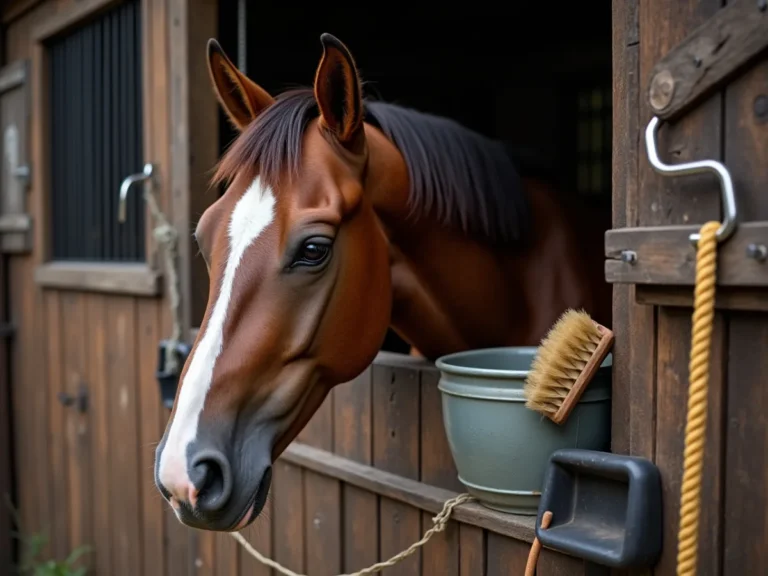
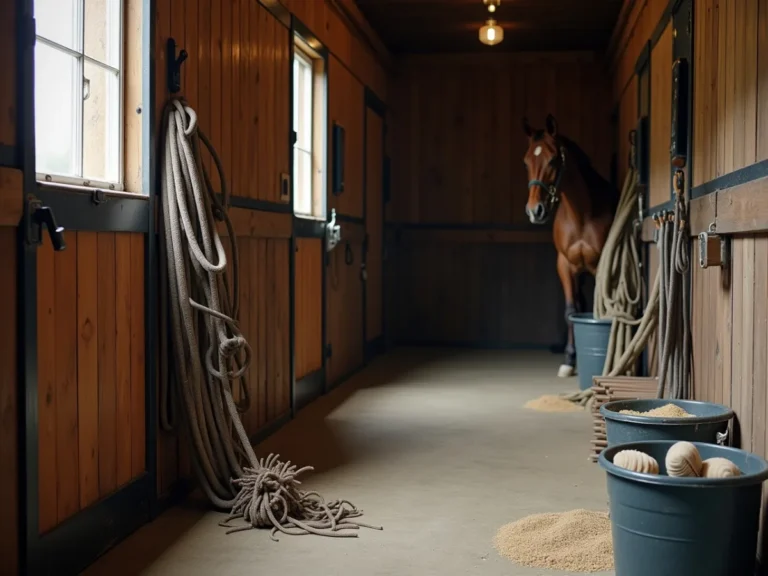
In a barn, a horse that stays close may stand near the stall door, follow a familiar person down the aisle, or position itself where it can keep track of neighboring horses. This is common in busy environments, especially when the horse can hear feeding activity, movement in the hallway, or turnout preparation nearby.
Some horses stay near the stable entrance because they expect the next part of the routine. Others stand close to a companion’s stall and settle as long as they can hear movement from the other side. If the horse is soft in the body, eating, blinking normally, and resting a hind leg, the closeness is usually part of normal social behavior.
In the pasture
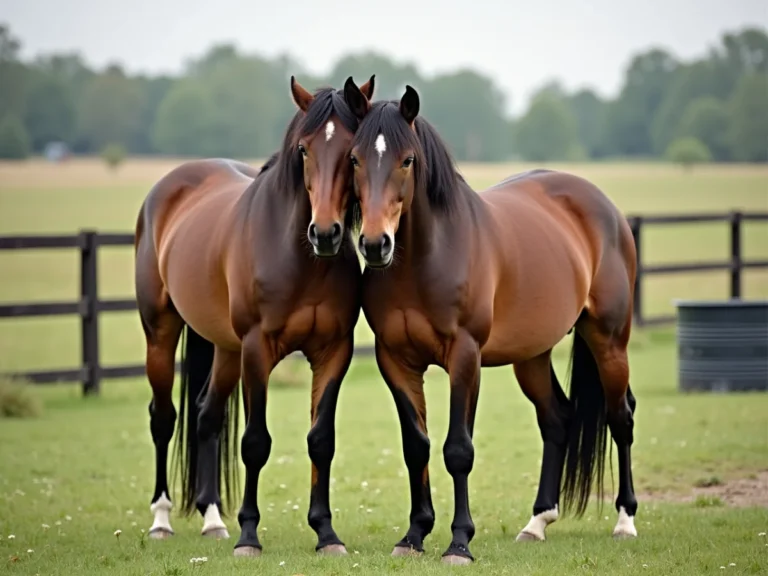
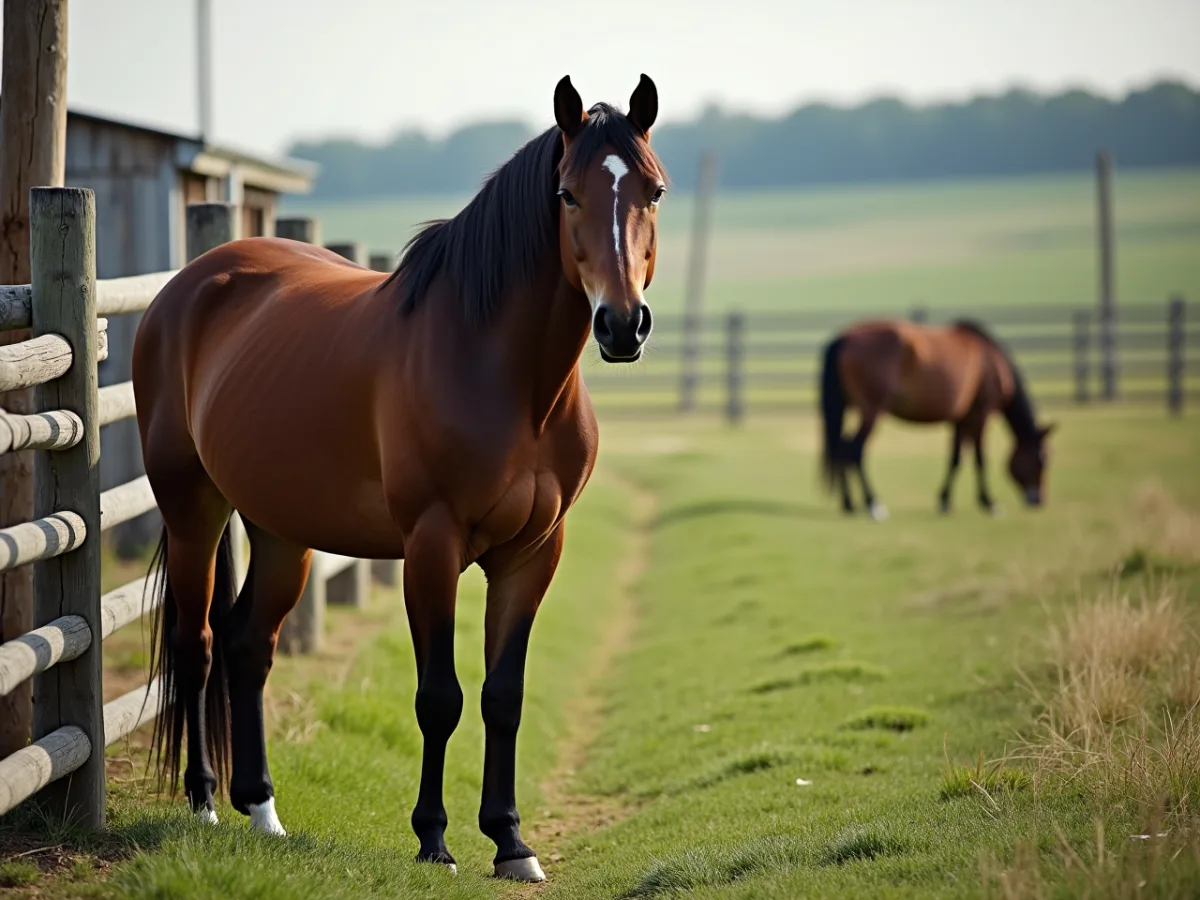
Pasture closeness often shows up as mutual grazing, parallel walking, or standing in a small cluster. Horses may maintain enough distance to feel comfortable, but not so much that they lose track of the group. One horse may act like a shadow, following a stronger or older herd mate from place to place.
If the horse is unwilling to drift even a short distance from a group, it may be showing insecurity. If it chooses one companion over the rest, the pair may have a strong social bond. That bond can be healthy and normal, but it can also create problems if the horse cannot relax without that one individual nearby.
During riding or groundwork
Some horses stay unusually close to their handler on the ground. They may crowd the shoulder, turn in too quickly, or step into the same space repeatedly. In a riding setting, closeness can appear as following another horse too tightly, refusing to separate on a trail, or staying glued to the lead horse in a group ride.
This can come from confidence, but it can also be a sign that the horse does not yet trust its own footing or environment. A horse that never seems to want space may be using the nearest safe presence as a shield. The context tells the story.
During transport
Loading and trailer travel often intensify this behavior. Horses may hesitate to enter alone, call for companions, or resist once separated from the group. Some travel better with a partner loaded first. Others settle only after they can see a familiar horse nearby.
Transport strips away many of the signals horses use to feel oriented. There is motion, noise, and confinement. In that setting, staying close is not surprising. It is one of the few comfort strategies the horse has available.
What closeness may signal about the horse’s state
Staying close is not a diagnosis. It is a behavior, and the meaning depends on the details surrounding it. The same horse can show closeness for very different reasons on different days.
Calm attachment
A horse that stays near another horse or person while remaining loose, quiet, and responsive is often simply content. It may graze peacefully within a few feet of a pasture mate or stand near a handler without fidgeting. In this form, closeness reflects social ease.
The horse still has choices. It can move away if needed, but it prefers not to. That preference is usually a sign of comfort, not distress.
Uncertainty or insecurity
Closeness can also reveal a lack of confidence. A horse that constantly checks where others are, refuses to leave the group, or visibly tenses when separated may be relying on proximity to manage worry. This is common in horses that are new to a barn, new to turnout partners, or still adjusting to training.
In those cases, the horse may not be fully settled. It may eat less, call more often, or move in a tight, watchful way. The body tends to look alert rather than relaxed.
Attachment to a routine
Some horses stay close because they are attached to a pattern rather than a social partner. They know when feeding happens, where grooming usually occurs, and which route leads to turnout. If the schedule changes, they may shadow the usual person more closely than normal.
This is especially common in horses that thrive on consistency. A small shift in order, location, or handling can make them more dependent on familiar proximity for a while.
Protective positioning
At times, a horse stays close as a way to avoid what feels risky. It may position itself near a fence, a companion, or a handler in order to reduce exposure to something behind or around it. This is not always obvious unless the rest of the environment is considered.
A horse that keeps one side toward a wall or leans into a companion’s space when something new appears may be using closeness as a shield. That matters because it tells you the horse is not only social; it is also managing pressure.
Closeness can mean comfort, dependence, caution, or habit. The body language around it is what separates one from another.
Subtle signals that travel with the behavior
Staying close is usually only one part of the message. The horse’s ears, head, feet, neck, and breathing often fill in the rest. Watching those details helps distinguish normal social contact from stress-related following.
Relaxed closeness
In a calm horse, the neck tends to look soft. The steps are easy. The horse may blink slowly, lower its head, or shift weight without stiffness. Ears may move casually between the environment and the nearby horse or person.
This kind of closeness often comes with quiet grazing, resting, or easy standing. The horse is near, but not needy. It is simply comfortable enough to remain connected.
Tight, watchful closeness
A horse that is tense may stay close in a much more alert way. It may keep its head high, move short and quick, or stare repeatedly toward the thing it does not want to lose track of. The muscles around the face and neck can look harder. Breathing may become shallow.
If the horse also pins the ears, swishes the tail, or crowding gets worse when asked to separate, the closeness may be driven by unease rather than social warmth. The horse is staying near because distance feels harder than contact.
Following versus choosing proximity
There is a difference between a horse that chooses to stand nearby and one that cannot seem to let go. The first may wander a bit, graze, or settle when the companion moves away. The second may startle, call, pace, or become increasingly fixated on keeping contact.
That difference matters in everyday handling. A horse that is freely choosing closeness usually still has emotional flexibility. A horse that cannot tolerate separation may need more careful adjustment to new situations.
How people often read the behavior differently from what it means
People sometimes interpret closeness as obedience, affection, or stubborn dependence. None of those labels is complete. Horses do form bonds, but their reasons for staying near are often practical and instinctive rather than emotional in a human sense.
A horse that walks beside a handler may not be trying to be “good” in the human sense. It may simply feel safer at that distance. A horse that refuses to leave another horse may not be being dramatic. It may be using the herd as a navigation tool.
The biggest misunderstanding happens when owners assume closeness means trust no matter what. In reality, a horse can stay near and still be worried. It can follow calmly one day and cling tightly the next. The behavior itself never explains enough on its own.
That is why context changes the interpretation. If a horse is close, relaxed, and responsive, the behavior likely reflects healthy social comfort. If it is close, tense, and unable to settle, the behavior may signal stress, uncertainty, or an unresolved change in the environment.
What influences closeness in modern horsekeeping
Domestic life creates conditions that can strengthen or soften this behavior. Horses in barns, training programs, small paddocks, and transport schedules experience social contact differently from horses with large roaming ranges. The environment shapes how often closeness becomes visible.
Stable layout matters
A barn with narrow aisles, visual barriers, or limited turnout can make horses more sensitive to separation. They may hear each other clearly but not have easy access to one another. That can lead to more calling, fence walking, or persistent following when they finally do connect.
By contrast, a layout with open sightlines and compatible pasture groups often produces quieter closeness. Horses can maintain contact without becoming frantic about it.
Routine and predictability matter
Horses remember patterns well. If one person always handles turnout, another always feeds, and the same companion always comes back from work first, the horse builds expectations around those events. When the pattern shifts, closeness may increase because the horse wants reassurance.
Even small changes can matter. A different halter, a new grooming spot, or a delay in turnout may be enough to bring a horse back toward whatever feels familiar.
Group composition matters
Not every herd arrangement is equally calming. Some groups are stable and balanced. Others have social tension, frequent changes, or one particularly dominant horse that affects how others move. In a tense group, closeness can be both a comfort and a strategy.
A horse may stay near a quiet companion to avoid pressure from a more assertive one. It may also keep close to the edge of the herd while still avoiding real isolation. That middle ground is common and worth noticing.
When closeness becomes more noticeable
Some horses are naturally social in a mellow way. Others become markedly more attached during certain times. Those shifts often show up when something in the horse’s life changes.
After a move
A new barn, new pasture, or new herd can make a horse noticeably more attached to the first familiar partner it finds. It may follow that horse around, stand at the fence when separated, or become uneasy if the bond is broken too soon.
This is usually temporary, but the pace of adjustment differs from horse to horse. A horse that settles slowly is not necessarily difficult. It may just need more time to map its new surroundings.
During illness or discomfort
Physical discomfort can also change social behavior. A horse that feels unwell may stay closer to a companion or handler than usual because being near others feels safer. Sometimes the horse appears quieter and less independent. Sometimes it becomes more clingy.
Changes in closeness alongside reduced appetite, stiffness, or reduced interest in movement deserve attention. Pain and uncertainty often overlap in horses.
In young horses and newly trained horses
Young horses often rely heavily on proximity because they are still learning how to handle separation, new tasks, and changing surroundings. Similarly, horses that are newly started under saddle or recently introduced to work may shadow people or horses more than established horses do.
With experience, some horses become more comfortable moving away and returning on their own. Others remain social and close, but in a much more settled way. Experience usually reduces panic, not necessarily the desire for contact.
Long-term patterns and consistency
A horse’s habit of staying close becomes easier to understand when you watch it over time. One day of following may mean very little. A repeated pattern across turnout, handling, riding, and transport says much more.
Some horses are simply social by nature. They remain close to one or two preferred companions for years without becoming distressed. That can be a stable, normal pattern. Other horses shift depending on season, herd changes, workload, or age. Their closeness is more flexible and reflects what is happening around them.
The most useful question is not whether the horse stays close, but how it does so. Does it drift near and settle? Does it follow but still eat and rest? Or does it stay glued to a companion and become upset the moment distance appears? Those differences reveal whether the behavior is part of normal social life or a sign the horse is struggling to feel secure.
A horse that can stay close without losing softness is often socially comfortable. A horse that cannot handle distance at all may be asking for more stability in its world.
Reading closeness with a practical eye
Owners do not need to overanalyze every step, but a few simple observations help. Notice whether the horse can choose distance and return without distress. Notice whether it remains relaxed when the preferred companion is out of sight. Notice whether the behavior appears only in one setting or across many.
- Loose body, steady eating, and easy movement usually point to calm closeness.
- Frequent calling, pacing, or tension may point to worry or dependence.
- Closeness limited to new places often suggests insecurity in unfamiliar surroundings.
- Closeness tied to one horse or person may reflect a strong social bond.
- Sudden changes in closeness can sometimes track discomfort or routine disruption.
These observations do not require special equipment or advanced handling knowledge. They simply require attention to what the horse is doing beyond the obvious act of following or standing nearby. Horses speak in patterns, not single gestures.
That is why staying close can never be read in isolation. The same behavior may be a sign of comfort in a familiar herd, a coping strategy in a noisy barn, or a response to being unsure in a new environment. Once the surrounding details are visible, the meaning becomes much clearer. The horse is not just near something. It is telling you what kind of space feels manageable at that moment.