Trust in horses rarely shows up as one dramatic gesture. It is usually quieter than that. A horse that trusts a person often looks ordinary to someone else, but the details are there if you know where to notice them.
Some horses greet a familiar handler with a lowered head and a soft expression. Others follow at liberty without much prompting, or stand still during grooming as if the whole process takes little effort. These moments may seem small, yet they tell a useful story about how safe the horse feels.
Trust also changes with context. A horse may be confident in the barn but cautious at the trailhead. One may relax around one person and stay guarded with another. That is normal, and it makes the signs of trust worth reading carefully rather than assuming they mean the same thing every time.
Why trust matters in a horse’s daily life
Horses survive by paying attention. They are built to notice movement, routine changes, pressure, and shifts in energy. Because of that, trust is not just an emotional idea. It affects how a horse handles feeding, grooming, saddling, leading, loading, and riding.
A trusting horse wastes less energy on worry. It is more able to focus on the task in front of it, whether that is standing for the farrier or walking into a trailer. When trust is weak, the same routine can feel harder, even if nothing else has changed.
Trust does not mean a horse has no fear or no opinion. It means the horse believes the person or environment is predictable enough to stay engaged.
That difference matters. A horse can still startle, hesitate, or test a boundary and yet remain fundamentally trusting. In everyday life, trust usually shows up as recovery, willingness, and a lack of unnecessary tension.
Soft body language is often the clearest sign
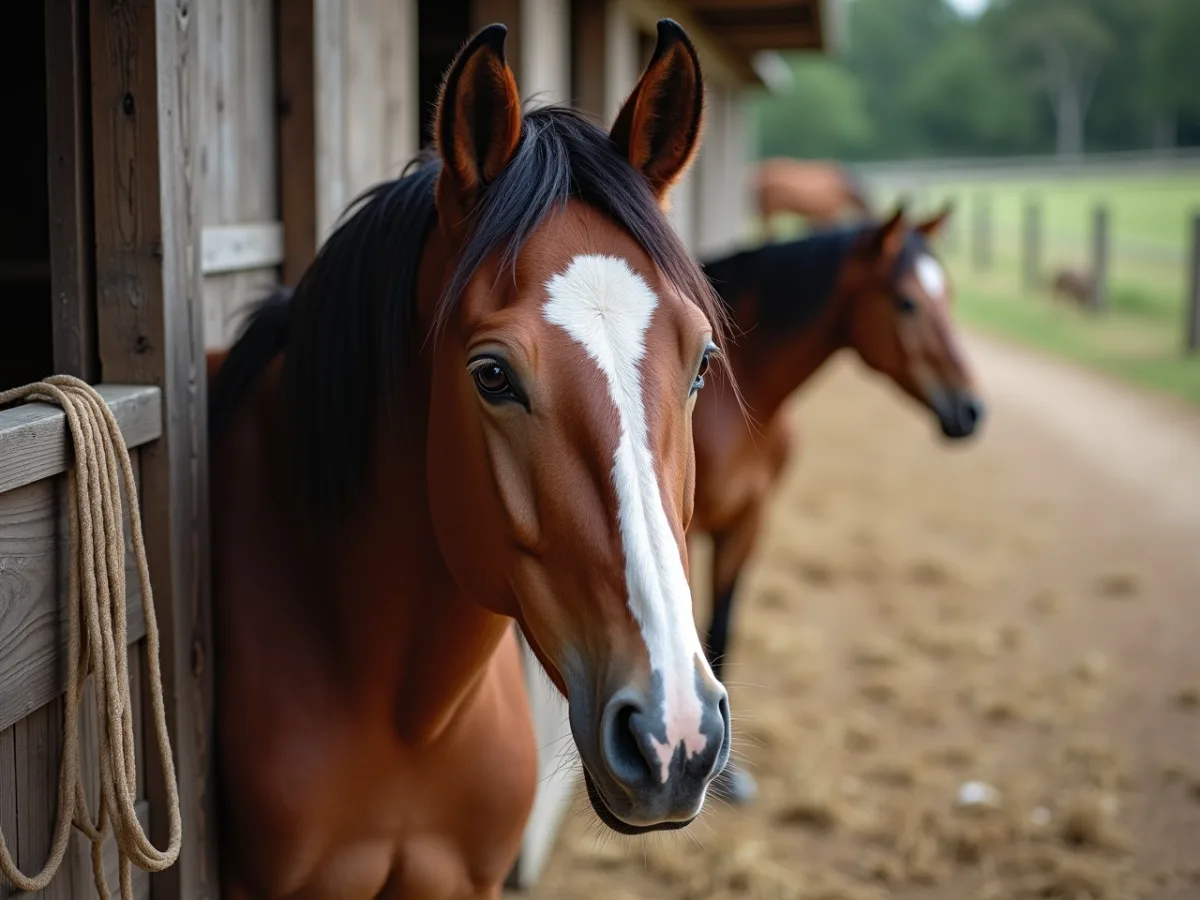
The first place many owners see trust is in the body. A trusting horse often carries itself with less stiffness. The neck may hang lower. The muscles around the jaw and shoulders may look less tight. The horse may blink slowly or let its eyelids rest in a loose, unforced way.
Relaxed ears are another useful clue, though ears should never be read alone. A horse that trusts its surroundings may let one ear drift toward a sound and the other toward its handler. The ears move, but they do not pin sharply or flick constantly with concern.
Breathing can also change. Some horses exhale deeply when approached by a familiar person. Others sigh during grooming or while being tacked up. These sounds are easy to miss, but they often appear when a horse feels safe enough to release tension.
Common soft signals that suggest trust
- Lowered head and loose neck muscles
- Quiet eyes with steady, relaxed blinking
- Soft muzzle and relaxed nostrils
- Ears that move naturally without locking back
- Standing square or comfortably resting one hind leg
- Easy breathing or a visible sigh
- Willingness to eat, lick, or chew in a calm way
These signals often appear together. One sign alone does not prove trust, but a cluster of them usually paints a clearer picture.
How trust appears during handling
Handling offers some of the clearest evidence of trust because it reveals how the horse responds to routine contact. A horse that trusts a person may walk up willingly in the paddock, follow a lead rope without bracing, or stand quietly while being haltered. The horse is not necessarily eager in a playful sense. More often, it is cooperative in a calm, matter-of-fact way.
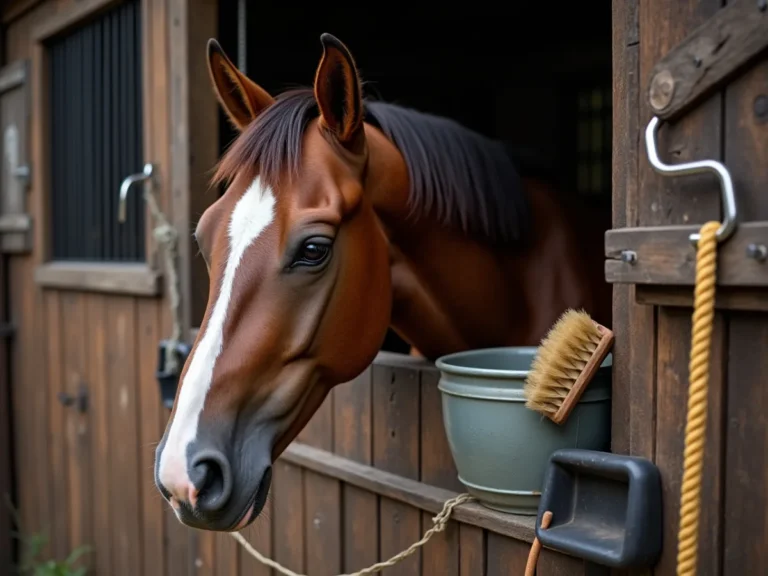
Grooming is another revealing moment. Horses that trust their handler often tolerate sensitive spots with less resistance over time. They may lower their head for the face brush, shift only slightly when a sore area is touched, and stay present instead of mentally leaving the interaction.
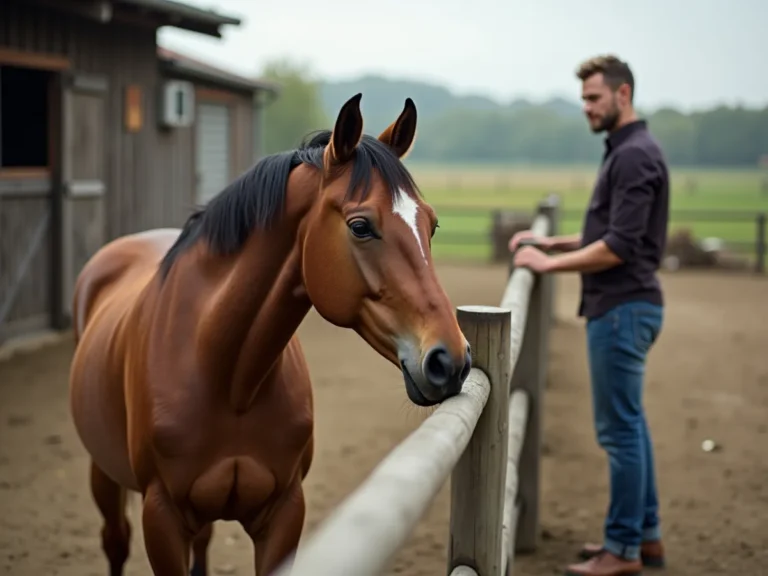
Some horses even show trust by inviting contact. They may bring their head toward a familiar hand, nudge a shoulder gently, or rest their muzzle near a person without pushing. These are not demands. They are small bids for connection.
A horse that stays near a person without crowding, and leaves without panic when asked, often shows a balanced form of trust.
That balance matters. A horse that clings too hard may be anxious, not confident. Trust usually has a quiet, steady quality rather than an urgent one.
Trust during riding looks different from trust on the ground
A horse may seem affectionate in the stable and still be unsure under saddle. Riding adds new layers of pressure, balance, and direction. Trust in that setting often appears as steadiness rather than warmth.
A trusting horse may accept the rider’s aids without resistance, stay mentally present through transitions, and recover quickly after a surprise. It may keep its rhythm when asked to bend or move forward, rather than tensing through each request. That does not mean the horse never questions anything. It means the questions are small and short-lived.
Look for the moments between the obvious ones. Does the horse soften after a cue instead of fighting it? Does it stretch its neck when given the chance? Does it remain willing after a brief mistake from the rider? Those little responses often say more than a polished round of work.
Signs of trust under saddle
- Steady rhythm without constant bracing
- Quiet response to leg, seat, or rein pressure
- Willingness to move forward without panic
- Quick recovery after a sudden sound or motion
- Softness in the mouth and jaw
- Readiness to stretch or lower the neck when appropriate
A horse that trusts the rider does not need to resist every cue to prove it has an opinion. Often the opposite is true: the horse can remain attentive without becoming defensive.
Why some horses trust one person faster than another
Trust is personal for horses. They read patterns, not labels. A horse may trust the person who handles it with predictable timing, quiet hands, and calm movement, even if that person spends less time with it than someone else. Consistency matters more than affection alone.
Horses notice how pressure is applied and how quickly it disappears. They remember whether a person listens to their signals. If a handler approaches the same way every day, gives clear direction, and avoids unnecessary roughness, the horse often learns that the interaction is safe.
Timing also influences trust. A horse that is fed, turned out, caught, and worked on a regular schedule may relax faster simply because the day makes sense. Unpredictable handling can make even a steady horse cautious. In that case, the horse may not be rejecting the person. It may be trying to make sense of the pattern.
Many horses trust the person who feels easiest to understand, not the person who tries hardest to be liked.
What trust looks like in the barn
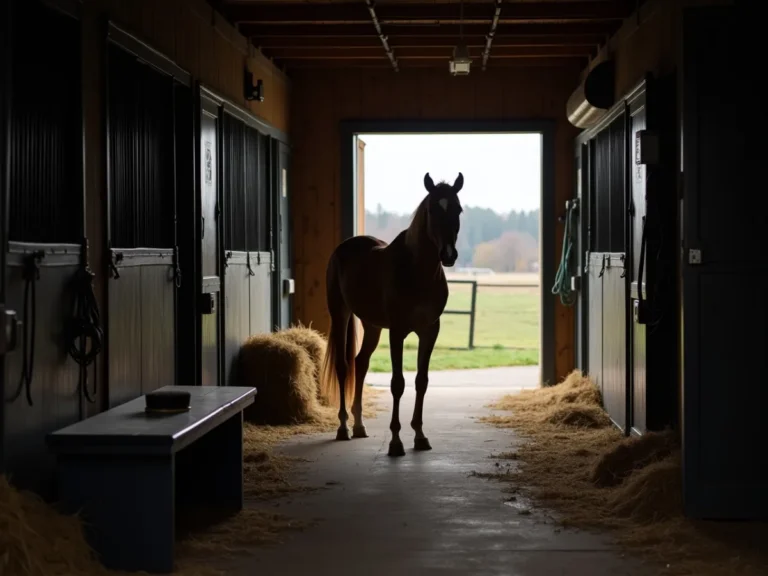
The barn offers a lot of subtle evidence. A horse that trusts its environment may rest more fully in the stall, eat normally with minimal hypervigilance, and remain unconcerned when neighbors move around. Some horses even lie down more readily when they feel secure enough to enter deep rest.
When a trusted handler arrives, the horse may look up, turn its ears, or step toward the stall door without rushing. It may stay engaged during cleaning and feeding instead of crowding or guarding resources. The horse knows the routine and feels little need to control every detail.
Trust also shows up in how the horse uses space. A relaxed horse may allow a person to enter, move around, and leave without following anxiously. It can remain open to contact without becoming dependent on constant attention.
Barn behaviors that often reflect trust
- Relaxed resting posture in the stall
- Willingness to eat while people work nearby
- Calm response when the stall door opens
- Standing quietly during blanketing or leg care
- Little guarding of feed or equipment
If a horse is calm only when everything is perfectly still, that is a different picture. Real trust usually survives small changes and everyday movement.
Trust in the field and pasture
In a pasture, horses often show trust through proximity and choice. A horse that trusts its herd and handler may choose to come in when called, approach a known person with interest, or keep grazing calmly while humans move nearby. The body stays loose. The attention is available, but not strained.
At liberty, trust becomes easier to spot because the horse has more freedom to leave. A horse that remains near a person by choice may be showing comfort, curiosity, or both. The best sign is often a willingness to drift in and out of contact without alarm.
Some horses follow from a distance and then stop when asked, as if checking whether the next step still feels safe. Others come close enough for a scratch and then wander off again. That pattern is often healthy. Trust does not always look like constant closeness.
A horse that can separate calmly, then reconnect calmly, is often more secure than a horse that never wants space.
How stress can hide or mimic trust
Not every quiet horse is a trusting horse. Some horses freeze when they are overwhelmed. They may stand still, lower the head, or stop moving simply because they have shut down. That can look peaceful from a distance, but the rest of the body tells a different story.
Frozen stillness often comes with a tight jaw, hard eyes, shallow breathing, or a rigid back. The horse may seem compliant but feels unreachable. It may not resist, yet it is not truly settled. Real trust usually brings softness, not just silence.
On the other side, some reactive horses are not untrusting in the long term. They may be highly sensitive, easily startled, or still learning. Their trust may show after the reaction, when they come back to the person, accept reassurance, and recover. That recovery matters.
Soft trust versus stressed compliance
| Soft trust | Stressed compliance |
|---|---|
| Loose muscles, normal breathing, steady eyes | Rigid body, shallow breathing, fixed stare |
| Responsive but calm | Still, shut down, or brittle |
| Recovers quickly after surprise | Remains tense or disconnected |
| Willing to engage and rest | Appears quiet but not truly relaxed |
That distinction is important when reading behavior day to day. A horse that seems easy does not always feel safe.
Subtle choices that reveal confidence
Some of the strongest signs of trust come through choice. A horse that trusts may choose to stand still while being bridled, step toward the mounting block, or place its head into the halter without being chased. It may volunteer the harder parts of a routine because the surrounding steps feel understandable.
Choice also appears in how a horse handles novelty. A trusted horse might pause to inspect a new tarp, cone, or trailer ramp, then investigate instead of panicking. Curiosity is not the same as trust, but in a stable relationship the two often work together. A horse that feels safe can afford to be curious.
Many owners notice this during training in small ways. The horse may try the request once, hesitate, then try again. That second try can be a useful sign. It suggests the horse is not closing the conversation after a mistake.
When a horse keeps thinking with you instead of bracing against you, trust is often present even if the work is not perfect.
How routine strengthens trust over time
Trust grows through repetition, but not through repetition alone. The repetitions have to make sense to the horse. If the same human arrives at roughly the same time, uses familiar cues, and responds consistently, the horse can predict what happens next. Predictability lowers tension.
Daily care contributes more than many people expect. The order of feeding, turnout, grooming, and work can matter. A horse that knows when its turn comes often settles faster because it does not have to keep guessing. Even small habits, like approaching at a steady pace and allowing a moment before touching sensitive areas, can build confidence.
When routines change, trust is tested. A horse may need extra time after a schedule shift, a new barn layout, a different trailer, or a new rider. If the foundation is strong, the horse usually adapts. If the foundation is weak, the change may expose it.
What long-term trust tends to look like
Long-term trust is usually visible in the horse’s overall tone. The horse spends less time bracing, less time checking every movement, and more time staying open to interaction. It may still have opinions. It may still have off days. But its baseline is calmer.
These horses are often easier to read because they do not mask everything with tension. Their expressions shift naturally. Their reactions are more proportional to the situation. They may react to something new, then return to normal once they have processed it.
That consistency is valuable. It allows a handler to distinguish between a real concern and a passing moment. It also gives the horse room to be a horse, which is where trust often becomes most visible: not in perfect obedience, but in steady partnership.
Trust becomes easier to notice when the horse can remain itself around people without needing to guard every moment.
In everyday life, the clearest signs are rarely dramatic. They are the relaxed breath at the stall door, the soft follow on a lead rope, the quiet acceptance of grooming, and the way the horse returns after a brief worry. Those small behaviors form the outline of trust long before anyone calls it by name.