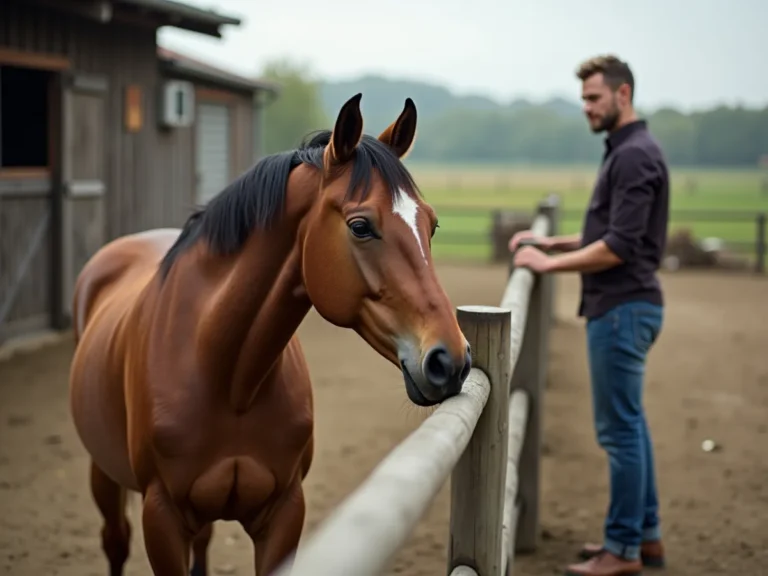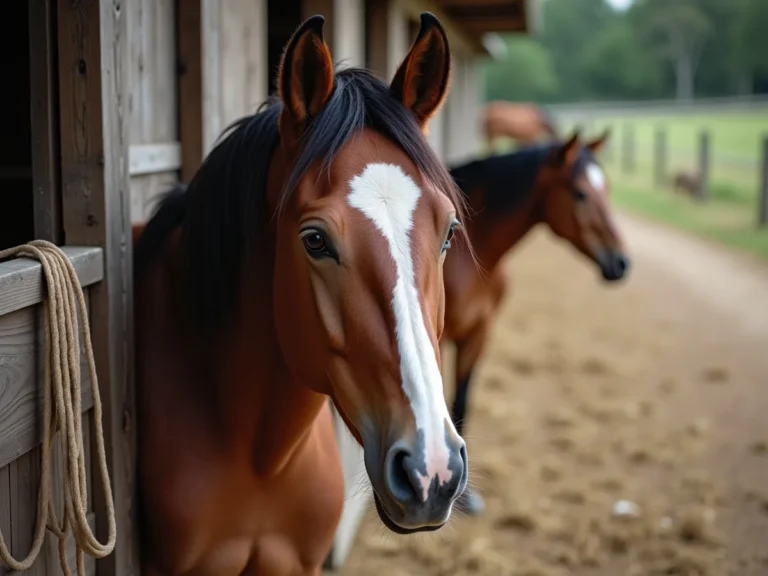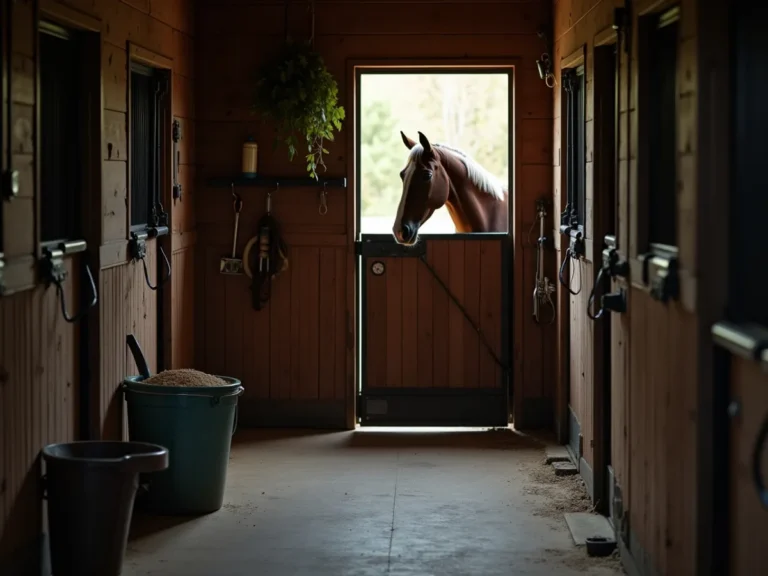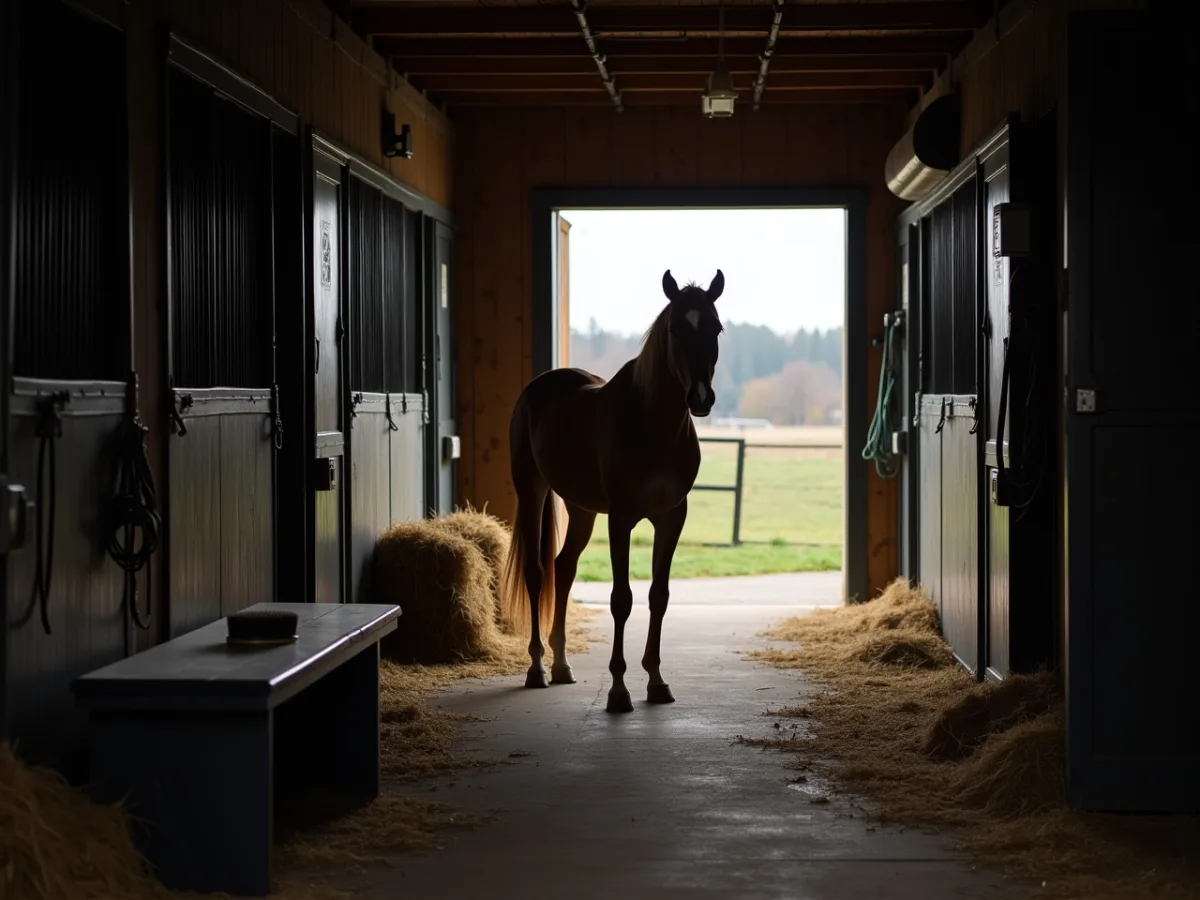
Some horses go quiet around one person and stay more animated around another. They may lower their head, soften their eyes, and stand with a loose body when a familiar handler approaches, then become watchful or stiff with someone else. That difference is not always dramatic, and it does not always point to fear. Often, it is a small and steady response built from repeated experiences, daily routines, and the way a person carries themselves.
Calm behavior around certain people can look simple from the outside, but it usually reflects a layered relationship. A horse notices tone, timing, movement, pressure, and predictability. When those things feel familiar, the horse often settles faster. When they feel unclear or inconsistent, the same horse may stay more guarded even if nothing “bad” is happening.
That is why the same horse can seem relaxed with a groom, cautious with a new rider, and completely at ease with one particular owner. The behavior is not random. It is part of how horses sort safety, comfort, and trust in a world built around subtle signals.
Why Calm Behavior Often Centers on Specific People
Horses do not usually decide, in a human sense, that one person is “better” than another. They respond to patterns. A person who moves predictably, uses clear pressure, and respects space may become easy for the horse to read. Another person may be kind but inconsistent, and that inconsistency can keep the horse slightly on alert.
Comfort also builds through repetition. If a horse is led, groomed, fed, and handled by the same person in a steady way, that person becomes part of the horse’s mental map of normal life. Calmness can then show up quickly because the horse expects routine instead of surprise.
In many barns, this is why a horse appears notably softer with one handler. The person may not be doing anything especially dramatic. They may simply be reliable, quiet, and easy to understand from the horse’s point of view.
What Calm Looks Like in Everyday Handling
Calm behavior can be easy to miss if you only look for obvious signs. It is often a collection of small changes rather than one clear gesture. A horse might stand square instead of shifting weight constantly, blink more slowly, or let the neck stretch forward without keeping the muscles tight.
In handling, calmness may appear as willingness to approach, less resistance to haltering, or a softer response to grooming and tack. The horse may still stay attentive, but the attention feels open rather than defensive. Ears may move toward the person and then relax back into a neutral position.
Sometimes the clearest clue is what the horse stops doing. Less pawing. Less head tossing. Fewer quick checks of the surroundings. The body simply looks more settled.
Common Signs People Notice First
- Lowered or relaxed head carriage
- Loose jaw and softened muzzle
- Slow blinking or a drowsy expression
- Even breathing
- Quiet stance with less shifting
- Ears that rest forward or to the side without tension
- Willingness to stay near the person
These signs matter most when they repeat. One relaxed moment does not say much. A steady pattern does.
How Calm Behavior Appears in Riding Situations
Under saddle, the difference between a calming influence and a less familiar one can become even clearer. Some horses become easier to mount, walk forward more freely, and accept contact with less bracing when the rider is someone they know well. Their backs may swing more, and transitions may feel smoother because the horse is not spending extra energy watching for unclear cues.
With another rider, the same horse might still behave correctly, but the effort shows more plainly. The horse may hold tension in the neck, hesitate before moving off, or take longer to settle into rhythm. This does not always mean the rider is doing something wrong. It may mean the horse has not yet built enough confidence in that person’s timing and feel.
Riding also adds more pressure than ground handling, so small differences become easier to see. A steady seat, consistent hands, and quiet leg aids often help a horse remain calm. Sudden changes, even mild ones, can create uncertainty.
When a horse stays calmer with one rider, the key question is not “Why does this horse prefer that person?” but “What does that person make easier for the horse to understand?”
Why the Body Settles Around Certain People
Calm behavior is often linked to a horse’s internal state, even if that state cannot be measured directly from the outside. A horse that feels safe does not need to spend as much energy scanning, bracing, or preparing to move away. The body becomes more efficient. Muscles soften, breathing deepens, and movement looks less fragmented.
That settling can come from trust, but it can also come from clarity. Some horses do not become calm because they are especially affectionate. They become calm because the person is easy to predict. The horse knows what will happen next.
That distinction matters. A horse may not be unusually bonded to someone and still be more relaxed with them. Predictability alone can make a big difference.
Possible Internal Reasons Behind the Response
- Reduced tension because the horse expects familiar handling
- Lower alertness when the environment feels controlled
- Less effort spent on evaluating human movement
- Positive memory from repeated low-stress experiences
- Natural preference for a particular pace or energy level
These reasons often overlap. Calm behavior rarely has only one cause.
How the Environment Shapes the Reaction
The same horse can appear calm with one person in a quiet barn aisle and much less settled with that same person in a noisy place. Environment changes how much information the horse must process. A loud feed room, a busy arena, strong wind, or unfamiliar footing can all raise the horse’s general alertness.
When the surroundings are busy, a horse may lean more heavily on the person who feels most familiar. That person becomes a kind of anchor. The horse may stand closer, track that handler’s movement, or relax more quickly when they are present.
Routine also matters. Horses often feel calmer when the day follows a familiar order. If one person usually turns the horse out, feeds after work, or handles grooming in the same sequence, the horse may link that person with the predictable flow of the day.
Settings Where Calm Around One Person Often Shows Up
- Stable and grooming time
- Leading through busy barn traffic
- Pasture catch time
- Warm-up before riding
- Trailer loading and transport
- Vet or farrier visits
In each setting, the person who helps the horse feel organized and understood may draw a noticeably calmer response.
When Calmness Is Real Comfort and When It Is Caution
Not every quiet horse is a relaxed horse. Some horses become very still when they are unsure. The difference is in the details. A truly calm horse usually shows a softer body, more fluid breathing, and fewer signs of tension around the eyes, mouth, and neck. A cautious horse may stand still but remain tight.
Stillness with tension can look like pinned focus, shallow breathing, a fixed gaze, or a body that seems ready to spring. The horse may avoid movement, not because it feels safe, but because it is waiting. That is an important distinction for owners who want to read behavior accurately.
Quiet does not always mean relaxed. Look for softness in the body, not silence alone.
People often miss this because a horse that is not moving can seem peaceful at a glance. Watching the whole body gives a clearer picture than relying on one behavior.
How Horses Show Preference Without Acting Obvious
Horses rarely show preference the same way people do. They are more likely to signal comfort through small choices. They may follow one person without being asked, turn an ear toward them, or remain nearby when they would normally drift away. Some horses lower the head when that person enters the stall. Others stop fidgeting faster after being touched by a trusted handler.
Preference can also appear in transitions. A horse may stand better for hoof care with one person, load more smoothly with another, or settle faster after a stressful event when a particular familiar person takes over. The pattern may seem minor until it is repeated across many days.
These reactions are useful because they reveal where the horse feels least guarded. That does not always mean the horse is attached in a deep emotional way. It can simply mean the horse trusts the person’s actions.
What Calm Behavior May Signal About the Horse’s State
Calm around certain people often suggests the horse is conserving energy. That can be a sign of comfort, but it can also reflect familiarity with the human’s rhythm. In either case, the horse is not spending as much effort on self-protection.
Sometimes the calmness is part of a broader personality. Some horses are naturally more even-tempered and less reactive overall. In those horses, the effect may be subtle. The horse still shows a slight preference for particular people, but the difference is more about degree than about dramatic change.
In more sensitive horses, the pattern may be easier to see. A sensitive horse can be beautifully calm with the right person and noticeably watchful with the wrong one. That sensitivity is not a flaw. It simply means the horse responds strongly to human communication.
How Calm, Neutral, and Stress-Related Forms Differ
| Type of response | What it may look like | What it may mean |
|---|---|---|
| Calm | Soft eyes, relaxed body, steady breathing | Comfort, predictability, or trust |
| Neutral | Quiet but alert, minimal reaction | Uncertain yet not distressed |
| Stress-related | Tension, fixed attention, shallow breathing | Uncertainty, worry, or guardedness |
This table is useful because the same quiet horse can fit more than one category. The body language gives the answer.
How People Influence Calmness Without Realizing It
Many handlers think calmness comes only from “good horsemanship,” but everyday habits matter just as much. A person who walks directly and steadily is easier for a horse to interpret than someone who changes speed and direction often. Someone who pauses before entering the stall gives the horse time to process. Someone who reaches with certainty, not hesitation, can also help the horse stay settled.
Voice matters too. Not in the sense of speaking constantly, but in the quality of sound. Some horses relax around a low, even tone. Others respond best to a person who is quiet and economical with words. The horse does not care about style in a human sense. It cares about whether the signals make sense.
Touch can reinforce that feeling. A handler who brushes in a steady rhythm or uses consistent pressure during leading may become part of a calming pattern. The horse remembers how it feels to be handled by that person.
When the Difference Becomes More Noticeable
The contrast between people often shows up most clearly during mildly stressful moments. A horse may seem similar in easy conditions but show a sharper preference when the situation changes. New locations, time pressure, trailer loading, veterinary care, and first rides after a break often reveal which person the horse finds most grounding.
In these moments, the horse has less tolerance for mixed signals. A person who remains organized and unhurried may help the horse stay within a manageable range of alertness. Another person may not be as effective simply because the horse has less history with them.
This is also why calm behavior can change over time. If a new groom or rider consistently offers clear, steady handling, the horse may begin to relax around them too. The pattern is not fixed forever. It evolves with experience.
Long-Term Patterns and What They Usually Mean
Over weeks and months, a horse’s calm response around certain people often becomes a reliable pattern. The horse may consistently soften for one handler and remain more businesslike with another. That consistency is useful because it tells you the horse is tracking the human relationship, not just reacting to the moment.
Long-term observation can also reveal whether the calmness is broad or situation-specific. A horse may be comfortable with one person only during routine work, but not during hoof care or transport. Another horse may relax with one person almost everywhere. Those differences help explain what the horse truly trusts.
Patterns are especially important when a horse’s behavior changes unexpectedly. If a horse that was once soft with a certain person becomes guarded, it is worth paying attention to what changed in the routine, the environment, or the person’s handling style. Horses often notice the details before humans do.
Practical Ways Owners Interpret the Behavior
Owners usually want to know whether a calm response means affection, respect, habit, or plain comfort. The answer may be some of each. Horses are practical animals. They build relationships through repeated experiences, not abstract ideas.
If a horse calms down around one person, the safest interpretation is that the person feels understandable to the horse. That understanding may come from softer body language, better timing, fewer sudden decisions, or a strong history of safe interactions. It may also come from shared routine, which horses value more than people sometimes realize.
Instead of asking whether the horse “likes” someone in a human way, it is more useful to ask what the horse’s body is saying. Is the horse looser? Is it easier to approach? Does the horse recover faster from excitement? Those details tell a clearer story than assumptions about personality.
A horse’s calm response to one person is often a record of many small experiences, not a single big moment.
Quiet Comfort in Daily Life
In the barn, the field, or the arena, calm behavior around certain people often appears as a quiet kind of trust. It does not need to be dramatic. A horse that stands a little easier, follows a little more willingly, or releases tension a little faster is already showing important information about how it experiences the human beside it.
That information becomes most meaningful when the same pattern appears across ordinary days. Morning feeding, tacking up, walking out to the paddock, and handling after work can all reveal the same preference in smaller forms. The horse is not making a speech. It is showing a habit of ease.
When that ease is present, it usually feels less like obedience and more like shared understanding. The horse stays open. The person stays consistent. And the calm behavior becomes part of the everyday language between them.