A horse that pushes with the head can be easy to notice and surprisingly hard to interpret. The gesture may look simple at first: a muzzle pressing into a shoulder, chest, gate, arm, or another horse’s body. But the meaning behind it is not always simple at all.
Sometimes the movement is social. Sometimes it is curious. In other moments it is a way of asking for space, attention, feed, or reassurance. The same basic action can show up in a calm field, a busy barn aisle, during tacking up, or in the middle of grooming, and each setting can change the message.
That is why this behavior deserves a closer look. A horse does not push with the head for only one reason. Body language, context, routine, and the horse’s relationship with the surroundings all matter. When those pieces are read together, the behavior becomes much easier to understand.
Why Horses Use Head Pushing at All
Head pushing is rooted in physical contact. Horses are tactile animals, and contact is part of how they test the world, interact with herd mates, and respond to people. A nudge from the head can be soft and polite, or it can become firm and insistent depending on the situation.
In a herd, a horse may use the head to communicate rank, to invite movement, or to maintain personal space. The same idea can carry over into domestic life. A horse may push the head against a handler because it has learned that contact changes what happens next. A scratch might follow. A treat might appear. A door might open. Over time, the horse connects the push with a result.
Head pushing is not a single message. It is a behavior shaped by habit, pressure, comfort, emotion, and learned expectation.
That is why it is helpful to watch what comes before and after the push. The horse may be asking. It may be resisting. It may simply be trying to stay close. The motion itself matters, but the context gives it meaning.
How the Behavior Appears in Real Handling Situations
During grooming
Some horses push their heads into the groomer’s arm, shoulder, or chest while being brushed. This may look affectionate, and often it is. A horse that leans in with relaxed eyes and a loose lower lip may be seeking comfort or enjoying contact. The behavior can be gentle and steady rather than urgent.
But grooming can also bring out impatience. If a horse nudges hard while ears flick back and forth, the behavior may signal irritation or a desire for the session to end. The push is still physical contact, but the emotion behind it has changed.
At feeding time
Head pushing often becomes more obvious near feed. A horse may press into a person’s shoulder, chest, or hands before the bucket is down. This can be a sign of anticipation. It can also be a learned habit if the horse has discovered that pressure speeds up the feeding routine.
When feed is involved, the same action can become more forceful. A horse may crowd, crowd again, and keep pushing until the person moves. In that case, the behavior is less about warmth or curiosity and more about claiming access.
At the gate or stall door
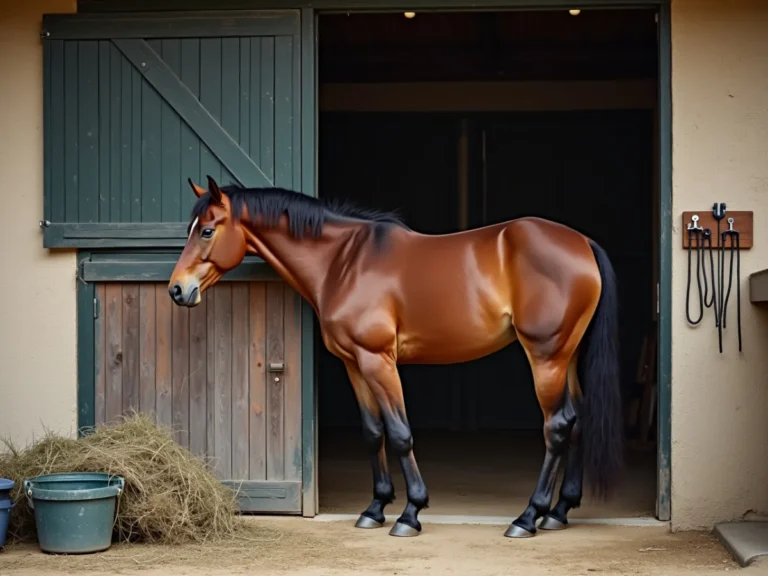
Some horses push the head through openings, against bars, or into the handler’s body when waiting to be led out. The motion may come from excitement, impatience, or a strong attachment to movement and routine. A horse that feels stuck often uses the head first.
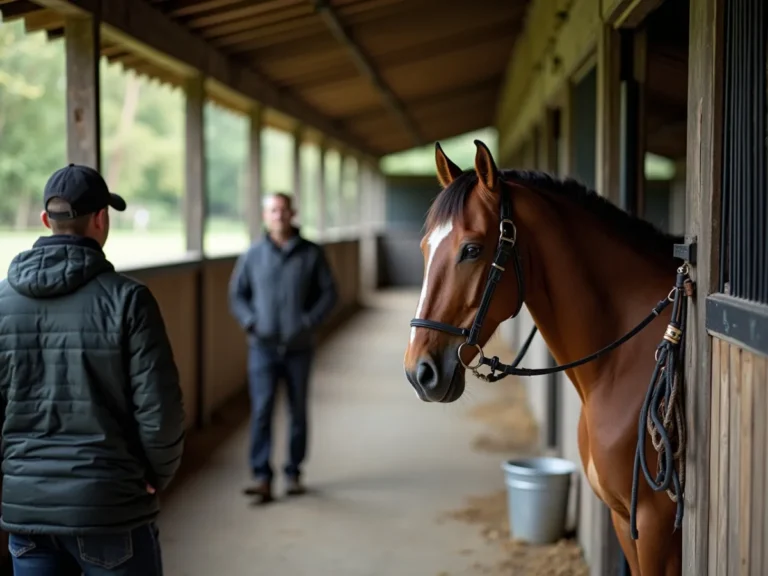
At the stall door, it is common to see a horse rest the head against the frame or bump it lightly when asking for attention. That can be a calm invitation. It can also become a persistent habit if people respond every time with feed, petting, or immediate turnout.
When meeting other horses
In pasture or turnout, head pushing may appear as a social test. One horse may extend the muzzle, press into the neck or shoulder of another horse, and then withdraw. This can be a friendly greeting, a rank check, or a request to move aside.
The reaction of the second horse matters. If the other horse steps away without tension, the push may have been routine social communication. If the other horse pins the ears, swings the hindquarters, or snaps back, the push was likely more intrusive than welcome.
Possible Internal Reasons Behind the Reaction
Some head pushing is emotional. Some is practical. Often it is both. A horse that feels safe may use the head more freely, while a worried horse may use the head in a tighter, more defensive way.
Curiosity is one common reason. Horses explore with the face and muzzle. A new person, an unfamiliar object, a pocket, a sleeve, or even a grooming kit can draw the horse in. The push may not be about dominance at all. It may simply be investigation.
Comfort-seeking is another. A horse that likes human contact may rest the head against a person during quiet moments, especially if the relationship is familiar and relaxed. The head push in that setting can look almost like leaning. The body is soft, the breathing is even, and there is no urgency.
On the other hand, frustration can make the same movement sharper. A horse that wants food, turnout, movement, or relief from a tack pressure may shove rather than nudge. The force level changes the message, as does the rest of the body.
Soft contact usually looks different from demanding contact. The ears, eyes, neck, and feet often tell the real story.
Subtle Signals That Travel With the Push
Head pushing rarely happens alone. The muzzle may be the first thing people notice, but the rest of the body usually gives away the tone.
- Ears: relaxed, moving ears often point to curiosity or comfort; pinned ears suggest irritation or a warning.
- Eyes: soft eyes usually fit a calm push; a tight, focused look can mean tension.
- Neck: a loose neck often accompanies friendly contact, while a stiff neck can show pushiness or resistance.
- Feet: a horse that stays planted may be simply leaning; a horse that steps in repeatedly is more intent and may be crowding space.
- Mouth: licking, chewing, or a relaxed jaw may show release, while a tight mouth often appears with stress or impatience.
These details matter because the same muzzle pressure can mean different things in different emotional states. A horse that gently rests its head on a person’s arm after work is not making the same statement as a horse that drives its head into the handler while searching for grain.
How People Often Read the Behavior Wrong
Head pushing is often labeled as affection right away. Sometimes that is accurate. Horses do form preferences, and they can seek contact with familiar people. But not every push is a sign of liking. Some are learned habits. Some are boundary tests. Some are pressure responses.
A horse that pushes into a person’s body when led may be saying, “Move,” or “I want to go there first,” rather than “I trust you.” A horse that puts the head into a pocket may not be showing affection so much as expecting feed. The behavior can still be harmless, but its meaning is different.
People also misread head pushing as stubbornness alone. That view can be too narrow. Stubborn-looking behavior often has a practical side. The horse may be seeking balance, relief, food, social contact, or certainty. The push is the visible part. The cause may lie elsewhere.
How Environment and Surroundings Shape the Behavior
Noise, movement, and crowded spaces
A busy barn aisle can change a horse’s behavior quickly. More movement, more voices, and more activity often make horses more alert. In that setting, head pushing may become a way to anchor attention or create a bit of certainty. The horse presses into something familiar because the surroundings feel active or unpredictable.
In a quieter area, the same horse may behave very differently. A calm field or empty grooming space often reduces the need for pushing. Less outside pressure can mean less physical crowding.
Routine and expectation
Horses are strong pattern learners. If head pushing has worked before, the horse may repeat it. A horse that gets walked out after nudging the handler may keep nudging next time. A horse that gets a treat after bumping the pocket may make the same choice again.
This is where routine matters. When the same response follows the behavior, the behavior becomes more likely. That does not make it malicious. It makes it practiced.
Companionship and separation
Some horses push more when separated from herd mates or moved into unfamiliar spaces. The head may press against a wall, gate, person, or another horse as the horse tries to steady itself. In those moments, the behavior can be a sign of discomfort rather than confidence.
Other horses push more when a favorite companion is near. The action may look social, even playful, especially if the horse is loose through the body and not trying to dominate the space.
Different Forms of Head Pushing
| Form | Common setting | Likely meaning |
|---|---|---|
| Soft nudge | Quiet handling, greeting, grooming | Curiosity, friendliness, mild request |
| Leaning push | Resting, waiting, calming moments | Comfort, relaxation, seeking contact |
| Repeated push | Feeding, turnout, crowded spaces | Impatience, demand, learned habit |
| Firm crowding | Leading, stall doors, gate areas | Boundary testing, insistence, pressure |
| Startled push | New environment, strange object, noisy area | Unease, uncertainty, self-protection |
These forms can overlap, and horses do not always stay in one category. A calm horse can become pushy around grain. A pushy horse can become gentle once the environment settles. The behavior is flexible, which is why timing and context matter so much.
What the Behavior May Signal About the Horse’s State
Head pushing can show interest. It can show closeness. It can also show pressure. The important question is not just what the horse is doing, but what state the horse is in while doing it.
A relaxed horse that nudges once and then steps away is usually communicating differently from a horse that keeps driving forward without pause. The first may be exploring a relationship. The second may be trying to control it.
When the push comes with a steady body, even breathing, and no signs of alarm, the behavior is often low-risk and socially normal. When it comes with tension, rushing, or a brace in the neck, the message is less peaceful. That does not always mean danger, but it does mean the horse is not at ease.
One behavior can sit on several emotional layers. The safest reading comes from the whole horse, not the muzzle alone.
How This Behavior Changes in Young or Inexperienced Horses
Young horses often use their heads more than mature horses do. They are still learning where their bodies end, how much pressure is acceptable, and how humans respond. A youngster may push out of curiosity, clumsiness, or excitement without understanding the social result.
In inexperienced horses, head pushing can also be a sign of poor manners that were never corrected in a clear, consistent way. If a foal or young horse learns early that head contact brings attention, it may keep trying that approach as an adult.
Still, not every young horse that pushes is being rude. Some are simply exploring the human world with the tools they have. The difference shows up in repetition, force, and response to boundaries. A polite youngster often learns quickly. A more persistent one may need time and consistency.
How It Can Look in Mature Horses
Adult horses often make their head contact more deliberately. A mature horse may know exactly when a nudge will get a reaction. That knowledge can make the behavior feel more intentional, even if the horse is not being “dominant” in a dramatic sense.
Older horses may also use head pushing as part of established relationships. A trusted horse may lean into a familiar person the same way every day. The behavior becomes part of the routine, almost a signature.
But mature horses can also become more set in their habits. If pushing has always opened a gate, prompted a scratch, or rushed a feeding moment, the adult horse may keep doing it because it works. In that case, the behavior is less about age and more about history.
When the Behavior Becomes More Noticeable
Head pushing often stands out during transitions. Moving from pasture to stall, from stall to arena, from rest to work, or from work back to feed can all trigger it. These are moments when the horse is asked to shift state, and some horses use the head to help manage that shift.
It can also become more obvious during changes in the horse’s life. A different turnout group, a new feeding schedule, altered exercise, or a change in handler can all increase the behavior temporarily. The horse is adjusting, and the head is one way that adjustment shows up.
If the behavior increases suddenly, the change is worth noticing. A horse that begins pushing more after a schedule shift may be reacting to stress, anticipation, boredom, or a new learned pattern. The timing often tells more than the push itself.
Long-Term Patterns and Consistency
Repeated head pushing is easier to understand when viewed over time. A horse that only does it before meals is probably responding to expectation. A horse that does it only with certain people may be reacting to different handling habits. A horse that pushes more in one area of the barn than another may be responding to context.
Consistency matters because it separates a passing mood from a stable habit. If the behavior appears in the same place, at the same time, with the same outcome, it is likely well learned. If it comes and goes with no clear pattern, emotion or environment may be driving it more strongly.
That long view also helps prevent overreaction. A single nudge is not the same as a repeated pattern of crowding. A one-time lean is not the same as a horse that drives into space every day. The horse’s history gives the behavior shape.
Practical Reading of the Behavior in Daily Life
When a horse pushes with the head, it helps to pause and read the full picture. The best clue is often the combination of posture, timing, and consequence. A horse asking for a scratch behaves differently from a horse demanding access to feed.
It can be useful to ask a few simple questions:
- Was the horse relaxed or tense before the push?
- Did the behavior happen once or repeat several times?
- Did it occur around food, attention, or movement?
- Did the horse back off when ignored, or keep crowding?
- Did the rest of the body look soft or braced?
These questions do not turn the behavior into a formula, but they help separate friendly contact from pressure. Over time, the pattern becomes clearer.
Conclusion
Head pushing can be gentle, social, impatient, curious, or defensive. It can appear in the barn aisle, at the gate, during grooming, around feed, or in the pasture, and the meaning can shift with each setting. The muzzle may deliver the touch, but the rest of the horse decides the message.
When the body is loose and the contact is brief, the behavior often sits in the range of social exploration or comfort-seeking. When the horse crowds, repeats, or braces, the same movement may be carrying pressure, frustration, or a practiced habit. The difference is usually there in the details.
Watching head pushing as part of a larger pattern makes it easier to understand what the horse is trying to say in that moment. The behavior is not random, and it is rarely just one thing. It is a small motion with a lot of information built into it.