Horses notice people long before many people realize they have been noticed. A shift in the doorway, a familiar voice in the barn aisle, a hand reaching for the halter, or even the quiet sound of footsteps can change the way a horse stands, breathes, or looks around. Their responses are often subtle, but they are rarely random.
Some horses lean toward human presence with visible interest. Others become still, watchful, or cautious. The same horse may greet one person eagerly and remain guarded with another. These reactions are not just about personality. They are shaped by memory, environment, routine, body language, and how safe the horse feels in that moment.
Understanding how horses respond to human presence makes daily handling easier to read. It also helps explain why a horse that seems calm in one setting may behave differently in another. The signs are usually small at first: an ear flick, a soft step forward, a tightened neck, a lowered head, or a pause before moving closer.
The first reactions horses show when people are near
Horses often respond to a person before any direct interaction begins. They may lift their head, angle an ear toward the sound, or shift their weight to get a better view. In a pasture, a horse may continue grazing but keep one eye trained on the person approaching. In a stall, the same horse might step toward the door or back away depending on past experience and current mood.
These early reactions usually fall into a few common patterns. Some horses show curiosity right away. Others appear neutral, as if they are registering the person without committing to a response. A few become guarded, especially if the approach feels sudden or if they have reason to expect discomfort.
Not every horse that steps away is rejecting people. Sometimes the horse is simply deciding how much space feels safe before choosing the next move.
A horse’s first reaction also depends on whether the person is known or unknown. Familiar handlers often trigger softer, more predictable responses. An unfamiliar person may create alertness, even in a generally easygoing horse. That alertness is part of the horse’s natural tendency to assess before engaging.
Why horses react so strongly to human presence
Horses are prey animals, and that shapes nearly everything about how they respond to people. Their instincts favor awareness, quick evaluation, and readiness to move. Human presence can feel neutral, comforting, or uncertain, but the horse is always processing it through a system built for survival.
That does not mean horses are always fearful. Many are deeply accustomed to people and read them with remarkable comfort. Still, even a relaxed horse tends to stay aware of where a person is standing, how fast they move, and whether their gestures look predictable. Horses are constantly gathering information.
Their sensitivity is part of the reason they can seem emotionally open in some moments and distant in others. A horse may enjoy grooming one day and seem indifferent the next. Often the difference is not dramatic. A change in schedule, weather, noise, handling tone, or body tension can alter the response more than people expect.
How the response appears in daily handling
At the stall door
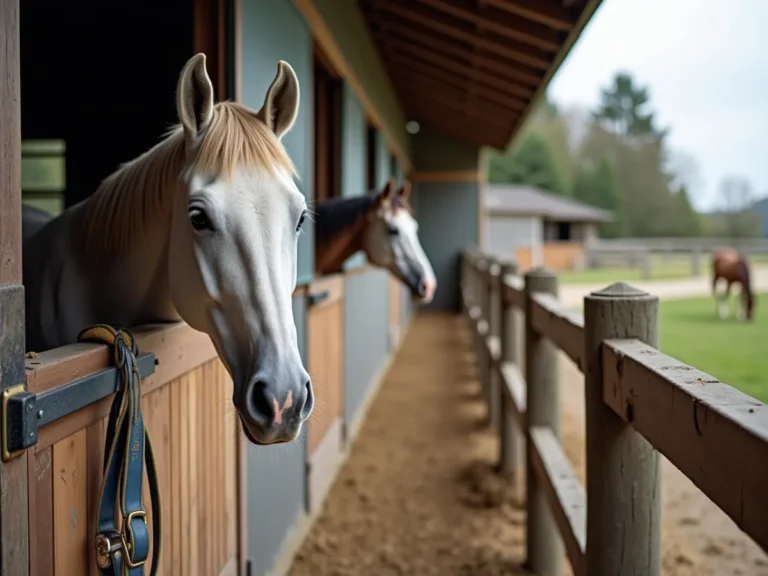
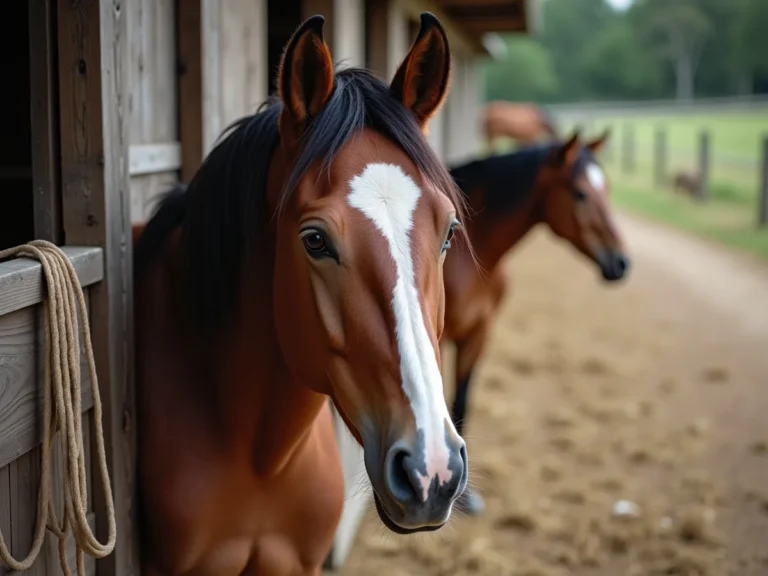
Many horses show their clearest reaction when a person approaches the stall. Some step forward immediately, expecting attention, feed, or turnout. Others pin their ears briefly, turn away, or remain still until they recognize what is happening. The stall door is a small space, but for a horse it can feel like a meaningful boundary.
A horse that consistently meets a person at the door is usually showing trust, routine comfort, or anticipation of something pleasant. A horse that hangs back may not be difficult. It may simply prefer to watch first and respond second. The same behavior can look very different depending on the horse’s history.
During grooming
Grooming often reveals the small ways a horse feels about human contact. A relaxed horse may lower the head, soften the eyes, or rest a hind leg. Another may shift away from certain touch points, especially along the belly, girth area, back, or face. These responses can reflect sensitivity, a bad experience, soreness, or uncertainty about what will happen next.
Horses that enjoy grooming often show small signs of acceptance. They may lean into the brush, lip quietly, or stand with an easy posture. A horse that keeps moving the body away, even slightly, is asking for more space or gentler pressure. Reading that request early matters more than waiting for a stronger reaction.
When being caught in the field
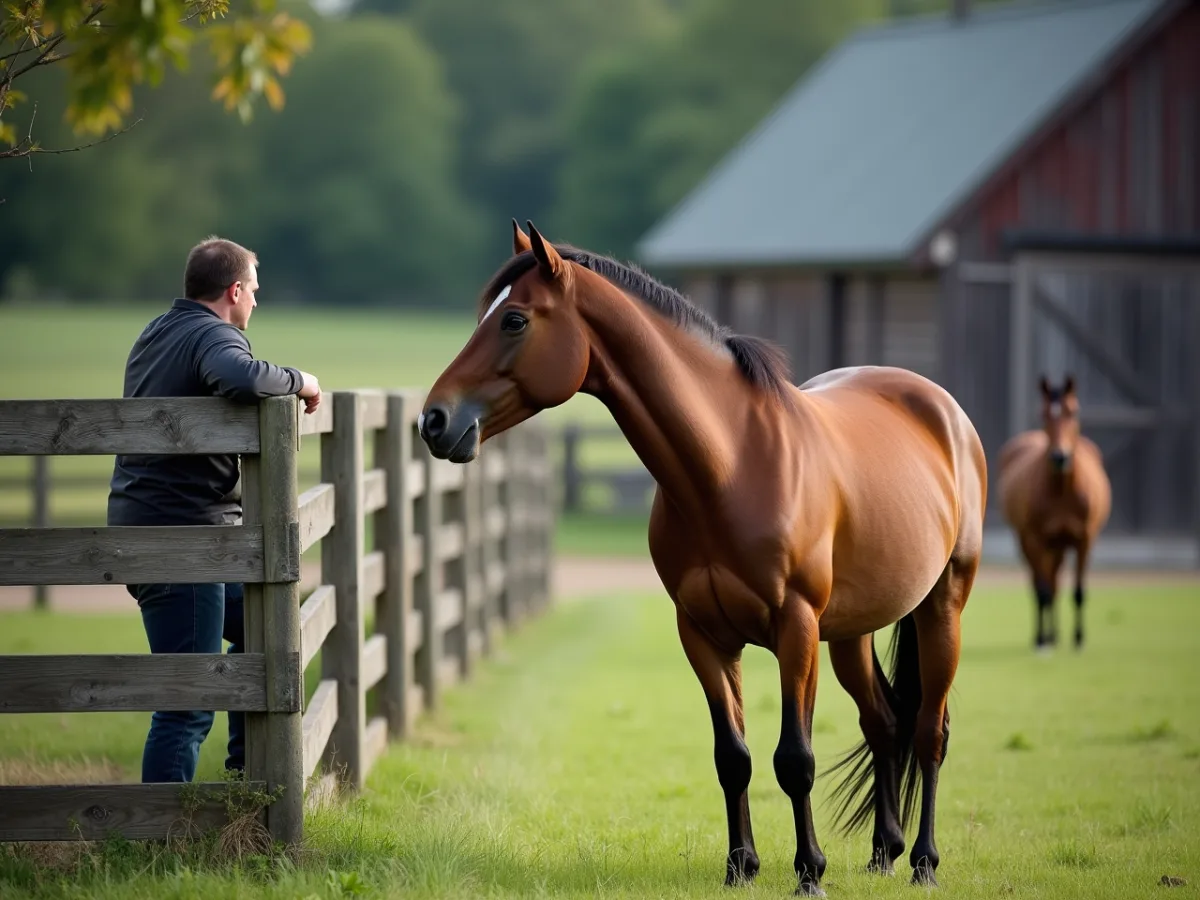
In pasture settings, human presence can have a different meaning. Some horses approach because they associate people with work, feed, or company. Others walk away because they want to keep control over distance. That does not automatically indicate disrespect or resistance. It often reflects how the horse feels about the next part of the routine.
A horse that is easy to catch one day and difficult the next may be responding to context rather than personality alone. Weather, herd dynamics, fatigue, discomfort, and prior handling all matter. A horse can learn to read the human’s intentions just as humans learn to read the horse’s mood.
Under saddle or in work
Mounted work can make horse-human interaction even more complex. A horse may appear settled on the ground but become more alert once tack is added. In the arena or on the trail, the horse continues to respond to the rider’s balance, timing, and pressure. Human presence is no longer just nearby; it is part of the horse’s movement and decision-making.
Some horses become more attentive with a skilled, quiet rider. Others grow tense if they feel trapped, rushed, or physically uncomfortable. A horse that tosses the head, shortens the stride, or resists forward movement may be responding to confusion, pain, or nervousness. The behavior is often clearer when looked at in relation to the whole session, not just one moment.
Subtle signals that reveal the horse’s state
The biggest clue is often not the obvious reaction but the smaller details that come before it. Horses speak through posture, ears, eyes, mouth, feet, and breathing. When a person is near, these details can change quickly.
Common calm signals
- Soft, even breathing
- Head held at a natural height
- Ears moving gently between sounds and the person
- Quiet eyes with no hard stare
- Weight resting comfortably on one leg
- Chewing, licking, or relaxed lower lip movement
Common alert or uneasy signals
- Raised head and tightened neck
- Short, shallow breathing
- Frozen posture with little movement
- One ear locked forward and the other back
- Tail held tight or swishing sharply
- Repeated stepping away, especially from one side or one type of touch
These signals do not always point to the same cause. A horse may be alert because it is curious, because it is uncomfortable, or because something nearby has caught its attention. The context around the behavior is what gives it meaning.
A calm-looking horse is not always relaxed, and an active horse is not always upset. The difference often sits in the details: softness versus stiffness, steady movement versus bracing, curiosity versus avoidance.
What familiar people change in the horse’s response
Horses often respond differently to familiar handlers than to strangers because experience creates expectation. A person who feeds, cleans, leads, and works with the horse in a steady way becomes part of the horse’s routine. The horse begins to predict what comes next. That prediction can create comfort, impatience, excitement, or caution.
Some horses become more responsive and easier to handle with people they know well. They stand quietly, follow pressure lightly, and show little stress. Others become more demanding, especially around turnout or feeding times. They may nudge, crowd, or call out. Those behaviors are still responses to human presence, just not always the kind people expect.
When a horse behaves differently with one person than another, that difference often reflects tone, consistency, and body language. Horses notice the speed of movement, the tension in the shoulders, and the clarity of the hands. They may not understand the exact reason, but they absolutely respond to the pattern.
How environment shapes the reaction
A horse’s response to a person is rarely isolated from the environment. The same horse may seem open and easy in a quiet barn but guarded in a busy showground. Wind, cold, machinery, barking dogs, other horses, and unpredictable activity all increase alertness. Human presence becomes just one more piece of the picture.
In familiar surroundings, many horses rely on routine to guide their behavior. They know when feeding happens, when turnout starts, and when handling usually begins. When a person arrives outside that pattern, the horse may react differently. That does not necessarily signal a problem. It may simply mean the horse is noticing a change.
New places often magnify responses. Transport trailers, clinics, show barns, and arenas can make even easygoing horses more watchful. The horse may stay close to a trusted person, hesitate before moving, or scan the surroundings before settling. Human presence can either stabilize that response or add more pressure depending on how the person behaves.
The emotional side of human interaction
Horses do not respond to people in a single fixed way because their emotional state shifts from moment to moment. A horse that feels secure may approach with softness. A horse that feels uncertain may still approach, but more slowly and with more checking behavior. A horse that feels overwhelmed may choose distance over contact.
These emotional states often show up as changes in willingness. Willingness to stand, to follow, to accept touch, or to remain near a person all tell part of the story. None of these signs should be judged alone. A horse that hesitates before a new handler reaches for the halter may simply be processing. A horse that relaxes after a moment may have just needed time.
People sometimes expect a horse to respond consistently to human presence, but horses are responsive to details that humans easily miss. Fatigue from turnout, a new horse in the next stall, a sore back, poor weather, or a disrupted routine can alter behavior. The emotional tone is often practical rather than dramatic.
Different forms of response in calm and reactive horses
Some horses are naturally quiet about human presence. They move little, keep their expression neutral, and appear easy to read. Others are more demonstrative. They come forward quickly, call out, shift their feet, or show visible anticipation. Both types can be healthy and normal.
The key difference is whether the behavior stays soft or becomes defensive. A calm horse may watch a person closely without backing away. A reactive horse may brace, rush, startle, or keep changing position to maintain control of space. That difference matters more than whether the horse is quiet or energetic.
Soft response patterns
- Approaches at a steady pace
- Checks the person and then relaxes
- Accepts touch without stiffness
- Maintains a loose lower neck and easy feet
- Shows interest without crowding
Stronger response patterns
- Pulls away before contact
- Swings the hindquarters or shoulders to change distance
- Raises the head and locks the body
- Becomes hard to halter or lead
- Shows repeated tension in the same situation
A stronger response does not always mean fear alone. Sometimes it reflects past handling that felt unpleasant, a strong preference for personal space, or a moment of discomfort. The horse is communicating something either way.
Mixed signals and why they happen
Many horses give mixed signals around people. A horse may walk toward a person but keep the head high. It may nuzzle for attention and then step away the moment a hand moves. It may stand quietly, then suddenly shift as if changing its mind. These moments are common and often misunderstood.
Mixed behavior usually means the horse is balancing interest with caution. That balance can change from one second to the next. A horse that wants contact but feels unsure about the approach may appear inconsistent. The inconsistency is often a sign of thought, not confusion.
In practical terms, mixed signals call for patience and observation. Rushing through them can turn mild uncertainty into stronger resistance. Giving the horse room to decide often produces a clearer response than trying to force one immediately.
What the response can signal about the horse’s condition
Because horses express themselves physically, the way they respond to people can hint at more than mood. Changes in human-related behavior sometimes reveal discomfort, stiffness, dental issues, saddle problems, or general stress. A horse that suddenly becomes less tolerant of grooming, haltering, or handling may be trying to avoid pressure on an uncomfortable area.
Behavior changes are especially meaningful when they appear in a horse that was previously steady. A horse that once welcomed grooming but now flinches away may need closer attention. A horse that becomes clingy, withdrawn, or unusually tense around people may also be signaling that something has shifted.
When a horse’s response to human presence changes quickly, the cause is worth checking before assuming it is attitude.
This is one reason long-term observation matters. Horses often reveal patterns slowly. The small differences add up. A handler who notices how the horse reacts to specific people, times of day, or types of touch can often spot problems earlier than someone focusing only on the biggest reactions.
Long-term patterns in horse-human relationships
Over time, horses tend to settle into recognizable ways of responding to people. Some become increasingly confident with steady handling. Others stay reserved but cooperative. A few remain highly sensitive throughout life, though they may learn to trust specific routines and individuals.
Experience shapes these patterns, but it does not erase instinct. Even a very well-trained horse still brings natural awareness to every interaction. That is why consistency matters so much. Horses remember how people usually behave, and they adjust their expectations accordingly.
Long-term observation also helps separate personality from circumstance. A horse that is cautious with everyone is different from a horse that only reacts in noisy places. A horse that leans into grooming because it enjoys contact is not the same as one that crowds because it is anxious and seeking reassurance. The shape of the response matters, not just the fact that a response exists.
How to read the whole picture without overthinking it
Human presence means something different to every horse, and it can mean different things to the same horse across the day. That is why the most useful approach is to read the horse as a whole. Look at the ears, the feet, the breathing, the muscle tension, and the way the horse chooses distance or contact. One sign by itself rarely tells the full story.
A horse that greets a familiar person with a soft eye and relaxed posture is showing comfort. A horse that remains still but tense may be tolerating the interaction rather than enjoying it. A horse that moves away, then returns, may be testing the situation and deciding whether trust feels possible in that moment.
Those responses are part of everyday horse life. They shape leading, grooming, feeding, riding, and quiet time in the barn. When people learn to notice them, handling becomes more respectful and more effective. The horse does not need to be perfectly predictable to be understood; it only needs to be watched with enough patience to make sense.