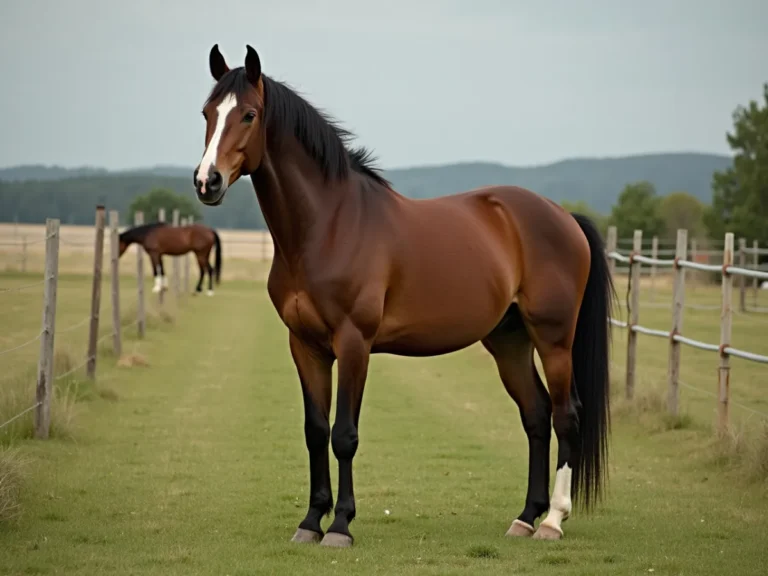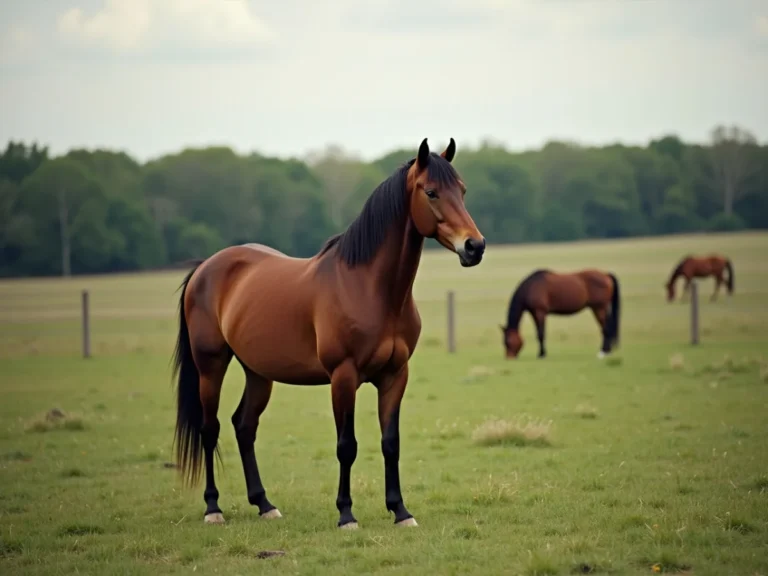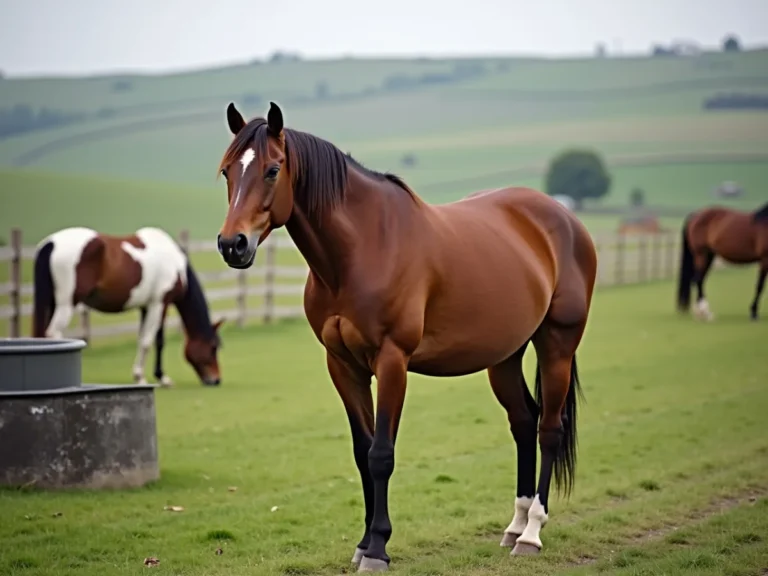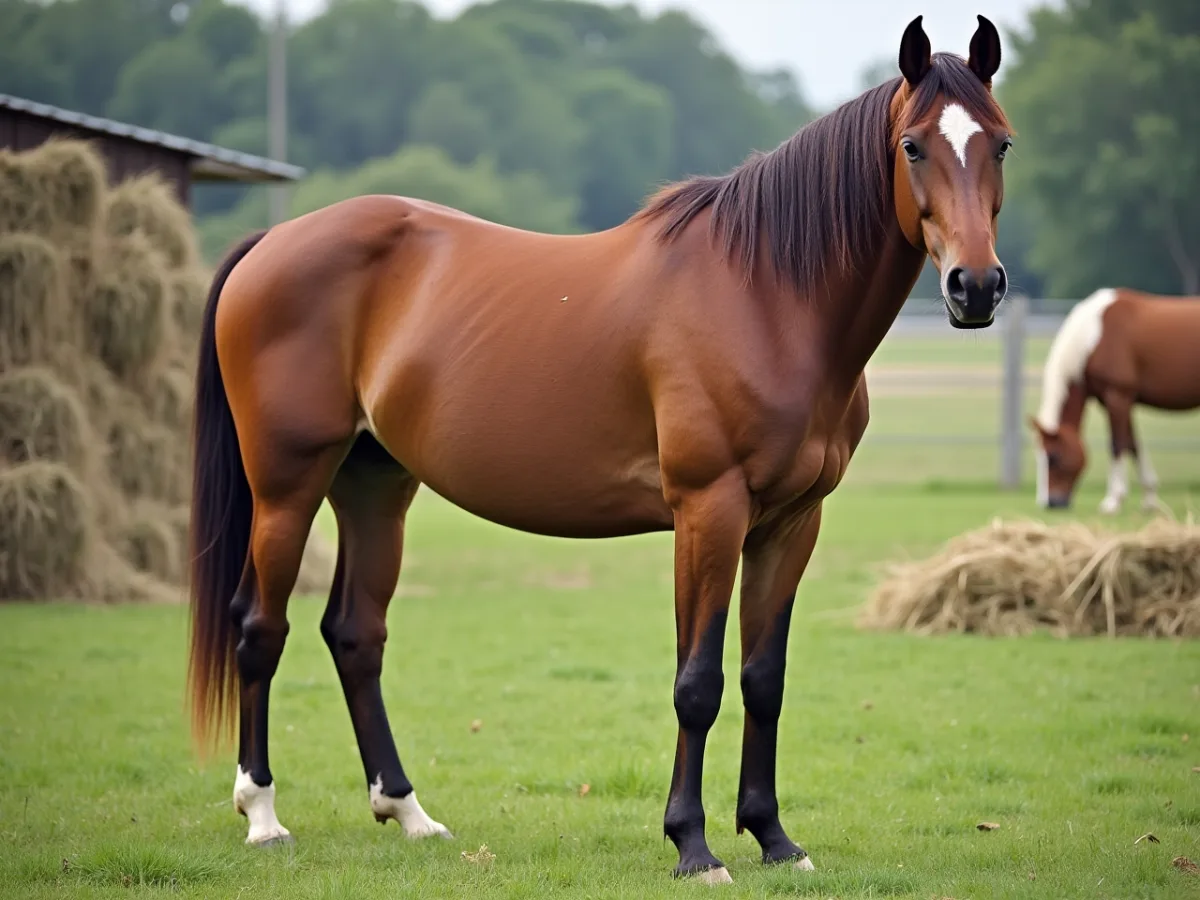
Pinned ears are one of the clearest pieces of body language a horse can show. The ears move back, sometimes flatten tightly against the neck, and the whole expression can change in an instant. People often notice the ears first because they are easy to see, but the real meaning depends on what the rest of the horse is doing at the same time.
A horse with pinned ears is not always angry, and it is not always dangerous. Sometimes the signal is brief and mild. Other times it comes with tight muscles, a swishing tail, a hard stare, or a defensive step. The same ear position can mean very different things depending on context.
Understanding what pinned ears can signal helps owners read the situation more accurately. It can point to irritation, discomfort, competition, fear, pain, or a reaction to something nearby. In daily handling, that difference matters. A horse that is warning another horse to back off is not the same as a horse that pins its ears because the saddle hurts.
What pinned ears look like in real life
In motion, pinned ears are usually easy to spot. One or both ears flatten backward, often close to the head. The horse may hold that position for a moment, flick between pinned and neutral, or keep the ears locked back while moving, being groomed, or standing in place.
Not every backward ear is a strong warning. Horses do move their ears constantly, and they may point backward while listening to something behind them. The key difference is tension. Relaxed backward ears look softer and more mobile. Pinned ears look fixed, sharp, and deliberate.
The body often gives away the tone of the message.
- Loose posture with brief ear movement may mean simple attention.
- Tight neck muscles and a raised tail often suggest irritation or arousal.
- Head tossing, stepping away, or tail lashing can indicate stronger discomfort.
- Teeth-baring, kicking, or striking means the horse is escalating.
Why horses pin their ears
Pinned ears usually communicate a negative feeling, but that feeling can come from different places. A horse may be annoyed, guarded, uncertain, or physically uncomfortable. Because horses cannot explain what is wrong, the ears often become part of a quick warning system.
One common reason is social pressure. Horses in a herd use body language to establish space. A dominant horse may pin its ears to tell another horse to move away from food, water, a resting spot, or a preferred companion. In that setting, the signal can be normal and expected.
Another common reason is discomfort. A horse that feels pain may react to touch, tack, movement, or a specific request. Ear pinning in this case is not just attitude. It can be an early sign that something hurts or feels wrong.
Stress also plays a role. A new environment, loud noise, confusing handling, or an unfamiliar horse nearby can all make a horse defensive. When the ears go back, the horse may be saying, “I do not like this,” or “I need space.”
Common situations where pinned ears appear
In the stable
Stalls and barn aisles can produce plenty of ear pinning. Horses may pin their ears at neighboring horses, especially during feeding time or when hay is limited. They may also pin their ears at people entering the stall if they are protecting food, feeling crowded, or expecting an unpleasant task.
A horse that pins its ears during grooming may be reacting to a sore spot, a brush that feels too rough, or irritation from flies. If the response happens in one area repeatedly, it is worth paying attention to that location on the body.
In the pasture
Pasture behavior often looks more natural and less filtered. Horses may pin their ears while sorting out herd rank, approaching a shared feeder, or defending a comfortable resting area. Brief ear pinning is common in herd interactions.
What matters is whether the behavior ends quickly or keeps escalating. A short warning may pass without issue. Repeated pinning, chasing, or striking suggests tension in the group or a resource problem.
Under saddle
When riding, pinned ears can mean the horse is unhappy with the rider’s request, the equipment, or the surrounding situation. A horse may pin its ears during transitions, bending work, leg pressure, girthing, or contact that feels restrictive.
Sometimes the ears go back when the horse is concentrating hard, especially during demanding work. That does not automatically mean defiance. But if the same pattern appears with stiffness, resistance, or a change in performance, discomfort deserves a closer look.
During transport
Loading, standing in a trailer, and traveling can all trigger ear pinning. The horse may be anxious, crowded, or irritated by movement, noise, or another horse nearby. Some horses pin their ears only while loading; others stay guarded the entire trip.
Transport-related ear pinning is often paired with a tense neck, wide eyes, reluctance to step forward, or a tendency to brace against balance changes. The reaction may improve when the horse feels more secure, but repeated transport stress should never be ignored.
What pinned ears may signal about the horse’s state
Pinned ears are a warning sign, not a diagnosis. The ears tell you the horse is reacting negatively, but they do not tell you the reason by themselves.
That distinction matters because people often assume the horse is being stubborn when the real issue is physical or emotional discomfort. A horse can look “naughty” and still be in pain. The body language is honest, but the interpretation has to be broader than the ears alone.
Here are some common meanings behind pinned ears:
- Irritation: the horse wants space or dislikes what is happening.
- Defensiveness: the horse feels pressured and is preparing to react.
- Pain: tack, movement, or touch may be causing discomfort.
- Fear: the horse is responding to something that feels threatening.
- Social warning: the horse is telling another horse to stay back.
- Frustration: the horse is confused, constrained, or unable to escape a pressure.
Sometimes the signal is subtle and short-lived. A horse may pin its ears for a second when another horse walks too close, then return to normal. That can be a mild boundary. In other cases, the ears stay back during handling, and the horse’s whole body looks braced. That pattern suggests a stronger emotional or physical concern.
How to tell mild irritation from stronger warning signs
Not all pinned ears mean the same level of concern. A brief ear flick backward during concentration is different from a horse that locks the ears flat, tenses the muzzle, and shifts weight away from contact. The intensity of the posture gives the clue.
Soft irritation often looks like this:
- ears go back briefly, then return forward
- the horse remains loose in the neck and shoulders
- there is no major change in breathing or movement
- the horse resumes normal behavior quickly
Stronger warning signs usually include:
- ears held tightly back for longer periods
- tail swishing or tail clamping
- tight lips, narrowed eyes, or a fixed stare
- head tossing, hindquarter swaying, or stepping away
- kicking, biting, or striking attempts
A horse may move through these levels quickly if the trigger continues. What starts as a warning can become a defensive response if the horse feels ignored or trapped. That progression is one reason the context matters so much.
How environment and surrounding stimuli influence ear pinning
Horses are sensitive to small changes in the environment. A horse that seems calm in one setting may pin its ears in another because the surroundings change how safe or comfortable it feels. Noise, movement, routine changes, weather, and nearby horses all affect behavior.
In a busy barn, a horse may pin its ears at sudden footsteps, equipment clanging, or repeated interruptions. In a quiet field, the same horse may seem far more relaxed. That does not mean the horse is difficult in the barn. It may simply be overstimulated or easily crowded.
Weather can also matter. Wind, insects, heat, and cold all make horses more reactive. A horse bothered by flies may pin its ears while shaking its head or stomping. A horse standing in the sun with little relief may be less tolerant of handling.
Feeding time is another strong trigger. Many horses become protective around grain or hay. Ear pinning in that moment may reflect competition, anticipation, or an urge to guard resources. If the horse is otherwise pleasant, the issue may be tied to food pressure rather than general temperament.
When pinned ears are linked to pain or discomfort
Pinned ears that appear repeatedly in the same situation deserve closer attention. If a horse pins its ears during saddling, mounting, flexion, or contact work, the issue may be physical. Pain often shows up as attitude before it shows up as obvious lameness.
Common discomfort sources can include the back, mouth, teeth, saddle fit, girth pressure, hooves, and joints. A horse with sore muscles may resent grooming in certain places. A horse with dental pain may pin its ears when the bit is used. A horse with a poor saddle fit may become tense as soon as the tack is placed.
Some clues point more clearly toward pain than simple annoyance:
- the behavior appears in the same task every time
- the horse becomes worse under a specific rider or piece of tack
- performance changes, such as shortened stride or reluctance to bend
- the horse reacts even when the handling is gentle
- the response is new for that horse
A new pattern of pinned ears, especially if it comes with resistance or changes in movement, deserves a physical check before it is treated as a behavior problem.
How horses show social tension with pinned ears
Horses use ear position constantly in herd life. Pinned ears can be a quiet threat, a boundary, or a full warning depending on the rest of the interaction. In many cases, the horse is not “being bad.” It is communicating with precision.
When one horse approaches another too quickly, pinned ears may appear before a nip, kick, or chase. Around feed, the ears often flatten as the horse claims space. In a group, a horse may pin its ears at a newcomer simply to mark distance.
People sometimes misread this as random aggression, but the pattern is usually practical. Horses prefer predictable space and clear social rules. Ear pinning can be part of maintaining those rules without direct conflict.
It becomes more concerning when the behavior is constant, not just situational. A horse that pins its ears at every horse, every handler, and every small disturbance may be under chronic stress, in pain, or lacking enough safe space.
What humans often misunderstand
One of the biggest mistakes is assuming a horse with pinned ears is trying to challenge the person. Sometimes that is true, but often the horse is reacting to pressure, confusion, or discomfort. The ears are only one piece of the picture.
Another common misunderstanding is reading all backward ears as anger. Horses use their ears for balance, awareness, and listening. A horse may glance back with the ears without any real conflict. What matters is whether the position looks loose or locked, and whether the rest of the body supports a calm or tense state.
People also tend to overlook repeated mild pinning. A small warning that happens every day can mean more than one dramatic reaction that never repeats. Patterns matter. Horses often give many smaller signals before they escalate.
That is why observation over time is useful. One moment of ear pinning may not mean much. The same expression during saddling, feeding, riding, and turnout may tell a much bigger story.
Reading the full picture instead of the ears alone
The most reliable interpretation comes from combining ear position with posture, movement, and timing. A pinned-ear horse with a relaxed mouth and soft stride is sending a different message than a pinned-ear horse that is braced, hollow, and quick to react.
Useful questions to ask include:
- What happened right before the ears went back?
- Did the horse change posture or movement?
- Is the behavior repeated in the same setting?
- Does the horse seem worried, sore, crowded, or frustrated?
- Does the expression fade quickly or stay fixed?
Those questions help separate a passing reaction from a meaningful pattern. Horses rarely hide their discomfort completely. They usually show it in a chain of signals, and the ears are only the first link.
When the chain points toward pain, pressure, or anxiety, the most useful response is to adjust the situation rather than push through it. When the chain points to herd tension or resource guarding, changes in spacing and routine may help. When the chain points to momentary irritation, the horse may simply be asking for a little more room.
What pinned ears can mean in different moods
| Ear position | Common body language | Possible meaning |
|---|---|---|
| Brief backward flick | Loose body, normal movement | Listening, mild irritation, attention to something behind |
| Held back but not rigid | Moderate tension, alert posture | Discomfort, frustration, guarded attention |
| Flat against the neck | Tight muscles, defensive stance | Strong warning, pain, or aggressive intent |
| Back ears with calm eye and loose frame | Soft movement, no bracing | Often simple awareness rather than conflict |
The table is useful, but it should never replace observation in context. A horse is not a chart. It is a living animal reacting to what is around it and what it feels inside its body.
Why consistency matters more than one incident
One pinned-ear moment may mean very little. A pattern, especially one linked to the same activity, is more informative. Horses repeat reactions when the underlying cause remains in place. That is why consistent ear pinning during tacking, riding, feeding, or handling deserves attention.
If the behavior appears and disappears without any clear pattern, it may be tied to temporary mood, environmental stimulation, or another horse’s behavior. If it happens predictably, the horse is giving you useful information. The message may be mild, but it is still worth hearing.
Watching how the horse changes over days and weeks can reveal more than any single event. Some horses pin their ears rarely and only in social conflicts. Others do it whenever they feel trapped or uncomfortable. That difference is important because it shapes how the horse is approached, housed, and handled.
In daily life, the ears may be one of the first signs that something needs adjustment. They rarely tell the whole story, but they often tell enough to make the next step clearer.
When a horse pins its ears, it is usually not sending a random signal. It is drawing a line, reacting to a pressure, or warning that something is off. The meaning depends on the moment, the body, and the setting around it. Read together, those details make the message much easier to understand.