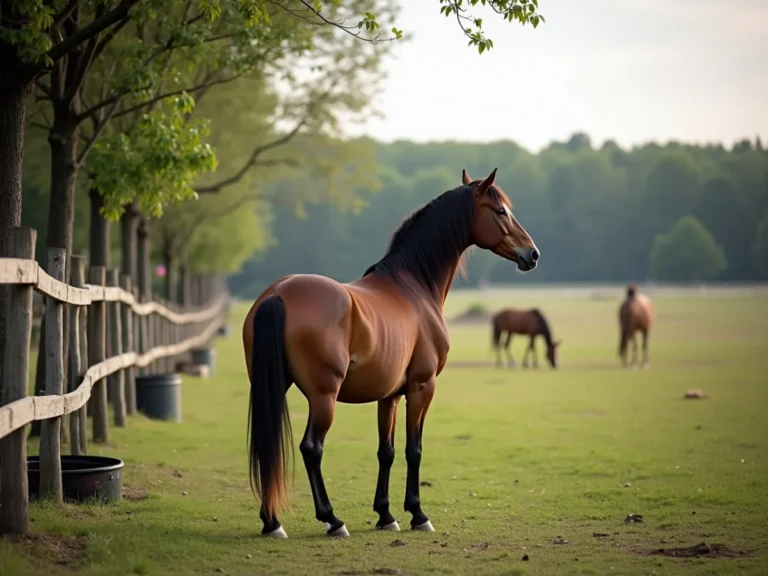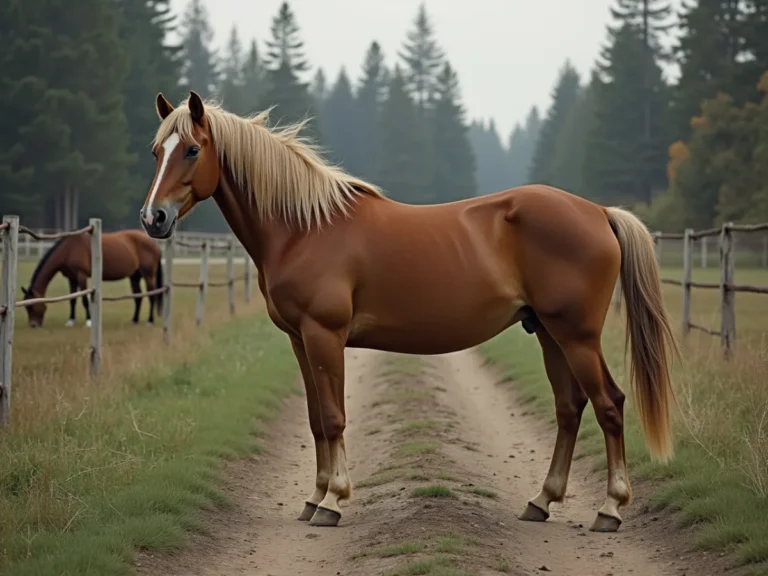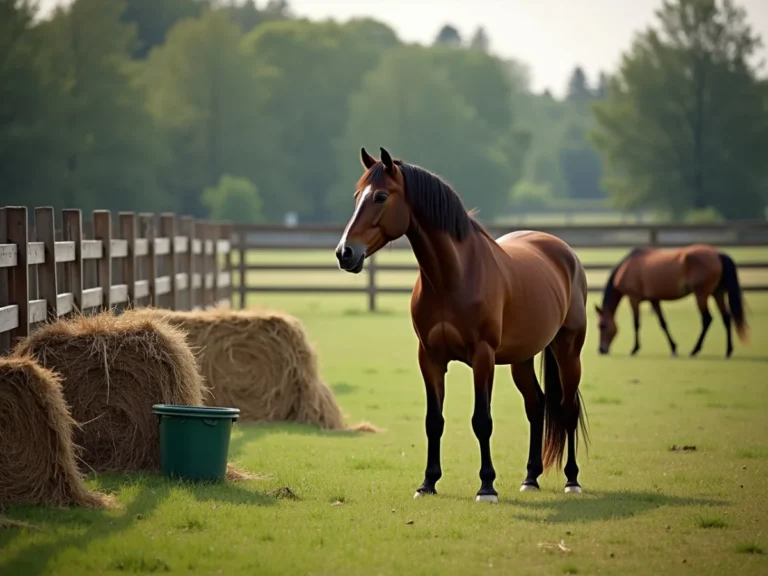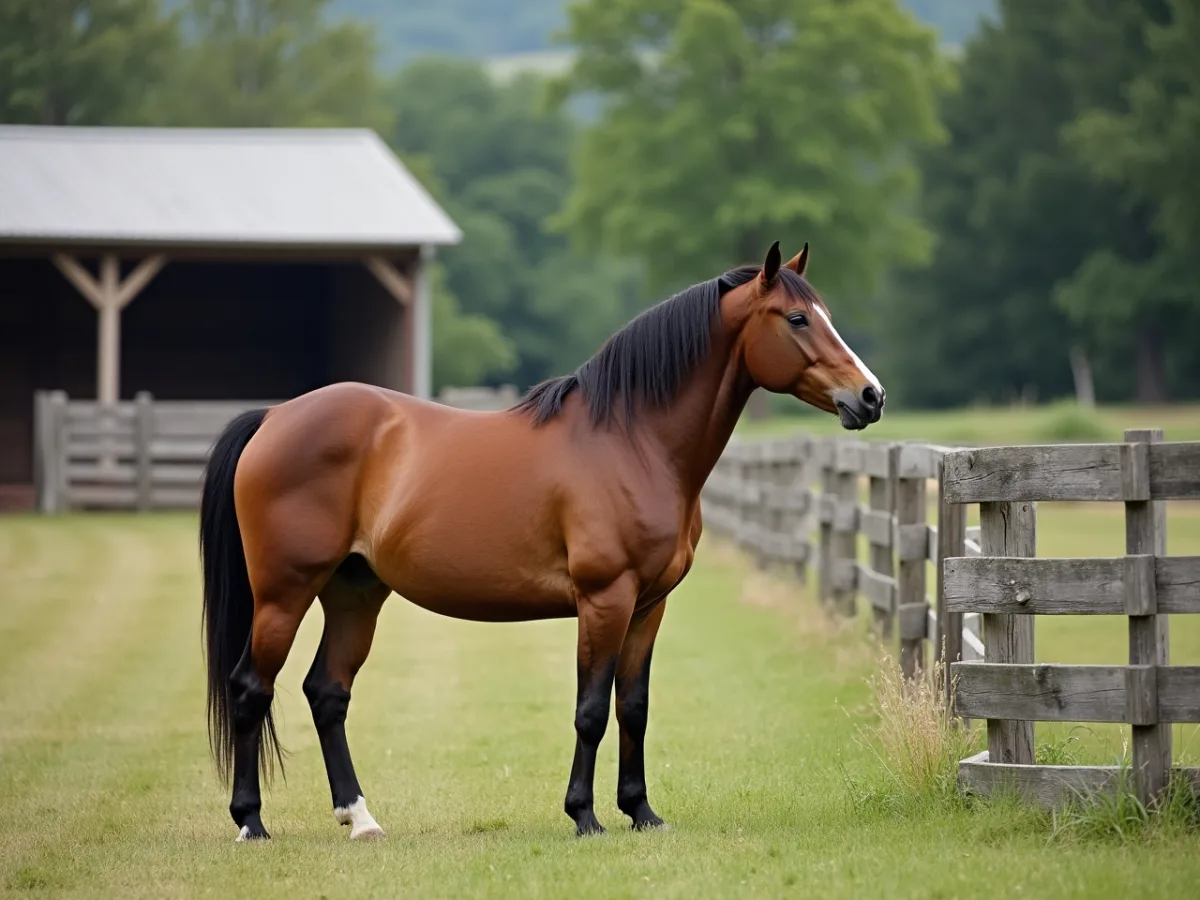
A horse that suddenly freezes and stares can make any owner pause. The body goes still, the neck may rise, and the eyes lock on something that may seem invisible to us. Sometimes the scene passes in a second. Sometimes the horse stays fixed for much longer, as if the whole world has narrowed to one point.
This behavior is not unusual, but it is worth paying attention to. Horses rely heavily on sight, hearing, and instinct. When they stop moving and stare, they are often collecting information before deciding what to do next. That pause may be mild curiosity, or it may be a sign that something feels uncertain, startling, or important.
Understanding the difference takes observation, not guesswork. The same frozen posture can appear in a calm horse looking at a strange object, in a tense horse listening for danger, or in a worried horse that feels trapped. The details around the behavior matter just as much as the behavior itself.
In daily horse life, these moments show up in the stable aisle, out in the pasture, during grooming, while riding, or at a trailer. A horse may stop and stare at a new tarp flapping in the wind, a shadow on the wall, another horse in the distance, or even a sound from outside the barn. What looks like stubbornness is often something more basic and more natural.
The key is to read the whole picture. Ears, nostrils, weight shift, breathing, muscle tone, and the horse’s next movement all help explain what that stillness means.
Why a horse freezes before staring
Freezing is one of the horse’s oldest survival responses. Horses are prey animals, so they are built to notice change fast. When something catches their attention, stillness gives them a chance to assess it without immediately committing to flight.
That pause is useful. Movement can attract attention, but stillness lets the horse listen, look, and compare the new thing against what it already knows. A horse may freeze for only a few seconds if the stimulus seems harmless. If the horse is unsure, the freeze can last longer and become more pronounced.
Sometimes the horse is not afraid at all. It may simply be concentrating. Horses can stare at something because it is different, interesting, or difficult to interpret. A plastic bag in the field, a bird taking off, a new piece of equipment, or even a smell carried by the wind may hold the horse’s attention.
Freezing is often a decision point, not a final reaction. The horse is waiting, evaluating, and choosing whether to stay, move closer, or leave.
In other cases, freezing can mean the horse feels conflicted. It may want to keep looking, but also wants to move away. That hesitation can show up as a rigid body, a fixed neck, and a stare that seems intense. When the horse cannot easily choose between curiosity and caution, the stillness becomes stronger.
How this behavior appears in real situations
In the stable
Inside a barn, horses often freeze and stare at small changes that people barely notice. A bucket moved to a new spot, light coming through a door, a rope hanging differently, or an unfamiliar smell can all catch their attention. Because the stable is a confined space, the horse may stare while keeping its feet planted.
This type of stillness often comes with a lifted head and focused ears. The horse may look alert but not panicked. If it relaxes after a moment and resumes normal behavior, the reaction was likely simple curiosity or a brief check of the surroundings.
In the pasture
Out in open space, freezing often happens when a horse notices something at a distance. It might stare across the field toward another animal, a vehicle, a person, or an object that has changed position. The open environment gives the horse room to assess, so the behavior may last longer than it would in a stall.
Pasture freezes can also happen in herd settings. One horse staring can spread to others. Horses watch each other closely, and a single tense reaction may influence the whole group. If several horses stop and stare in the same direction, there is usually something in the environment worth checking.
During grooming or handling
A horse may go still during grooming if it hears a sound outside or if a brush, pressure, or body sensation makes it concentrate. A horse that freezes while being tacked up may be noticing discomfort, uncertainty, or a new experience. The stare may not be dramatic, but the stillness can say a lot.
Some horses freeze when a handler stands too close or moves too quickly. They may watch the person closely, waiting to see what happens next. In that moment, the horse is not necessarily being defiant. It may simply be bracing itself and deciding whether the situation feels safe.
While riding
Under saddle, freezing and staring can be especially important to notice. The horse may lock onto a trail object, the arena gate, a jumping standard, or something beyond the fence. The body often becomes less supple, and the horse may slow or stop before any bigger reaction happens.
When this occurs, the rider’s response should be calm and steady. A horse that stares while riding is usually trying to gather information. Forcing it forward without understanding the cause can increase tension. On the other hand, allowing it to stand in uncertainty for too long can let the worry grow.
During transport
A horse in or near a trailer may freeze and stare because the setting feels unfamiliar and restrictive. Strange sounds, the sway of the vehicle, and limited visibility all matter. Some horses stare at the ramp, the open doorway, or the space outside as they process what they are expected to do.
This kind of stillness often reflects hesitation more than fear. The horse may be deciding whether to step forward or hold back. A relaxed approach, patient handling, and careful observation can help reveal whether the behavior is mild uncertainty or deeper stress.
What the horse may be feeling inside
Freezing and staring can reflect several internal states. The most common are curiosity, caution, tension, and sensory overload. A horse does not label these feelings the way a person might, but the body expresses them clearly enough if you know what to look for.
Curious horses often stare with a softer body. Their muscles are not rigid, their breathing stays even, and they may stretch their neck forward rather than hold it high and tight. Their attention is focused, but they still seem available to the environment around them.
A cautious horse may look similar at first, but the body tends to be more guarded. The ears may point sharply toward the object, the nostrils may widen slightly, and the horse may hold its weight back. It might not move at all until it understands what is happening.
Tension changes the picture again. The horse may freeze with a stiff neck, tight jaw, or fixed tail. The skin may twitch. The body can look coiled, as if the horse is ready to spring. In this state, the horse is not just observing. It is preparing for a possible next step.
If the stare comes with a rigid body, held breath, or weight shifted backward, the horse is probably more than curious. Those details matter.
Overload can happen when too many things are happening at once. A horse may stare because it does not know where to focus. No single object seems dangerous, but the overall situation feels hard to process. Horses in busy environments, noisy barns, or new places can show this kind of stillness.
Subtle signals that often travel with the stare
The eyes alone do not tell the whole story. Horses rarely freeze and stare without sending other signals at the same time. These clues help separate a normal pause from a reaction that needs more care.
-
Ears: Forward ears may show interest, while one ear flicked forward and the other back can suggest divided attention. Very tight, fixed ears often go with tension.
-
Neck position: A raised neck can signal alertness. A low, stiff neck can suggest caution or hesitation. A long, loose neck usually points to a calmer state.
-
Nostrils: Slightly open nostrils are common when a horse is focused. Flared nostrils and quick breathing suggest stronger arousal or stress.
-
Feet: A horse that is still but balanced is different from one that has shifted weight back or has one hind leg locked. Foot position often reveals how ready the horse feels to move.
-
Tail: A quiet tail usually fits a calmer moment. A tight tail or a tail held high can point to more tension.
-
Eyes: Soft eyes often accompany calm attention. Wide eyes, a hard stare, or a fixed gaze with little blinking can mean the horse feels more alert or uneasy.
These signals can change quickly. A horse may begin with simple curiosity and move into tension if the object remains unclear or suddenly changes. That shift is why short observation is often more useful than reacting instantly.
How surroundings shape the behavior
Environment has a strong effect on how and why a horse freezes and stares. Horses notice contrast, motion, sound, scent, and layout. A familiar object in a new place can seem strange. A harmless shadow can look different at sunset than it did earlier in the day.
Wind plays a larger role than many people expect. A plastic feeder, tarp, jacket, branch, or gate can look harmless when still and alarming when moving. Horses often stare at these changing details because the brain is trying to match what the eyes see with what the body expects.
Noise matters too. A horse may freeze because it hears something but cannot identify the source. Metal clanging, engines, dogs barking, or a horse calling in the distance can all trigger a pause. If the horse cannot connect the sound to a clear cause, it may stare toward the direction of the noise.
Changes in routine can also affect how often the behavior appears. A horse that is comfortable in a stable routine may stare more during turnout changes, travel days, or lesson days. New people, different tack, altered feeding times, and unfamiliar horses can all make the world feel less predictable.
How people often misread it
Owners sometimes assume that a horse freezing and staring is being stubborn, rude, or dramatic. That view misses what is happening underneath. Horses do not usually stop in place just to ignore a person. More often they are unsure, attentive, or momentarily overwhelmed.
Another common mistake is assuming all staring means fear. That is not true either. A horse can stare because it is curious, waiting, listening, or simply noticing a change. The same posture can carry different meanings depending on context and body language.
It is also easy to overlook quiet stress. A horse does not need to be pawing, spinning, or snorting to be uncomfortable. Some horses become very still when something bothers them. The lack of movement can look calm from a distance, but the rest of the body may tell a different story.
Stillness is not always relaxation. In horses, quiet bodies can hide alertness, doubt, or a need for more information.
That is why the setting matters so much. A horse staring at a grazing herd member in a sunny pasture is likely in a very different emotional place than a horse staring at a trailer ramp after a tense loading session. The posture may look similar, but the meaning can be entirely different.
When freezing becomes more noticeable
Some horses show this behavior more often than others. Highly alert horses tend to notice small changes quickly. Young horses may also freeze and stare more because they are still learning what is normal. Their reactions are often sharper simply because the world is new.
Experienced horses can still do it, but their reactions are often quicker to settle. A mature horse with many familiar exposures may glance, pause, and move on with little drama. If the horse is comfortable with its environment, the stare may be brief and soft.
The behavior becomes more noticeable when the horse is tired, under-fed, sore, or mentally overloaded. Discomfort lowers tolerance. A horse that is usually easygoing may start freezing at things it would normally ignore. That change can be a clue that something else is going on, even if the horse is not showing obvious pain.
Repeated freezing in the same place or situation can point to a pattern. Maybe the horse dislikes a particular corner of the arena, the entrance to the trailer, or a certain area of the trail. Maybe it responds to a shadow at one time of day but not another. Regular patterns are useful because they help separate a random reaction from a true trigger.
Different forms of the same behavior
| Type of stare | Common signs | Likely meaning |
|---|---|---|
| Brief and soft | Loose body, normal breathing, relaxed ears | Curiosity or quick checking |
| Held but steady | Still feet, focused ears, moderate tension | Caution and assessment |
| Rigid and fixed | Stiff neck, wide eyes, tight muscles | Heightened alertness or stress |
| Frozen with backing away | Weight shifted back, reluctance to move forward | Conflict, fear, or pressure |
These forms can blend into one another. A horse may start with a quiet stare, then stiffen, then step away if the object remains confusing. Another horse may freeze and then relax after a few seconds once it realizes the thing is harmless. Watching how the behavior changes is often more useful than labeling it too quickly.
Mixed signals are common. The horse may point its ears forward but stand with a tight jaw. It may step closer while keeping the body braced. It may stare at one object but keep checking the handler or herd. Those combinations usually mean the horse is still deciding how safe the situation feels.
What to do in the moment
The best response is usually calm observation. Take a second to look at what the horse is looking at. Check for obvious causes: movement, noise, unfamiliar objects, animals, or changes in the environment. If there is a real trigger, identifying it often helps the horse settle sooner.
Avoid rushing the horse simply because the stillness feels inconvenient. Pushing too hard can increase worry. At the same time, do not assume the horse needs endless waiting. Some horses gain confidence when the handler stays quiet, gives them a moment, and then asks for a small next step.
Movement can help if it is used carefully. A relaxed request to look, step, or turn can redirect the horse’s focus without creating more pressure. The goal is not to force compliance. The goal is to help the horse move from uncertainty back into ordinary attention.
If the horse freezes and stares often, especially in the same settings, it is worth looking deeper. That pattern may relate to vision issues, pain, training confusion, or repeated stress around a particular place or task. A horse that becomes more reactive over time may be telling you the situation has not been resolved.
How long-term patterns give better clues
A single freeze does not reveal much. A pattern does. Over time, the same horse may show that it stares at loud objects but ignores quiet ones, or that it freezes only when separated from the herd, or that it reacts most strongly in dim light. These repeated details are often more helpful than any one incident.
Long-term observation also shows whether the horse recovers easily. Some horses freeze briefly, inspect the object, and relax right away. Others stay fixed, carry tension for a long time, or react more strongly the next day in the same place. Recovery tells you a lot about how the horse processed the moment.
If the horse’s freezing behavior becomes more frequent, more intense, or more paired with other changes like appetite loss, stiffness, or unwillingness to move, the issue may be broader than simple caution. Horses rarely change their patterns without a reason. Even subtle changes deserve attention when they repeat.
At the same time, not every stare needs correction. Some horses are simply observant. They notice more, pause more, and then continue on. With those horses, the behavior can be part of their personality as much as their environment.
A calm way to understand it
A horse that freezes and stares is usually trying to make sense of something. The reason may be small or significant, harmless or stressful, brief or ongoing. What matters is the combination of body language, setting, and the horse’s follow-up behavior.
When the stare is soft and the body remains loose, the horse may just be checking in with the world. When the body tightens, the breath changes, or the feet hesitate, the horse is telling you the moment matters more. Reading that difference takes patience, but the signals are there.
Quiet attention can be normal. Hard stillness can mean caution. Repeated freezing in the same context can reveal discomfort or uncertainty that deserves attention. Horses rarely stare without reason, and that reason is usually visible once you know where to look.