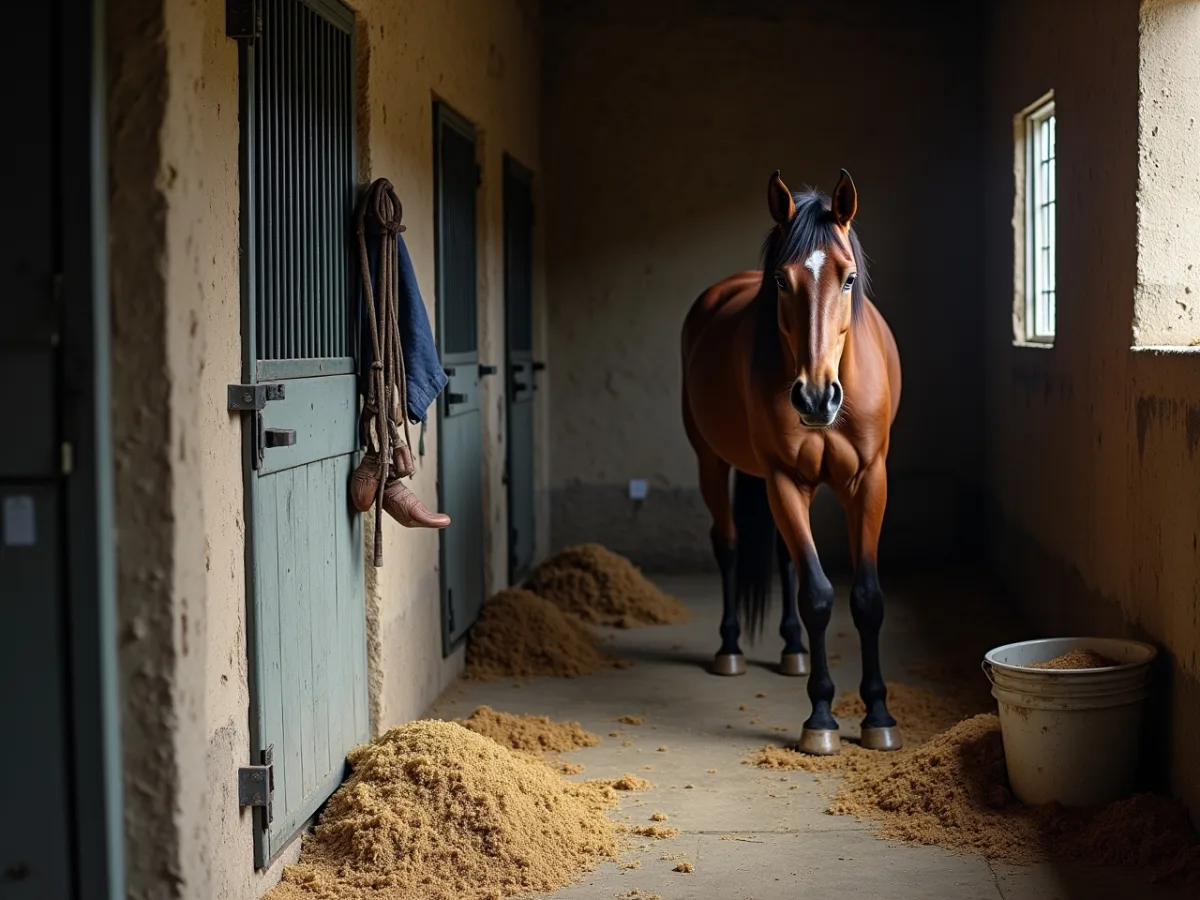
Sudden aggression toward people can feel shocking, especially when a horse that seemed steady yesterday is pinning its ears, swinging its hindquarters, or threatening to bite today. The change often appears fast, but the reasons behind it usually build more slowly. A horse rarely becomes difficult for no reason at all.
What matters most is noticing the pattern before the behavior escalates. A sharp reaction near the feed tub, a tense response during grooming, or a defensive move when being led may look like bad manners at first glance. In many cases, it is a message, not a random outburst.
That message can involve pain, fear, frustration, confusion, poor handling, or a combination of several things. The same outward behavior may mean different things depending on the horse, the setting, and what happened just before the reaction. Paying attention to those details changes how you respond.
How Sudden Aggression Can Appear in Daily Handling
Some horses show aggression in obvious ways. Others begin with smaller signals that are easy to miss if you are in a hurry. A horse may stiffen when a person enters the stall, turn the head away from contact, then suddenly snap with teeth or a kick.
In the barn, the behavior often shows up around routine moments that should be simple. Putting on a halter, picking up feet, tightening a girth, or reaching into the stall can trigger an abrupt response. The aggression may be brief, but it is usually linked to something the horse is trying to avoid.
Under saddle, the picture can look different. Some horses become defensive when asked for contact, while others react when pressure shifts suddenly or when they feel trapped. What seems like “attitude” may actually be the horse trying to create space or reduce discomfort.
Common outward signs
- Pinned ears that stay back instead of flicking forward again
- Tail swishing paired with a tense back or rigid neck
- Head swinging toward the person
- Snapping, biting attempts, or lunging with the shoulder
- Hind-end threats, kicking out, or lifted hind feet during handling
- Faster escalation when the person stays too close or keeps pressing
A horse does not need to bite to be communicating distress. Small threats, repeated avoidance, and sudden tension matter too. These are often the earliest clues that the horse feels unsafe, uncomfortable, or overwhelmed.
When aggression appears suddenly, look first for change: change in pain level, routine, feeding, turnout, tack, work intensity, or handler approach.
Why a Horse May React This Way
Horses are built to notice pressure quickly. That sensitivity helps them survive, but it also means they can react strongly when something feels wrong. Aggression toward people is often a defensive answer to a problem the horse cannot explain any other way.
Pain is one of the most important possibilities. A sore back, dental issue, hoof problem, gastric discomfort, muscle strain, or reproductive pain can make routine handling feel intolerable. A horse that is usually calm may become defensive only when touched in a painful area or asked to move in a way that hurts.
Fear is another common factor. If a horse has had rough handling, inconsistent cues, or a frightening experience, it may begin to protect itself before contact even happens. The horse may not be trying to dominate anyone. It may be trying to avoid a repeat of something unpleasant.
Frustration can build as well. A horse that feels confined, underworked, overworked, or crowded by other horses may carry that tension into human interactions. Some horses become sharper when their daily routine changes, especially if they depend heavily on predictability.
Possible internal reasons
- Physical pain or soreness
- Skin irritation, flies, or sensitivity to touch
- Ulcers or digestive discomfort
- Hormonal changes, especially in some mares and stallions
- Fear from past handling or bad timing of pressure
- Stress from boredom, isolation, or constant environmental change
One horse may bite because of pain, while another with the same outward behavior may be reacting to fear. That is why the context matters so much. The sign alone does not tell the full story.
How Surroundings Shape the Reaction
Environment often decides whether a horse stays calm or tips into defensiveness. A quiet horse in an open paddock may act very differently once placed in a busy aisle, crowded wash rack, or noisy trailer. The same horse may seem fine one minute and explosive the next if the setting becomes stressful.
Feed time is a classic trigger. Horses can become protective around food, especially if they are turned out with competition for hay or fed on an irregular schedule. A horse that pins its ears near the bucket may be showing resource guarding, but the deeper issue may be anxiety about not having enough or being interrupted.
Confinement can also matter. Stall rest, reduced turnout, or a disrupted exercise schedule can leave a horse more reactive than usual. Without enough movement and mental outlet, some horses build tension that spills into human interactions. They may not have the tools to stay settled.
Noise, traffic, unfamiliar horses, and frequent handler changes can all increase sensitivity. Horses thrive on routine, but routine does not have to mean sameness in every detail. It means the horse knows what to expect. When expectations break down, behavior often changes with them.
Situations where aggression often appears
| Situation | What may be happening | What to watch for |
|---|---|---|
| Feeding | Protective behavior, anticipation, frustration | Ears back, body blocking, rushing at a person |
| Grooming | Pain, skin sensitivity, impatience | Flinching, biting at the air, turning the hindquarters |
| Leading | Fear, lack of respect for personal space, discomfort | Charging, shoulder leaning, sudden head threat |
| Riding | Tack discomfort, confusion, physical pain | Tail clamping, head tossing, refusing forward movement |
| Trailer loading | Claustrophobia, pressure buildup, prior bad memories | Backing away, striking, lunging toward the handler |
A horse that seems aggressive only in one setting is often telling you that the setting itself matters.
Subtle Signals That Often Come First
Many people notice the big reaction and miss the quieter lead-up. That is understandable, but it leaves out a lot of useful information. Horses usually show unease before they become openly aggressive.
The ears are one of the first places to look. Ears that freeze in one position, stay tightly back, or flick sharply between targets can reflect tension. Eyes may appear hard, wide, or focused in a way that looks fixed rather than relaxed. The nostrils may flare, and breathing can become shallow or fast.
Body posture matters just as much. A horse may brace through the neck, lock the jaw, shift weight off the forehand, or stand unusually still. Stillness is not always calm. Sometimes it is the pause before a reaction.
Movement can become clipped or controlled. A horse may step away from contact, swing the haunches, or crowd the handler’s space with unusual directness. These are often attempts to control distance before the horse feels forced to defend itself more strongly.
Early warning signs
- Reduced blinking or a fixed stare
- Jaw clenching or grinding
- Tail held tight instead of loose
- Uneven shifting of weight
- Reluctance to be touched in one spot
- Sudden sensitivity to normal handling
These signs do not always mean aggression will follow, but they are worth noticing. Once the tension is visible, the horse is already telling you that the current approach may not be working.
What the Behavior May Signal About the Horse’s State
A horse that lashes out is not always “mean,” and the label usually hides more than it explains. The behavior may signal that the horse feels trapped, sore, uncertain, or over threshold. The key is not to focus only on the action, but on what kind of state produced it.
If the reaction appears only during a specific touch or movement, pain or sensitivity becomes more likely. If the horse is reactive in many settings and stays tense for long periods, stress or fear may be playing a larger role. If the aggression centers on food, space, or herd pressure, the horse may be guarding important resources.
Some horses become defensive after repeated misunderstandings. If pressure increases too quickly, the horse may learn that aggression creates relief. That does not make the horse malicious. It means the horse has found a way to control a situation that felt overwhelming.
Age, history, and training matter too. A younger horse may react out of uncertainty. An older horse may react because the body no longer tolerates what it once did. A well-trained horse can still become aggressive if pain, fear, or stress overwhelms the usual tolerance.
If the horse’s personality seems to have changed, assume there is a reason worth investigating before assuming it is only behavior.
How People Often Misread the Signs
One common mistake is treating all aggression as a discipline problem. That view can lead to more pressure, which often makes the behavior worse. A horse already on edge usually needs clearer information, not a louder response.
Another mistake is assuming the horse is being disrespectful whenever it comes too close or pushes into space. Sometimes the horse is crowding because it is anxious, not because it is trying to take control. The outward picture can look similar, but the response should not be the same in every case.
People also miss pain when the horse is still willing to work. A horse may move forward, cooperate briefly, or perform well in some tasks while becoming reactive in others. That inconsistency can make owners think the horse is choosing when to misbehave, when in fact the discomfort is task-specific.
There is also a habit of ignoring gradual change. A horse that becomes slightly more touchy each week may not appear “aggressive” until the behavior becomes impossible to overlook. By then, the horse may have been giving warnings for a long time.
How Calm and Defensive Forms Differ
Not every tense moment turns into open aggression. Some horses show a controlled version of the behavior, where they look annoyed, brace against contact, or make small threats without fully committing. Others jump straight to sharper reactions. The difference often depends on how safe the horse feels and how much pressure is present.
A calm horse may show a brief warning and then recover. The ears flick back, the body tightens, and the horse relaxes again when the pressure stops. That kind of response suggests the horse is trying to communicate before becoming defensive.
A more reactive horse may escalate quickly, with little warning. This can happen when fear is high, pain is significant, or past experiences taught the horse that subtle signals do not work. In those cases, the horse may move fast to create distance.
Mixed signals can be confusing. A horse may approach a person, then suddenly threaten to bite when touched. It may seek contact one moment and avoid it the next. This can happen when the horse wants interaction but cannot tolerate a certain type of pressure or touch.
Examples of different levels of reaction
- Low-level tension: ears back, body stiff, but no overt strike
- Moderate defensiveness: head swing, threat to nip, refusal to move
- High-level aggression: active biting attempts, kicking, charging, or striking
These levels can shift quickly. Watching the whole sequence helps more than focusing on the most dramatic moment.
Long-Term Patterns Worth Noticing
When aggression toward people keeps showing up, the pattern matters more than the single incident. A horse that reacts only after hard work, only when cramped in a stall, or only around one handler is giving a clue about the trigger. Repeated timing often reveals the cause.
Some horses become more defensive with age if arthritis, dental wear, or back stiffness makes them less tolerant of handling. Others improve when their discomfort is addressed and their routine is adjusted. The behavior can also change with seasons, especially when turnout, weather, insects, and workload shift.
Consistency helps reveal whether the issue is temporary or ongoing. If the horse is only reactive after a missed meal, a long trailer ride, or a loud event at the barn, the context is likely driving the response. If the horse is increasingly tense across many situations, the issue is broader and deserves more attention.
Observation over time is useful because horses rarely invent new problems overnight. They often show a progression: alertness, stiffness, warning behavior, and then a stronger response when the pressure remains. Catching the earlier stages gives you a better chance to address the underlying cause before the horse feels the need to get louder.
Repeated aggression is more informative than a single bad day. The pattern is where the real clue usually lives.
What to Watch Without Overreacting
Noticing aggression does not mean assuming the worst about the horse. It means staying curious. Start with what changed, where the behavior happens, and what the horse does just before the reaction. Those details are often more useful than the label itself.
Look at the basics first: feeding, turnout, tack fit, workload, footing, recent illness, body condition, and any changes in herd dynamics. Even small changes can affect comfort and temperament. A horse does not need a major injury to become defensive.
Then pay attention to timing. Does the behavior happen when the horse is touched in one area? Right before food? Only with a certain person? Only after exercise? Patterns like these narrow the possibilities quickly.
If the horse is increasingly sharp, painful to handle, or dangerous to be around, that is not a normal phase to wait out. It is a sign to look deeper at the horse’s health, stress load, and daily experience. The earlier the source is found, the easier it usually is to reduce the tension behind the behavior.
Sudden aggression toward people is often the visible edge of something that has been building underneath. The horse may be signaling discomfort, fear, or frustration long before the first bite or kick. Watching the small shifts in posture, expression, and routine can make those signals much easier to understand.
When the pattern is read in context, the behavior stops looking random. It starts looking like information. And that information is often the most practical place to begin.