Panic-like reactions in controlled situations can be confusing because the setting itself looks safe. The horse is in a familiar arena, a clean stall, a quiet trailer, or a routine grooming space, yet the response appears sudden and extreme. That mismatch is what makes these moments stand out.
In many cases, the reaction is not true panic in the human sense. It may be a quick surge of vigilance, a startle response, or a brief loss of confidence when something in the environment changes faster than the horse can process. A horse does not need a loud or obviously dangerous event to become unsettled.
What looks dramatic from the outside may begin with small signals. A tight neck, shallow breathing, a fixed stare, or a hesitant step often comes before the bigger reaction. Those early signs matter because they show the horse is already working harder than it appears.
How Panic-Like Reactions Appear in Quiet, Controlled Settings
These reactions often show up in places where people expect calm behavior. A horse may be fine for several minutes, then suddenly lurch sideways when a bucket swings, a tarp shifts, or another horse calls from across the barn. The change can seem out of proportion to the trigger.
In riding, the pattern may be even more subtle. The horse may feel steady at the walk, then rush, brace, refuse to go past one corner, or snap its head up when the environment becomes visually busy. Sometimes the body stays moving, but the mind is no longer settled.
Ground handling can show the same pattern. A horse that leads well in one aisle may become tense near a hose, a gate, a tractor, or a stack of new supplies. The surroundings are controlled, but the horse does not always experience them that way.
Controlled does not always mean predictable from the horse’s point of view. A familiar place can still contain details that feel new, sharp, or unsafe.
Owners sometimes notice that the reaction only appears when the horse has to pause. In motion, the horse stays busy and connected to the task. At rest, the mind has more room to scan the surroundings, and that scanning can turn into tension very quickly.
What the Reaction Looks Like Before It Becomes Obvious
Most panic-like behavior is preceded by smaller changes. These signs are easy to miss because they can look like ordinary alertness. The difference is in how long they last and how many appear together.
- Sudden stillness after movement
- Wide eyes or a hard fixed stare
- Tight lips, nostrils, or jaw
- Raised neck and elevated poll
- Short, shallow breathing
- Repeated shifting of weight
- Tail held rigid or clamped
- Fast scanning from side to side
One sign alone does not always mean trouble. A horse can look toward a noise and return to normal in a few seconds. Concern grows when the body stays tense and the horse stops processing the environment in a relaxed way.
Some horses also become unusually obedient-looking before they react. They may stand very still, stop chewing, or seem locked in place. That freeze can be the moment right before they explode into motion, which is why quiet tension deserves attention.
Why Controlled Situations Can Still Trigger a Strong Response
There is a common assumption that a controlled situation automatically feels safe to the horse. In reality, control is a human concept. Horses respond to movement, sound, spatial pressure, and timing, not to our idea of order.
A horse may react strongly in a stall because the walls reduce options. It may react in a trailer because balance changes with every turn. It may react in an arena because white boards, mirrors, flags, or drifting shadows create visual contrast. Even a calm horse can struggle when multiple small stressors arrive at once.
Routine also plays a role. If the horse expects one pattern and experiences another, the reaction can be fast. A feeding delay, a different handler, a new grooming spot, or a sudden pause in the usual schedule may be enough to create uncertainty.
Many tense moments are not caused by one big scare. They come from a buildup of small disruptions that break the horse’s sense of routine.
Internal Reasons Behind the Reaction
Panic-like behavior is often tied to how the horse processes threat. Horses are prey animals, so quick detection matters more than long analysis. That design is useful in nature, but it can create exaggerated reactions in ordinary human settings.
Some horses have a lower threshold for alarm. They notice details more quickly and need more time to settle after something unexpected happens. Others are not especially reactive in general, but become overwhelmed when tired, uncomfortable, or mentally overloaded.
Physical discomfort can also shape the response. A horse with sore feet, a tight back, poor saddle fit, dental discomfort, or vision trouble may appear nervous when the real issue is pain or insecurity. When a horse cannot move comfortably, the nervous system often stays on guard.
Past experience matters too. Horses remember places, sounds, and handling patterns. If a trailer, wash rack, or corner of the arena once came with fear or rough handling, the body may react before the horse has time to think through the present moment.
How Sensory Input Changes the Picture
The environment matters because horses notice details people often overlook. A glossy tarp, a flickering light, a shadow moving across the floor, or wind hitting one side of the barn can all feel important. What seems minor to a person may be the strongest thing in the horse’s field of attention.
Sound is especially influential. Echoes in enclosed spaces can make footsteps, clanging buckets, and gate latches feel sharper than they do outdoors. A horse that seems calm in an open paddock may become edgy in a narrow aisle where every sound bounces back.
Smell and air movement also matter, even if they are harder to notice. A new disinfectant, unfamiliar bedding, strong dust, or a sudden draft can change the mood of a space. Horses often react to the whole environment, not a single object.
- Bright reflections on metal or water
- Loose objects moving in the wind
- Sudden changes from light to shadow
- Heavy echoes in indoor spaces
- Strong or unfamiliar odors
- Unexpected movement near the horse’s shoulder or hind end
How Controlled Reactions Differ in Stable, Field, and Riding Work
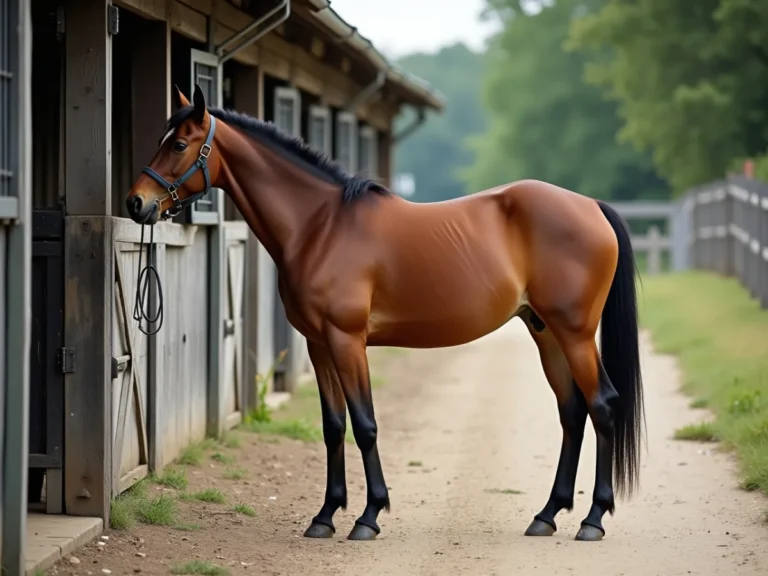
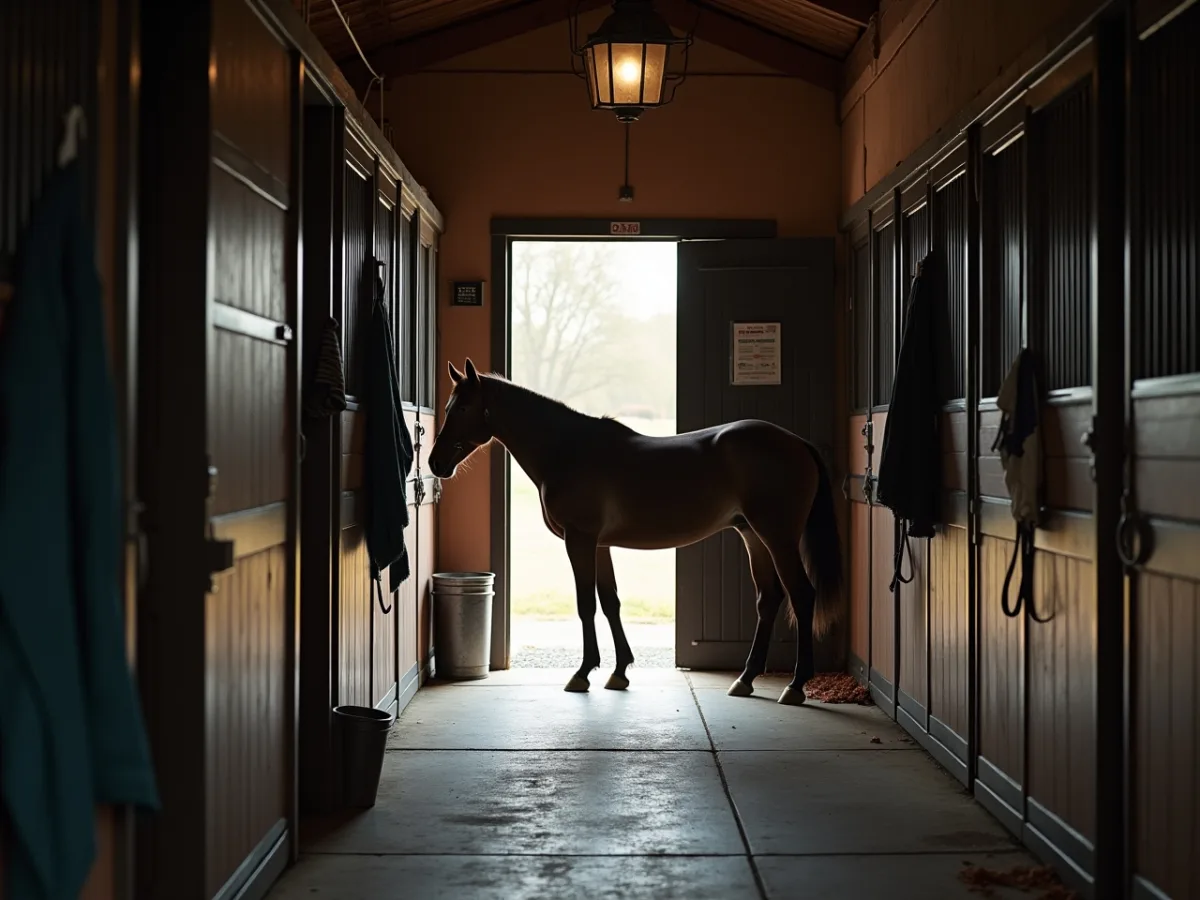
In the stable, the reaction may be limited but sharp. The horse may pin back from a sound, rush the door, or wheel around in a narrow space. The confinement can make the response look worse because the horse has fewer options to create distance.
In the field, the same horse may show a different pattern. It may startle, then move off quickly and settle after a few strides. With more room, the body can release tension in motion instead of trapping it in place.
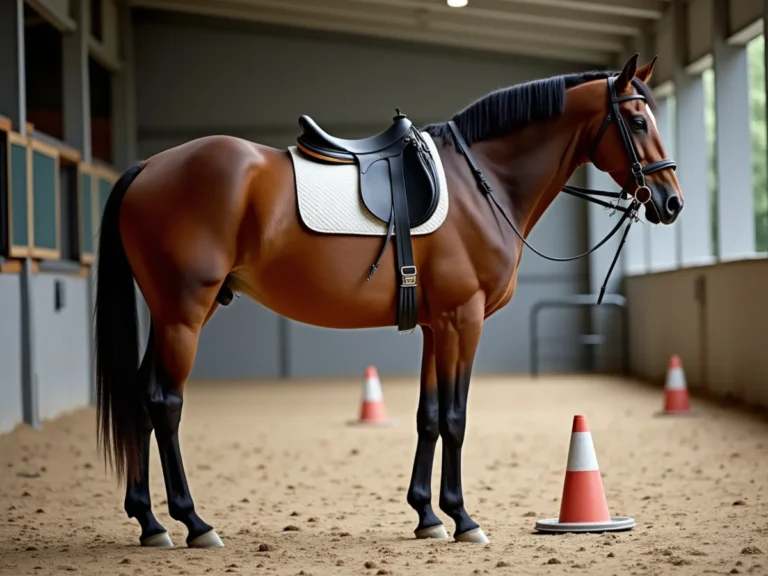
Under saddle, the reaction often becomes more complicated because the rider adds contact, balance demands, and directional pressure. A horse may not feel free to step away from what worries it, so the response can appear as rushing, lifting the head, refusing, or spinning. The horse may not be rejecting the rider. It may be trying to escape a feeling it does not yet understand.
What the Behavior May Signal About the Horse’s State
A panic-like reaction can mean the horse is overstimulated, underprepared, or unsure of how to handle the moment. It may also mean the horse was already tense before the obvious reaction appeared. The body often signals strain earlier than people realize.
Sometimes the behavior points to a horse that is temporarily overloaded but otherwise healthy. Other times it points to a broader pattern of anxiety, chronic discomfort, or inconsistent handling. The same outward reaction can come from very different internal states.
That is why context matters so much. A single sudden jump after a loud bang is not the same as repeated tension in everyday situations. One is a response to an event. The other may be part of a deeper pattern.
Common contexts that deserve closer attention
- Repeated tension in the same location
- Reactions that are growing more intense over time
- Episodes that appear during grooming, tacking, or mounting
- Behavior paired with weight loss, stiffness, or resistance to touch
- Horses that recover slowly after a mild scare
How People Often Misread the Reaction
One of the most common mistakes is assuming the horse is simply being difficult. That view can lead to frustration instead of observation. A horse that looks defiant may actually be frightened, overwhelmed, or physically uncomfortable.
Another common misunderstanding is thinking the reaction is always random. In reality, horses often react to patterns humans have stopped noticing. The trigger may be consistent, even if it is subtle. A specific doorway, a particular corner, a certain type of noise, or a handler’s rushed approach can all become part of the horse’s memory.
People also tend to overlook how quickly tension spreads. If the handler becomes tight, hurried, or frustrated, the horse may read that change immediately. The horse does not need to understand the reason. It only needs to detect that something in the interaction has changed.
A horse that looks “fine” for most of the day may still be carrying enough tension to tip into a sudden reaction when one more stressor is added.
Calm Alertness, Nervous Tension, and True Escalation
Not every intense-looking response is panic. Some horses are naturally expressive, quick to look around, and energetic without being distressed. The key difference is whether the horse can come back to neutral after the moment passes.
Calm alertness usually looks awake but soft. The horse notices the environment, shifts attention, and then relaxes again. Nervous tension stays longer. The horse may keep bracing, breathe more quickly, or remain reluctant to soften even after nothing happens.
True escalation tends to build. The horse may start with attention, move into tension, then transition into a bigger physical reaction such as bolting, spinning, striking, rearing, or hitting the end of a lead line. The shift can happen in seconds, which is why early recognition is so useful.
| State | Typical signs | What usually happens next |
|---|---|---|
| Calm alertness | Soft focus, brief looking, steady breathing | Returns to normal quickly |
| Nervous tension | Stiff body, repeated scanning, reduced relaxation | May settle slowly or stay edgy |
| Escalation | Brace, rush, freeze, sudden flight response | Needs space and time to recover |
How Consistency and Long-Term Pattern Matter
A single episode may not tell the whole story. The long-term pattern is often more informative than one stressful day. Horses can have an off moment and move on, but repeated reactions in controlled settings suggest the horse is carrying something unresolved.
Consistency also shows up in the trigger type. If the horse reacts to anything novel, the issue may be general sensitivity. If it reacts only in one area, one task, or with one kind of handling, the cause may be more specific. That distinction helps make sense of the behavior without overreading it.
Owners who watch over time often notice that the horse’s threshold changes with weather, workload, turnout, and rest. A horse that seems fine after several easy days may become more reactive during a busy week. The behavior is often tied to overall state, not just the immediate scene.
What Helps People Read the Situation More Clearly
The most useful habit is to notice the full picture instead of the dramatic part alone. The reaction itself matters, but so do the moments leading up to it and the recovery afterward. Those pieces tell a much fuller story.
- What happened just before the response
- How quickly the horse settled
- Whether the same trigger appears again
- Whether the horse was tired, sore, or rushed
- Whether the environment felt crowded or noisy
Paying attention to recovery can be especially helpful. A horse that startles and then exhales, lowers the neck, and resumes work is telling a different story from one that stays rigid for several minutes. Recovery often shows whether the event was brief surprise or deeper stress.
Body language during routine tasks also gives clues. Horses often reveal more during grooming, leading, and tacking up than during the most obvious moment of fear. These ordinary situations expose small cracks in confidence before they become larger reactions.
Natural Ending to the Pattern
Panic-like reactions in controlled situations are usually less random than they first appear. They often grow from sensitivity, memory, discomfort, or a momentary overload of sensory input. The setting may look safe to people, but the horse may be reading a very different set of signals.
When the early signs are noticed, the behavior becomes easier to understand. Tightness, scanning, freezing, and rushing all fit into the same bigger picture of a horse trying to manage something that feels uncertain. Over time, those details matter more than the loudest part of the reaction.
The real story is often in the buildup, not just the burst. Once that is seen clearly, the behavior stops looking mysterious and starts looking readable.