Repeated tasks can change the way a horse responds long before anything looks obviously wrong. A horse that used to walk forward on cue may start to hesitate. Another may drift, brace, paw, or simply feel harder to reach on the same exercise that once seemed easy. The pattern is often subtle at first, and that is what makes it worth paying attention to.
Resistance to repeated tasks does not always mean a horse is being disobedient. In many cases, it is a sign that something about the routine, the physical demand, or the horse’s mental state is no longer matching the request. A horse may understand the task very well and still begin to push back when the pattern becomes tiring, uncomfortable, or emotionally flat.
When the same work is asked for over and over, the response can shift from willing to guarded. That shift may show up in the stable, in turnout, on the lunge line, under saddle, or during handling at the trailer. It is often less about one dramatic moment and more about a gradual accumulation of small signals that the horse is giving the same answer in a quieter, less cooperative way.
How Resistance Shows Up in Real Handling and Riding Situations
Repeated tasks do not need to be difficult to become frustrating for a horse. Simple requests, when repeated too often or in exactly the same way, can start to lose clarity. A horse may begin to slow down, stop offering the expected response, or become dull to pressure that used to work easily.
Under saddle, this can look like a horse that no longer steps into transitions with the same willingness. The walk-to-trot cue may need to be repeated several times. Lateral work that was once smooth may turn stiff or rushed. In some horses, resistance appears as a quiet refusal: a blocked step, a heavy contact, or a body that feels tense but technically still compliant.
On the ground, repeated tasks can produce different kinds of pushback. A horse that is asked to stand for mounting multiple times in a row may begin shifting weight, fidgeting, or moving away from the block. During grooming, the horse may pin ears when the same sensitive area is touched again and again. Even leading through the same path every day can lead to hesitation if the experience has become predictable in an unpleasant way.
Sometimes the task itself is not the issue. The problem is the horse’s expectation of what comes next. If every repetition leads to more pressure, more correction, or more discomfort, the horse starts anticipating that pattern. Resistance then becomes less about the current cue and more about the horse trying to protect its own energy or comfort.
A horse that resists repetition is often communicating one of three things: the task is uncomfortable, the task is mentally tiring, or the task no longer feels clear enough to be worth repeating.
Why Horses Tend to Push Back Against Repetition
Horses are creatures of habit, but that does not mean they enjoy endless sameness. Routine can make them feel secure, yet too much repetition can also make them dull, anxious, or irritated. Their reactions often reflect a balance between predictability and sensitivity. When that balance tips, resistance becomes more likely.
One reason is simple fatigue. A horse may perform a movement well for a few repetitions and then begin to fall apart as muscles tire. This is common in collected work, small circles, backing up, or any task that asks the same physical pattern over and over. What looks like stubbornness may actually be a body that is struggling to keep up.
Another reason is mental saturation. Horses notice patterns very quickly. If the same cue, exercise, or drill is repeated without enough variation, the horse may stop paying close attention. The result can be dullness, slow responses, or a kind of resignation that is easy to mistake for laziness.
There is also the issue of pressure buildup. If a task is repeated because the first answer was not accepted, the horse may feel trapped in a loop. The cue comes again, the expectation rises, and the horse has less room to offer a fresh response. This is especially common in horses that are sensitive, guarded, or unsure about making mistakes.
Common Places Where Repeated-Task Resistance Appears
In the Stable
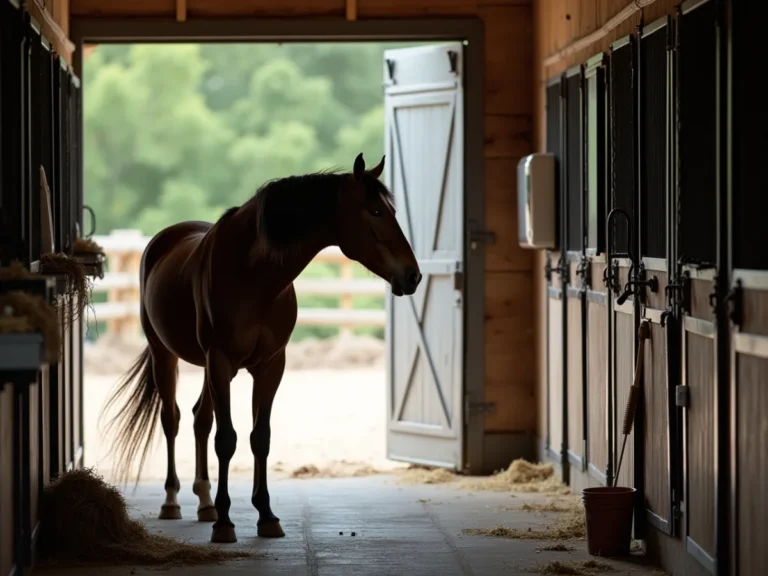
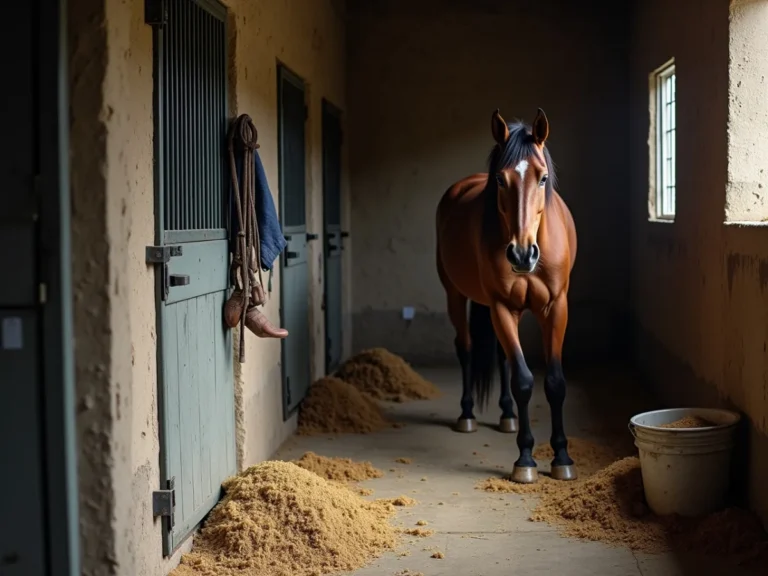
Stable routines are full of repetition. Feeding, grooming, tacking, picking up feet, and leading in and out all happen on schedule. A horse that resists repeated tasks in the stable may start with small signs: stepping away when approached with the halter, leaning on the lead, or becoming hard to catch in the same stall or corner.
If the same handling sequence happens every day with little variation, the horse may begin to predict exactly when pressure is coming. That can lead to resistance before the handler even asks for anything. A horse may not be reacting to the current moment at all. It may be reacting to memory.
In the Field
In turnout, repeated tasks are less structured but still relevant. Calling a horse in multiple times, walking the same route to and from pasture, or practicing the same approach and retreat can all shape the horse’s response. A horse that is asked to come in when it would rather stay out may begin to ignore the cue or walk off before the handler arrives.
This does not always indicate defiance. Sometimes the horse is simply becoming less interested because the request feels predictable and unrewarding. Other times, the field itself introduces distractions that make the task harder to repeat cleanly. Weather, herd movement, and noise can all affect how willing a horse feels to cooperate.
Under Saddle
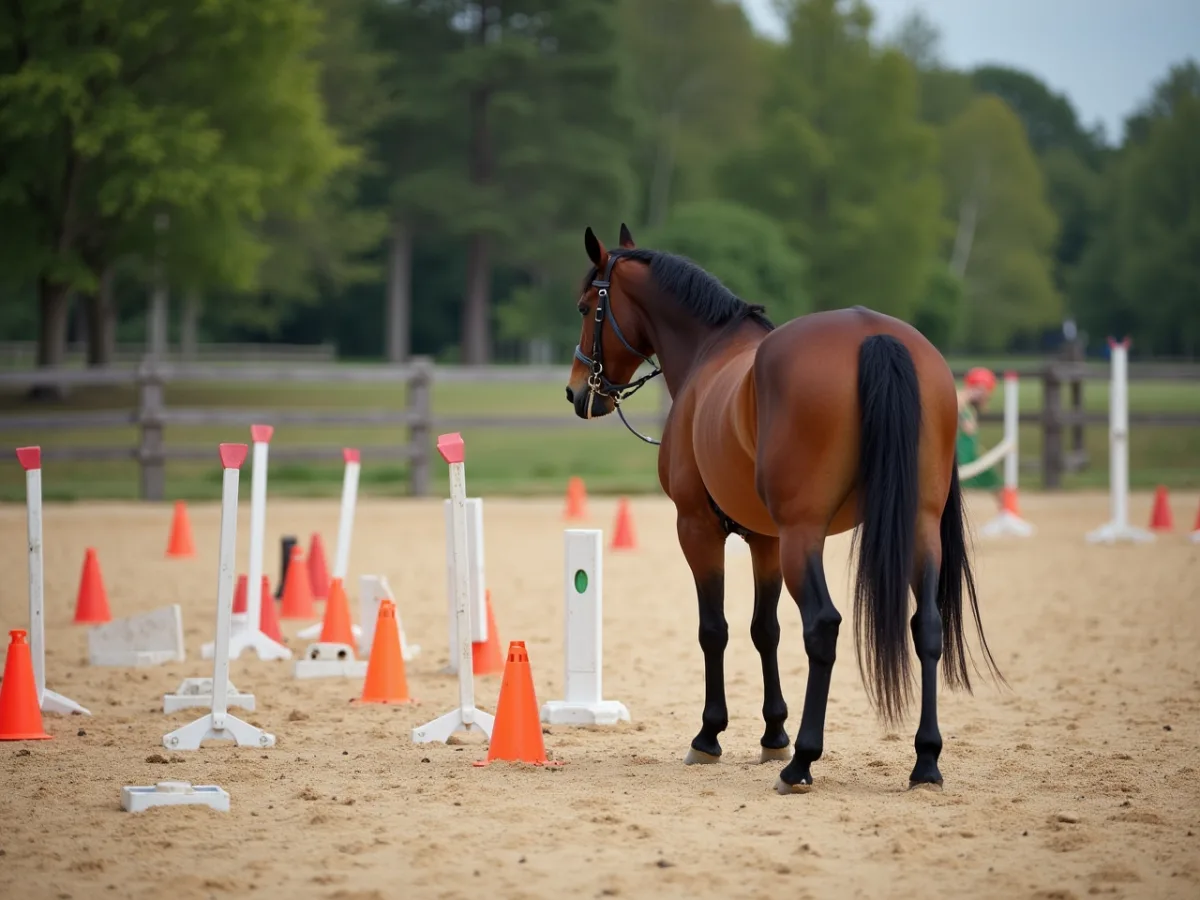
Repeated work under saddle is one of the clearest places to see resistance. Circles, transitions, and bending exercises all ask the horse to perform with consistency. When the same movement is repeated too often, a horse may become stiff through the body, shorten the stride, or stop responding promptly to leg and seat aids.
Some horses show resistance by becoming quick instead of slow. They may rush through the repeated task to get it over with, then lose balance and become harder to regulate. Others become physically careful, as if each repetition costs more than the last. In both cases, the horse may be trying to reduce effort rather than refusing the exercise outright.
During Transport
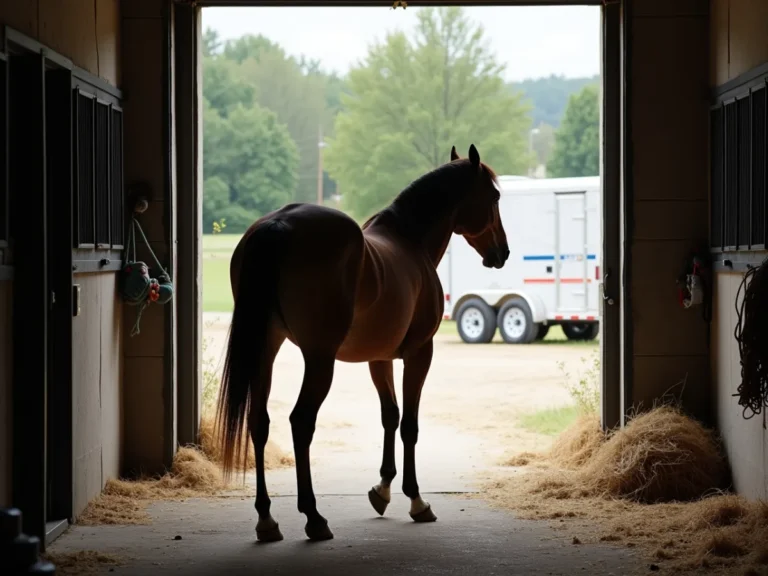
Loading, unloading, and standing in a trailer can also reveal resistance to repetition. A horse that has been asked to load several times in one day may begin to hesitate at the ramp or balk at the doorway. The repeated process can make the trailer feel like a trap rather than a normal part of the routine.
Transport-related resistance often grows when the horse does not get enough time to recover between attempts. Each new try may carry the memory of the last one. Even if the handler is calm, the horse may already be braced for another round of pressure.
What the Behavior May Signal About the Horse’s State
Resistance to repeated tasks is often a useful clue, not a bad habit. It can signal discomfort, confusion, boredom, stress, or simple tiredness. The exact meaning depends on the horse, the situation, and the pattern of behavior around it.
A horse that resists only after physical work may be showing fatigue or soreness. A horse that resists when the same request is made in the same way every day may be reacting to predictability or mental dullness. A horse that resists more strongly as the session goes on may be trying to escape pressure that is accumulating faster than the horse can process it.
Body language often fills in the details. Tight jaws, a fixed neck, a swishing tail, shallow breathing, or a rigid back can all suggest tension. A horse that looks calm on the outside but feels locked in the body may still be resisting internally. That matters, because quiet resistance often becomes stronger if it is ignored.
Repeated-task resistance is not a single behavior. It can be a sign of fatigue, discomfort, emotional frustration, or a horse’s attempt to cope with too much sameness.
In some horses, resistance is linked to previous experience. If repeated tasks have been associated with frustration, pain, or harsh correction, the horse may be reacting to memory as much as to the present moment. In that case, the issue is not only the repetition itself, but what repetition has come to mean.
How the Environment Changes the Response
Surroundings matter more than many people expect. A horse may tolerate a repeated task well in one setting and resist it in another. Small changes can alter the horse’s comfort level enough to affect the result.
Noise, weather, footing, herd activity, and the presence of unfamiliar equipment all change the picture. A horse may be perfectly willing to repeat a task on a quiet day, then become reactive when wind, machinery, or other horses add extra stimulation. What seems like inconsistency is often the horse adjusting to the environment.
Routine also shapes behavior. Horses that live with very rigid schedules may become sensitive to anything that breaks the pattern. On the other hand, horses with no reliable routine may resist repeated tasks because nothing feels predictable enough to relax into. Both extremes can create stress, just in different forms.
Even small environmental details matter. If grooming always happens in the same narrow spot, the horse may begin to anticipate restraint. If lunging always takes place in the same ring with the same sequence of exercises, the horse may start showing boredom or evasion before the work begins. Repetition is never only about the task. It is also about the context built around it.
Soft Resistance vs Strong Resistance
Not all resistance looks dramatic. Some of the most important signs are quiet. A horse may blink less, move slower, or stop offering a forward feel. The response is still there, but it is reduced. These softer forms are easy to dismiss because they do not interrupt the session in a obvious way.
Stronger resistance is harder to miss. The horse may pull away, brace against the lead, refuse to move forward, or repeatedly evade the same exercise. That kind of response often signals that the horse has reached a limit. The body is saying no with more force because the quieter signals were not enough.
Mixed signals are common. A horse may step forward while keeping the ears pinned back. It may offer the movement but hold the neck rigid or breathe faster than usual. These combinations matter because a horse can technically comply and still be unhappy or uncomfortable with the repetition.
Examples of common patterns
- A horse repeats a lateral exercise well for a few minutes, then becomes stiff and slow.
- A horse stands still for mounting, but only after shifting and fidgeting through several requests.
- A horse loads into a trailer, then resists unloading and reloading later in the same day.
- A horse responds to leg pressure once, then becomes dull and needs repeated cues.
- A horse remains obedient on the surface while showing tight ears, tail action, or a locked jaw.
When Repetition Becomes a Long-Term Pattern
If resistance appears once, the reason may be temporary. If it appears often, a pattern is forming. That pattern deserves attention because horses remember not only the task itself, but the emotional tone that surrounds it. Repeated experiences shape expectations.
Over time, some horses become less willing to try when they expect the same result every day. Others grow increasingly defensive because they never get enough variety, release, or recovery. The horse may not be becoming “worse.” It may be adapting to a routine that no longer fits.
Long-term resistance often shows up in one of two ways. Some horses become dull and disconnected. They give minimal responses and seem to wait out the session. Others become sharp and reactive, trying to avoid the task before it starts. Both can come from the same root issue: repetition without enough balance.
Consistency still matters, but it should not be confused with sameness. A horse can benefit from a steady routine and still need changes in duration, difficulty, direction, or type of work. That variation keeps the horse mentally present and physically more willing.
When a horse starts resisting the same task week after week, the pattern often points to a mismatch between the horse’s current capacity and the way the work is being repeated.
What Owners Often Misread
People often label repeated-task resistance as stubbornness first. That reaction is understandable, but it can hide the real issue. Horses rarely resist without a reason. The reason may not be obvious, but it usually exists.
Another common mistake is assuming that a horse needs more repetition to “learn the lesson.” Sometimes that is true. Other times, more repetition only makes the horse more tired, more bored, or more suspicious. Pushing harder can turn a small concern into a larger one.
It is also easy to misread quiet compliance. A horse that keeps working may still be giving low-level resistance through tension and diminished effort. By the time the refusal becomes obvious, the horse has already been telling the story for a while.
Interpretation improves when the whole pattern is watched instead of one moment. The horse before the task matters. The horse after the task matters. A change in appetite, posture, interest, or responsiveness can help reveal whether the resistance is situational or part of something broader.
What Repetition Means in Horse–Human Interaction
Repeated tasks are not just physical exercises. They are interactions that shape trust, expectation, and comfort. A horse learns quickly whether a request is fair, clear, and worth trying. If the answer always leads to more of the same without relief, the horse may start protecting itself by offering less.
That protection is not personal. It is practical. Horses are efficient animals. They look for the easiest path to balance, comfort, and safety. When repetition becomes costly, they search for a different way to handle the situation, and that is when resistance becomes visible.
The human side matters too. A person who notices subtle changes early can adjust the session before resistance grows. That may mean shortening the work, changing the exercise, giving the horse a break, or checking for discomfort. Small adjustments often prevent bigger pushback later.
Repeated tasks are a normal part of horse life. Feeding routines, handling habits, and training exercises all depend on repetition to some degree. The important part is watching how the horse responds as the pattern continues. A horse that remains loose, attentive, and easy in the body is telling a different story from one that becomes braced, dull, or reluctant.
Resistance is often the point where the horse’s capacity and the demand have drifted out of balance. Paying attention to that change helps keep the work clear, the routine manageable, and the horse more willing to meet the next request without carrying the last one too heavily.