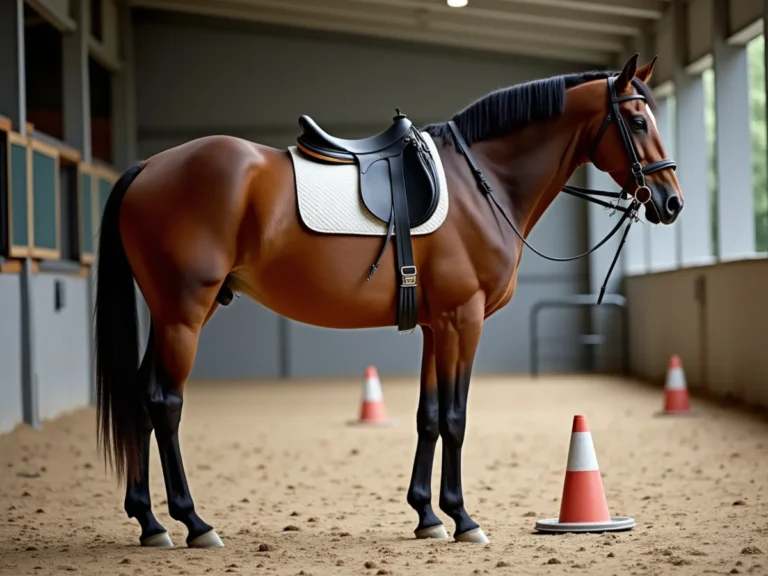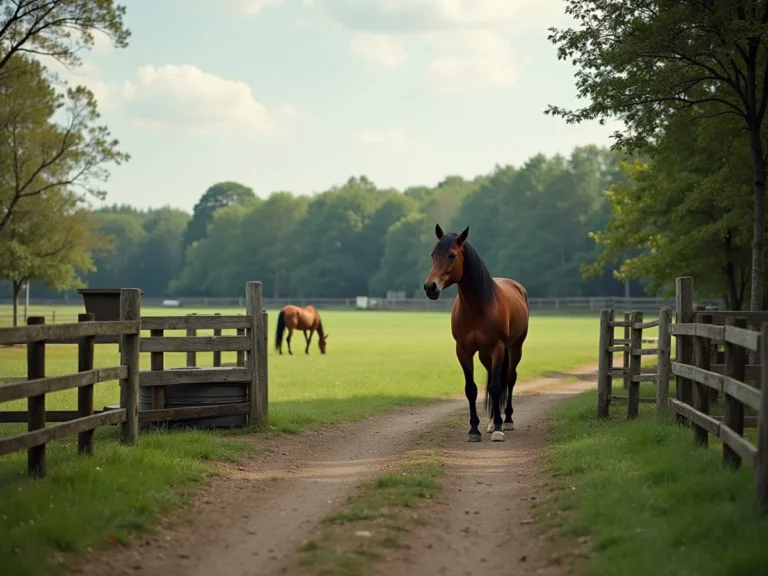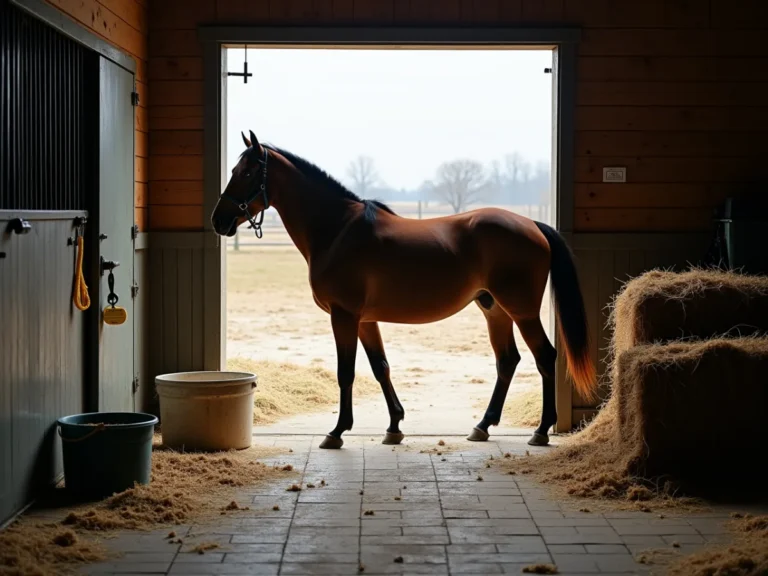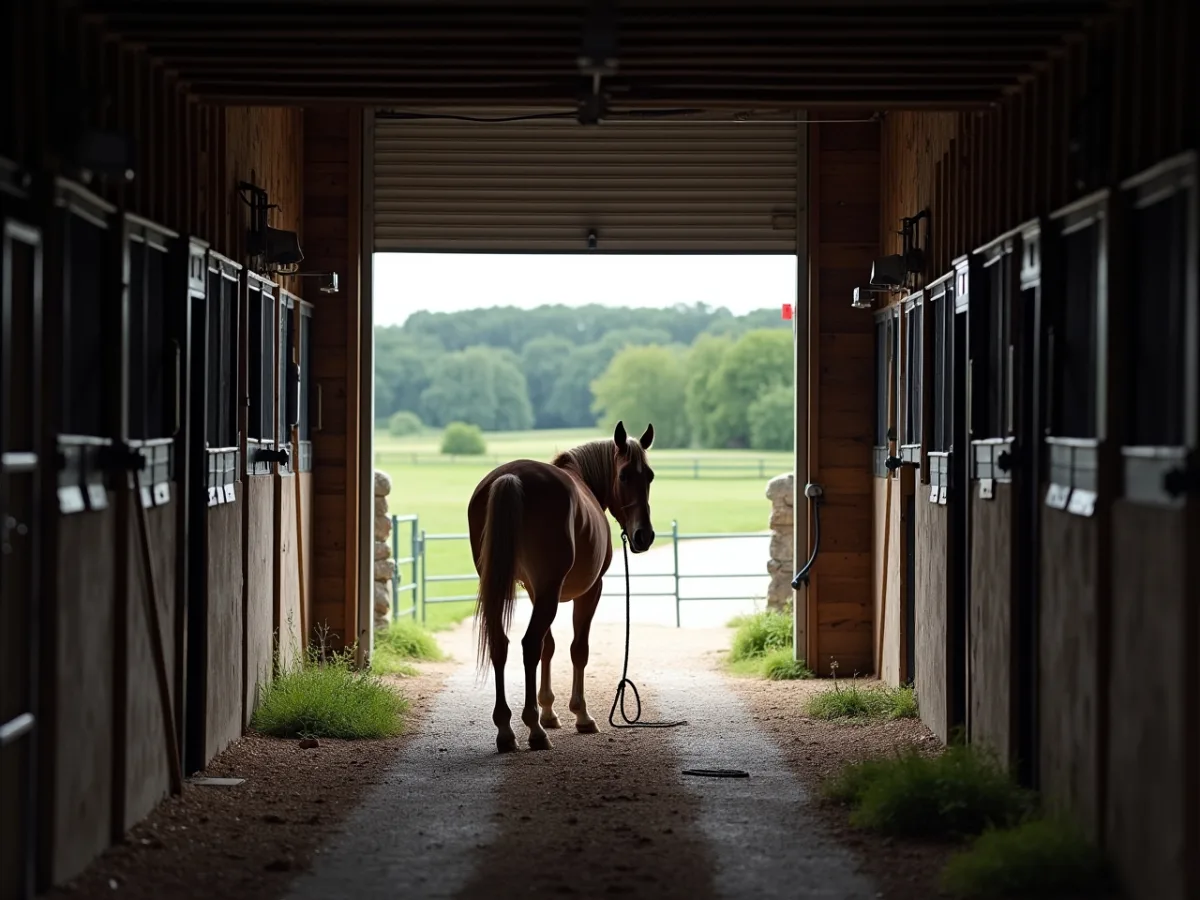
A horse that slows down, braces, or simply refuses to walk toward one particular spot is sending a message that should not be ignored. The reaction may look small at first: a pause at the aisle, a drift away from the mounting block, or a sudden reluctance to cross the same stretch of ground that was fine yesterday. Yet this kind of behavior often has a pattern, and the pattern matters more than the moment itself.
Resistance near certain areas is rarely about one single cause. It can come from a memory, a strong sense of discomfort, a change in surroundings, or a learned expectation that something unpleasant happens there. Horses notice places with remarkable precision. A doorway, corner, wash rack, trailer ramp, gate, or even a patch of footing can become meaningful to them in ways people do not immediately see.
Some resistance is quiet and easy to miss. Other times it is obvious: planting the feet, pulling back, swerving away, or quickening the pace to avoid passing a specific point. In both cases, the horse is making a judgment based on what that location means to him. Reading that judgment well begins with observing the details, not just the refusal itself.
Why Certain Areas Become Difficult
Horses are creatures of habit, and familiar places shape their expectations. When a horse resists a certain area, the location may have developed a negative association through repeated experience. A vet visit at the barn entrance, a painful slip near the wash rack, a rough interaction by the fence line, or a noisy piece of equipment by the gate can all leave a lasting impression.
Sometimes the issue is not a single dramatic event. Small discomforts can accumulate. A tight turn in a corridor, a slippery patch of concrete, a shadow across the ground, or a draft near a doorway can make one spot feel less safe than the rest of the environment. Horses often remember where their footing felt uncertain or where they felt crowded, trapped, or startled.
When resistance appears in the same location again and again, the place itself is often part of the message. The horse may be reacting to memory, footing, sound, smell, pressure, or a combination of all four.
There are also areas that become difficult because of routine. If feeding, injections, trailer loading, tack, exercise, or separation from herd mates regularly happen in one spot, the horse may begin to anticipate pressure there. What looks like stubbornness is sometimes anticipation. The horse is not refusing the area as much as what that area has come to predict.
How the Behavior Appears in Everyday Handling
Resistance can show up in practical ways that owners recognize quickly once they know what to look for. A horse may hesitate just before entering the barn, step sideways past the arena gate, or stop short near the mounting block. Some horses stretch their necks forward but keep the feet still. Others rush through the area once they have committed, as if trying to escape the spot before anything can happen.
In hand, the reaction may look like an increase in pressure against the halter, tension through the neck, or a reluctance to follow light guidance. Under saddle, the signs can be more subtle. A horse may shorten the stride, become heavier in the bridle, drift off the track, or repeatedly spook at the same corner. When the horse knows exactly where the tension begins, the body often becomes guarded before the actual point is reached.
Common places where resistance appears
- Barn doors and aisleways
- Wash racks and grooming areas
- Trailer ramps and loading zones
- Mounting blocks and tacking spots
- Gates, corners, and narrow passages
- Shadows, wet patches, or changes in footing
- Areas near machinery, barking dogs, or loud activity
These places are not inherently difficult, but they can become meaningful through experience. A horse that is otherwise cooperative may still show strong resistance when one of these locations carries a history of discomfort. That contrast is often what surprises owners most.
Possible Internal Reasons Behind the Reaction
Not every refusal points to fear alone. A horse may resist a certain area because of physical discomfort, and that possibility should always be considered first. Pain in the back, hocks, feet, or mouth can make a particular movement feel harder when performed in a certain place. For example, stepping onto hard concrete, turning tightly in a stall aisle, or backing into a trailer may expose discomfort that is not obvious on soft ground.
Some horses develop resistance when they feel trapped or unable to control the situation. Narrow spaces can heighten that feeling. If a horse believes he cannot move away, he may become more defensive as the area gets closer. The behavior can include freezing, tossing the head, widening the eyes, or shifting weight backward.
Memory plays a strong role as well. Horses do not need to be frightened every time to remain cautious. A single difficult moment can stay linked to a place for a long time, especially if the horse is sensitive or has had several unsettling experiences in the same area. The reaction then becomes less about the present moment and more about what the horse expects from that place.
Resistance near a specific area should always raise two questions: does the horse feel safe there, and does the horse feel physically comfortable there?
There is also the horse’s natural preference for predictability. Some animals cope poorly with sudden changes in footing, smell, lighting, or sound. If the environment shifts in a small but noticeable way, the horse may react before a person even sees what changed. That is why a location can be easy one day and difficult the next.
How Surroundings Shape the Response
Environment matters because horses process the world through constant scanning. A spot that seems ordinary to a person may stand out sharply to a horse if something about it has changed. Wet leaves on the ground, a new tarp near the fence, a swinging door, fresh gravel, or an unfamiliar vehicle nearby can all affect whether the horse wants to approach.
Light and shadow can matter more than many owners expect. A dark doorway, reflective puddle, or a sharp patch of sun across the floor may look harmless to human eyes, yet feel uncertain to a horse. The same is true for sounds. A ventilation fan, clanging bucket, or echo in a hallway may not bother the horse until he reaches the exact spot where the sound becomes louder.
The presence of other horses also changes the picture. A horse may resist entering a grooming area if another horse was once anxious there. He may refuse a gate if herd separation has happened repeatedly in that spot. Even the smell of disinfectant, sweat, or feed can become part of the association.
Environmental factors that often intensify resistance
- Slippery, uneven, or noisy footing
- Strong shadows or sudden changes in brightness
- Loud machinery, fans, or metal sounds
- Traffic from people, horses, or vehicles
- Confined space with limited escape options
- Familiar stress linked to feeding, loading, or vet care
Owners sometimes focus on the horse’s reaction and miss the setting that triggered it. Yet the setting often explains why the reaction appears in one area and not another. If the environment is the trigger, the horse may improve quickly once that environment is changed or approached differently.
What the Behavior May Signal About the Horse’s State
Resistance is not a single emotional state. It can reflect caution, discomfort, uncertainty, learned avoidance, or a more guarded response to stress. The key is to watch the whole picture rather than label the horse too quickly. A horse who hesitates but stays soft in the body may be worried. A horse who plants his feet, locks his jaw, and backs away may be more deeply defensive.
Timing also offers clues. If the resistance appears only when the horse is tired, sore, or rushed, the area may simply reveal a problem that is already building. If it happens after a specific event, the horse may be remembering that event. If it appears consistently in one place regardless of the handler, then the location itself is likely central to the behavior.
Some horses show mild concern without escalating. They slow down, inspect the area, and then proceed once they feel reassured. Others become increasingly rigid the closer they get. That progression matters. It can reveal whether the horse is approaching an uncertainty he can manage or one that he has learned to avoid strongly.
Soft hesitation and hard refusal are not the same thing. The first may be caution. The second often means the horse has a stronger reason to avoid the area.
The horse’s state can change from day to day. A horse that easily crosses a corridor when calm may resist it after a long trailer ride, a turnout conflict, or a less comfortable ride. The location has not changed, but the horse’s capacity to cope has.
Subtle Signals That Often Appear First
Before a horse stops outright, the body usually gives hints. These signs can be easy to miss if the owner is focused on getting from one place to another. A slight shortening of stride, a flick of the ears backward, an elevated head, or a shift of weight to the hindquarters may show that the horse is already preparing not to go forward.
Some horses start looking everywhere except at the area they dislike. Others stare directly at it, as if checking whether the threat is still there. Tight lips, a tense muzzle, and a braced neck often appear before the feet stop. A horse may also become unusually slow in the approach, trying to control the distance one small step at a time.
Those early signals are useful because they provide a chance to adjust before the horse feels cornered. A horse that is allowed to process the area calmly may remain far more cooperative than one who is pushed past his warning signs. What seems like a small pause is often the horse’s attempt to self-manage.
Signals that often show up together
- Hesitation before the exact location
- Neck stiffness or raised head carriage
- Weight shifting backward
- Ear tension or quick ear flicking
- Shorter steps or a drift to one side
- Snorting, staring, or rapid scanning
- Backing up after approaching
These signs do not always mean the horse is anxious to the same degree. They do, however, show that the area has become important enough to affect movement. That alone deserves attention.
How People Often Misread the Behavior
It is common to call a horse “stubborn” when he resists one spot repeatedly. That explanation is convenient, but often incomplete. A horse may appear disobedient when he is actually uncertain, uncomfortable, or trying to avoid something he has linked to that area. The difference matters because the response from the handler usually changes the horse’s reaction.
Another common mistake is assuming that the horse is being dramatic because he walks past the same place on another day. Horses can be highly context-dependent. A familiar area may feel fine when the horse is relaxed, but not when he is carrying tension from somewhere else. People often interpret this inconsistency as randomness, when it may actually reflect a shift in the horse’s internal state.
There is also the assumption that every hesitation is fear. In reality, some resistance is practical. A horse might avoid a wet patch because it feels slippery, or stop at a narrow gate because turning through it is awkward. The behavior may not be emotional in a broad sense. It may be a very specific judgment about footing, balance, or space.
A horse does not need to panic to resist. Sometimes the reason is simple, practical, and deeply reasonable from the horse’s point of view.
When people read the behavior accurately, they are better able to respond in a way that helps instead of escalates. That usually means paying attention to where the resistance starts, what changes around that spot, and how the horse’s body tells the story before the refusal becomes obvious.
How Different Areas Create Different Reactions
Not all difficult places create the same kind of resistance. Some areas make horses hesitant because they are visually confusing. Others feel physically awkward. A trailer ramp may trigger concern because it rises and moves underfoot. A stall door may cause resistance because it feels like a narrow boundary. A ring corner may be difficult because horses often anticipate work there, and the pressure increases before the turn even begins.
Wash racks are a common example. The horse may dislike the texture underfoot, the sound of running water, or the confinement of the space. The issue may not be the washing itself, but the combination of slick footing, noise, and limited room to move. In a pasture gate, the problem may be social tension, especially if the horse expects separation from companions or a change in routine.
Even a location that seems harmless can become difficult if it is linked to repeated demands. If every time the horse enters that area he is asked to stand still, lower his head, accept handling, or work harder than expected, the place may start to feel like a cue for pressure. The horse learns the pattern faster than many owners realize.
When Resistance Becomes More Noticeable
Resistance often becomes sharper when the horse is already under strain. Cold weather can make movement less comfortable. Heat may lower patience and raise irritation. Fatigue after exercise, boredom from stall rest, or stress from a disrupted turnout schedule can all reduce tolerance for places that already feel uncertain.
Young horses may show the behavior more readily because they have fewer experiences to build confidence. Mature horses can also struggle if they have been moved to a new barn, introduced to unfamiliar footing, or asked to revisit an area where a negative memory was never fully resolved. Experience alone does not erase concern. Sometimes it just makes the concern more specific.
Some horses are more consistent than others. A quiet horse may remain mildly cautious but never become dramatic. Another horse may show very little notice of an area for months and then suddenly begin resisting after a single bad day. That change does not always mean the horse has become worse overall. It may mean the memory was stronger than it first appeared.
What Long-Term Patterns Usually Suggest
When the same area keeps producing the same response over time, the pattern usually deserves closer attention than the moment itself. Long-term consistency can indicate a stable association, a recurring physical issue, or a feature of the environment that keeps making the horse uneasy. The challenge is to avoid assuming that the horse is simply being difficult because the behavior is familiar.
Some owners notice that the horse resists more in one season than another. That can happen if weather, footing, turnout, or workload changes. A muddy approach to the arena in spring may create a different response than a dry, firm path in summer. A dim barn aisle in winter may feel more uncertain than it does in daylight. The horse is responding to a situation that is partly the same and partly different.
Long-term observation also shows whether the horse is improving or only coping. A horse that once halted and now merely slows down may be learning that the area is manageable. A horse that has gone from hesitation to repeated backing or spinning may be telling you the issue is intensifying. Those are not the same story.
| Type of response | What it may suggest |
|---|---|
| Brief hesitation | Caution, curiosity, or mild concern |
| Repeated slowing in one spot | Learned association or environmental trigger |
| Planting feet or backing away | Stronger avoidance or defensive response |
| Swerving or rushing through | Attempt to escape the area quickly |
| Changing behavior over time | Shift in comfort, routine, or physical state |
Patterns are most useful when they are observed without rush. The horse’s behavior near a specific area is often layered, and the layers become easier to see when the same moment is watched across several days instead of judged once.
What Helps Make Sense of the Reaction
Understanding resistance begins with asking what is different about the area, not what is wrong with the horse. That shift in perspective is practical. It keeps attention on footing, noise, memory, pain, space, and routine. It also prevents owners from overlooking the horse’s physical comfort, which should always remain part of the assessment.
It helps to notice whether the horse resists only when approaching, only when entering, or only when leaving. That distinction can point to the underlying reason. Approaching may suggest anticipation. Entering may suggest spatial concern. Leaving may suggest separation stress or a desire to return to the herd, stall, or familiar route.
Body language across the whole horse matters more than a single dramatic gesture. Ears, neck, stride, breathing, and posture often tell the story before the feet do. When those signals are read together, the behavior becomes less mysterious. The area may still be difficult, but the reason behind the difficulty becomes clearer.
A horse that resists one specific place is not giving random feedback. He is identifying a place where his comfort, confidence, or expectations change.
That message can be subtle or bold, temporary or long-standing. Either way, it usually has a pattern, and the pattern is worth noticing in ordinary barn life, not just when the horse has already stopped moving.