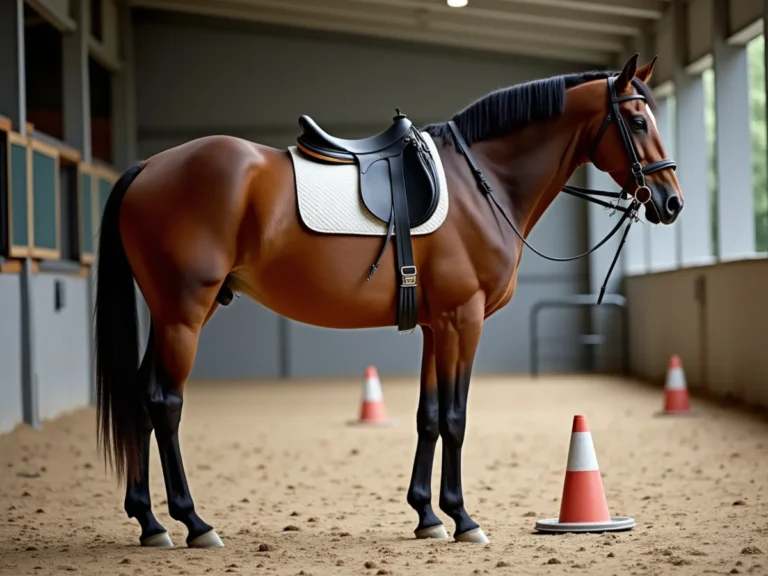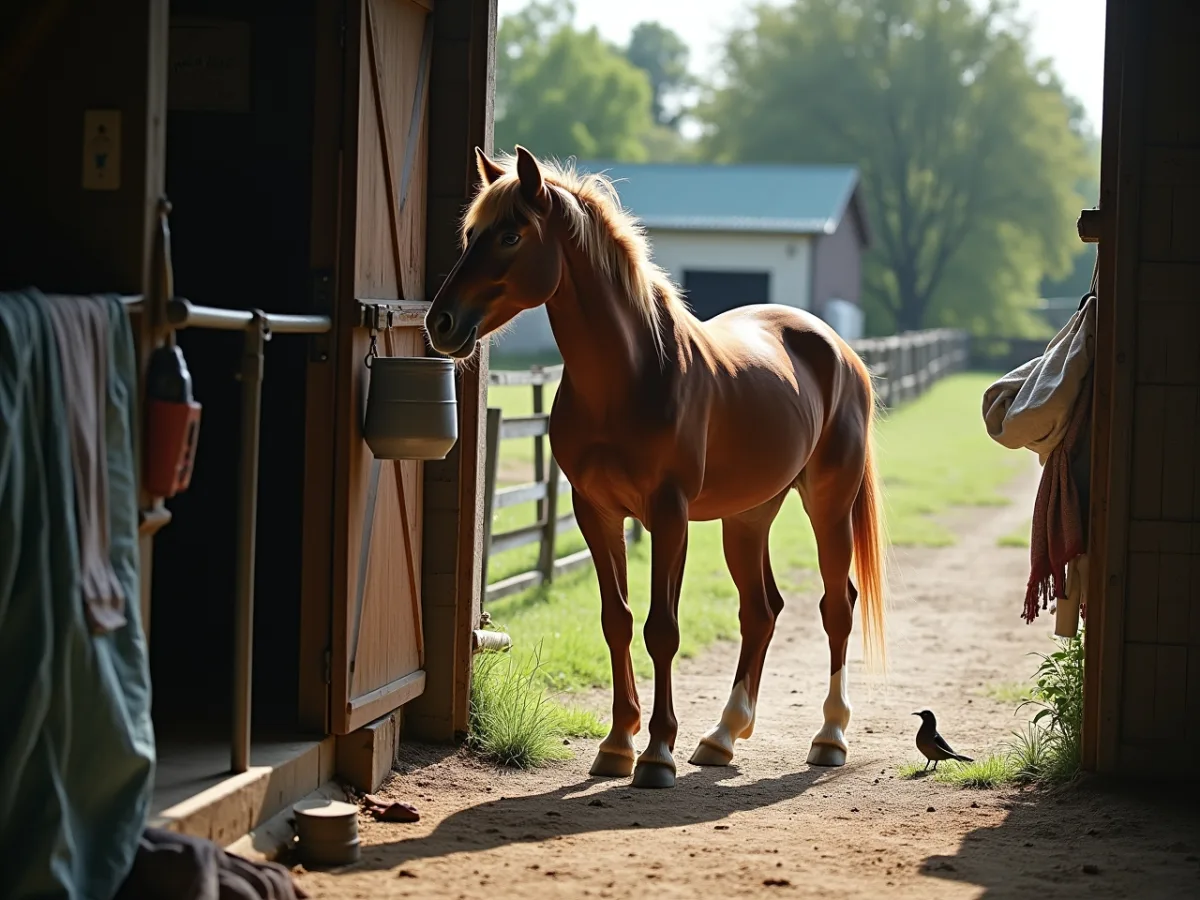
A horse that reacts sharply to a tiny movement or a faint sound can seem unpredictable at first. One moment everything looks quiet, and the next the horse jumps, startles, or turns its attention to something barely noticeable. That reaction is often less about drama and more about how the horse is reading its surroundings.
Small triggers can matter a lot to a horse because its senses are built to notice change fast. A shifting shadow, a loose tarp, a crack in the barn, or a bird taking off nearby may be enough to create a sudden response. In many cases, the horse is not trying to be difficult. It is reacting to a signal that feels important in the moment.
This kind of behavior can show up in the stable, the pasture, while being led, or under saddle. Sometimes it passes quickly. Sometimes it lingers, and the horse stays tense for a while after the first reaction. The difference often tells you more than the movement itself.
Why Small Triggers Can Feel Big to a Horse
Horses are naturally alert animals. They depend on quick awareness to stay safe, which means they tend to notice changes in sound, texture, motion, and space long before humans do. What seems minor to us may register as meaningful to them.
A horse does not always react because it is frightened in a dramatic way. Sometimes the response comes from simple uncertainty. The horse hears something out of place, sees an object move, and wants to assess it before deciding whether to relax again.
That pattern can be very normal. It becomes more noticeable when the horse is already on edge, tired, bored, underworked, overstimulated, or in a new environment. In those moments, the threshold for reacting is much lower.
Common reasons small triggers stand out
- Horses notice sudden changes faster than humans often do.
- Past experiences can make a similar sound or movement feel important.
- Limited turnout or lack of routine may increase alertness.
- Noise, weather, and unfamiliar surroundings can add tension.
- Some horses are simply more sensitive by temperament.
Small reactions often make more sense when you look at the horse’s overall state, not just the trigger itself.
How It Appears in Daily Handling
Overreacting to small movements or sounds does not always look dramatic. It may start with a flick of the ears, a quick head lift, a tightened neck, or a brief pause before the horse moves again. In other cases, the reaction is larger: a sidestep, a spin, a jump forward, or a rush away from the sound.
When leading a horse, the reaction may show up as pulling back, swinging the hindquarters, or trying to move out of range of the perceived threat. At the grooming area, the horse might flinch at the brush, start when a gate clangs, or become restless when another horse calls nearby. During tacking up, a squeaky buckle or the rustle of a jacket can be enough to interrupt the process.
Under saddle, these responses may be harder to read because the horse has more pressure on it. A small reaction can become a bigger one if the horse feels trapped or unsure. The same sound that would be ignored in a pasture may trigger a sharp movement in the arena.
Signs that often come before a larger reaction
- Ears locking onto one point
- Eyes widening or staring
- Neck raising above normal
- Muscles tightening through the back or shoulder
- Brief hesitation before stepping forward
These signals matter because they give a short warning. A horse rarely explodes from nowhere. There is usually a buildup, even if it lasts only a second or two.
What the Reaction May Be Saying
A quick, exaggerated response to a small sound or motion can mean several things. The horse may be startled, but it may also be uncertain, uncomfortable, or mentally overloaded. The behavior alone does not tell the full story.
Some horses react because they are highly observant and do not want to miss anything. Others react because they feel trapped by the situation. A horse tied in a busy barn aisle, for example, may respond more strongly than the same horse loose in a quiet field, simply because it cannot control the space around it.
Repeated reactions to very small things can also hint at a nervous baseline. That does not automatically mean the horse is fearful all the time. It may mean the horse is carrying tension from recent changes, inconsistent handling, pain, poor rest, or a long history of being on edge.
If a horse suddenly becomes much more reactive than usual, the change in behavior matters as much as the behavior itself.
Internal Reasons Behind the Response
Not every overreaction is about the environment. Sometimes the cause is internal. Discomfort can make a horse much quicker to jump at small things. Pain in the back, feet, teeth, neck, or abdomen may lower tolerance for surprise and make the horse feel less secure in its body.
Stress also plays a role. A horse that has had a schedule change, a herd change, or a recent move may be more reactive for a while. Even a horse that appears settled can show more sensitivity when its routine is interrupted. Horses often rely heavily on predictability, and unexpected change can make them more watchful.
Fatigue can contribute too. A tired horse may seem less able to filter out harmless stimulation. The brain stays alert, but the body does not have the same reserve to settle after a brief startle.
Internal factors that may increase reactivity
- Pain or physical discomfort
- Digestive upset or general unease
- Sleep deprivation or poor rest
- High stress from recent changes
- Hormonal shifts in some horses
When the reaction feels out of character, it helps to think beyond manners and look at the horse’s overall condition.
How Environment Changes the Way the Behavior Shows Up
The same horse may react very differently depending on where it is. A quiet pasture in daylight gives a horse more room to check things out. A crowded barn aisle, a windy arena, or a trailer can make ordinary sounds feel sharper.
Weather matters more than many people expect. Wind moves objects, creates extra noise, and changes what the horse can see. Rain on a roof, loose metal, rustling tarps, and sudden gusts can all create repeated small surprises. Even the scent of the air changes with weather, and horses notice that, too.
Lighting can affect reaction as well. Shadows across a floor, a patch of sun moving on a wall, or a doorway that shifts from bright to dark may cause hesitation. A horse may not be reacting to an object itself, but to the way that object looks in that moment.
| Setting | Common trigger | Typical reaction |
|---|---|---|
| Stable aisle | Clanging bucket, door latch, echo | Startle, head lift, step away |
| Pasture | Bird flight, fence movement, wind | Brief alertness, scan, quick move |
| Arena | Shadows, footstep sounds, flags | Tension, hesitation, sidestep |
| Trailer | Rattle, motion, confinement | Brace, rush, refusal, sweating |
Calm Reaction or Stress Reaction?
Not every startled response means the horse is highly stressed. Some horses react, check the source, and settle right away. Their body softens again, the ears move on, and they return to what they were doing without much trouble.
That is different from a horse that stays tense after the initial response. A stressed horse may keep looking, keep moving, or remain unable to relax. It may breathe quickly, hold the neck rigid, or continue scanning the area long after the sound is gone.
The quality of recovery is often more useful than the size of the reaction. A big jump followed by immediate relaxation can be less concerning than a tiny flinch that turns into ongoing tension.
Helpful distinctions to notice
- Does the horse settle quickly or stay watchful?
- Is the reaction the same every time?
- Does it happen only in certain places?
- Does the horse seem sore, tired, or distracted?
- Has the horse’s routine changed recently?
A horse that startles and then returns to neutral is different from a horse that never fully leaves the alert state.
How People Often Misread the Behavior
People sometimes assume a horse that reacts to tiny things is being stubborn or theatrical. In reality, the horse may be trying to stay safe. The behavior can look dramatic from the outside, but internally it may be a simple attempt to process something unfamiliar.
Another common misunderstanding is thinking that every reaction means the horse is nervous by nature. Some horses are naturally more reactive, but even a steady horse can become unusually sensitive when something is off. A sudden increase in reactions should never be dismissed as just personality.
It is also easy to miss the smaller signs that come before the bigger movement. By the time the horse leaps, the body has already been communicating discomfort or uncertainty. Ears, posture, breathing, and foot placement often give a clearer picture than the final burst of movement.
What Changes the Threshold for Reacting
Many horses have a threshold, even if it is not always obvious. When things stay below that level, the horse remains fairly relaxed. When one more sound, movement, or pressure point gets added, the response comes quickly.
That threshold can move from day to day. A horse that is calm one afternoon may be much quicker to react the next morning after a poor night, a change in feed, a noisy work area, or a long period of standing still. The horse is not necessarily regressing. The internal margin for tolerance has simply shifted.
Routine often helps keep that threshold steadier. Horses tend to do better when feeding times, turnout, handling, and work patterns remain predictable. Even small disruptions can create a sense of uncertainty that shows up as extra alertness.
Things that often lower the threshold
- Inconsistent turnout or exercise
- Sudden changes in feed or stable routine
- Too much standing without release
- Too much noise and activity nearby
- Poor-fitting tack or physical soreness
When the Reaction Becomes More Noticeable Over Time
Some horses begin to show this behavior more clearly after a change in life stage or workload. A young horse may react because it is still learning what belongs in its environment. A more experienced horse may react because it has become sensitive after a stressful period or an uncomfortable season.
In a horse that used to be steady, a new pattern of overreacting is worth paying attention to. The change may happen slowly. First there is a little more tension, then a few extra startles, then a stronger response to the same kinds of sounds the horse once ignored.
That gradual shift can be easy to overlook if the horse is otherwise eating, moving, and working normally. But consistent behavior changes often show up in subtle ways long before they become obvious.
Behavior that changes gradually deserves the same attention as behavior that appears suddenly.
How the Horse’s Body Gives Clues
The body usually tells the truth before the reaction fully unfolds. A horse may brace through the topline, tuck or lift the tail, or tighten the jaw. Some horses widen their eyes, while others go very still and seem to hold their breath.
Stillness can be a warning sign, not a sign of calm. A horse that freezes to listen is not always relaxed. In some cases, the horse is collecting information before deciding whether to move.
Foot placement can matter too. A horse that keeps shifting weight, stepping away from pressure, or repeatedly repositioning itself may be showing low-level unease. Those small adjustments often appear before a larger startle.
Body language that often accompanies overreaction
- Raised head and hollowed back
- Tense lips or clenched jaw
- Rapid ear movement
- Short, quick steps
- Difficulty standing still
Practical Meaning in Everyday Horse Life
In daily life, this behavior often points to a horse that needs clearer conditions, not harsher correction. The horse may do better with quieter handling, more time to process new things, and fewer sudden surprises in its surroundings. Sometimes the best change is not a big one.
A quieter aisle, a slower approach, or a little extra distance from a noisy object can lower the horse’s response enough to keep the moment manageable. When the reaction is linked to pain or discomfort, making the horse more obedient will not solve the problem. The source still needs attention.
Owners often notice that the horse behaves better when life is consistent. Regular turnout, dependable routines, and careful observation can make a real difference. That does not erase the horse’s sensitivity, but it gives that sensitivity fewer chances to spill into a bigger startle.
Reading the Pattern Instead of the Moment
One startled movement is not very informative on its own. A pattern tells more. If the horse reacts only to specific sounds, only in certain places, or only during stressful periods, the cause may be fairly localized. If the horse reacts to many tiny things across different settings, the horse may be carrying broader tension.
Pattern also matters for timing. Reactions that happen after confinement, after turnout changes, or after days of limited exercise can point to a relationship between routine and sensitivity. Reactions that appear during handling but not in the field may suggest the horse feels less able to control its space around people.
The goal is not to eliminate every startle. That is not realistic. The more useful question is whether the horse returns to balance quickly, whether the reactions are becoming more frequent, and whether the environment is adding avoidable pressure.
What a Steady Response Looks Like
A horse with a steadier response still notices things. It just does not escalate as easily. The ears may flick toward the sound, the horse may glance at a moving object, and then the body comes back to neutral without much effort.
That kind of response often reflects a combination of physical comfort, predictable routine, and enough trust in the surroundings to keep moving. It does not mean the horse is dull. It means the horse can process information without getting pulled into repeated alarm.
When a horse begins to show more of that balance, the change often appears in small moments first. Fewer abrupt shifts, less muscle tension, and faster recovery after a surprise can all show that the horse feels more settled in the day-to-day environment.
Closing Thoughts in the Barn Aisle
Overreacting to small movements or sounds is often a sign that a horse is working hard to interpret the world around it. Sometimes that means natural alertness. Sometimes it means stress, discomfort, or a setting that feels too busy to ignore. The response itself is only part of the story.
What matters most is the shape of the behavior over time. A horse that startles briefly and relaxes again is telling a different story from one that stays tense, keeps reacting, or becomes more sensitive week by week. Careful observation of the whole pattern usually gives clearer answers than any single moment.
In everyday horse care, the smallest reactions are often the ones that reveal the most.