Difficulty focusing during training can show up in many small ways. A horse may drift its attention toward the gate, start fidgeting, rush through familiar work, or seem mentally absent even when the body is moving correctly. Some horses look alert but never settle. Others appear calm on the outside while clearly missing the point of the exercise.
This is not always a sign of stubbornness. In many cases, the horse is responding to something in the environment, the routine, or its own level of stress and physical comfort. A horse that cannot stay mentally present may be confused, tired, under-stimulated, over-stimulated, or simply not ready for what is being asked.
Training asks a horse to divide attention in a way that does not come naturally. The horse must listen to a rider, process cues, manage movement, and remain aware of surroundings at the same time. When focus breaks down, the reason often becomes clearer once the full picture is examined.
How difficulty focusing appears in real training sessions
Loss of focus is often visible before it becomes obvious in performance. A horse may keep turning the head away from the work, repeatedly look at the same corner, or miss familiar cues that were usually easy. Another horse may start offering extra movement, such as backing up, swinging the hindquarters, or constantly changing pace.
Some horses become busy in the body when their minds are elsewhere. They move, but not with purpose. The gait may become uneven, transitions may feel delayed, and responses that were once soft become dull or scattered. In hand, that might look like pulling, stepping into the handler’s space, or stopping every few seconds to inspect something nearby.
In riding work, the signs can be even more subtle. The horse may tilt attention toward other horses, ignore the rider’s leg, or become inconsistent from one direction to the other. These changes are easy to blame on attitude, but they often reflect a change in concentration rather than a deliberate refusal.
A horse that seems “not listening” is often listening to too many things at once, or trying to manage more than the training session is asking.
Common patterns owners notice
- Repeated looking away from the task
- Delayed response to familiar cues
- Rushing, then checking out mentally
- Spooking at minor changes in the surroundings
- Switching between dullness and sudden reactivity
- Drifting toward the barn, pasture, or other horses
These patterns matter because they show how attention is breaking down. A horse may not be fully distracted in the same way every time. One day the issue is mild and manageable. Another day the same horse seems unable to stay with the work for more than a few seconds.
Why horses struggle to stay mentally present
There is usually a reason behind wandering attention. Horses are sensitive animals, and their focus is shaped by comfort, confidence, and the amount of pressure they feel. If the lesson feels confusing or the requests come too quickly, the horse may mentally step away from the task.
Physical discomfort is another common cause. A horse that is sore in the back, stiff in the joints, or unhappy with tack may have trouble paying attention because part of the mind is occupied with discomfort. Even minor issues can change concentration. A saddle that pinches, a bit that feels unstable, or muscle fatigue from previous work can all affect focus.
Emotional state matters too. A horse that is anxious will often scan the environment instead of settling into the session. A horse that is bored may stop trying to understand the work. A horse that is uncertain may keep waiting for a clearer signal and never fully relax into the pattern.
Internal reasons that can interfere with training focus
- Confusion about the task
- Stress or worry
- Physical pain or stiffness
- Fatigue after hard work
- Low engagement from repetitive routines
- Previous bad experiences linked to the same exercise
When focus drops, the first question is often not “How do I make the horse obey?” but “What is making it hard to think right now?”
That shift in perspective changes the response. Instead of pushing harder, the handler can look for patterns. Does the horse lose attention only after twenty minutes? Only in one arena? Only when other horses leave? Those details usually point to the real issue faster than trying to correct the behavior in the moment.
How the environment affects attention
Surroundings play a major role in how well a horse can focus. A quiet indoor arena creates a very different mental environment from a busy showground or open field edge. Even a familiar place can become distracting if the routine changes. A new piece of equipment, loud machinery, extra traffic, or nearby horses can pull attention away quickly.
Horses notice movement, sound, and change with great sensitivity. A banner flapping near the fence, a gate left open, or another horse calling from across the property may be enough to interrupt concentration. Some horses settle after a brief look. Others keep returning to the same distraction and never fully come back to the work.
Weather and surface conditions matter more than many owners expect. Wind can make a horse more watchful. Cold temperatures may make the body feel tight, which affects patience. Mud, deep footing, or an unusually hard surface can create discomfort that shows up as mental restlessness.
Environmental factors that often reduce focus
- Sudden noise
- Visible movement outside the work area
- Changes in footing
- Wind, rain, or extreme temperature
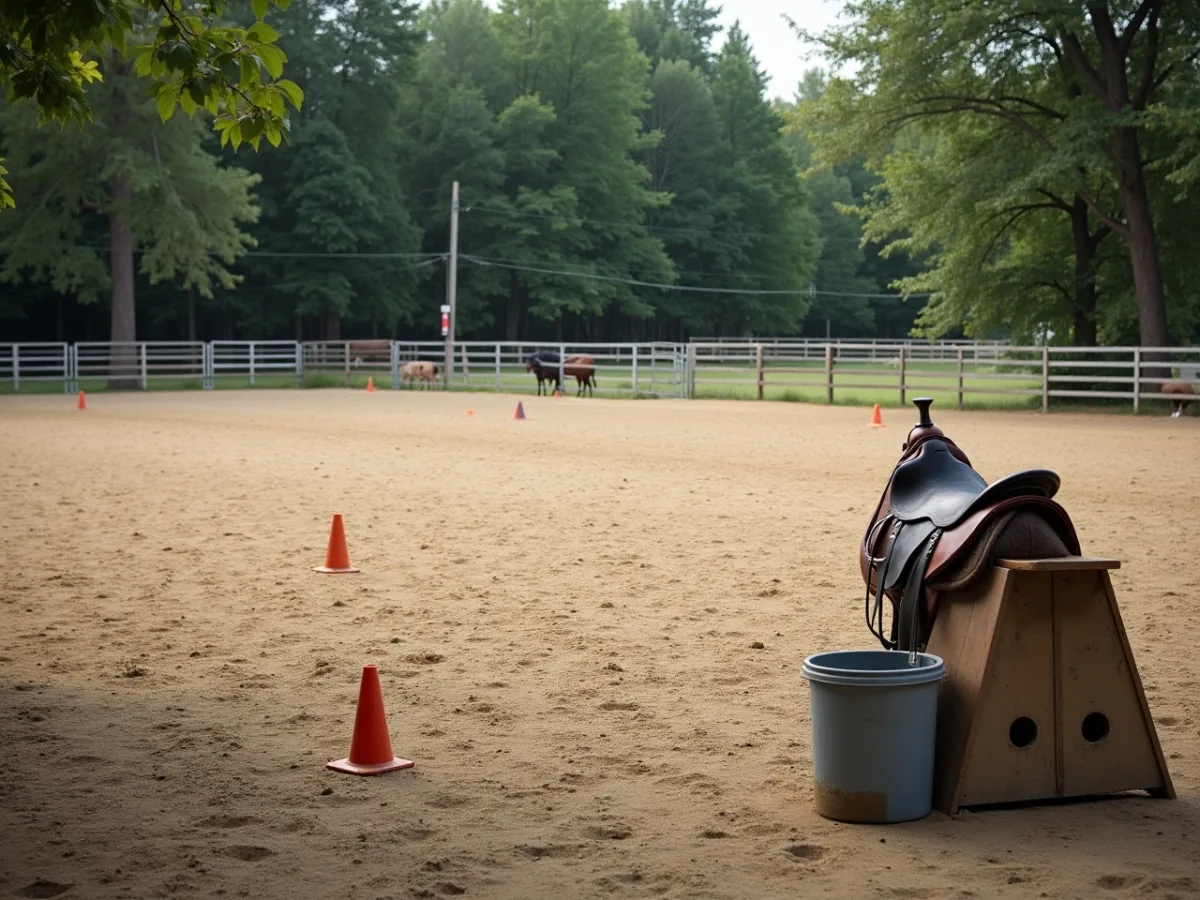
- New objects in the arena or barn aisle
- Nearby herd separation
Routine also shapes attention. A horse that always works in the same place may become predictable and mentally efficient, but it can also become quick to notice any change. Some horses concentrate better in familiar settings, while others are more settled when the day follows a steady pattern with feeding, turnout, and training at consistent times.
What the horse may be communicating
Difficulty focusing is often a kind of signal. It may mean the horse is uncomfortable, uncertain, or overstimulated. It may also mean the horse does not yet understand what the rider wants well enough to stay mentally organized through the exercise.
When the issue is linked to stress, the horse may show additional signs: tight muscles, a raised head, shallow breathing, a tense mouth, or quick reactions to simple aids. When the issue is more about boredom or repetition, the horse may appear flat, slow to respond, and willing to go through the motions without real engagement.
These two forms can look similar from a distance, but they are not the same. A worried horse and a disengaged horse may both seem inattentive, yet the handling approach should be very different. One needs more reassurance and clearer structure. The other may need variety, sharper timing, or a shorter session before attention fades.
| Type of focus problem | Common signs | What it may reflect |
|---|---|---|
| Stress-related | Scanning, tension, quick reactions, rushing | Worry, uncertainty, overstimulation |
| Confusion-related | Delayed response, mixed signals, checking out | Unclear cues or incomplete understanding |
| Fatigue-related | Slower effort, dull response, inconsistent balance | Physical tiredness or soreness |
| Boredom-related | Flat energy, loss of interest, predictable resistance | Repetition or lack of mental engagement |
Not every distracted moment means something serious. Horses have normal off days. But a repeated pattern usually deserves attention. The goal is not to force stronger concentration at any cost. It is to notice what interrupts it and why.
How focus changes in different training situations
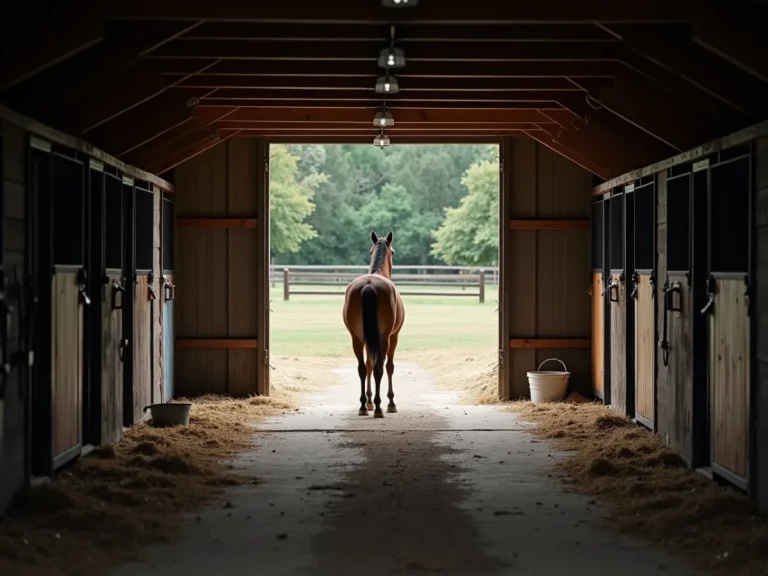
At the stable, a horse may struggle to focus because the barn environment is full of small interruptions. Feed time, movement in the aisle, other horses calling, and changing routines can make it harder to settle. Some horses are especially watchful at the stall door and seem mentally half-present from the start of the session.
In the field or pasture, attention often depends on herd dynamics. A horse that wants to stay near companions may spend more energy thinking about separation than about the handler. If work begins right after turnout or when herd members are visible nearby, focus can be especially fragile.
Under saddle, distraction may become more noticeable when the work asks for more precision. A horse may manage walking work fairly well but lose concentration during transitions, lateral exercises, or patterns that require sustained attention. The more mentally demanding the task, the more visible the weakness in focus becomes.
Transport and travel can also affect concentration later in the day. Even a horse that arrives safely and behaves well may be mentally drained by the time training begins. New locations, unusual footing, and a schedule that is already off can create a horse that is physically present but mentally scattered.
Focus often drops fastest when the horse is asked to work while still processing change, noise, herd pressure, or fatigue from earlier events.
Why the same horse may focus well one day and poorly the next
Consistency is not only about the horse’s personality. It is also about context. A horse that works well in the morning may become less attentive in the afternoon if turnout, feeding, or weather conditions have changed. A horse that is usually sharp may lose concentration after a heavy lesson the day before.
Small changes add up. Less sleep, more insects, a new rider, a tighter schedule, or unusual barn activity can all affect attention. Horses do not always show the effect immediately, but the difference often appears in the quality of the work. The session may look ordinary from the outside while the horse is clearly struggling to organize its thoughts.
Long-term patterns are especially useful. If focus consistently drops at the end of a ride, fatigue is worth considering. If it happens only in one arena, the space itself may be part of the problem. If the horse stays attentive during groundwork but not under saddle, the issue may be tied to pressure, balance, or tack rather than general temperament.
Questions that help narrow the cause
- Does the horse lose focus in the same place every time?
- Does the problem appear after a certain amount of work?
- Is the horse more distracted with other horses nearby?
- Do tack changes affect the behavior?
- Does focus improve after rest, turnout, or a quieter routine?
The answers do not need to be dramatic to be useful. Even minor improvements can show which factor matters most. A horse that concentrates better after a shorter session is giving practical information. So is a horse that settles once the surroundings become quieter.
When distraction becomes part of a larger pattern
A horse that cannot focus only once in a while is different from a horse that rarely settles at all. The first may simply be reacting to a temporary situation. The second may be showing a deeper pattern that needs closer attention. That pattern can involve chronic discomfort, poor confidence, too much pressure, or a routine that does not match the horse’s temperament.
Some horses remain mentally busy because they have never learned how to relax during work. They may understand the mechanics of the task but still feel on edge. Others become mentally dull because the work is too repetitive or because they have learned that nothing changes when they pay attention. Both situations can look like poor focus, yet each asks for a different response.
Over time, the horse’s reaction to training can reveal whether the problem is temporary or structural. If the horse becomes more focused with rest, clearer cues, and a calmer setup, the issue may be manageable with small changes. If the pattern grows stronger or spreads into other parts of daily handling, it may be worth looking beyond the session itself and into the horse’s overall comfort and routine.
What helps a horse stay mentally with the work
Support starts with clarity. Horses focus better when the requests are simple, consistent, and easy to understand. Frequent changes in expectation make it harder for the horse to stay mentally organized. Shorter sessions often help more than longer ones, especially when the horse is already distracted or a bit tired.
It also helps to remove avoidable distractions when possible. Sometimes that means choosing a quieter time of day. Sometimes it means checking tack fit, footing, or nearby activity before asking for more demanding work. A horse that feels comfortable and safe usually has more room to pay attention.
Variety can also improve focus when boredom is part of the problem. That does not mean turning every session into something new. Small changes are often enough. A different pattern, a brief walk break, or a simple transition exercise can restore interest without overwhelming the horse.
Better focus usually comes from making the work easier to understand, not from asking for more intensity.
That idea matters because a horse that is mentally overloaded rarely becomes sharper through pressure alone. When the environment, the routine, and the task are all working together, attention tends to return naturally. The horse does not need a perfect day. It needs enough comfort and clarity to stay present long enough to learn from the session.
On other days, the best choice may be to scale back. A shorter lesson, lighter expectations, or a quiet groundwork session can preserve the horse’s mental energy. That kind of adjustment is often more useful than trying to finish a difficult ride while the horse is already drifting away from the job.
How to interpret attention without rushing to conclusions
Difficulty focusing during training is rarely one single thing. It can be tied to stress, pain, routine, confusion, or simple distraction. The same outward behavior may mean different things depending on when it happens and what else is going on around the horse.
A horse that looks unfocused may need rest, clearer communication, less stimulation, or a check for discomfort. Another horse may need a more interesting task or a more predictable routine. The key is to read the whole picture instead of reacting to one moment in isolation.
When the horse starts to struggle with attention, the details matter. The timing, the setting, the type of work, and the horse’s physical state all help explain what is happening. With that information, the behavior becomes easier to understand and easier to work with in everyday training.