Some horses look settled one day and noticeably different the next. They may stand quietly in the stall on Monday, then seem distracted, tight, or unusually vocal on Tuesday. The change can be small or obvious, but it often leaves owners wondering whether something is wrong.
Inconsistent behavior across different days is not always random. Horses respond to routine, surroundings, body comfort, weather, workload, and their own memory of past experiences. A horse that seems unpredictable may actually be giving very consistent responses to changing conditions.
What looks like a mood shift is often a clue. The key is to notice patterns across days, not just one moment. That means looking at the whole picture: turnout, feed timing, exercise, handling, rest, and the little details that make one day feel different from the next.
Why a Horse May Seem Different From Day to Day
Horses do not wake up with a blank slate. They carry forward what happened yesterday, what they expect today, and how their body feels in the moment. Small changes can affect how they move, how quickly they respond, and how comfortable they seem with ordinary handling.
One day a horse may be relaxed because the routine is familiar and the body feels good. The next day, the same horse may seem guarded because of soreness, fatigue, a change in feed, a windy afternoon, or tension from a different turnout group. To a person, it can appear inconsistent. To the horse, the conditions are different enough to matter.
Day-to-day changes in behavior often point to changing comfort, confidence, or stimulation rather than a fixed personality shift.
This is why the same horse can seem patient in the aisle, restless in the arena, and distracted at the mounting block on different days. The setting matters. So does the memory of the last few hours.
How Inconsistency Shows Up in Everyday Handling
Owners often notice this behavior first during simple daily tasks. A horse that usually stands quietly for grooming may shift weight, pin ears, or step away on certain mornings. Another horse may be easy to lead one day but rush ahead the next. These changes can appear without any dramatic warning.
Feeding time often reveals the clearest differences. Some horses wait calmly when their schedule stays steady, then become more impatient if a meal is delayed. Others are fine in the stall but sour when the barn is noisy or when other horses are getting feed first. The behavior is not always about food alone. It can reflect frustration, anticipation, or an increase in alertness.
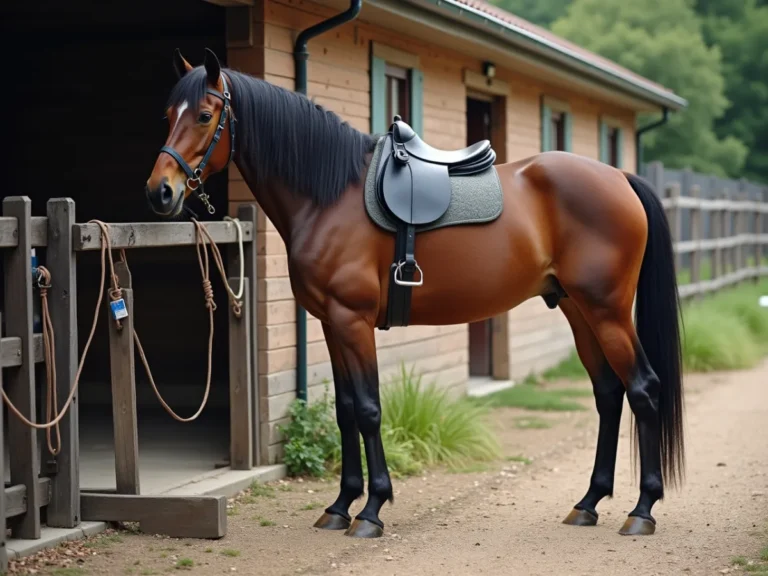
During tacking up, inconsistency may show as sensitivity that comes and goes. A horse may accept the saddle on one day and flinch the next. That does not automatically mean defiance. It may mean a sore back, a stomach issue, or simple discomfort from a girth that felt fine yesterday but not today.
Even at turnout, daily variation can show. A horse may leave the gate willingly on one day and hesitate on another. The difference might be mud, footing, herd tension, or a change in how much energy the horse has after a night in the stall.
What This Can Signal About Physical Comfort
When behavior changes from day to day, physical comfort is one of the first things to consider. Horses are good at masking discomfort, so the signs can be subtle. A horse that is a little less willing to move forward, less tolerant of touch, or more reactive than usual may be dealing with pain or strain.
Some physical issues create a pattern that comes and goes. Mild stiffness may be more noticeable after rest and ease once the horse warms up. A saddle fit issue may bother the horse more on certain days if coat thickness, muscle tone, or workload changes. Foot discomfort may show up more clearly on hard ground than on soft footing.
- Soreness after work may cause reluctance the following day.
- Stomach discomfort can make a horse tense, watchful, or defensive.
- Dental problems may affect willingness to accept the bridle or bit.
- Muscle tightness may create stiffness that changes from one morning to the next.
These signs do not prove a diagnosis, but they make inconsistency worth closer attention. When a horse’s behavior shifts with no clear handling reason, the body should be part of the conversation.
How Routine and Environment Shape Day-to-Day Behavior
Routine matters more than many owners realize. Horses are sensitive to timing, noise, movement, and the order in which things happen. A quiet stable morning may produce a very different horse than a busy afternoon with tractors, visitors, and horses being moved in and out.
Weather also changes behavior in small but meaningful ways. Wind can make a horse sharper. Heat can make one dull and impatient. Cold weather may increase stiffness and make some horses more reactive when first brought out. Rain, flies, and changing footing all add their own pressure.
Sometimes the cause is as ordinary as a shift in the daily schedule. If turnout happens later than usual, a horse may pace. If work begins at a different time, the horse may seem unsettled. Horses often learn the rhythm of the day very quickly, and even small changes can be enough to alter behavior.
Common environmental triggers
- Loud barn activity
- New horses nearby
- Different turnout companions
- Changes in feed timing
- Weather shifts, especially wind and heat
- Footing that feels different underfoot
When a horse behaves differently on certain days, it helps to ask what changed in the environment before asking what changed in the horse.
The Role of Mental State and Emotional Readiness
A horse’s mental state can change from day to day even when the horse looks healthy. One day the horse may feel secure and settled. Another day the same horse may be on edge after a stressful trailer ride, a difficult schooling session, or a short period of separation from herd mates.
Confidence can fluctuate. Horses that are normally steady may seem unsure after a new experience. Others may carry tension from the previous day into the next one. This can affect how quickly they respond, how much they move, and how willing they are to accept pressure or change.
The shift is often visible in small ways. A horse may stand with the neck higher than usual, scan the environment more often, or take longer to relax when asked to work. These signs do not always mean fear. Sometimes they mean the horse is processing the day before and has not fully settled yet.
A horse that seems “off” on one day may be carrying yesterday’s stress, not reacting only to the present moment.
That is why the timing of behavior matters. A horse that settles after ten minutes may simply need more time. A horse that stays tense across several days may be telling a more persistent story.
Why Some Horses Look More Variable Than Others
Not all horses show inconsistency in the same way. Some are naturally steady and appear almost identical from one day to the next unless something major changes. Others are more observant, more reactive, or more easily affected by small details.
Younger horses often show more obvious variation because they are still learning what to expect. New experiences can create uncertainty. Trained, mature horses may look more even, but they can still show day-to-day differences if their workload, comfort, or environment changes.
Breed tendencies, individual temperament, and past handling all matter, but so does experience. A horse that has learned to trust routine may be calmer across the week. A horse with a history of discomfort or abrupt handling may stay more alert to shifts that other horses ignore.
Inconsistency can also reflect energy level. A horse with more natural forwardness may appear sharp on one day and lazy on another depending on turnout and exercise. Another horse may show the opposite pattern, seeming quiet until something unsettles the routine.
How Different Signals Can Point to Different Causes
The same behavior does not always mean the same thing. A horse that moves away from touch may be sore on one day and simply distracted on another. A horse that refuses to stand may be anxious in one setting and impatient in another.
That is why body language matters. The ears, eyes, mouth, back, and feet often provide context that helps separate discomfort from unease or boredom. A horse with a tight body and short steps is telling a different story than a horse that looks loose but impatient.
Signals that often accompany daily inconsistency
- Tail swishing without an obvious fly problem
- Uneven willingness to move forward
- Changing responses to grooming or saddling
- Frequent shifting of weight
- More vocalizing than usual
- Staring, scanning, or overchecking the surroundings
One day these signs may be mild. Another day they may be stronger. The pattern itself is often more useful than a single moment.
How Owners Often Misread the Pattern
It is easy to assume a horse is being difficult when the behavior changes from day to day. That assumption can lead to the wrong response. A horse that seems fine on Sunday and resistant on Monday is not necessarily testing boundaries. The horse may simply feel different, or the setting may have changed enough to matter.
People also tend to compare one day’s behavior to the previous day’s behavior and stop there. That can hide the larger trend. A horse that appears “random” may actually be repeating a pattern linked to weather, workload, or handling sequence.
Misreading the pattern can make problems harder to solve. If a horse is punished for showing discomfort, the horse may become quieter without becoming more comfortable. The concern does not disappear. It just becomes harder to see.
Inconsistency is easier to understand when it is tracked against context: what changed, when it changed, and how long the change lasted.
What Helps Reveal the Real Pattern
Noticing inconsistency becomes much easier when daily details are observed together. A simple record can show whether the behavior is tied to weather, turnout, feeding, rest, or exercise intensity. That does not need to be formal. A few notes over time are often enough.
It helps to watch the same points each day. Did the horse walk out of the stall willingly? Was grooming easy or tense? Did the horse warm up normally? Did behavior change after turnout, after work, or after feeding? These small observations can show whether the issue is recurring or isolated.
When a horse seems different on a certain day, ask a few practical questions:
- Was the schedule changed?
- Did the horse get enough rest?
- Was the weather unusual?
- Did the horse work harder yesterday?
- Was there a new horse, person, or noise in the area?
- Did anything about the horse’s body seem off?
Often the pattern becomes clearer once the day is viewed in context rather than as a single event.
When Day-to-Day Changes Become a Concern
Some variation is normal. Horses are living animals, not machines. But when the differences begin to grow, a closer look is warranted. A horse that is only occasionally distracted is not the same as one that is increasingly hard to handle, stiff more often, or resistant in multiple settings.
Pay attention when the behavior starts affecting more than one part of the day. A horse that is slightly off during grooming one morning and then reluctant to move under saddle later the same week may be showing more than a passing mood. The same is true if the horse becomes less predictable during feeding, turnout, and riding all at once.
Repeated inconsistency can point to a pattern of discomfort, stress, or environmental pressure. It may also reflect a schedule that is simply too variable for that horse to handle well. Some horses cope with change better than others, but few horses thrive on constant unpredictability.
Observing Without Overreacting
The best response is often calm observation. Not every change needs immediate correction, and not every unusual day points to a serious problem. Still, it is worth paying attention to what happens before, during, and after the behavior appears.
A horse that seems different after a windy night may only need time. A horse that seems different after several hard days of work may need rest. A horse that becomes inconsistent with saddling, turning, or moving forward may need a physical check. The goal is not to label the horse quickly. It is to understand what the horse is communicating through daily variation.
That kind of observation builds a more accurate picture over time. Instead of seeing a horse as unpredictable, owners begin to see which days are easier, which situations create tension, and which changes matter most. The behavior becomes easier to read once the context is clear.
Inconsistent behavior across different days often has a pattern hiding inside it. Once the pattern is visible, the horse’s responses start making more sense. The differences stop feeling random, and the daily picture becomes easier to trust.