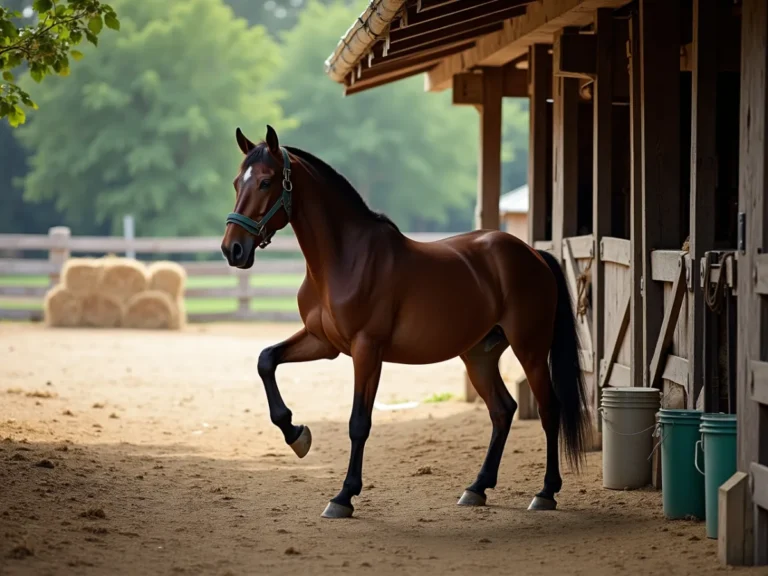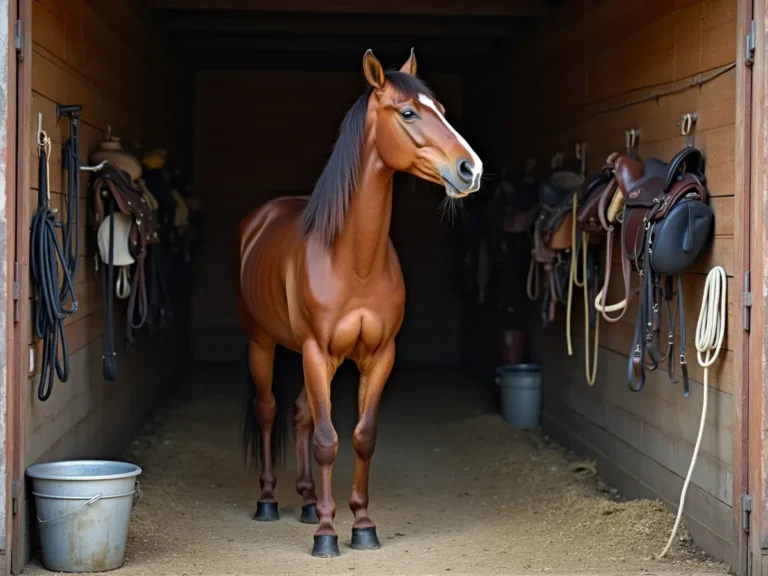
A horse that suddenly feels different can leave an owner second-guessing almost everything. One day the horse is steady and familiar, and the next day the same horse seems tense, reactive, dull, impatient, or unusually quiet. That shift can be small or dramatic, but either way it usually gets noticed fast.
Temperament changes matter because they often show up before anything else does. A horse may not be lame in an obvious way, may still eat, and may still move around normally. Yet the attitude is different. The ears, the posture, the willingness to be handled, and the way the horse reacts to ordinary sounds can all change at once.
Those changes are not always about “behavior” in the simple sense. Horses respond to discomfort, routine, tension, new surroundings, social stress, and subtle physical problems. When temperament shifts quickly, the change is often a clue rather than a personality overhaul.
How Sudden Changes Often Show Up in Daily Life
In real handling situations, a temperament change can be easy to miss at first because it may look like a collection of small differences. A horse that normally stands quietly may start fidgeting at the cross-ties. A normally forward horse may drag behind on the lead rope. A calm horse may pin its ears at grooming time, swing the hindquarters away, or refuse to stand still for saddling.
Some horses become more reactive. They startle at sounds they usually ignore, rush through familiar corners, or tense up when someone enters the stall. Other horses go the opposite direction and become flat, distant, or less engaged. Instead of seeming “naughty,” they may seem oddly absent.
Riding can show the change even more clearly. A horse that usually moves out willingly may become resistant to being asked forward. Another may become bracey in the contact, hollow through the back, or quick to object to transitions. A few become overly compliant in a way that does not feel normal, which can also be a warning sign.
When a horse changes temperament quickly, the pattern matters more than one bad moment. Look for what is different from that horse’s normal behavior, not just what seems inconvenient in the moment.
Examples of common shifts owners notice
- More sensitivity to touch during grooming or tacking up
- Less interest in food or treats
- Reluctance to leave the herd or the stall
- Increased anxiety during turnout or transport
- Unexpected irritability with routine handling
- Lower energy, slower response, or seeming “off”
These signs do not always appear together. Sometimes one small change is the only clue. A horse that stops nudging the grooming box, for example, may simply look less social than usual. But paired with reduced appetite or new tension, that same change becomes more meaningful.
Why Internal Factors Can Change Temperament Quickly
Many owners first think of mood when they see a horse acting differently. In reality, a sudden temperament change often starts with something inside the horse’s body. Pain is one of the most common reasons. It may be obvious, or it may be subtle enough that the horse only seems “grumpy” or “difficult.”
Back soreness, hoof discomfort, gastric irritation, dental pain, and muscle strain can all change how a horse tolerates work and handling. A horse in pain may not want to stand for the farrier, may resent grooming along the back or girth area, or may become tense under saddle. The horse is not inventing the reaction; the body is changing what feels safe or comfortable.
Hormones can also affect temperament, especially in stallions, mares, and horses with strong seasonal changes. A mare may become more irritable around heat cycles. A stallion may become more reactive around other horses. Some geldings also show noticeable behavior changes linked to hormones, management, or social stress even when people do not expect it.
Sleep, digestion, dehydration, and illness can all play a role too. A horse that is fighting a low-grade infection or dealing with stomach upset may seem dull, touchy, or unwilling to cooperate. That shift may be most visible in the stable, where the horse has fewer distractions and every response is easier to notice.
A sudden change in temperament is often a body signal first and a behavior issue second.
Internal causes that commonly affect temperament
- Musculoskeletal pain or stiffness
- Dental discomfort
- Hoof issues
- Digestive upset or ulcers
- Hormonal changes
- Illness or low energy
- Fatigue from work, travel, or poor recovery
Not every uncomfortable horse becomes aggressive. Some become quiet. Some become suspicious. Some simply lose their usual patience. That variation is why temperament changes should be read as part of the horse’s whole picture, not as a fixed personality statement.
How the Environment Shapes the Reaction
Horses are highly responsive to their surroundings, and a sudden temperament change often becomes more obvious when something in the environment shifts. A move to a new barn, a different feeding schedule, unfamiliar horses next door, construction noise, or a change in turnout can all alter the way a horse behaves.
Even small adjustments matter. A horse that has been moved from a quiet aisle to a busier one may become touchier during grooming. A horse that is turned out with new herd mates may become more guarded or more restless. A change in stall location can affect how much the horse sleeps, how often it rests, and how settled it feels during the day.
Weather is another factor people sometimes underestimate. Wind, storms, heat, cold, and sudden shifts in barometric pressure can make some horses edgy or less willing to focus. If a horse’s temperament changes only in certain conditions, the environment may be a stronger clue than the horse itself.
Routines matter just as much. Horses tend to notice when feeding times change, turnout is delayed, or handling becomes unpredictable. A horse that seems cranky might actually be responding to a broken routine. That reaction can be mild, but for sensitive horses it may be enough to change their whole attitude.
Environmental triggers that can affect behavior
- New barn or pasture
- Different herd dynamics
- Noise, machinery, or traffic
- Weather changes
- Altered feeding or turnout schedules
- Reduced exercise or too much confinement
These influences often blend together. A horse moved to a new place may also eat differently, sleep less, and spend more time separated from familiar horses. When that happens, temperament can shift in a way that looks broad but actually has several specific causes.
What the Horse May Be Communicating Through Body Language
Temperament changes are usually easier to understand when you pay attention to the body language that comes with them. A horse rarely changes mood without showing some physical signal first. The ears may flick back more often. The jaw may tighten. The neck may brace. The tail may swish with more force or, in some cases, stay unusually still.
Posture also tells a lot. A horse that stands with weight shifted back, head high, and muscles tight may be in a defensive state. A horse that seems flat, low in the head, and slow to respond may be more withdrawn or unwell. Neither look should be dismissed as simple moodiness.
Movement can offer another layer of information. Short, stiff steps, quick pivots, reluctance to bend, or repeated shifting of the feet can all suggest discomfort or tension. Some horses start to pace. Others stand frozen and watchful. Both patterns can happen in response to stress.
Signals that often accompany a temperament shift
- Pinning ears or rapid ear flicking
- Tight lips or jaw tension
- Raised head and short breathing
- Tail swishing without clear cause
- Uneven willingness to move forward
- Restlessness in the stall or cross-ties
- Standing withdrawn and less responsive than usual
It helps to notice what is new rather than what is dramatic. A horse that usually blinks calmly through grooming but now watches every movement carefully may be giving quieter signals of stress. Those quiet changes often matter more than the obvious ones.
Different Temperament Changes and What They Can Suggest
Not all sudden changes point in the same direction. Some horses become sharp and reactive. Others become dull and quiet. A few alternate between the two depending on the situation. That mix can be confusing, but it is common.
| Observed change | Possible meaning | Common setting |
|---|---|---|
| More reactive or snappy | Stress, pain, fear, overstimulation | Handling, tacking up, riding |
| Quiet or withdrawn | Fatigue, illness, discomfort, low confidence | Stable, turnout, grooming |
| Pushy or restless | Frustration, lack of movement, routine disruption | Stall, aisle, feeding time |
| Overly compliant | Stress, shutdown, uncertainty, physical issue | Any setting, especially work |
Controlled changes are often easier to interpret than defensive ones. A horse that simply becomes less eager to work may be showing early discomfort. A horse that suddenly objects strongly may be closer to a threshold where something feels too much to tolerate.
Mixed signals can happen when the horse is dealing with more than one issue. For example, a horse with mild pain may still want to move but become defensive when asked to bend or collect. Another horse may seem cheerful in turnout but sour under saddle because the work reveals the problem more clearly.
When behavior changes across settings, the horse may be telling a more complex story than “good” or “bad” temperament.
How Stable, Pasture, Work, and Travel Can Reveal Different Sides
A horse may look one way in the pasture and another way in the stable. That difference can help narrow down what is going on. A horse that is bright with the herd but difficult in the barn may be feeling confined, isolated, or pressured by handling. A horse that seems fine in the stall but tense in turnout may be reacting to herd tension, environmental noise, or an injury that shows up with freer movement.
Riding and ground work can uncover issues that are hidden at rest. Some horses look normal until they are asked to bend, back up, step onto a trailer, or move away from pressure. Then the change in temperament becomes clear. What looked like impatience may actually be discomfort under a specific type of request.
Transport is especially revealing. Horses that are usually settled can become agitated in a trailer if they are sore, anxious, or not used to the motion. Others become unusually quiet, which can also be a concern if it is very unlike their normal response. Travel disrupts routine, balance, and social comfort all at once.
Owners often notice that the horse seems “different” depending on where the behavior is happening. That is useful information. A horse that changes only in one place may be reacting to that environment. A horse that changes everywhere may be dealing with something broader.
When the Change Becomes Part of a Longer Pattern
A single bad day does not define temperament. Horses have off days just as people do. The more useful question is whether the change is repeating, deepening, or spreading into new situations. If the horse becomes harder to handle over several days, if the reaction grows stronger, or if the change starts to affect feeding, movement, or social behavior, the pattern deserves closer attention.
Consistency matters. A horse that is only sensitive after turnout with one particular pasture mate may be responding to social pressure. A horse that is only irritable when being saddled may be reacting to discomfort in a specific area. A horse that is moody for no clear reason, across multiple settings, may need a more careful look at health and daily management.
Long-term observation can also show what returns to normal and what does not. If a horse settles after a few days of rest, weather changes, or a routine adjustment, the temperament shift may have been temporary. If the horse never fully returns to baseline, something may still be unresolved.
That is why taking note of small changes helps. The horse that used to walk to the gate, now hesitates. The horse that used to eat quickly, now leaves grain behind. The horse that once stood quietly for fly spray, now dances away. These details give shape to the bigger picture over time.
What Owners Often Misread
People sometimes label a horse as dramatic, lazy, difficult, or sour when the change is really about discomfort or stress. That shortcut can hide the real issue. A horse does not need to be dangerous to be struggling. A subtle change in patience, expression, or willingness can be enough to signal that something is off.
Another common mistake is assuming a horse is “testing boundaries” when the behavior is actually inconsistent because the horse feels different from one day to the next. A horse with a painful back may cooperate one day and object the next depending on how sore it feels. That can look like training trouble, but it may have more to do with physical state than attitude.
Owners also sometimes overlook quiet changes because they are easier to live with. A horse that becomes less affectionate, less curious, or less active can still be dealing with a real problem. The lack of drama does not mean the change is meaningless.
The most useful question is not “What kind of horse has this become?” but “What is different in this horse right now?”
A Calm Way to Read the Change
When temperament changes suddenly, the best response is usually to slow down and compare the horse to its own normal pattern. Notice appetite, movement, grooming tolerance, turnout behavior, social habits, and how the horse feels in hand versus under saddle. Those details often reveal whether the change is tied to pain, environment, routine, or stress.
Some shifts will be temporary. Others will point to a problem that needs attention. Either way, the horse’s behavior is giving information. The change itself is the message, and the context around it is what makes the message clear.
Horses rarely change for no reason. When temperament changes quickly, there is usually a reason hidden in the body, the environment, or the daily pattern that surrounds the horse. Paying attention to that change early can make the horse easier to understand and easier to support in ordinary life.