When a horse backs up instead of moving forward, the moment can feel small at first and then suddenly important. The shift may be a single careful step in reverse, or it may turn into a full refusal to go on. Either way, it usually tells you something about the horse’s comfort, confidence, or attention in that moment.
Some horses back up because they feel uncertain. Others do it because the situation ahead seems crowded, confusing, or demanding. A few learn that stepping back changes the pressure around them, so the behavior becomes a habit in certain settings.
It is easy to read backing up as simple stubbornness, but that explanation often misses the real picture. The horse may be trying to create space, avoid a trigger, or respond to a cue that feels unclear. Looking at the setting and the details around the behavior gives a much better answer than looking at the step alone.
How backing up shows up in everyday situations
Backing up is not always dramatic. In many cases, it begins with a pause, a lifted head, or a shift of weight onto the hindquarters. Then the horse takes one or two steps backward and may stop again to check what happens next.
In handling, it often appears at the gate, in the cross-ties, at the trailer, or when being led past something unfamiliar. A horse may also step back when asked to stand still and feels pressure from a halter, lead rope, or nearby activity. The behavior can be very brief or surprisingly persistent.
Under saddle, backing up instead of moving forward may appear when the horse resists leaving the barn, approaching a new object, or passing another horse. Sometimes it happens during transitions when the horse is unsure what the rider wants. In other cases, the horse is physically uncomfortable and simply does not want to lengthen the stride ahead.
Backing up is not one single behavior. It can be a response to confusion, a request for space, a reaction to tension, or a learned way to avoid forward movement.
At liberty, the same pattern may look different. A horse might retreat a few steps from a person, a gate, or a noisy area, then stop and watch. That backward movement can be a sign of caution rather than defiance. The horse is choosing distance before deciding whether to engage.
Why horses tend to choose backward movement
Forward movement asks for commitment. It means stepping into the unknown, crossing into a new space, or continuing toward something the horse has not fully assessed. Backing up offers another option. It gives the horse a little time and a little control.
That control matters to horses. They are sensitive animals, and they often prefer to evaluate before they advance. If the environment feels tight, noisy, or visually confusing, going backward may feel safer than pressing ahead.
Some horses also back up when the pressure on them is difficult to interpret. If a rider’s leg, seat, or rein aids feel inconsistent, the horse may choose the direction that seems least risky. In hand, if the lead pressure is unclear or too strong, the horse may move back because it is the easiest way to relieve the sensation.
There is also a physical side to consider. A horse with soreness in the shoulders, back, hocks, or feet may avoid forward motion because it is uncomfortable. Backing up changes the way the body loads, so in some cases it becomes the movement the horse can tolerate more easily than stepping out.
Common places where the behavior appears
In the stable
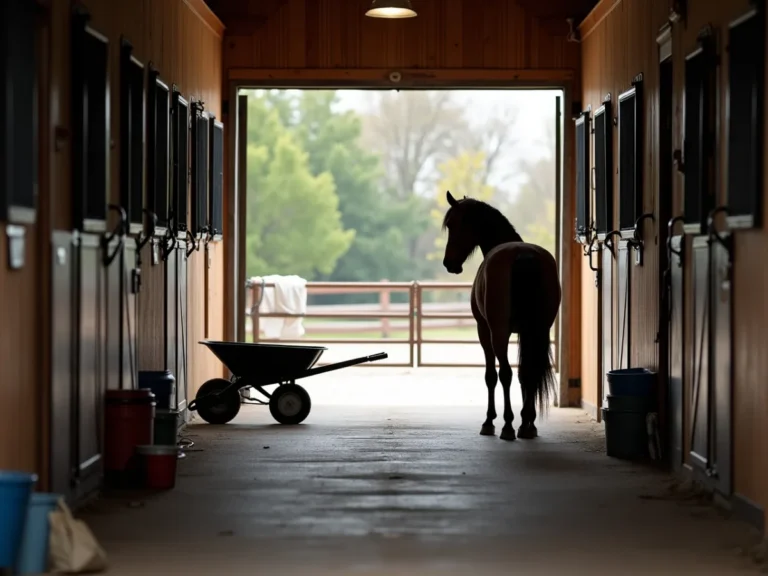
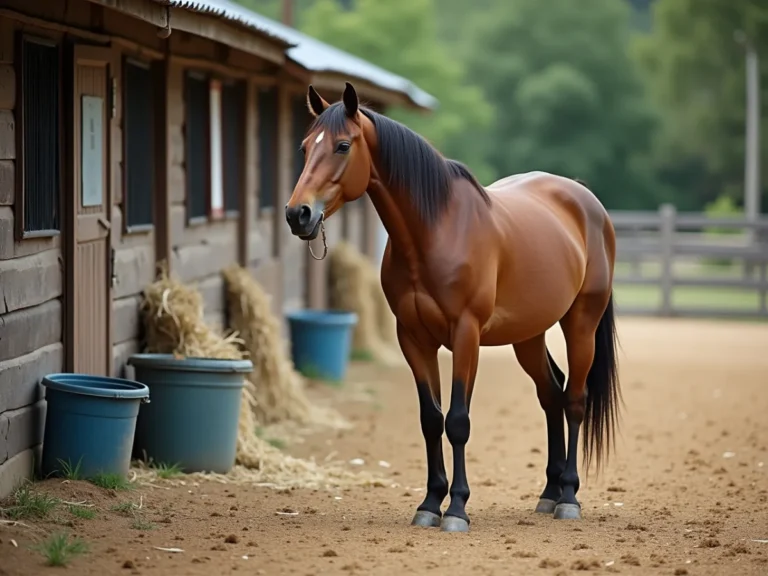
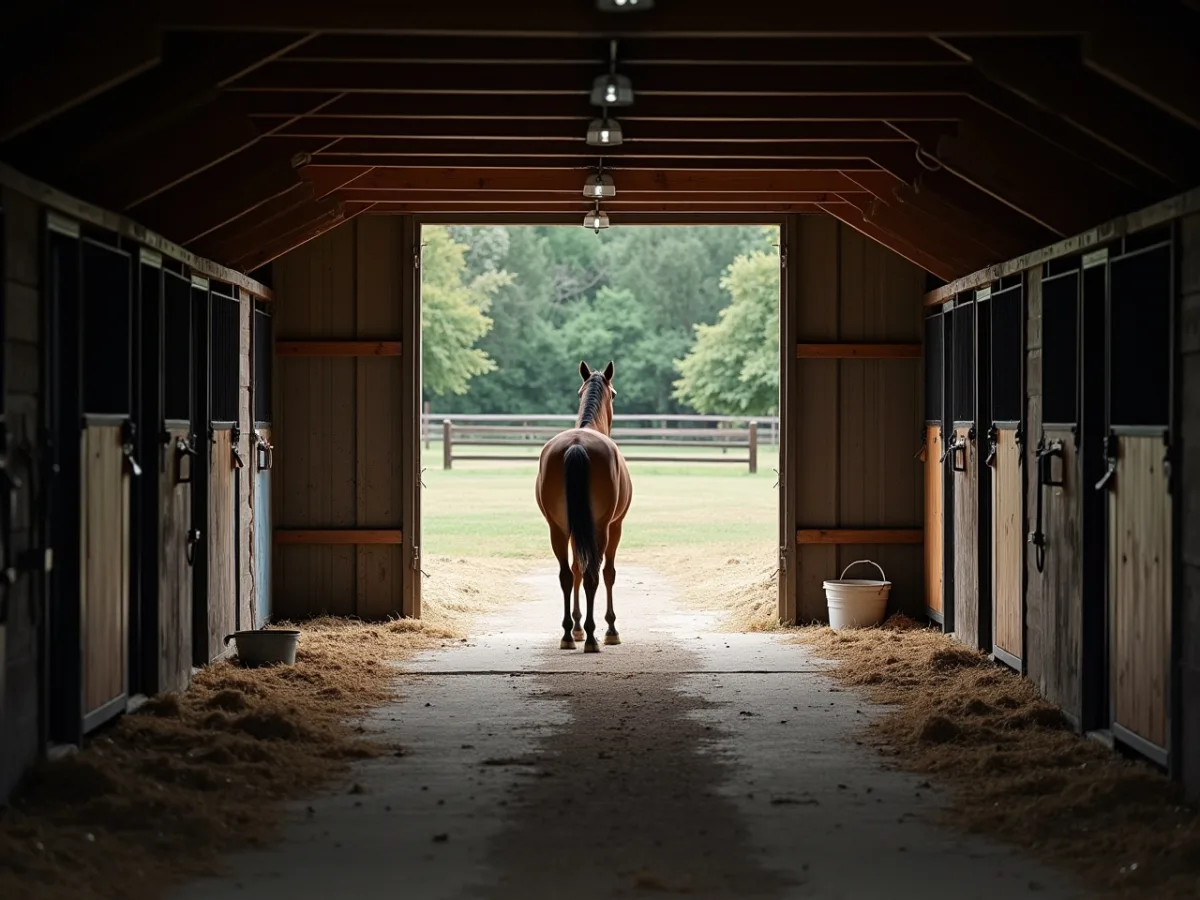
Inside the stable, backing up may happen when a horse feels crowded by equipment, people, or other horses. The aisle can seem too narrow. The horse may reverse away from a wheelbarrow, a sudden sound, or a door opening close by.
It may also show up when the horse is being asked to stand for grooming, saddling, or vet care. If the horse is uneasy, backing up can become a way to escape the pressure of the moment. The movement may be slow and careful, or quick and tense.
In the field or pasture
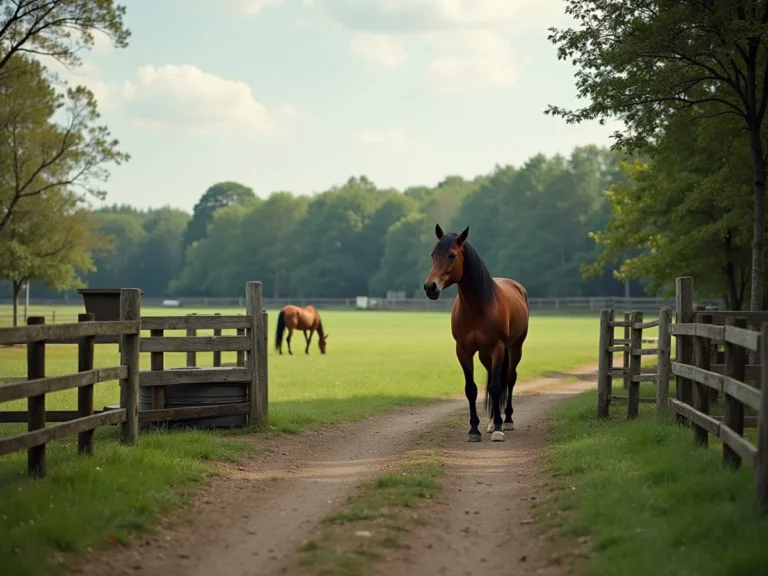
In a field, a horse may back away from another horse, a person, or a corner where movement feels restricted. Sometimes the behavior is social. The horse is creating distance from a herd mate. Other times it is environmental. A slick patch, a feeding area, or a gate can make the horse hesitate.
Horses that back up repeatedly near fences or gates may be responding to tension in the area. They may also be anticipating being caught, led out, or separated from the herd. The setting itself can teach the horse to expect pressure.
While riding
Under saddle, backing up can happen when the horse does not want to go toward a certain place, object, or direction. It may appear on trail rides, in the arena, or near the barn. A horse that feels blocked or unsure may stop and step back rather than continue forward.
Sometimes this is tied to rider balance. If the rider leans too far forward, tightens the reins, or becomes tense in the seat, the horse may interpret those signals as hesitation. The horse then mirrors that uncertainty with backward steps.
During transport
Loading and unloading are common moments for backing up. A horse may step backward away from the ramp, the trailer floor, or the confined shape of the trailer opening. Even horses that usually move well can hesitate here.
Transport is a place where depth, sound, footing, and confinement all change at once. If any one of those factors feels wrong, the horse may choose the option of retreat. In this setting, backing up is often about caution rather than attitude.
What the behavior may be signaling
Backing up can mean the horse is looking for space. That is one of the simplest explanations, and often one of the truest. If the horse cannot step around, away, or sideways, backward motion becomes the easiest release.
It can also mean the horse is uncertain about the next step. Horses rely heavily on visual information and body language. When that information is incomplete, they often slow down or reverse to buy time.
In some cases, the horse is signaling discomfort or pain. A horse with a sore back may brace when asked to move forward. A horse with foot pain may not want to travel into a new surface. A horse with dental discomfort or neck tension may also react more strongly to rein pressure.
Emotional state matters too. A worried horse may back up because the nervous system is on alert. A frustrated horse may do it because the response it expected did not come. A tired horse may do it simply because the effort of moving ahead feels like too much in that moment.
Repeated backing up in similar situations usually means the horse has learned something about that place, that cue, or that feeling. The repetition itself is a clue.
Subtle signals that often come before the step backward
The backward step rarely appears out of nowhere. There is often a short chain of smaller signals first. Watching those details can make the behavior easier to understand.
- Head lifting higher than usual
- Ears flicking rapidly or locking onto one point
- Neck stiffening and the back becoming less supple
- Weight shifting to the hindquarters before the feet move
- Short, cautious steps instead of a free walk
- Tail tension or tail clamping
- Snorting, wide eyes, or a fixed stare
Sometimes the horse looks calm on the surface but is already preparing to reverse. The body becomes still before the feet move. That stillness may be more meaningful than the step itself.
Other horses show a softer version. They lower their pace, look away, or hesitate at the threshold of a doorway, trailer, or arena corner. Then they back up only a step or two. These quieter signs can be easy to miss if you are only watching for a big reaction.
Different forms of backing up
| Form | What it looks like | Common context | Possible meaning |
|---|---|---|---|
| Soft retreat | One or two slow backward steps, relaxed but unsure | New place, mild pressure, unfamiliar object | Caution, need for space, brief uncertainty |
| Reactive backing | Quick, tense stepping back with raised head | Startle, pressure, tight space | Alarm, fear, or avoidance |
| Repeated refusal | Backing up again and again when asked to go forward | Leading, riding, loading | Habit, confusion, pain, or learned resistance |
| Controlled retreat | Backward movement in response to a cue | Training exercises, narrow spaces | Learned response, not necessarily stress |
These forms can look similar from a distance, but the details matter. A relaxed, deliberate step back is not the same as a sharp, defensive retreat. The horse’s body language often tells you which one you are seeing.
How surroundings influence the reaction
Environment plays a large role in how often the behavior appears. A horse that feels secure in a familiar aisle may back up as soon as the same aisle becomes busy, noisy, or slippery. The change does not need to be large. Small disruptions can matter.
Lighting, shadows, footing, and sound all affect how a horse reads space. A dark trailer interior, a patch of shiny concrete, or a sudden echo in a barn can make forward movement less appealing. Horses notice these details even when people barely register them.
Herd dynamics matter as well. A horse that backs away from the herd may be responding to rank or social pressure. A horse that backs toward the herd may be seeking comfort and security. In both cases, the direction of movement has meaning.
Routine can strengthen the pattern too. If a horse repeatedly backs up at the same gate before turnout, the behavior may be tied to anticipation. If the horse learns that backing up delays a stressful event, the habit can become more established over time.
What people often misread
One common mistake is to assume every backward step is disobedience. That interpretation is too narrow. Horses do not usually move against forward pressure just to be difficult. They respond to what the situation feels like from their side.
Another mistake is to ignore body language and focus only on the feet. A horse may seem to be “refusing” when the real issue is fear, pain, or confusion. The feet are only the final part of the conversation.
It is also easy to overcorrect. When a horse backs up, a person may push harder, which can create more tension and more backward movement. If the horse was already unsure, stronger pressure may make the behavior more likely to repeat.
A horse that backs up is not always resisting movement. Sometimes the horse is resisting the way movement feels.
Deeper context in horse-human interaction
Backing up often reveals how well the horse understands the interaction. Clear, consistent handling usually creates less need for retreat. Confusing cues, shifting pressure, or mixed signals often create more of it.
The behavior can also show how much trust is present. A horse that feels safe with a person may pause, assess, and then move on without much drama. A horse that does not feel safe may keep stepping back until the pressure changes. The difference is not always dramatic, but it is real.
Timing matters here. A release that comes at the wrong moment can accidentally reward the backward step. A horse may learn that backing up is useful, not because the horse planned it, but because the sequence made sense from experience. That is how patterns develop in ordinary daily handling.
Good horse-human communication is often less about stopping every backward step and more about understanding why it started. Once the reason is clearer, the response can be calmer and more appropriate. That may mean giving the horse space, simplifying the cue, checking the footing, or looking for discomfort.
When the behavior becomes more noticeable
Backing up often becomes more obvious during changes. Moving from pasture to stall, from stall to trailer, from quiet work to busier work, or from a familiar rider to a less familiar one can all bring it out. Transitions tend to expose uncertainty.
It can also increase when the horse is under routine stress. A schedule change, less turnout, new herd mates, a fresh training location, or a different feeding pattern may affect how readily the horse goes forward. The horse may not show stress in a dramatic way. Instead, the horse simply begins to hesitate more often.
In older horses, repeated backing can sometimes reflect stiffness or balance concerns. In younger horses, it may reflect limited experience or uncertainty about how to respond. In either case, the pattern is worth noticing when it becomes more frequent, more forceful, or more tied to one specific context.
How consistency changes long-term meaning
A single backward step can mean very little on its own. Repeated backward steps in the same place usually mean more. Over time, horses create expectations based on what has happened before. If backing up has worked, they may return to it.
That does not make the behavior simple. It may still begin with worry or discomfort, then become a reliable response because it has been reinforced. A horse might back up at the trailer because the trailer has always been difficult. Another horse might back up at the arena gate because the gate predicts work that feels hard.
Consistency is useful because it narrows the possibilities. If the horse only backs up in one situation, the environment is likely playing a role. If the horse backs up with one specific type of pressure, the cue may be unclear. If the horse backs up across many settings, physical or emotional discomfort may be more likely.
That pattern does not need to be interpreted in a dramatic way. It simply needs to be observed closely. Horses are often very clear once the context is examined.
Natural background behind the movement
Backing up has a place in horse behavior that goes beyond training. In the natural world, retreat can be part of assessing danger, adjusting social distance, or avoiding a collision. A horse that steps back is often doing what keeps the body safe while more information is gathered.
This is closely tied to how horses use their senses. They are alert, quick to register movement, and very aware of pressure around them. That sensitivity can make them responsive and cooperative, but it can also make them cautious when the picture changes.
Herd behavior adds another layer. Horses often move with the group, but they also maintain distance when needed. Backing up can be a simple way of managing that distance. The behavior may look like resistance, yet it can be part of ordinary horse communication.
For many horses, stepping back is not the opposite of moving forward. It is one of the ways they decide whether forward movement is safe enough to continue.
What to watch for over time
If backing up appears occasionally, the details around it matter more than the step itself. Note where it happens, what changed just before it, and whether the horse seemed tense, distracted, sore, or simply unsure. Those clues usually point to the real cause.
If the behavior is becoming more frequent, slower to resolve, or stronger in tone, it deserves closer attention. A horse that once took one step back but now swings away or refuses to advance may be telling you the situation has become harder to handle. That change is meaningful.
Some horses only back up in high-pressure moments. Others do it as a quiet habit when they want to avoid commitment. Both versions matter, but they call for different responses. One asks for better clarity. The other may ask for a closer look at comfort, stress, or learned patterns.
What matters most is the pattern, not the single event. A horse’s backward steps are often brief messages, and the message usually becomes clearer with repetition and context.
When the environment is calm, the cues are consistent, and the horse still chooses to step back, it is worth taking that seriously. A behavior that seems small can be the first visible sign that the horse is not ready for the next forward step yet.