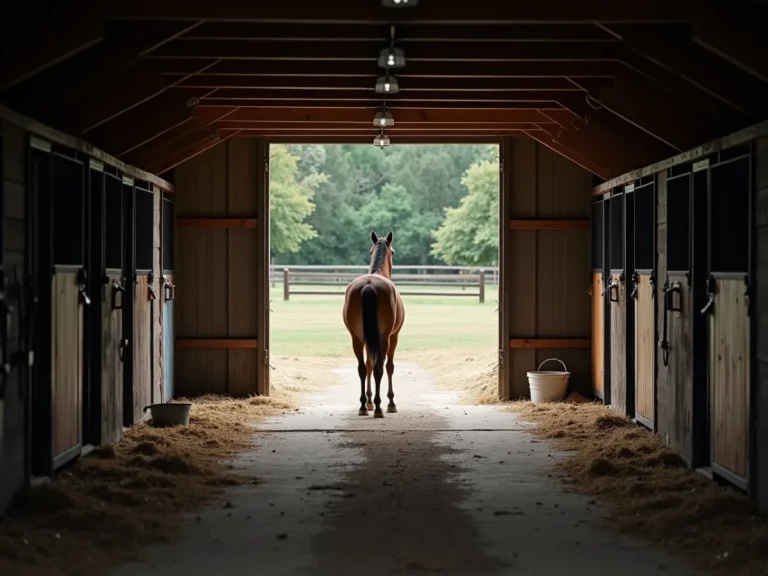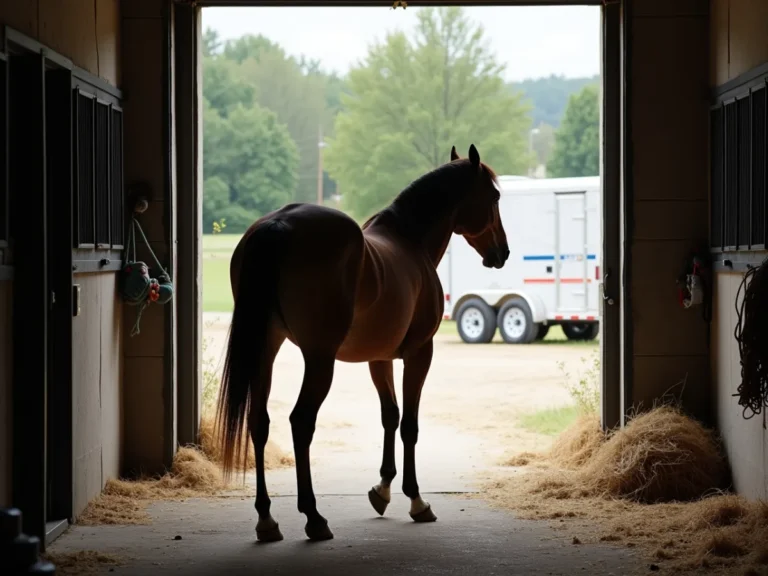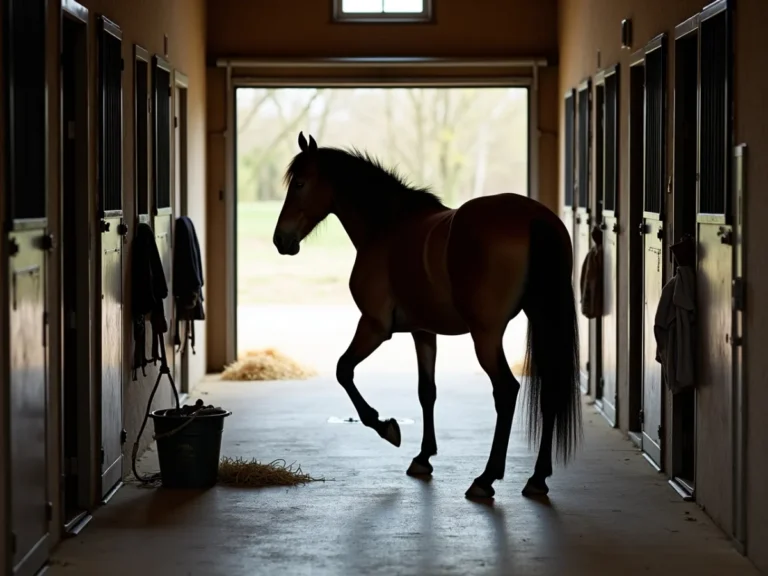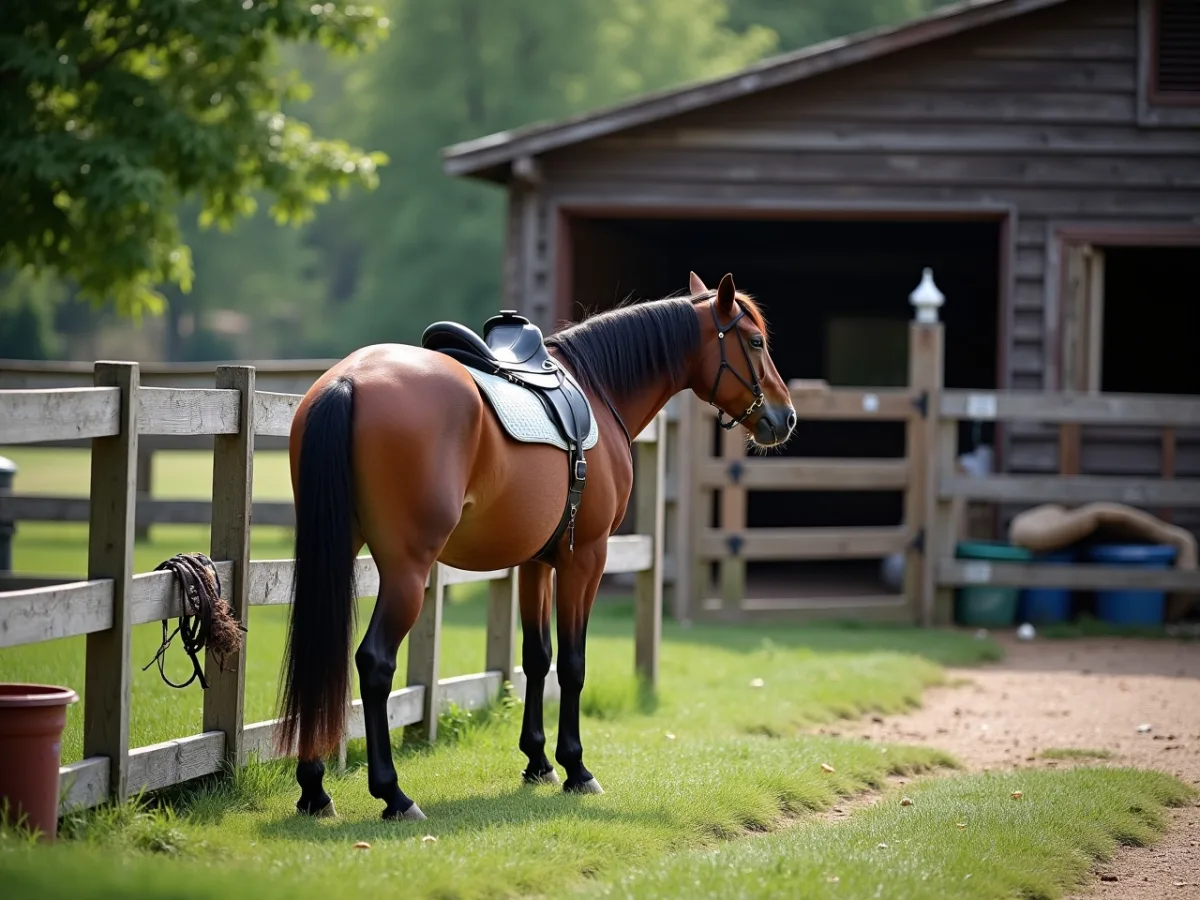
Horses do not always refuse in obvious ways. Sometimes the first sign is smaller: a drift away from the handler, a turn of the head, a pause at the barn door, or a repeated decision to move around an object instead of through it. These avoidance patterns can look mild at first, but they often carry useful information.
What matters most is not just the behavior itself, but when it happens and what else is going on. A horse that avoids a trailer after a bad experience is telling a different story than a horse that sidesteps every time the girth comes out. The pattern gives context. The context gives meaning.
In daily horse care, avoidance can show up in many forms. Some are easy to miss because they look polite rather than resistant. Others are more direct. Either way, they usually point to comfort, confidence, memory, or pressure in the horse’s environment.
How avoidance patterns appear in everyday handling
Avoidance does not always mean a horse is “naughty” or trying to win a contest. Often it begins as a subtle decision to create distance from something the horse does not trust, does not understand, or does not feel ready for. That decision may be brief, or it may become a habit.
In the barn, this can look like a horse who keeps stepping sideways when the halter is raised, backs away from the cross-ties, or pins the ears only when a certain area is touched. In the pasture, it may show up as one horse choosing to stay far from a gate or leaving a feeding area when a specific horse approaches. Under saddle, it might appear as drifting off the rail, refusing to go toward a corner, or repeatedly avoiding one rein or one direction.
Some horses use distance as their main coping tool. They do not explode; they simply leave. Others show a mix of avoidance and tension, with small movements that say, “I am not comfortable with this.” Those movements can be easy to overlook if the horse is otherwise quiet.
Avoidance is often less about disobedience and more about a horse trying to manage stress, uncertainty, pain, or pressure in the safest way it knows.
Common examples in daily situations
- Walking around a trailer instead of approaching it directly
- Turning the head away from the bridle, clip, or syringe
- Refusing to stand near a mounting block
- Drifting away from herd mates during feeding
- Moving off when a sensitive area is touched
- Avoiding one corner, gate, aisle, or section of the arena
These behaviors may seem unrelated on the surface, but they often share the same root: the horse has learned that distance helps. The reason for that learning can be physical, emotional, or environmental. Sometimes it is all three.
Possible internal reasons behind the reaction
When a horse avoids something repeatedly, there is usually a reason worth paying attention to. One of the most common is discomfort. A saddle that pinches, a girth that tightens unevenly, sore teeth, stiff joints, or a poorly fitting halter can all create patterns of avoidance. The horse may not stop the activity completely. Instead, it may start moving away just before the pressure arrives.
Fear and uncertainty are also common. Horses are highly observant animals, and they remember situations that felt unsafe. A horse that was startled by a noisy tractor, bitten in a specific spot, or rushed through a procedure may begin avoiding similar setups later. The pattern can become stronger if the horse feels it has no control.
In other cases, avoidance reflects confusion rather than fear. A horse may step away from a task simply because the cues are unclear, inconsistent, or too fast. If the animal cannot predict what comes next, creating distance may feel like the safest answer.
Learning history matters too. A horse that has discovered avoidance works may repeat it. If stepping away ends the pressure, the behavior can become stronger over time. That does not make the horse stubborn in a moral sense. It means the horse has learned a useful strategy, even if it is not the one the handler wants.
Possible internal causes to consider
- Physical discomfort or pain
- Previous bad experiences
- Unclear or inconsistent handling
- Stress from separation or herd dynamics
- Overwhelm from too much pressure too quickly
- Fatigue or reduced tolerance on a given day
A horse may show the same outward behavior for very different reasons. That is why one isolated moment rarely tells the whole story. Repetition, timing, and context are what make the pattern meaningful.
How surroundings and stimuli shape avoidance
Environment can make a quiet horse avoidant very quickly. A horse that is relaxed in one setting may become watchful in another. Narrow aisles, loud surfaces, changing light, unfamiliar smells, or a busy barn can all increase the chance that the horse chooses distance over engagement.
New objects often bring out this response. A tarp in the arena, a wheelbarrow left in a different place, a bag hanging from a fence, or a blanket with a new texture can all prompt careful detours. Some horses simply need time. Others need repeated exposure paired with calm experiences before the avoidance fades.
Routine also matters. Horses tend to feel safer when their daily patterns make sense. If feeding, turnout, grooming, and work happen at predictable times, the horse may show fewer avoidance responses. When the routine changes often, the horse may become more hesitant overall.
Temperature, weather, and noise can play a role too. A horse that avoids being caught in the evening may be more reactive on windy days than on quiet ones. A horse that avoids a saddle area in winter may be reacting not only to the tack, but also to tension from being colder, tighter, or less willing to stand still.
The same avoidance pattern can grow stronger in a crowded, noisy, or rushed setting and soften in a quiet, familiar one.
Situations that often change the pattern
| Situation | What avoidance may look like | What it may indicate |
|---|---|---|
| Stable aisle | Backing away, sidestepping, head turning | Anticipation, pressure, or discomfort |
| Pasture | Moving away from a horse or gate | Social tension or learned distance |
| Riding arena | Drifting off line, avoiding corners | Unease, confusion, or pain-related reluctance |
| Trailer | Stopping short, circling, planting feet | Memory of stress, fear of confinement |
| Grooming area | Turning the body or shifting constantly | Sensitivity to touch or pressure |
Environmental clues often explain why a behavior appears one day and disappears the next. A horse is not always changing its mind. Sometimes the setting is changing the horse’s sense of safety.
What avoidance may indicate about the horse’s state
Avoidance is most useful when it is read as information. It may indicate that the horse wants space, expects discomfort, or does not feel ready to proceed. It can also point to a habit that has become automatic. The same behavior may arise from very different internal states.
If the horse avoids a specific touch, gait, or movement, physical discomfort should stay on the list of possibilities. A horse that consistently avoids a direction during work, for example, may be feeling stiffness or asymmetry. A horse that resists tightening the girth may be reacting to belly sensitivity, saddle fit, or muscle soreness.
When the avoidance is more about a place or object, memory and expectation may be stronger factors. A horse that refuses the far end of the arena may be reacting to a spot where something startled it before. A horse that sidesteps the wash rack may be linking that location with restraint or pressure.
Social factors also matter. Horses are herd animals, and distance from other horses can mean safety or conflict depending on the group. A horse may avoid a feeder, gate, or corner because another horse has claimed it, or because approaching there has led to pushing, biting, or tension.
Clues that help narrow the meaning
- Whether the behavior is new or long-standing
- Whether it happens only in one place or many
- Whether the horse also shows tension in posture or breathing
- Whether the avoidance increases with pressure
- Whether it improves when the horse is allowed more time
- Whether the horse avoids only one side or one type of touch
These clues do not replace observation, but they help turn a vague reaction into a more useful pattern. Over time, the details usually say more than the refusal itself.
Subtle signals that often come with avoidance
Avoidance rarely appears alone. Horses usually show a chain of signals before they fully move away. These can be small enough to miss if someone is focused only on the main task. A horse may soften one eye, turn an ear back, shift weight, or hold the neck a little tighter before stepping away from the pressure.
Posture is especially important. A horse that avoids often carries some version of anticipatory tension. The body may feel braced, the steps may become short, or the horse may stop chewing and become less responsive to normal cues. These signals do not automatically mean panic, but they do suggest the horse is not fully at ease.
Timing also helps. If a horse avoids the saddle only after the girth is tightened, the pattern may point to a specific trigger. If the horse starts avoiding the handling area before anyone touches it, anticipation is likely involved. The horse has learned what usually comes next.
Common accompanying signs
- Head turning away
- Ear flicking or fixed ears
- Shortened stride
- Weight shifting from one hind leg to another
- Raised head or tight neck
- Tail swishing without an obvious cause
- Pausing before contact or movement
When these signs appear together, they often tell a fuller story than the avoidance itself. A horse may be communicating that the moment is manageable only as long as the pressure stays low. Once the pressure rises, the horse looks for another way out.
How people often misread avoidance
It is easy to call avoidance resistance. Sometimes that label is incomplete. A horse that moves away from the mounting block may not be challenging the rider. It may be trying to avoid pain in the back, uncertainty about balance, or a mounting habit that feels unpredictable. The behavior can look the same from the outside even when the cause is very different.
Another common mistake is assuming the horse is being dramatic. Horses usually do not invent conflict for no reason. If avoidance is repeated, it often means something in the situation feels wrong enough to matter. That does not mean the response is always large or urgent. It does mean the pattern deserves attention.
People also sometimes miss avoidance because the horse is quiet. A horse that walks away from pressure rather than rearing or striking can seem well mannered. In reality, the horse may be showing an early, manageable form of stress. Quiet avoidance is still communication.
Not every avoidance pattern is a behavior problem. Many are early signs of discomfort, uncertainty, or an environment that asks for more than the horse can give comfortably.
What consistency over time can reveal
One-off behavior is less important than repetition. A horse that avoids a single noisy corner on one windy day may have simply been startled. A horse that avoids that same corner every week is telling a clearer story. Long-term patterns are where useful meaning starts to emerge.
Consistency can show whether the cause is tied to the body, the place, or the task. If the behavior appears across many settings, the issue may be broader physical discomfort or general stress. If it appears only with one handler, one piece of tack, or one routine, the source may be more specific.
Changes over time can be informative too. Some horses begin with small avoidance and gradually become more direct if the underlying cause is removed. Others become more reactive if the pressure continues. Watching the direction of change matters as much as watching the behavior itself.
It is also helpful to notice whether the horse has good days and bad days. A horse with an intermittent pattern may be responding to soreness, weather, workload, or mental fatigue. A horse that avoids only after hard work may be signaling that the body is tired and less able to cope.
Questions that sharpen long-term observation
- Does the avoidance happen before, during, or after the task?
- Is the horse worse on certain days or in certain weather?
- Does the behavior lessen when the horse has rest?
- Is the same pattern present with different handlers?
- Does the horse avoid a place, a person, a piece of equipment, or the task itself?
These questions help separate a passing reaction from a pattern that needs a closer look. With horses, the details usually matter more than the label.
Reading avoidance in a practical way
When avoidance appears, the most useful response is usually not to force a quick answer. First, notice what the horse is avoiding and when. Then compare that moment with the horse’s normal behavior. A calm horse that suddenly starts avoiding a familiar task is giving a different signal from one that has always been unsure.
If the horse avoids something specific, think about fit, comfort, and clarity. Equipment, footing, noise, and timing can all influence whether the horse feels able to stay engaged. Small adjustments sometimes reveal a great deal. A quieter approach, more predictable handling, or a different setup may reduce the pattern without needing a big intervention.
For some horses, avoidance is strongest when they feel trapped. Giving a little more time, space, or choice can soften the response enough to show what is really behind it. A horse that relaxes once it can stop and think is often not refusing the task itself. It is objecting to the way the task is being presented.
In other cases, especially when the pattern is strong or persistent, the behavior deserves a closer look from a vet, saddle fitter, dentist, or experienced trainer. The behavior may be the visible end of something physical or emotional that is not obvious from one day of observation.
Closing thought
Avoidance patterns are worth watching because they are often precise. Horses rarely avoid everything. They avoid something, in a certain way, at a certain time. That specificity is what makes the behavior informative.
When the pattern is read with context, it can point toward pain, pressure, uncertainty, memory, or social tension. It may also reveal a horse that has learned to create distance because distance has worked before. The behavior itself is only part of the message. The setting, timing, and repetition give the rest of it.
In everyday horse care, the clearest answers often come from noticing what the horse is trying not to do. That small choice can say a great deal.