A horse can seem calm one moment and suddenly react to something no one else appears to notice. A quick startle at the barn gate, a sharp sidestep on the trail, a tense look toward an empty corner of the arena—these responses can feel confusing when there is no obvious reason for them. The reaction may be strong, but the trigger is not always easy to spot.
That disconnect matters. When a horse reacts without a clear cause, people often assume the horse is being difficult, dramatic, or stubborn. In many cases, the behavior is better understood as a response to something subtle, something the horse noticed before anyone else did. Horses are built to detect change fast, even when that change looks minor to us.
Strong reactions without clear triggers can show up in many settings: while being led, during grooming, in the pasture, on the trailer, or under saddle. The pattern is not always the same, but the theme is familiar. A small cue leads to a large response, and the reason may be hidden in the horse’s body, history, environment, or mental state.
Looking at those layers helps make sense of the behavior. A reaction rarely comes from nowhere. More often, it comes from a buildup of tension, a sensitive moment, or a detail people overlooked because it seemed unimportant.
Why a Horse May React So Strongly
Horses are prey animals, which means their brains are tuned to notice possible danger quickly. That instinct can be useful in the wild, but in daily life it can create responses that seem bigger than the situation. A rustling bag, a change in footing, a new smell, or a person moving suddenly can all be enough to set off a fast reaction.
Not every strong response is about fear in the simple sense. Sometimes the horse is surprised. Sometimes the horse is already tense and a small event pushes it past a threshold. Sometimes pain, discomfort, or fatigue lowers tolerance, so the horse reacts more sharply than usual.
Strong reactions often say more about the horse’s current state than about the object or event itself.
That current state may include physical discomfort, emotional tension, or accumulated stress from earlier parts of the day. A horse that has been standing in the stall too long, handled roughly, or asked for more effort than it can comfortably give may react at the next small change. The trigger looks minor because the real issue is already in the background.
Some horses also learn to react strongly because it has worked for them in the past. If a spin, bolt, or refusal led to release, removal of pressure, or a person backing off, the reaction may become more likely. In those cases, the cause is not always a sudden fear. It can also be a learned pattern.
How This Appears in Real Daily Situations
At the barn
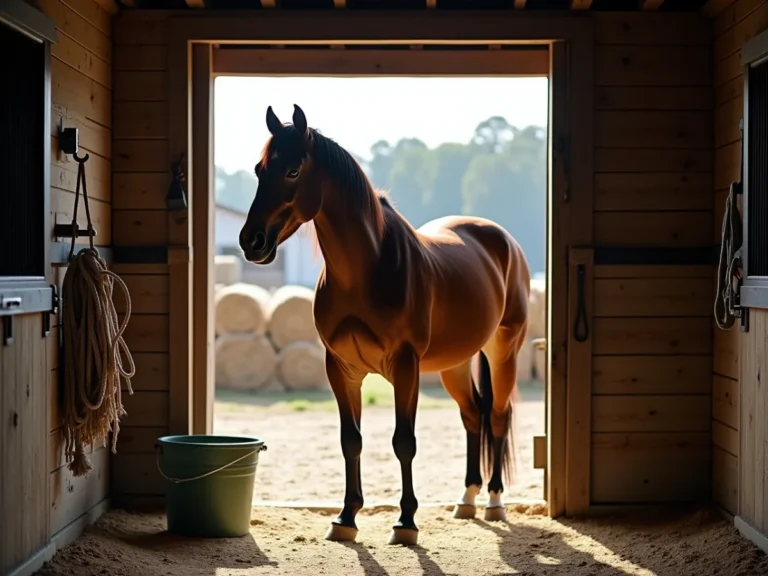
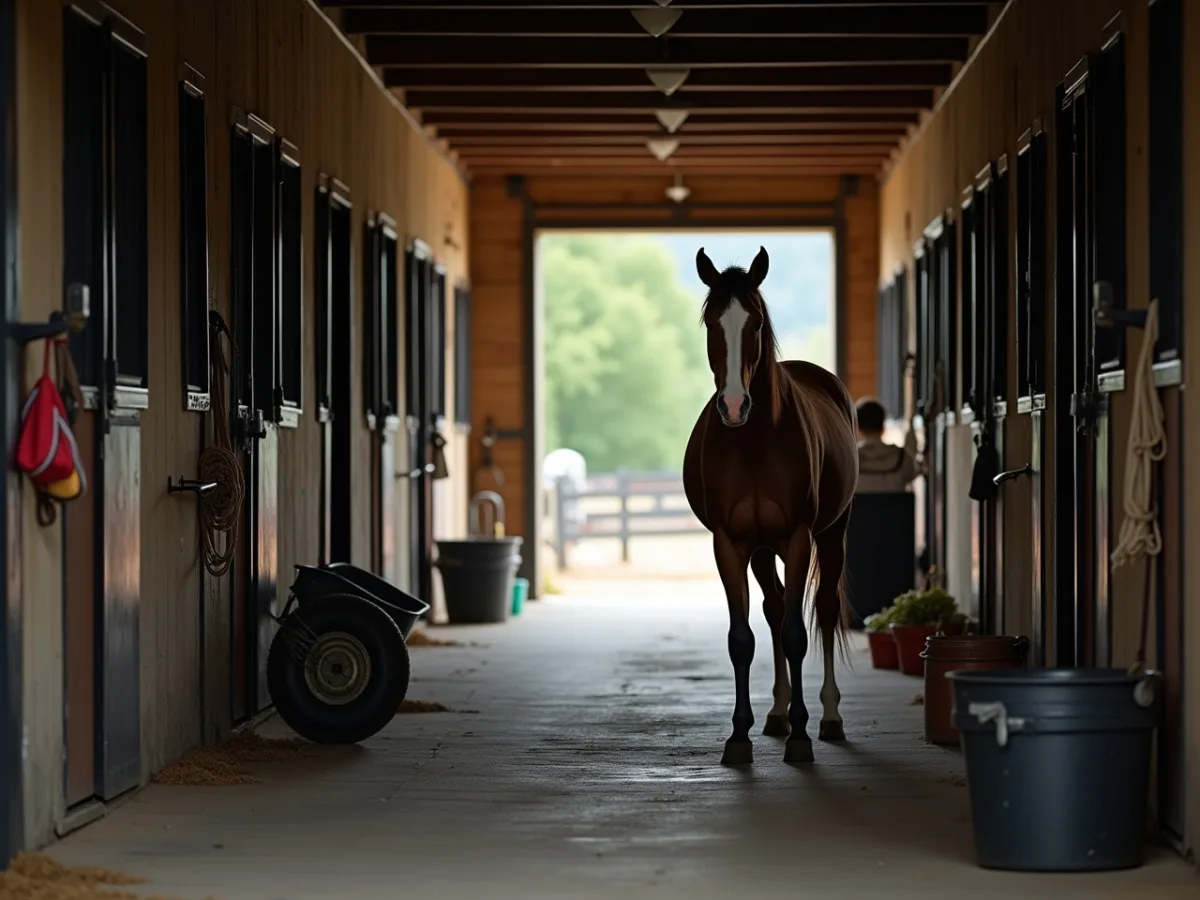
In the barn, strong reactions without clear triggers often show up around routine tasks. A horse may flinch at a lead rope touching the leg, rush past a doorway, or suddenly pin the ears when a familiar person enters with a bucket. To humans, the situation looks ordinary. To the horse, something may feel different enough to matter.
One horse may react to the sound of a metal latch. Another may stiffen when the grooming routine changes slightly. A horse that is usually relaxed in its stall may become touchy when neighbors are noisy, when feed time is late, or when the barn atmosphere feels busy and crowded.
Sometimes the reaction follows a chain of small things. A horse starts the day a little tired, then gets less turnout than usual, then waits longer than normal for feed, then hears unfamiliar equipment nearby. The final reaction can seem to come from nowhere, but it may be the last piece of a larger puzzle.
In the pasture
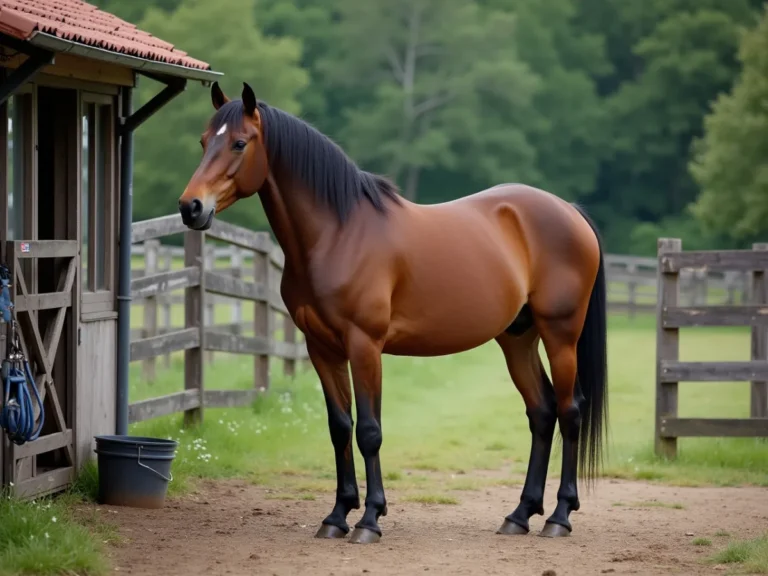
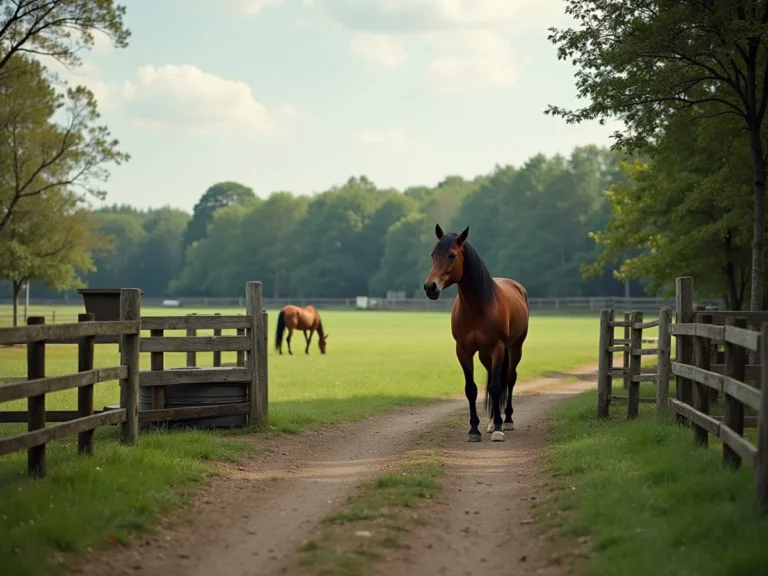
In the field, reactions can look sudden and dramatic. A horse may leap sideways at a bird flying up from grass or whirl away from a patch of shadow. Herd dynamics matter too. If one horse gets nervous, nearby horses may mirror that energy even if they did not notice the original stimulus.
Pasture reactions can also be linked to space and footing. A horse standing near a fence line, mud hole, drainage area, or slick surface may already be cautious. One uncertain step or odd sound can create a bigger reaction than it would on firm, open ground.
Weather plays a role as well. Wind can carry unfamiliar smells and create moving branches, flapping tarps, or shifting shadows. A horse that seems fine on a quiet day may react strongly when the environment becomes visually and acoustically busy.
While riding
Under saddle, the lack of a clear trigger can be especially frustrating. A horse may spook at nothing visible, rush through a corner, or suddenly become resistant after moving calmly for several minutes. Riders often focus on the moment of the reaction, but the build-up may have started long before that moment.
Tight muscles, saddle discomfort, uneven contact, or mental overload can all contribute. If the horse has been asked to work in a new place, around unfamiliar equipment, or for a longer session than usual, the reaction may be a release of pressure rather than a true surprise. The horse is saying something, though not always in a way that is easy to decode.
Reactions can also happen when the horse is distracted by internal sensations. A small ache, a stiff joint, a girth pinch, or trouble balancing can change attention and tolerance. In motion, that change may appear as a sideways jump, a head toss, or a sudden refusal to continue forward.
During loading or transport
Trailers and transport create a concentrated version of many stressors at once. There is confinement, unfamiliar motion, noise, vibration, and limited escape space. A horse that reacts strongly during loading may not be responding to the ramp itself; the response may be tied to anticipation, past memory, or subtle discomfort with balance and footing.
Even horses that usually trail well can have reactive moments if the day has been long or the routine has changed. A horse arriving at the trailer already overstimulated may treat a normal sound as a bigger concern than usual. In these settings, the line between “no clear trigger” and “too many small triggers” becomes very thin.
Possible Internal Reasons Behind the Reaction
Internal reasons are often overlooked because they are harder to see than outside events. Yet they are important. A horse’s body and mind work together, and either one can raise sensitivity.
- Muscle soreness or joint discomfort
- Digestive discomfort or general unease
- Fatigue from work, heat, or limited rest
- Hormonal changes, especially in mares
- Previous bad experiences stored as memory
- High baseline anxiety or a low tolerance for novelty
Physical discomfort can create short tempers and fast reactions. A horse that feels sore may not want to turn, back up, or lower the head. When asked to do so, it may snap its tail, rush, or jump away. What looks like an emotional outburst may actually be a body trying to protect itself.
Memory also matters. Horses remember places, sounds, objects, and handling patterns. If a horse once had a bad experience with a clattering wheelbarrow, a loose tarp, or a veterinary procedure, it may react later even when the current situation is safe. The behavior can seem random to people, but the horse may be reacting to an internal association.
When a horse reacts strongly, it is worth asking two questions: what changed in the environment, and what changed inside the horse?
That second question is easy to skip, especially when the horse looks physically fine. But subtle discomfort is common. A horse does not need to be obviously lame or sick to feel off. Small shifts in comfort can change response time and patience.
How Surroundings and Stimuli Influence the Reaction
Environment matters because horses read context closely. A sound that feels harmless in one place can seem threatening in another. A horse may ignore a flag moving at a familiar arena and react sharply to the same flag in a new facility. The object is the same, but the situation is not.
Lighting, weather, footing, and layout all shape reaction. Long shadows at dusk, echoing indoor walls, gravel underfoot, narrow alleyways, and clutter near the working area can make a horse more alert. The horse is not inventing danger; it is scanning for uncertainty.
Human behavior also influences the response. A person who tightens the lead, freezes, or becomes tense may unintentionally confirm that something is worth worrying about. Sudden corrections, loud voices, and rushed movements can escalate a small concern into a bigger one.
At the same time, too much pressure to ignore a concern can make the horse more reactive later. If the horse is repeatedly pushed through moments of uncertainty without enough time to settle, the response threshold may drop. Then even ordinary events can start to feel too much.
When routine changes
Routine changes often explain why strong reactions appear on days that seem otherwise normal. A horse may be fed later than usual, exercised at a different time, moved to a new stall, or handled by someone unfamiliar. That shift can matter more than people expect.
Horses tend to notice pattern. When the pattern changes, they may become more vigilant. Some adapt quickly. Others need time. If the horse is already sensitive, even a small change can show up as a sudden startle or defensive movement.
Examples of routine-related changes include:
- Different turnout group or pasture location
- Altered feeding schedule
- New bedding smell or barn noise
- Weather changes that affect turnout and energy level
- Unexpected workload or a longer ride than usual
What the Reaction May Be Signaling About the Horse’s State
A strong reaction is often communication. It may signal worry, pain, surprise, overload, or a desire to create space. The key is not to assume one meaning too quickly. A horse that jumps away from a harmless object may be telling you it is already near its limit. A horse that lashes out during grooming may be asking for relief from discomfort.
Subtle signals often appear before the bigger moment. Ears may lock forward, then flick back and forth. The neck may brace. Breathing may get shallower. The horse may stop chewing, shift weight, widen the eyes, or tense the jaw. These signs are easy to miss when people are focused on getting through a task.
Some horses are naturally more expressive than others. A bold horse may show a quick reaction and then immediately recover. A quieter horse may give fewer warning signs, then suddenly explode when pressure builds. Both patterns deserve attention, but they may mean different things.
Soft signals versus strong signals
A soft signal is often a brief ear change, a pause, a small head lift, or a minor hesitation. A strong signal may include rushing, spinning, striking, kicking out, refusing to move, or pulling hard against restraint. The difference is not just intensity. It is also about how long the horse stays in that state.
A brief startle can be normal. Repeated strong reactions in the same setting suggest the horse does not feel settled there. If the horse shows this pattern often, the issue is less likely to be a random surprise and more likely to be a repeated source of tension.
| Reaction type | What it may look like | Possible meaning |
|---|---|---|
| Soft | Ear flick, brief pause, small flinch | Noticing something; early alertness |
| Moderate | Head raise, sidestep, tightened body | Unease, uncertainty, or mild discomfort |
| Strong | Spin, bolt, strike, refusal, panic | High stress, pain, fear, or overload |
How People Often Misread the Behavior
People sometimes call a horse “fresh,” “naughty,” or “silly” when the response has a more practical cause. That language can hide useful information. A strong reaction may not be about attitude at all. It may be about fear, discomfort, confusion, or a lack of confidence in the setting.
Another common mistake is assuming that if the horse reacted once, it must be the same problem every time. In reality, the same outward behavior can come from different causes on different days. One spook may come from surprise. Another may come from pain. Another may come from anticipation based on memory.
It is also easy to miss how small the early signals can be. By the time a horse has blown up, the warning may already have passed. That does not mean the warning was absent. It may have been there in the body posture, in the hesitation, or in the change in focus.
What looks like “no trigger” is often a trigger the human did not notice, did not connect, or did not think mattered.
That gap between human and horse perception is normal. Horses process the world differently. They notice movement, sound, pressure, and pattern in ways that can be hard for people to match in real time.
How to Read the Situation More Clearly
Reading these reactions well starts with watching the whole picture, not just the moment of the outburst. The best clues usually come from what happened before, during, and after the reaction. A single incident means less than a pattern across days.
Questions worth noticing include:
- Did the horse seem tired, sore, or restless before the reaction?
- Was the environment noisier, busier, or more crowded than usual?
- Did the horse have enough turnout, rest, and water?
- Was the handling rushed or inconsistent?
- Did the horse show small warning signs first?
These observations do not require special equipment. They require attention and repetition. A notebook can help, especially when reactions happen in different settings. Over time, patterns often appear in places that looked random at first.
It is also useful to compare days. If the horse reacts strongly after long stall time, after a hard workout, or during windy afternoons, the trigger may be less mysterious than it first appeared. Consistency in the pattern is often the real clue.
Longer-Term Patterns Matter More Than One Moment
One sudden reaction does not define the horse. Repeated reactions in similar settings tell a more complete story. Over time, a horse may become more reactive if stress keeps piling up, or more settled if the environment becomes easier to predict and the horse feels comfortable again.
That change can happen gradually. A horse that once spooked at everything may start to recover faster as its daily life becomes steadier. Another horse may become more reactive when pain develops, work becomes too demanding, or turnout drops. The reaction is the surface level. The trend underneath is what matters.
Long-term observation also helps separate personality from condition. Some horses will always be more alert than others. That does not automatically mean there is a problem. But if a usually steady horse begins reacting strongly and often, the change deserves attention.
Strong reactions without clear triggers are rarely about one isolated moment. They usually reflect a mix of alertness, context, and internal state. When those layers line up poorly, the response can feel sudden and extreme.
What seems unexplained at first often becomes more readable once the horse’s day, body, and surroundings are viewed together. The behavior makes more sense when the full setting is taken into account, especially the quiet details people tend to overlook.
A horse that reacts strongly is not always overreacting. Sometimes it is responding accurately to a signal that was subtle, delayed, or hidden from human view. The more carefully those signals are noticed, the less mysterious the behavior becomes, and the easier it is to respond in a way that fits the horse’s actual experience.