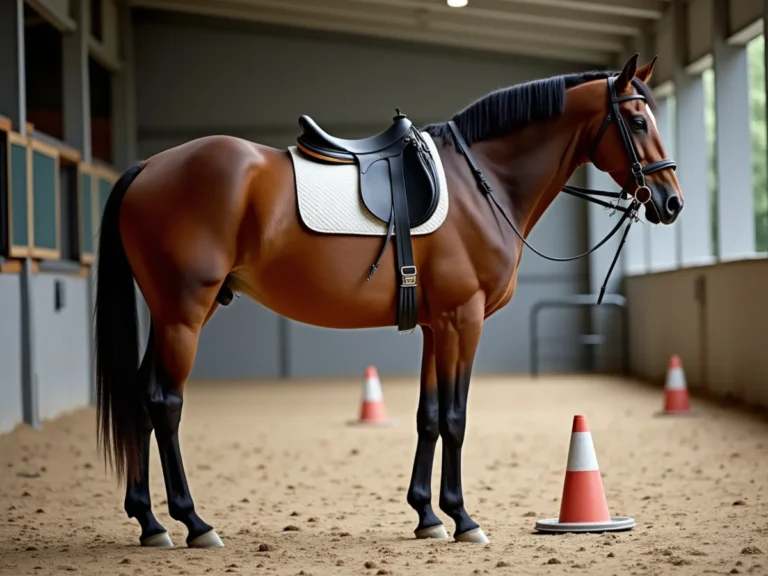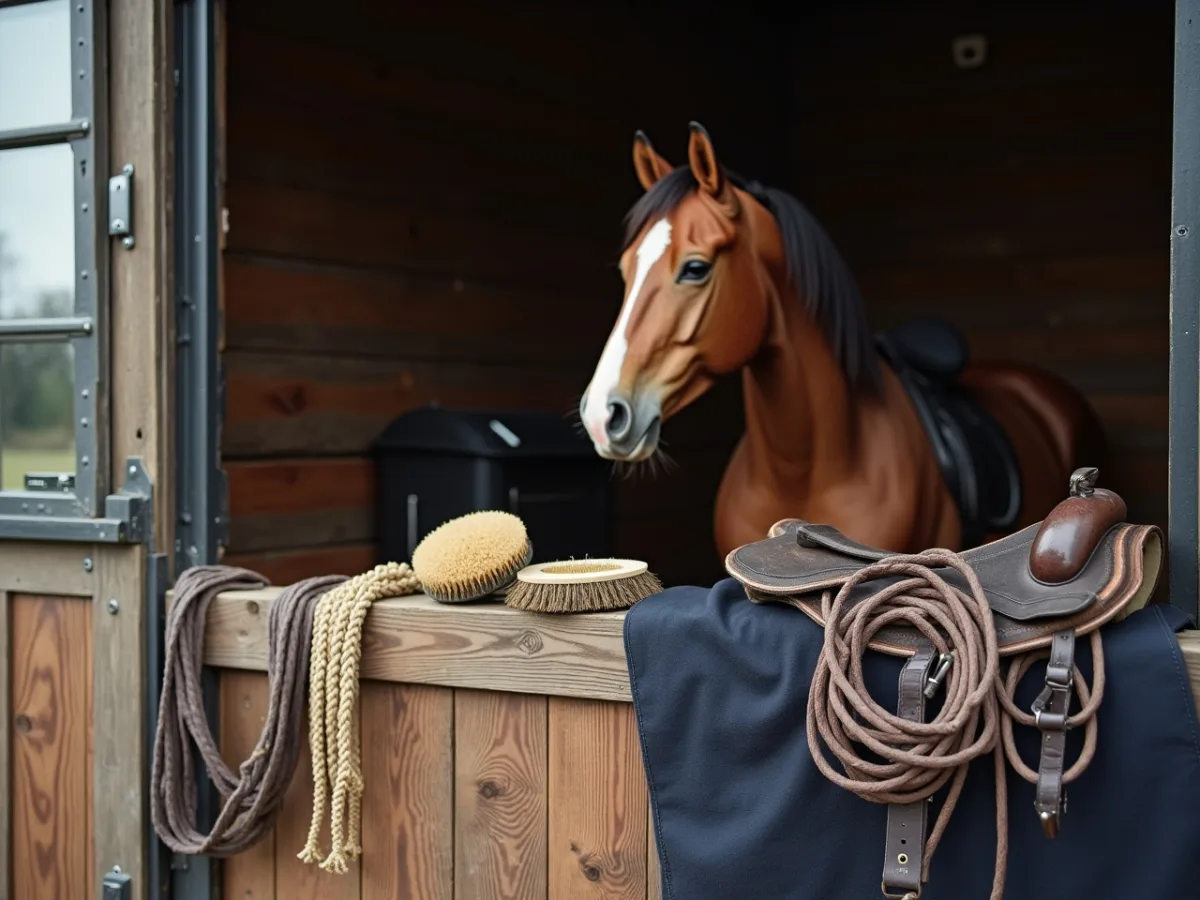
Some horses lean into a hand, while others pull away from the slightest touch. A blanket strap, a brush passing over the ribs, a saddle pad settling on the back, or even a quiet hand on the neck can bring out a reaction that seems bigger than the moment calls for. Sensitivity to touch and handling is not one single behavior. It can look like flinching, tensing, pinning the ears, stepping away, tail swishing, or simply becoming hard to groom and hard to place a halter on.
In daily life, this sensitivity shows up in small, practical moments. It may appear when the horse is being groomed before turnout, when a vet checks a sore spot, when a farrier lifts a foot, or when a rider tightens the girth. Sometimes the horse is genuinely uncomfortable. Other times the response reflects worry, confusion, old habits, or a need for more careful handling. The same reaction can mean different things depending on the situation.
That is what makes touch sensitivity worth paying attention to. It is not just about whether the horse “likes” being touched. It is about how the horse experiences pressure, expectation, restraint, and sudden contact. A horse that reacts strongly is often giving information long before the behavior becomes obvious enough for people to notice.
How sensitivity shows up in everyday handling
Touch sensitivity can be subtle at first. A horse may turn an ear, tense the neck, or shift weight before any major reaction appears. Another may tuck the belly the moment a hand reaches toward the flank. Some horses are sensitive only in specific areas, while others seem guarded all over the body. The pattern matters more than the one-off reaction.
In the barn, this behavior often shows up during grooming. A horse may dislike a stiff brush on the belly, a curry comb over the hips, or a spray bottle near the hind legs. Some horses are comfortable being touched when they are loose in the field but become defensive in cross-ties, where they feel trapped. Others tolerate one person easily and struggle with another because the second person moves faster, grips harder, or stands in a less predictable way.
Handling sensitivity also appears with routine tack and equipment. Saddling, girthing, leg wrapping, fly spray, bathing, hoof picking, clipping, and blanket changes can all reveal where a horse feels uneasy. The reaction may be small: a brief step away, a head lift, a tail snap, or a pause that seems to say “not that spot.” When these signals are ignored, the horse often becomes more reactive, not less.
What the body often says before the horse reacts
Most horses give early clues before they fully resist handling. The body tightens first. Breathing may become shallow. The skin twitches. The ears stop moving freely and fix on the person or object. A horse that is trying to tolerate touch may hold still in a stiff, unnatural way, which is different from relaxed stillness.
These signals are easy to miss because they can look quiet. A horse may not rear, kick, or bolt. Instead, the horse simply becomes hard to read. The face looks tight. The jaw clamps. The hind feet stop resting. That kind of stillness often carries more tension than motion does.
When a horse seems “fine” but the body is tight, the reaction often begins well before any visible refusal.
Understanding those early signs helps separate discomfort from defiance. A horse that braces when touched on the shoulder is not necessarily being difficult. The horse may be bracing because pressure is unpleasant, surprising, or emotionally loaded from previous experience.
Possible reasons behind touch sensitivity
There is no single cause behind sensitivity to handling. Physical discomfort is one possibility, and it should always be considered first. A sore back, dental issue, hoof pain, skin irritation, gastric discomfort, saddle fit problem, muscle soreness, or injury can make a horse defensive about touch. When a horse changes behavior suddenly, pain should stay near the top of the list.
Even without active injury, some horses have areas that are naturally more sensitive. The belly, ears, girth area, flanks, poll, hocks, and topline can all trigger a reaction. A horse may be comfortable being scratched on the neck yet resent pressure around the hindquarters. That contrast does not mean the horse is inconsistent. It means the body is not equally comfortable everywhere.
Past experience also matters. A horse that has been handled roughly, startled repeatedly, or rushed through grooming may learn to brace before contact starts. This kind of sensitivity can become a habit. The horse expects pressure to be unpleasant and reacts early to protect itself. In some cases, the horse is not guarding against pain right now, but against the memory of pain or stress.
Temperament plays a role too. Some horses are naturally more alert to movement and touch. They notice details faster and react sooner. A quiet, easygoing horse and a quick-thinking, reactive horse may both be healthy, but they process handling in very different ways.
How environment changes the reaction
The same horse can seem perfectly calm in one place and touchy in another. Environment shapes how safe the horse feels. A familiar stall with predictable routines can make handling easier. A noisy aisle, windy barn door, barking dog, or restless herd nearby can make the same brushing session feel much harder.
New surroundings often increase touch sensitivity. A horse that stands well at home may resist being handled at a show, trailer, clinic, or training facility. The horse is already processing unfamiliar smells, sounds, footing, and activity. In that state, even normal contact can feel like too much information at once.
Lighting, weather, and herd dynamics matter too. Flies, cold wind, rain on the coat, or a tense horse nearby can all change how a horse receives touch. A horse that is irritated by insects may not be reacting to the person at all. The reaction may be directed at the overall level of annoyance in the environment.
Routine also has a strong effect. Horses usually prefer handling that follows a familiar pattern. When a person changes the order of tasks, moves too quickly, or approaches from unexpected angles, a sensitive horse may become braced. Predictability often lowers tension more than force ever can.
How touch sensitivity appears in riding situations
Under saddle, touch sensitivity can show up as resistance to the girth, discomfort when the rider mounts, or tension when the leg applies steady pressure. Some horses hollow through the back when the saddle settles. Others pin the ears, rush forward, or refuse to stand still. A horse that seems “cinchy” may actually be trying to avoid a painful or unpleasant feeling around the ribcage.
Leg sensitivity can be complicated. A horse may respond well to a light aid yet become upset when the rider keeps adding pressure. The issue is not always the leg itself. Sometimes the horse is confused by repeated cues. Sometimes the horse is physically tight and cannot comfortably carry the request. Sometimes the horse has learned to react quickly because that response once worked.
Riding can also reveal sensitivity in transitions and contact. A horse that flinches when the rein closes, lifts the head when the rider sits deeper, or swishes the tail when asked to collect may be telling the rider that the aid feels abrupt. That does not always mean the aid is wrong, but it may mean the horse needs more preparation, softer timing, or a better fit between the horse’s current state and the work being asked.
In the saddle, repeated resistance to normal touch often deserves a physical check before it becomes a training label.
When sensitivity signals discomfort, not just personality
Owners sometimes assume a horse is simply “sensitive” by nature, but physical discomfort can hide inside that label. A horse that suddenly hates grooming on one side may be dealing with muscle soreness. A horse that reacts to the girth only after training harder could be struggling with back pain or saddle pressure. A horse that becomes difficult to handle during hoof care may be sore in the foot, leg, or lower back.
Changes in appetite, posture, movement, or mood can strengthen that possibility. A horse that stands camped out, shifts constantly, struggles to bend, or seems unusually dull may not be expressing a handling issue alone. The touch reaction is often part of a larger pattern. Looking at the whole horse keeps the response from being misunderstood.
Some discomfort is mild and easy to overlook. Tight muscles after hard work, skin irritation from sweat, a rubbed spot under a blanket, or a pinching strap can all make a horse less willing to be touched. These problems may not produce dramatic signs. Instead, they create steady irritability that builds with repeated handling.
When the reaction is emotional or defensive
Not every touch-sensitive horse is in pain. Some are guarding space. A horse that has not been handled much may not yet trust human hands. Another may have learned that movement near the head, belly, or hind legs leads to something unpleasant. The reaction becomes a defensive habit, even if the horse is physically fine.
Defensive sensitivity often looks different from pure discomfort. The horse may be fine while watching from a distance, then react the instant a hand reaches in. The body may move away before contact even begins. In these cases, the horse is often anticipating the touch rather than reacting to the touch itself.
That kind of anticipation can grow stronger if people keep pressing the issue. Holding the horse still longer, touching the sensitive area again and again, or trying to “make the horse accept it” may increase fear. The horse starts to expect being overrun, and the response becomes faster and sharper.
Common handling situations and what they may mean
| Situation | Possible response | What it may suggest |
|---|---|---|
| Grooming the barrel | Skin twitching, stepping away | Ticklishness, irritation, or soreness |
| Putting on a girth | Tensing, pinning ears, biting air | Back, rib, or abdominal discomfort; anticipation of pressure |
| Touching the ears or poll | Head tossing, avoidance | Protective reaction, soreness, or poor past handling |
| Picking up a hoof | Leaning, jerking away, kicking out | Balance trouble, pain, or distrust |
| Blanket changes | Moving off, flinching at straps | Unease with restraint or sensitive skin |
These reactions do not point to one fixed answer. They point to areas worth observing more closely. A horse may be sensitive only when pressure comes quickly, or only when the person stands in a certain place. The details help narrow down what the horse is reacting to.
How people often misread the behavior
Touch sensitivity is often mistaken for stubbornness. That label is convenient, but it can hide useful information. A horse that refuses the saddle pad may be trying to avoid a painful back. A horse that dances during grooming may be overstimulated by touch in a place that already feels uncomfortable. A horse that hates being tied and handled at once may be anxious about restraint, not disrespectful.
Another common misunderstanding is assuming the horse should “get used to it” through repetition alone. Repetition can help only when the horse is physically comfortable and mentally able to learn. If the horse is overwhelmed, repeated exposure without a gentler setup often teaches the horse to become more guarded, not less.
Owners also sometimes mistake a horse’s quietness for acceptance. Some horses do not fight; they simply endure. They may stand still, but with a rigid back, a set jaw, and careful feet. That is not the same as relaxation. The horse may be tolerating handling rather than feeling calm about it.
What helps reveal the true pattern
Good observation usually starts with small comparisons. Does the horse react the same way every day, or only after work? Is the reaction limited to one person, one tool, one side of the body, or one location? Does it happen more when the horse is tired, cold, sweaty, or distracted? Patterns tell a better story than isolated moments.
It also helps to note the type of touch. Some horses dislike sudden contact more than firm contact. Others prefer a slow approach and then tolerate steady pressure. A horse that startles at a quick pat may be fine with a calm hand resting on the shoulder. The method matters as much as the location.
Timing makes a difference too. A horse that is fresh from turnout may handle touch differently than one that has just finished work. Similarly, a horse that has stood quietly all morning may be less reactive than a horse that has already been clipped, tacked, trailered, and examined. Sensitivity can rise with accumulated stress.
Reading the balance between calm, neutral, and reactive
Not all touch responses are negative. A calm horse may lean into brushing, relax the lips, and lower the head when scratched in a favorite spot. A neutral horse may accept handling without strong opinion. That is different from a horse that is avoiding, bracing, or preparing to resist.
Reactive sensitivity usually looks faster and sharper. The horse may flinch before contact lands, swing the hindquarters away, or tighten across the topline. Sometimes the reaction is small but consistent. That consistency is often more telling than intensity.
Mixed signals can appear when a horse wants contact but also fears it. The horse may approach the handler, then jerk away when touched. Or the horse may stand quietly for a moment, then react when the touch becomes specific or prolonged. These mixed responses often reflect conflict, not contradiction.
A horse that alternates between seeking contact and avoiding it is often balancing comfort against caution.
Long-term meaning of a sensitive response
Some horses stay naturally more reactive throughout life, but the reason behind the reaction can change. A young horse may begin by simply not understanding touch. A trained horse may later become sensitive after a bad saddle fit, a rough season of work, or a period of illness. An older horse may become more selective as joints stiffen and muscles lose ease.
That is why long-term observation matters. A horse’s sensitivity is not fixed in one shape forever. It can increase, decrease, or shift from one area to another. A horse that once disliked the girth may later object to hoof handling instead. A horse that used to dislike brushing may become more tolerant after pain is addressed and handling becomes more consistent.
The most useful approach is to treat touch sensitivity as information. It points toward comfort, trust, physical condition, and daily stress all at once. The horse’s reaction is part of a conversation, even when the horse has no words. When people pay attention to where, when, and how the response appears, handling becomes easier to interpret and much easier to live with. The horse does not need every touch to feel the same. What matters is noticing which touches feel safe, which feel loaded, and which are asking for a closer look.