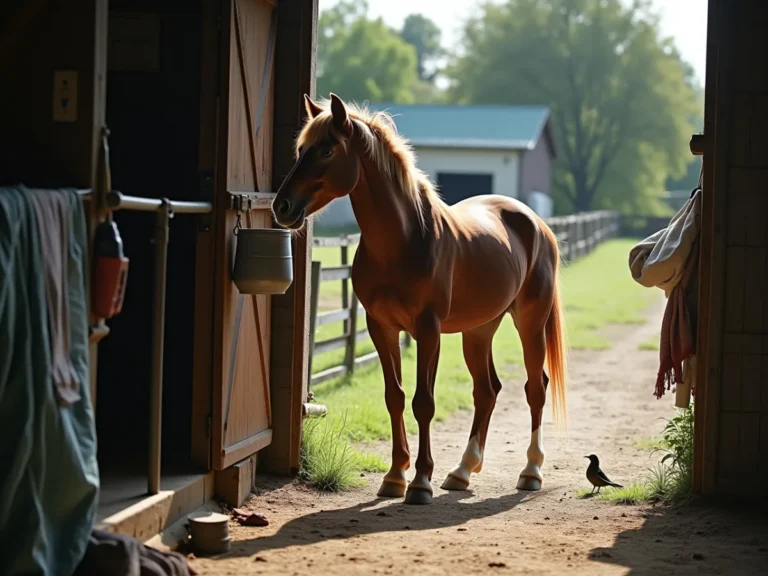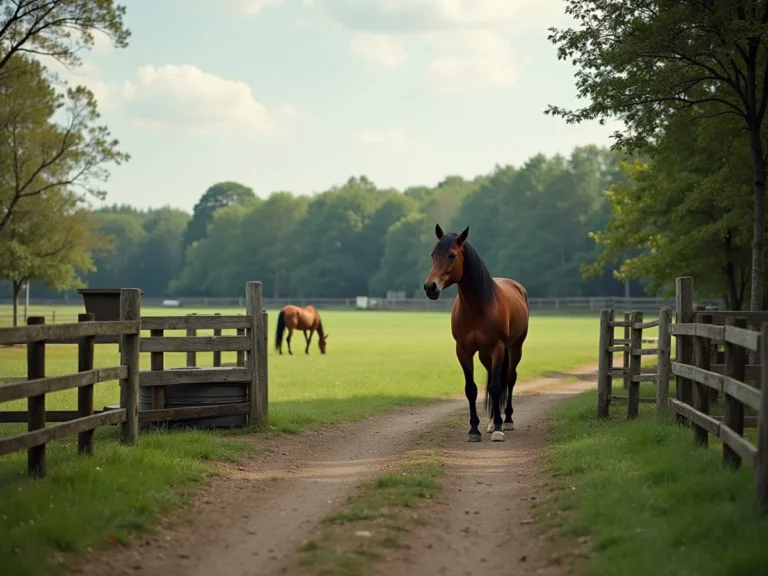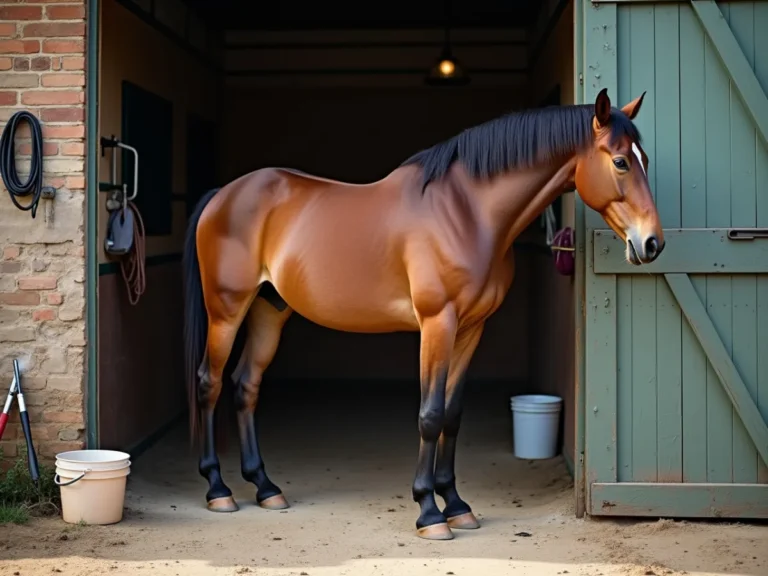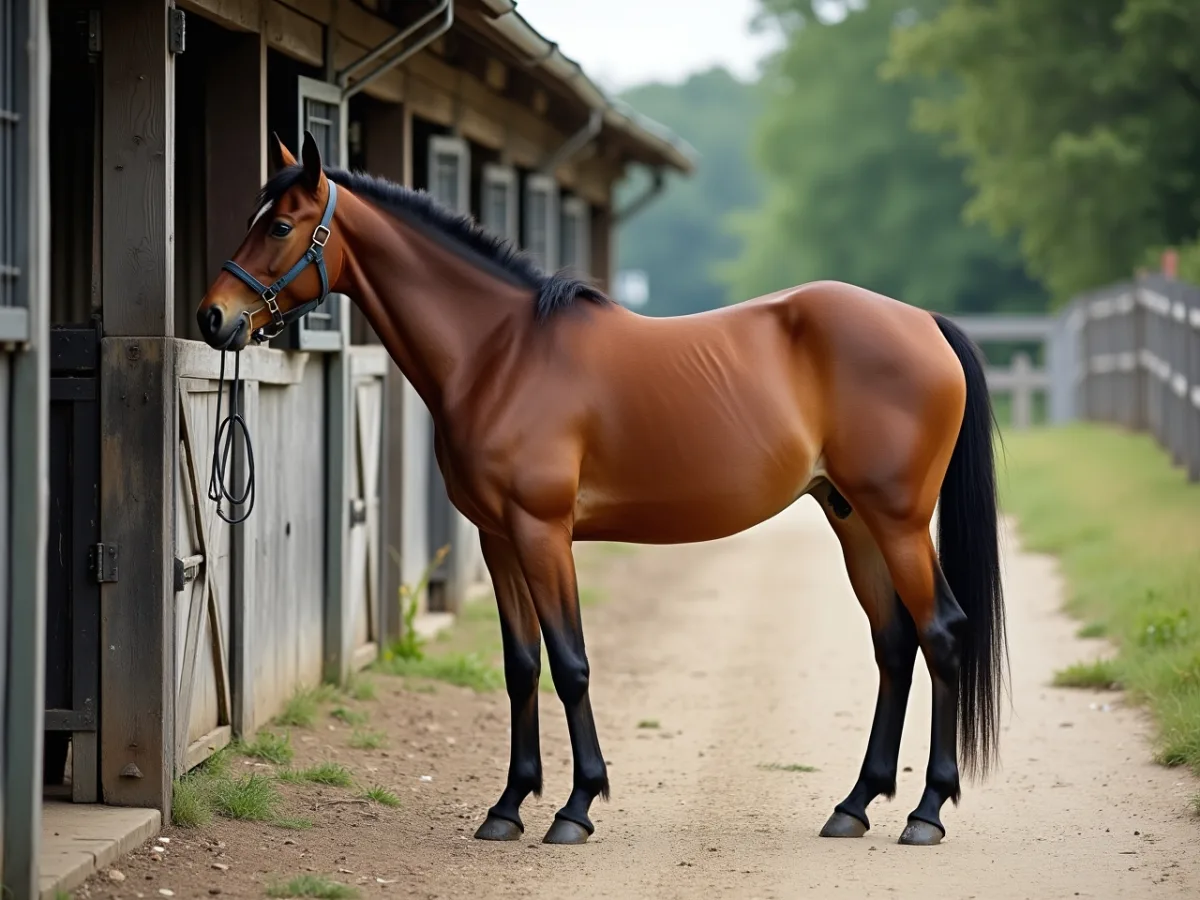
A horse that refuses to walk when asked can leave even experienced owners feeling puzzled. One day the horse moves forward easily, and the next day it plants its feet, leans back, or turns the request into a full standoff. That change can look stubborn on the surface, but the reason is often more specific than simple disobedience.
Walking forward is a basic response, yet it depends on comfort, trust, understanding, and timing. If any one of those pieces is off, the horse may decide not to move. In some cases the answer is physical. In others it is emotional, environmental, or tied to a learned habit that has slowly become stronger than the cue.
What matters most is reading the refusal in context. A horse that freezes before a trailer, drags behind on a trail, or stops moving in the arena may be saying different things each time. The body language, the setting, and the horse’s usual behavior all help narrow down what is really going on.
When a horse stops responding to a walking cue
Refusing to walk can show up in many ways. Some horses simply stand still and ignore the request. Others brace through the neck, shift weight backward, or pin their ears without taking a step. A few will take one hesitant step and then stop again, as if they want to move but cannot quite commit.
The behavior may happen in hand, under saddle, during turnout, or when approaching something unfamiliar. A horse that walks freely in one place may stop in another. That pattern is often a clue. The horse is not always refusing the cue itself; sometimes it is responding to where the cue is being given.
A horse that will not walk when asked is often communicating one of three things: discomfort, uncertainty, or resistance to a learned pattern. The surrounding details usually matter as much as the behavior itself.
Physical discomfort is one of the first things to consider
Many horses that refuse to move forward are not trying to be difficult. They may be protecting themselves from pain or strain. Even mild discomfort can make forward movement feel risky, especially if the horse associates stepping out with pressure on a sore area.
Lameness is the obvious concern, but the issue is not always dramatic. A horse can feel off in a subtle way and still seem mostly normal at a glance. Back pain, hoof soreness, hock stiffness, dental problems, ill-fitting tack, or soreness in the shoulders and hips can all change how willing a horse is to walk.
Common physical sources of reluctance
- Foot soreness or bruising
- Hoof imbalance or poor trim
- Back pain from saddle fit or muscle tension
- Stiff joints, especially after rest or in cold weather
- Gastrointestinal discomfort, including ulcers or gas
- Dental pain that affects balance and willingness
- Muscle strain after work or turnout rough play
Sometimes the horse looks almost normal while standing still, but the refusal appears the moment walking begins. That is especially common when pain shows up during movement rather than at rest. Short, careful observation can reveal uneven steps, a tight back, reluctance to turn, or a shorter stride on one side.
If a horse that normally walks off easily suddenly stops responding, pain should be treated as a real possibility before assuming it is behavior alone.
Confusion about the cue can look like refusal
Not every horse understands the request the way the handler expects. This happens often with young horses, recently rehomed horses, or horses being handled by a new person. A cue that is clear to one rider may feel vague to another horse, especially if the timing or pressure changes from one session to the next.
Some horses hesitate because they have learned mixed signals. They may have been asked to move forward while also being held back by a lead rope, a rein, or a nervous body position from the person handling them. When the cue does not feel consistent, the horse may simply stop and wait for more information.
In these cases, the horse may not be resistant so much as uncertain. The pause is often accompanied by a soft eye, quiet ears, and a body that looks attentive rather than tense. That is different from a horse that braces or becomes defensive.
Signs the horse may be unsure rather than oppositional
- Looking toward the handler for direction
- Shifting weight without committing to a step
- Slowly stretching the neck forward
- Taking a step after a clearer cue
- Relaxing once the request becomes simpler
When confusion is the main issue, the solution is usually cleaner communication, not more force. Horses tend to respond better when the request is direct, steady, and free of mixed messages.
Fear can shut down forward movement
A horse may refuse to walk because moving forward feels unsafe. Fear does not always look dramatic. Some horses spook, jump, or spin, but others freeze. Freezing is a common response when the horse is unsure whether stepping ahead will make things worse.
This often happens near trailers, narrow gates, puddles, plastic sheets, loud machinery, unfamiliar footing, or strange animals. A horse may stop because the object itself is alarming, or because the horse expects pressure from the situation. Even a place that seems ordinary to people can feel risky to a horse that has had a bad experience there before.
Fear-based refusal often comes with a different body picture than simple disobedience. The neck may be stiff, the nostrils flared, the ears locked forward or flicking rapidly, and the horse may stand almost too still. The stillness can be deceptive. Internally, the horse may be very alert.
When a horse stops in a fearful moment, forcing movement too quickly can raise the horse’s stress rather than solve the problem. The refusal may intensify if the horse feels trapped.
Habit and reinforcement can make the behavior stick
Some horses learn that stopping works. If a horse plants its feet and the pressure disappears, the horse may repeat the same strategy next time. This does not mean the horse is plotting anything; it means the horse is learning from what happens immediately after the refusal.
Habit-based refusal can become very polished over time. A horse might stop at the barn door, at the mounting block, at the gate to the arena, or on the same patch of trail every ride. The pattern is often predictable because the horse has learned that one location or one type of request leads to less pressure, a delay, or a change in plan.
In these situations the horse may not seem frightened or sore. The body can look calm, even casual. That calmness can make the behavior harder to interpret. Still, a learned refusal pattern is real, and it usually grows from repetition rather than from one single incident.
The environment can shape how willing a horse feels
Surroundings matter more than many people expect. A horse that walks normally in the arena may stop on a windy day, near barking dogs, beside a busy driveway, or in a crowded barn aisle. The same horse may become reluctant if footing changes from firm to slick, deep, uneven, or noisy underfoot.
Routine also matters. Horses often feel steadier when daily patterns are familiar. A change in turnout group, feeding schedule, exercise time, or stable location can make a horse more watchful. That watchfulness may show up first as hesitation to walk.
Transport situations are a common example. Some horses walk on willingly at one moment and then refuse the next. The issue may be the trailer itself, the footing under the ramp, the sound of metal, or the memory of a stressful trip. Each piece can increase tension before the horse even steps forward.
Environmental triggers that can change willingness
- Slippery mud, ice, or deep footing
- Wind, rain, or sudden weather shifts
- Unfamiliar sounds from equipment or traffic
- Other horses moving too quickly nearby
- Changes in light, shadows, or reflections
- Confining spaces such as aisles, ramps, or narrow lanes
A horse may look different in each setting because the setting itself changes the horse’s sense of safety. A refusal that appears random is often tied to a detail people overlooked.
Routine changes can create temporary resistance
Some horses are creatures of habit in a very practical way. They notice when feed arrives later than usual, when turnout is shorter, or when training happens in a different order. These changes may not seem important to a person, but they can affect the horse’s readiness to cooperate.
When routines shift, a horse may become less eager to step out. The horse can feel mentally preoccupied, less settled, or more reactive to small things. This does not always mean there is a major problem. It may mean the horse needs time to adjust before the walking cue feels familiar again.
You may also see more refusal after days off, after travel, or after a period of reduced work. Muscles can feel stiff, energy can build unevenly, and the horse may not want to move through the first request of the day. The first few steps often tell the story better than the whole session.
Emotional state can change the meaning of the refusal
A horse’s emotional state often shows up in the way the refusal happens. A calm, quiet horse that just stands still may be processing the request or waiting for clearer direction. A tense horse may refuse in a tighter, more defensive way, with weight shifted back and the body ready to react.
Some horses stop because they feel overfaced. That can happen after too much pressure, too much repetition, or too many strong corrections. Once the horse anticipates stress, even a normal request can feel heavy. The refusal then becomes part of a larger conversation about trust and expectation.
It helps to notice whether the horse is mentally present. Does the horse soften after the handler relaxes? Does the horse respond when the request becomes simpler? Does the horse start walking after a pause, or only after the surroundings change? Those details can separate a worried horse from a resistant one.
Emotion and learning often overlap. A horse may begin by refusing by fear, then continue refusing because the response became a habit.
Subtle body language offers important clues
Horses often give warnings before they fully plant their feet. These signals can be easy to miss if the handler is focused only on forward motion. A slight brace in the neck, a fixed jaw, a tucked tail, or a delayed response to pressure can all appear before the refusal becomes obvious.
Reading the whole horse is more useful than watching the legs alone. Ears, eyes, breathing, posture, and weight distribution all help tell whether the horse is relaxed, uncertain, or guarded. A horse that is willing usually shows a more fluid body, even if the response is slow. A horse that is resisting pain or fear often looks segmented, held, or difficult to organize.
Signals that often accompany a refusal
- Weight shifting backward
- Hollowing through the back
- Repeated head tossing or pulling away
- Clamped tail or tail swishing out of frustration
- Hesitation before the feet move
- Quickly looking toward the source of concern
These signals do not point to one cause by themselves. They are best read as part of the larger pattern. The same ear position may mean curiosity in one context and tension in another.
What the location of the refusal can reveal
Where the horse stops often matters as much as how the horse stops. Refusal at the barn door may point toward separation stress, anticipation, or a bad association with work. Refusal in the arena may suggest confusion, pain, or discomfort with the task. Refusal on the trail may indicate worry about footing, distance from other horses, or a place the horse considers exposed.
Some horses only resist at transitions. They are fine once moving, but the change from standing to walking feels difficult. Others move from one gait to another without issue but resist the first step after a pause. That kind of pattern can point to stiffness, insecurity, or a poor association with the cue itself.
Consistency matters. If the refusal always appears in one place, that place deserves attention. If it appears everywhere, the issue is more likely to be physical, emotional, or both.
Age, experience, and past handling all shape the response
A young horse may stop because the request is still new. The horse may need repetition, clarity, and patience to connect the cue with the action. An older horse may stop because past experiences have taught it to question the request or because the body simply does not feel as easy as it once did.
Horses with inconsistent handling often show more hesitation. If one handler allows stopping while another insists on immediate response, the horse can become confused about what walking cue actually means. That uncertainty may look like defiance, but it often reflects a mixed history.
Older horses may also develop behavior patterns linked to comfort. They know how much effort a task requires, and they may not want to offer forward movement when they expect stiffness or soreness. That awareness is not stubbornness in a simple sense; it is often a learned response to how the body feels.
How to think about the behavior in everyday terms
A horse that will not walk when asked is usually giving a message, even if the message is messy. The reason can be physical, mental, environmental, or a blend of all three. One horse stops because it hurts. Another stops because it is unsure. Another has learned that stopping changes the outcome.
That is why the same behavior should not be treated as the same problem every time. A horse that refuses to walk in the cross-ties after a hoof trim is not necessarily showing the same issue as a horse that stops halfway up a trail when a tractor starts nearby. The context changes the meaning.
Paying attention to timing, body language, and location makes the behavior easier to interpret. A horse that feels comfortable usually shows it in the way it steps forward: loose, direct, and willing. A horse that does not feels it too, and the refusal is often the first place it shows.
The question is rarely just “Why won’t the horse walk?” It is often “What changed in the horse, the cue, or the environment that made forward feel difficult right now?”
That question is usually the most useful place to start. It keeps the focus on observation instead of assumption, and it points attention toward the details that actually matter.