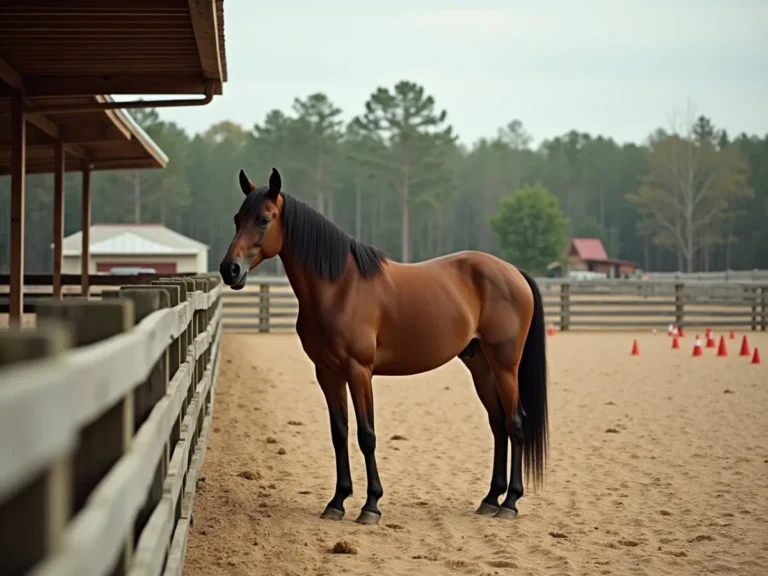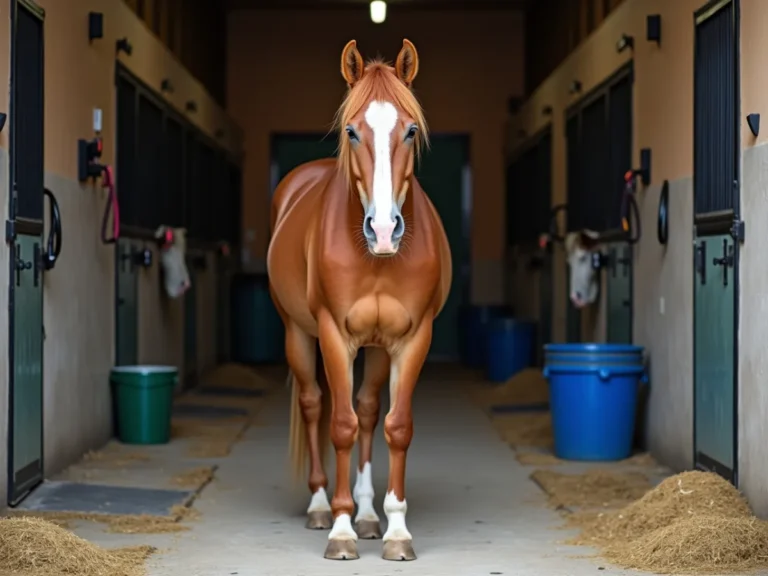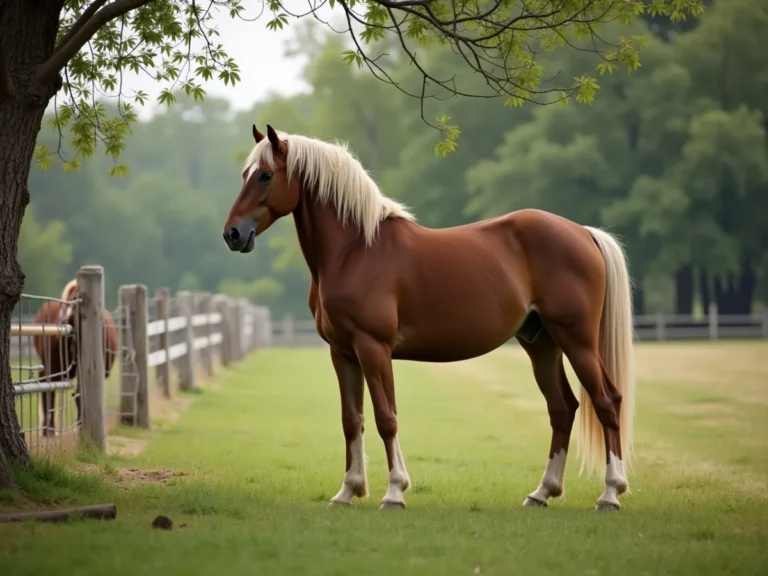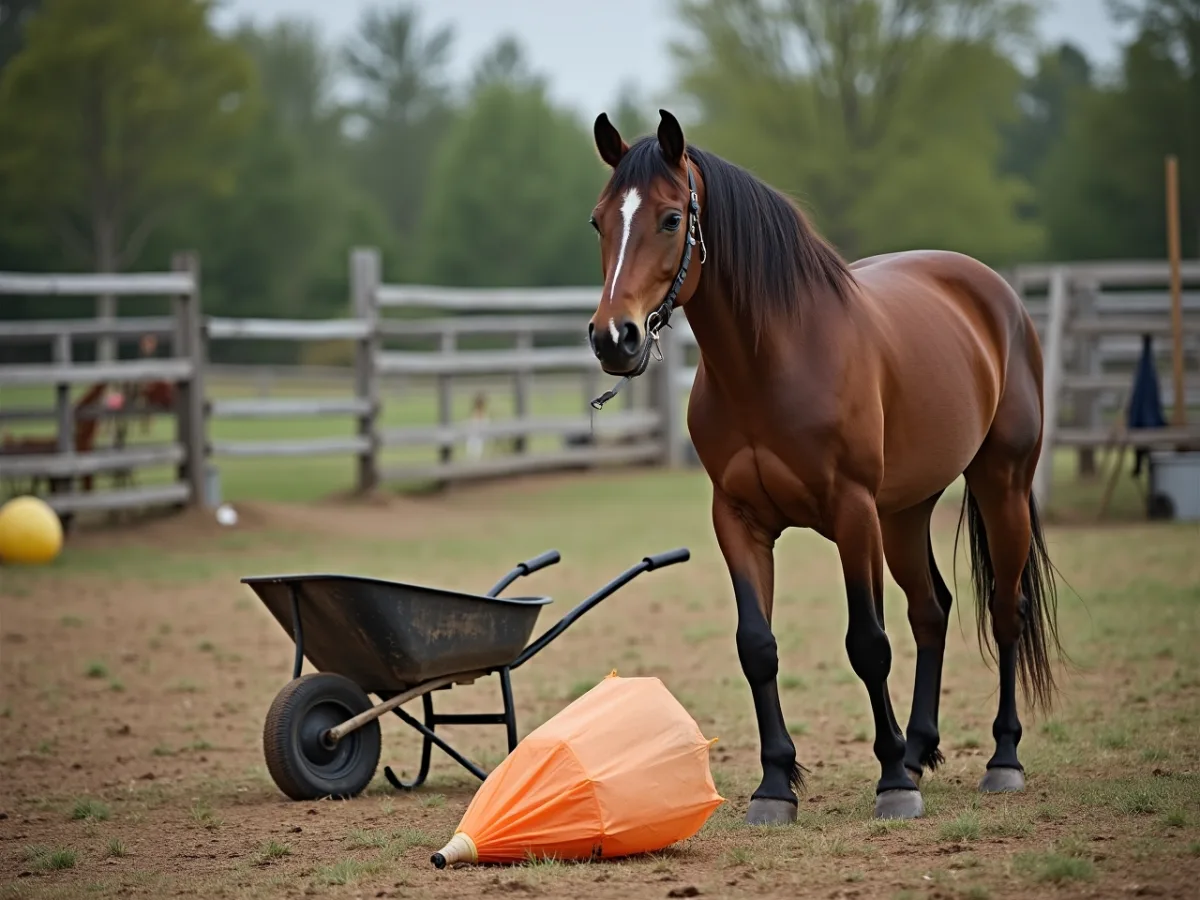
A horse that suddenly jumps, freezes, or swings away from an object is not being difficult. The reaction usually comes from a quick read of the surroundings, and that read can change in an instant. A plastic bag on the fence, a bucket left in the wrong place, a jacket draped over a rail, or even a feeding tub moved a few feet can trigger a strong response.
Spooking is not always dramatic, either. Sometimes the change is small: a tight neck, a pause in the stride, an ear locking forward, or a step to the side before the horse settles again. Other times the reaction is bigger and more obvious, with a snort, a jump, or a rapid pivot away from the object.
Objects matter to horses because they stand out as something new, strange, or possibly unsafe. In a horse’s mind, a new shape in a familiar place deserves attention. That attention can turn into caution very quickly, especially if the horse cannot immediately make sense of what it sees.
Why objects trigger such a fast reaction
Horses are built to notice change. A still object that was not there yesterday, or that looks different in a different light, can be enough to break their sense of predictability. Their first response is often to check the distance, movement, and position of the object rather than to ignore it.
This makes sense in a natural setting. A horse that hesitates around something unfamiliar has a better chance of avoiding danger. That same instinct shows up in barns, arenas, trailers, and fields, even when the “danger” is just a trash can lid or a fluttering tarp.
When a horse spooks at an object, the reaction is usually a mix of caution, uncertainty, and a strong need to stay aware of the environment.
The reaction can be stronger if the object appears suddenly, sits in a narrow path, or seems to move. A black hose across the ground can look very different from a distance than it does up close. Bright colors, sharp edges, shadows, and reflections also change how the horse reads the scene.
How the behavior shows up in daily handling
In hand, a horse may stop hard, snort, and lean away before trying to circle the object. Some horses stretch their necks forward and stare, then explode sideways if asked to move closer too soon. Others keep walking but feel tense through the body, with shorter steps and a harder mouth.
At the barn, objects that humans barely notice can become major points of concern. A broom leaning against the wall, a feed cart in an unusual spot, or a jacket hanging from a gate can all cause hesitation. Horses often react more strongly when they encounter the item in a place that should already feel safe and familiar.
Under saddle, the same reaction may look different. A horse can shy away from a mailbox, a cone, a ground pole, or a pile of leaves while still staying mostly under control. Some spooks are brief and easy to sit through. Others leave the horse mentally “stuck” on the object, looking back, rushing, or avoiding that area entirely.
Common situations where object spooking appears
- New items placed in the stall or aisle
- Tarps, umbrellas, flags, and plastic sheets
- Trash bins, wheelbarrows, hoses, and buckets
- Trail signs, stones, logs, or trail markers
- Items that move with wind or make sudden noise
Transport can bring out the same pattern. A horse may balk at the trailer ramp because it looks different from the ground, feels hollow, or carries an unfamiliar scent. Even a calm horse can become uncertain when the object is large, reflective, or positioned in a way that changes depth perception.
What the reaction may say about the horse’s internal state
Not every spook means the same thing. In one horse, it may simply mean “I noticed something new.” In another, it may point to tiredness, tension, or a lack of confidence in the current setting. The body language around the reaction gives useful clues.
A horse that is relaxed overall may glance at an object, blink, and then move on after a brief pause. A horse that is already worried may react before getting close, with high head carriage, tight muscles, and a fixed stare. If the reaction keeps happening around many different objects, the issue may be less about the item itself and more about the horse’s level of stress that day.
A single shy step away from a strange object is not the same as a horse that feels overwhelmed and cannot recover quickly.
Fatigue matters too. A horse that has been worked hard, handled for a long time, or separated from companions may have less patience for something unexpected. The same bucket that seemed harmless earlier in the week might feel far more suspicious when the horse is tired or mentally overloaded.
Internal reasons behind the reaction
Horse behavior around objects is shaped by more than simple fear. Sensitivity to movement, sound, texture, and contrast all play a role. Some horses are naturally bolder. Others are more cautious from the start and need more time to inspect new things.
Past experiences also leave a mark. A horse that once had a bad moment near a tarp, gate, or feed cart may remember that kind of setup in a general way, even if the exact object is different. The horse may not be thinking in a human story-like way, but the body still learns, and the next similar item can bring back that same guarded response.
Health can influence the reaction as well. Vision problems, soreness, or discomfort can make an object seem more threatening than it really is. If a horse suddenly becomes much more reactive than usual, or seems especially worried about things on one side, the physical side of the picture deserves attention.
Internal factors that can intensify spooking
- Tiredness or mental overload
- Poor confidence in unfamiliar settings
- Past negative experiences near similar objects
- Vision or pain issues
- High baseline alertness
Age can matter, but not in a simple way. Young horses often react because they have little experience sorting new things from real threats. Mature horses may still spook, but usually in a more measured way unless they are anxious, underworked, or reacting to something that genuinely seems different.
How the environment changes the reaction
The same object can be ignored in one place and rejected in another. A blue tarp laid flat in a quiet paddock may be less upsetting than that same tarp flapping beside the arena. Background noise, shadows, and foot traffic all shape how the horse reads the scene.
In low light, ordinary objects can look unfamiliar. A water trough at dusk, a stack of hay nets in the corner, or a fence post casting a long shadow can alter the horse’s sense of depth and shape. Wind is another major factor. Movement that humans barely register can seem highly suspicious to a horse that notices even small shifts.
Routine also gives objects meaning. A horse that always passes the same wheelbarrow in the same place may stop caring about it. Move that wheelbarrow ten feet, and it can suddenly become a new problem. Horses often react not only to what something is, but to whether it is where it “should” be.
Environmental details that commonly matter
- Lighting and shadows
- Wind and motion
- Noise from machinery, doors, or other horses
- Placement in narrow or unfamiliar spaces
- Changes in routine or layout
Even scent can be part of the picture. Fresh paint, rubber mats, fuel, cleaning products, or strange feed smells can make an area feel less familiar. When several details change at once, the horse may treat the entire space with suspicion rather than isolating one single object.
Calm interest versus a stronger defensive reaction
Not every object-related reaction is a full spook. A calm horse may show interest first: ears forward, head lowered, neck stretched out, maybe one step closer. That kind of response shows caution without immediate flight.
A stronger defensive reaction looks different. The horse may lift the head, round the back, swing the hindquarters, or pull away before getting a full look. If the horse cannot settle after the first reaction, the body usually stays braced, which makes the next step more tense and less balanced.
There is also a middle ground. Some horses alternate between checking and avoiding. They look, shift, look again, then move away and return later. This mixed response often means the horse is trying to decide whether the object is harmless but still feels unsure.
| Response | Common signs | What it may suggest |
|---|---|---|
| Calm interest | Forward ears, soft eyes, slow approach | Curiosity with limited concern |
| Brief spook | Jump, sidestep, quick glance back | Startle plus quick recovery |
| Defensive reaction | High head, tense body, repeated avoidance | Strong uncertainty or stress |
Recovery time is often more informative than the first jump. A horse that startles and then settles quickly may simply be surprised. A horse that keeps the neck tight, refuses to move past the object, or becomes more reactive after repeated exposure may need a slower, steadier approach.
Signs people often miss before the spook
Horses rarely go from fully relaxed to full reaction without warning. The signals can be subtle. A pause in the rhythm, a tighter jaw, a fixed look, or a slight shift of the feet may come first.
Ear position is useful, but not the whole story. Forward ears can mean curiosity, yet they can also appear during intense focus. Tail movement, nostril shape, head height, and weight distribution all help show whether the horse is calmly assessing the object or bracing for more.
Small changes in posture often appear before a horse reacts to an object. Those changes can be more useful than the spook itself.
Some horses “scan” the object by moving their eyes, then their head, then their feet. Others freeze. A horse that stops moving may not be relaxed at all; it may be preparing to decide whether escape is needed. That pause can be brief, but it is often the moment when the horse is doing the most internal work.
How people often misread the behavior
It is easy to think a horse is being stubborn when it refuses to pass a bag, a pile of poles, or a new decoration at the arena gate. In reality, the horse may be reacting to a shape, a shadow, a smell, or a sudden movement that people barely notice. The object may look harmless to a person and still feel deeply uncertain to the horse.
Another common mistake is assuming all spooks are the same. A horse that sidesteps away from a mailbox is not necessarily trying to evade work. It may simply be startled. On the other hand, repeated avoidance of many objects can show a broader pattern of worry that deserves a closer look.
People also tend to miss how quickly one bad experience can color later reactions. If a horse was frightened by a loose tarp once, future tarps may become suspicious even when they are neatly tied down. The horse is not remembering the situation in human terms, but the reaction can still carry over.
What repeated object spooking may mean over time
When the same horse keeps reacting to objects in different settings, the pattern becomes more meaningful than any single incident. A horse that spooks only when something is truly unusual is different from a horse that reacts to ordinary items every day. Consistency matters.
Frequent reactions can point to a horse that lacks confidence, has not had enough exposure to varied environments, or is dealing with discomfort. They can also appear in horses that are generally willing but currently overstretched by schedule, workload, or a noisy environment. The behavior itself is not a full diagnosis; it is a clue.
Some horses improve with steady exposure to ordinary changes. They learn that a bag on the fence does not chase them, that a bucket near the gate is not a threat, and that arena equipment usually stays put. Others need more time before they can process a strange object without reacting strongly. The pace varies, but the pattern usually becomes clearer with observation.
Long-term patterns worth noticing
- Does the horse react to many different objects or only specific ones?
- Does the reaction happen more in certain places or at certain times?
- Does the horse recover quickly or stay tense for a long time?
- Has anything changed in health, routine, or workload?
- Does the behavior look worse when the horse is alone or tired?
A horse that is generally steady may still spook now and then, especially if something looks unusual. That alone is not unusual. What matters more is whether the horse can process the object, settle afterward, and continue without carrying the tension into the next moment.
The quiet balance behind a spook
Objects cause a horse to spook because the horse is reading the world quickly and taking new information seriously. The reaction may be tiny or dramatic, but it almost always begins with uncertainty. A horse that pauses, stares, sidesteps, or jumps away is showing that the object changed the picture in some way.
That change can come from the object itself, the environment around it, or the horse’s physical and mental state at the time. A horse that feels comfortable may only glance and move on. A horse that feels taxed, wary, or confused may react more strongly and need more room to sort things out.
In everyday life, the most useful clue is often the pattern around the spook rather than the spook alone. What was different in the setting, the routine, or the horse’s body language? The answers usually sit there in plain view, even when the object itself seems harmless.