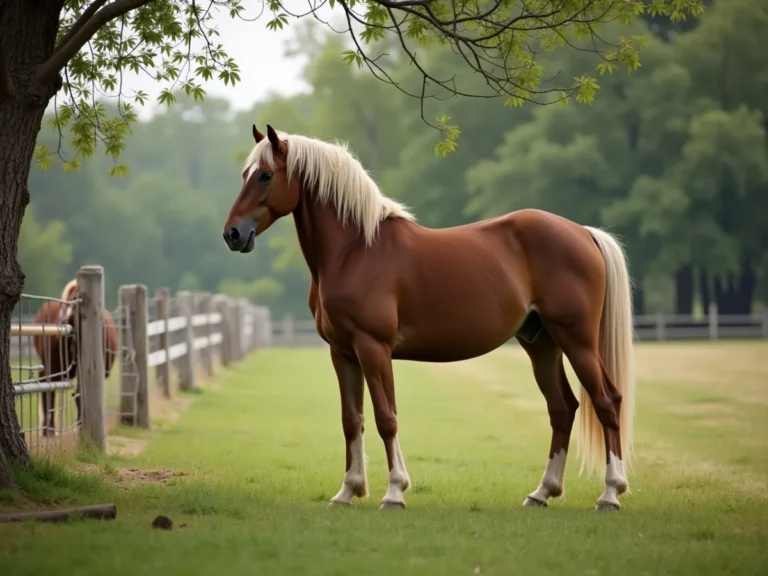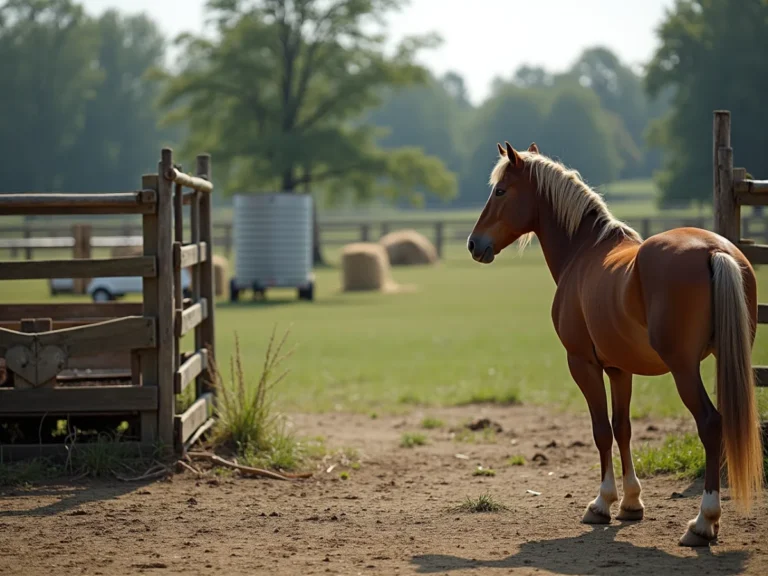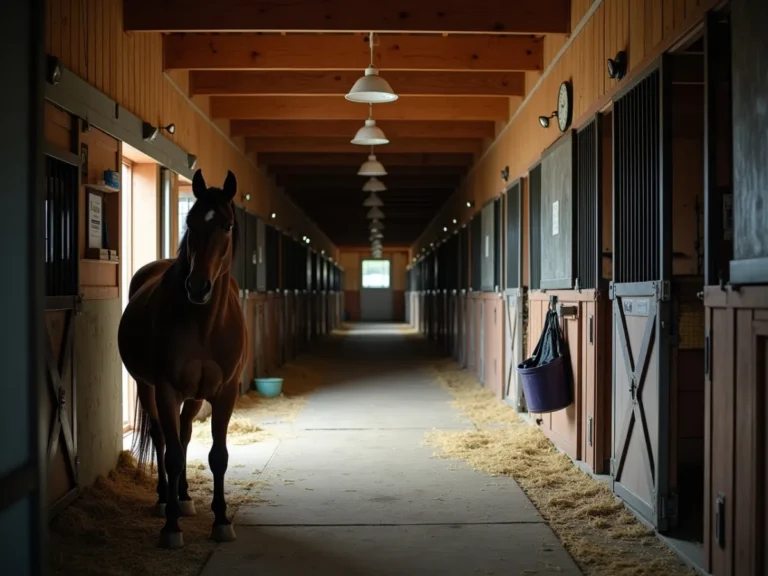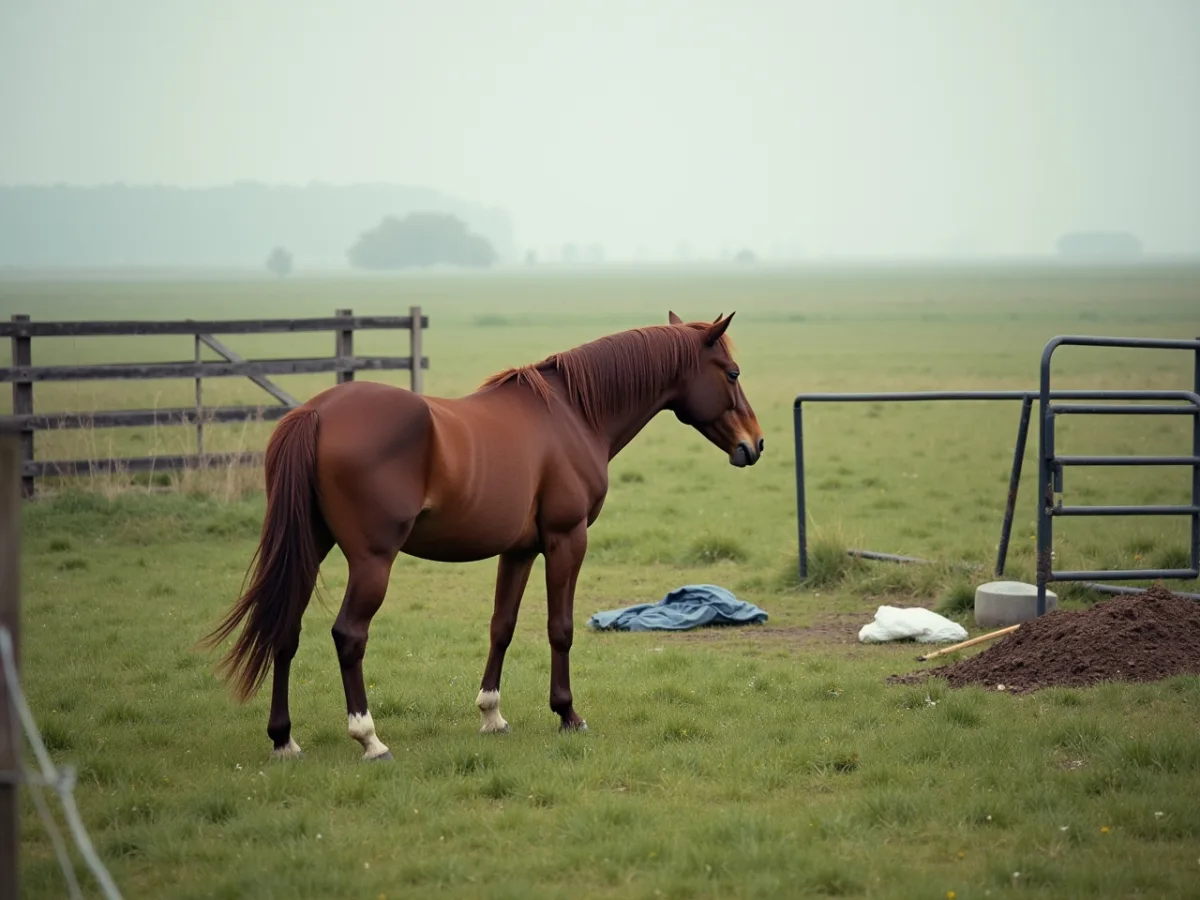
A horse can look calm and still be reading the world with intense attention. A flick of an ear, a pause at the gate, a sudden change in head position, or a shift in the feet may all be responses to something the horse has seen. Visual triggers are often subtle because horses do not always react with obvious fear or agitation. Sometimes the first sign is simply that the horse has noticed something and decided it deserves more attention.
In daily life, these reactions can appear in the barn aisle, during turnout, in the arena, or on a trail. A feed bucket moved to a different spot. A jacket draped over a fence. A shadow crossing the floor. A vehicle in the distance. Horses do not only respond to loud or physical events; they often react strongly to what they can see, especially when the image is new, unusual, or hard to interpret.
Visual triggers matter because horses rely heavily on sight to stay safe. They are built to detect movement, shape, contrast, and sudden changes in the environment. That strength can also make them quick to react to things people barely notice. Understanding these reactions helps explain why one horse walks past a tarp without concern while another stops, stares, and refuses to move forward.
How Visual Triggers Appear in Daily Handling
Visual reactions do not always look dramatic. A horse may first show interest, then tension, then avoidance. The body often changes before the full behavior becomes obvious. A horse may raise the head, lock the neck, widen the eyes, or stop chewing. In some horses, the feet remain still while the ears and face become sharply focused on the object.
In the stable, a horse may hesitate near a doorway because someone left equipment in a new place. In the pasture, the same horse may avoid a corner where a plastic bag moved in the wind. Under saddle, a horse might drift sideways, spook, or lose focus after seeing something beside the arena. The reaction is not always about danger itself. Often it is about uncertainty.
Some horses respond with a brief startle and then settle quickly. Others keep looking, snorting, or circling back to check again. That second look matters. It tells you the horse is not only surprised but trying to gather more information. When the horse can keep looking from a safe distance, the reaction may stay mild. When the horse feels trapped or pressured, the same visual trigger can become much stronger.
Visual triggers often create a chain reaction: notice, assess, hesitate, then either approach or avoid. The speed of that chain depends on the horse’s confidence and the clarity of the scene.
Why Horses React to What They See
Horses are prey animals, so their eyes are tuned for scanning the environment. Sudden movement, sharp contrast, and unfamiliar shapes naturally catch their attention. A horse does not need a loud noise to feel alerted. A patch of light on the ground, a jacket hanging on a rail, or a stationary object that suddenly appears in a familiar place can be enough.
Distance also matters. A horse may be relaxed when it can see an object from far away, then become tense as it approaches and the details change. Sometimes the issue is not the object itself but the fact that it looks different from one moment to the next. A blue barrel in the arena may be fine one day and alarming the next if it has been moved, tipped over, or covered with something unfamiliar.
Shape plays a large role. Horses tend to notice things that break a familiar outline. That is why a folding chair, a hose coiled in a new place, or a wheelbarrow parked beside the fence may draw more attention than a person expects. Motion can increase the reaction, but stillness can be confusing too if the object seems out of place. The horse is not overthinking it. The horse is sorting out whether the image belongs.
Common Visual Features That Catch a Horse’s Eye
- Sudden movement, especially from the side
- Unfamiliar shapes in a familiar setting
- High contrast or changing shadows
- Objects that appear or disappear quickly
- Reflections, glare, or shifting light
- Things that move in wind, such as tarps or branches
- Items placed where the horse did not expect them
How the Reaction Changes by Situation
A horse may respond differently depending on whether it is in the stall, paddock, trailer, or riding environment. The same visual trigger can feel manageable in one place and overwhelming in another. Context changes everything. A horse that calmly watches a truck pass outside the gate may react more strongly if that same truck appears beside the arena during a lesson.
In the stable, horses often notice changes in routine objects. A feed cart parked in a new corner can be enough to trigger hesitation. During turnout, horses may react to birds flushing from the grass, a blanket moving on the fence, or a neighboring horse appearing suddenly. On a trail, bends in the path, gaps between trees, water reflections, and movement in the brush can all create visual uncertainty.
Under saddle, the rider often feels the reaction before fully seeing the trigger. The horse may shorten stride, raise the head, brace through the back, or drift away from one side of the arena. If the horse has already decided the image is suspicious, pressure can make the reaction bigger. A calm horse can become tense if the rider asks for a forward response too quickly. In those moments, the visual trigger is only part of the picture. Body pressure, expectation, and the horse’s current confidence all shape what happens next.
| Situation | Common Visual Trigger | Typical Reaction |
|---|---|---|
| Stable aisle | Moved equipment, open doors, hanging items | Hesitation, staring, sideways steps |
| Pasture | Wind-blown objects, new fences, wildlife | Head lift, snort, quick retreat or watchfulness |
| Arena | Shadows, cones, tarps, people at the rail | Drifting, spooking, loss of focus |
| Trail | Reflections, brush movement, low branches | Slowing down, tension, avoidance |
What the Horse May Be Communicating
A visual reaction is not always a sign of bad behavior. It may signal caution, curiosity, fatigue, insecurity, or a need for more time to process. A horse that stares at something is often telling you that the object has not yet been classified as safe. That does not mean the horse is panicking. It may simply mean the horse wants more information before moving closer.
Some horses become more reactive when they are tired or mentally overloaded. A horse that has already handled a difficult ride, a crowded barn, or a long trailer trip may be less able to absorb a new visual surprise. In that state, even a small change can feel large. The reaction may seem sudden, but the buildup often started earlier.
There is also a difference between alertness and alarm. Alert horses notice the world quickly and stay engaged. Alarmed horses look frozen, pulled tight, or unable to shift attention. One horse may prick the ears, look, and move on. Another may hold the breath, swing away, and keep checking behind. Those differences help reveal whether the horse is simply interested or truly unsettled.
A horse that looks at something is not necessarily being difficult. Often the horse is asking one simple question: “Is this safe enough for me to keep going?”
Subtle Signals That Often Appear First
The earliest signs can be easy to miss if you only watch for big reactions. A horse may stop blinking, slightly tighten the muzzle, or shift weight onto the hindquarters before stepping away. The neck may rise a few inches. The ears may pin forward toward the object, then flick back toward the handler or rider. These are small signs, but they often appear before a spook or refusal.
Breathing can also change. Some horses hold their breath briefly, then snort. Others breathe faster and keep the ribcage tight. The tail may go still. The horse may also become unusually quiet, which people sometimes mistake for relaxation. In reality, the horse may be focused so strongly on the visual trigger that other signals have narrowed.
Watch for movement patterns too. A horse that sidesteps, stalls, circles, or keeps one shoulder away from the object may be trying to manage distance. That distance gives the horse a chance to stay oriented without fully committing. When the horse chooses to stretch the neck and look instead of retreating, that usually means the trigger is being processed, not fully rejected.
Signs That Deserve Attention
- Head lifting higher than usual
- Sudden stillness or a frozen stance
- Eyes fixed on one spot
- Neck tension and a braced back
- Sidestepping or spinning away
- Snorting, repeated staring, or repeated checking
- Loss of rhythm in work that was previously steady
How People Often Misread Visual Triggers
People sometimes assume a horse is being stubborn when the horse is actually unsure. A refusal at the same gate every morning may look like resistance, but it may be tied to a changing reflection, a narrow angle of light, or a parked vehicle nearby. A horse that balks near the arena entrance may not be testing boundaries. The horse may be reacting to the difference between open space and a confined visual field.
Another common misunderstanding is thinking that one calm moment means the horse has fully accepted the trigger. A horse may walk past a tarp once and then react strongly to the same tarp the next day if the weather, wind, shadows, or nearby activity have changed. Horses do not always generalize the way humans expect them to. What looked safe yesterday may not look safe today if even one detail shifts.
There is also a tendency to overreact to every visual hesitation. Not every pause needs to become a correction. Sometimes the horse simply needs time to look. If the handler rushes, the horse may lose confidence and become more reactive the next time. On the other hand, ignoring a growing reaction can let tension build. The useful middle ground is noticing the first signs and adjusting quietly before the horse feels pushed past its comfort.
What Influences Sensitivity to Visual Triggers
Temperament matters. Some horses naturally scan more, react faster, and stay alert to movement. Others seem steadier and less bothered by changes in the environment. Breed tendencies, past experiences, and current workload all shape how strong the visual reaction becomes. A horse that has seen many different environments usually handles novelty better than one with a very narrow routine.
Conditioning also plays a role. Horses that are used to gradual exposure often remain more composed when something unusual appears. That does not mean they never react. It means they recover more quickly and are less likely to escalate from curiosity into alarm. Consistency in routine can help, but too much sameness can make any sudden change stand out even more.
Physical comfort matters as well. A horse with sore feet, a tight back, or poor saddle fit may have less room to process visual surprises because the body is already under strain. When comfort is reduced, tolerance often drops. The horse may react to an ordinary object as if it were a major threat simply because the overall system is already overloaded.
Factors That Can Increase Reactivity
- Fatigue or stress
- Poor vision or changing light conditions
- Pain or discomfort
- Limited exposure to new environments
- Wind, noise, or other competing distractions
- Pressure from handlers or riders
Visual Triggers in the Horse–Human Relationship
Many visual reactions happen at the exact moment a horse is asked to trust human direction. That is why they can feel so personal to owners and riders. A horse that stops at a new object is not necessarily refusing the person. The horse may be weighing the information more carefully than the human expects. When the person remains patient, the horse often has a better chance of settling.
Clear handling helps because horses read human movement, too. A rushed approach, a sudden reach, or a tense posture can make the object seem more threatening. A steady lead line, calm body position, and quiet feet usually support better processing. Under saddle, soft rein feel and balanced riding can prevent a brief look from turning into a larger emotional reaction.
That interaction works both ways. When people become tense at the first sign of hesitation, horses often notice the change and assume there is real reason to worry. A horse may look to the handler for guidance. If the guidance feels unstable, the trigger can intensify. If it feels calm and consistent, the horse can often move forward without needing to fight the impression of the object.
The horse is not only reacting to what it sees. It is also reacting to how the human responds to what the horse sees.
When the Behavior Becomes More Noticeable
Visual triggers often stand out more during transitions. Moving from stall to turnout, from warm-up to work, or from familiar to unfamiliar places can make the horse more sensitive. A horse that is quiet in a known routine may become watchful when the day changes. New weather can matter too. Rain, frost, strong wind, and low sun all alter the appearance of familiar spaces.
After time off, horses may also react more strongly. The first ride after a break can reveal how much the horse depends on routine for confidence. Objects in the arena may seem less familiar. Sounds and movement outside the ring may register more strongly because the horse has not been in the work environment recently. The behavior is often temporary, but it can still be striking.
Some horses are especially sensitive at certain times of day. Early morning shadows can create moving patterns that disappear later. Evening light can flatten objects and make them harder to judge. A horse may seem calm at noon and reactive at dusk, not because the horse changed, but because the visual environment changed.
Reading the Difference Between Mild and Strong Reactions
Not every visual trigger has the same meaning. A mild reaction may involve a brief pause, a look, and then forward movement after a moment of thought. A stronger reaction may include repeated stopping, refusing to pass, rushing away, or becoming difficult to redirect. The difference often lies in whether the horse can process the image or feels overwhelmed by it.
Soft reactions usually leave some room for curiosity. The horse may keep one ear forward, soften the eyes, or inch closer after checking the object. Strong reactions tend to narrow the horse’s options. The body gets rigid, the attention becomes fixed, and the horse may choose escape over investigation. That is when the trigger is no longer just interesting. It is taking over the horse’s ability to think through the situation.
Mixed reactions are common. A horse might walk toward an object, then suddenly freeze, then stretch the neck to look again, then try to leave. That back-and-forth tells you the horse is trying to decide. It also shows why patience matters. The horse may need more time than a person expects, especially if the scene keeps changing or if pressure is added too soon.
Long-Term Patterns and What They Reveal
Over time, visual triggers often show patterns. Some horses are generally alert but recover quickly. Others are quieter day to day but become sharp in specific settings. A horse may react only to moving objects, only to unusual colors, or only when something appears in a place where it “shouldn’t” be. These patterns help reveal what the horse finds difficult to organize visually.
Consistency is important when watching for patterns. If the same type of object causes tension again and again, the issue is probably not random. It may be linked to movement, position, texture, reflection, or past memory. A horse that avoids a certain area every afternoon may be responding to the changing angle of light rather than the area itself. Looking at the repeated context often explains more than the single reaction.
Long-term observation also helps separate real sensitivity from temporary stress. A horse that only reacts after hard work, travel, or time off may be showing a temporary drop in confidence. A horse that repeatedly reacts in the same way to similar visual changes may have a stronger baseline sensitivity. Either way, the behavior is easier to understand when it is seen across many days, not just one moment.
Practical Ways Owners Notice the Trigger Early
Owners usually catch these reactions best when they pay attention to the whole horse, not just the final spook or refusal. The body tells the story early. Head position, neck tension, ear carriage, and foot placement often change before the horse moves away. If you notice those details, you can respond before the reaction grows.
It also helps to watch for environmental changes that humans may overlook. A new container near the gate, a blanket draped over a fence, or a branch shifted after wind can alter how a familiar space looks. Horses notice these things quickly. A simple walk-through of the area before bringing the horse in or asking for work can prevent avoidable surprises.
In some cases, the best response is not to push harder but to give the horse a clearer view. Allowing the horse to look from a safer position often reduces tension. Once the horse has processed the image, movement tends to improve. That approach is especially useful when the trigger is visual rather than physical.
Small Adjustments That Often Help
- Change the horse’s angle so it can see the object better
- Give a little more space before asking for forward movement
- Keep your own body calm and balanced
- Check for shadows, reflections, or moved objects
- Let the horse pause briefly instead of rushing the moment
Visual triggers are part of normal horse behavior, but the meaning behind them changes with the horse, the setting, and the moment. A quiet stare may be nothing more than careful observation. A sudden sidestep may reflect uncertainty more than fear. Once you start reading the early signals, the behavior becomes easier to understand in everyday life, from the barn aisle to the open field to the arena gate.