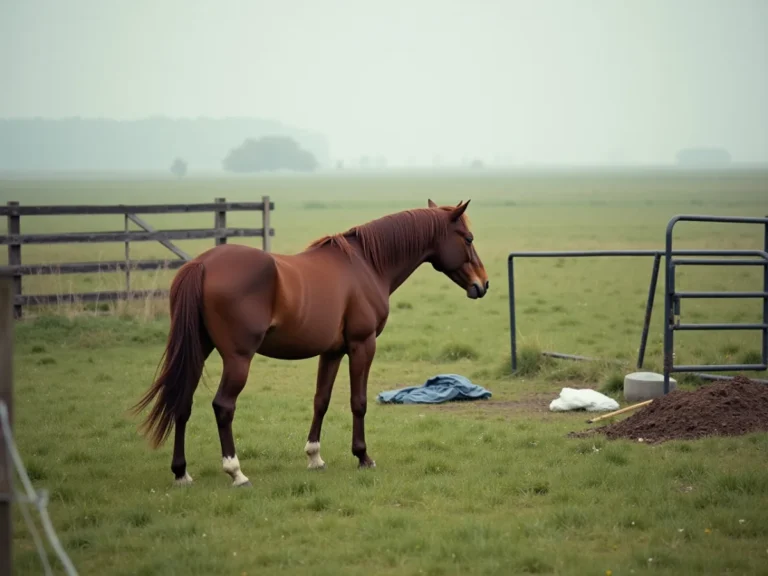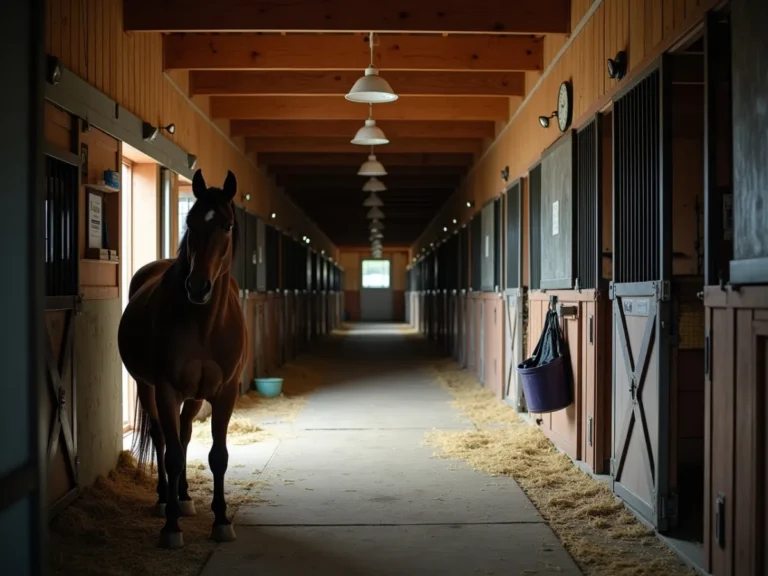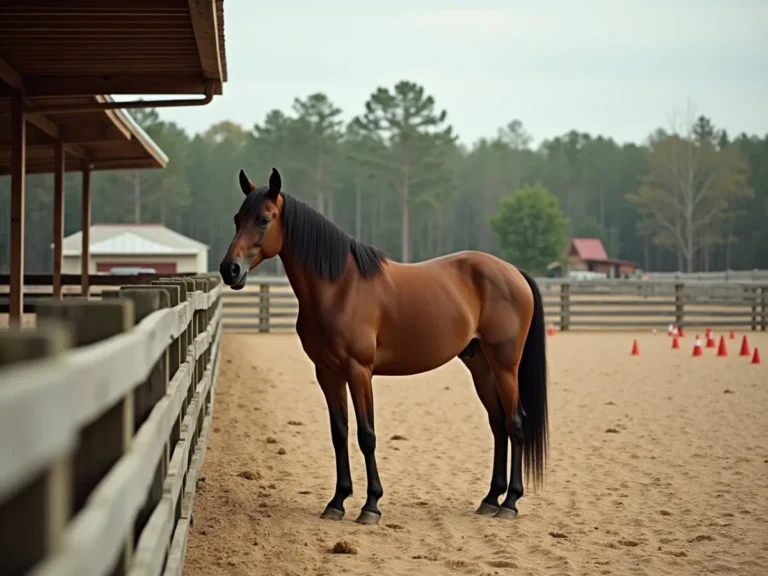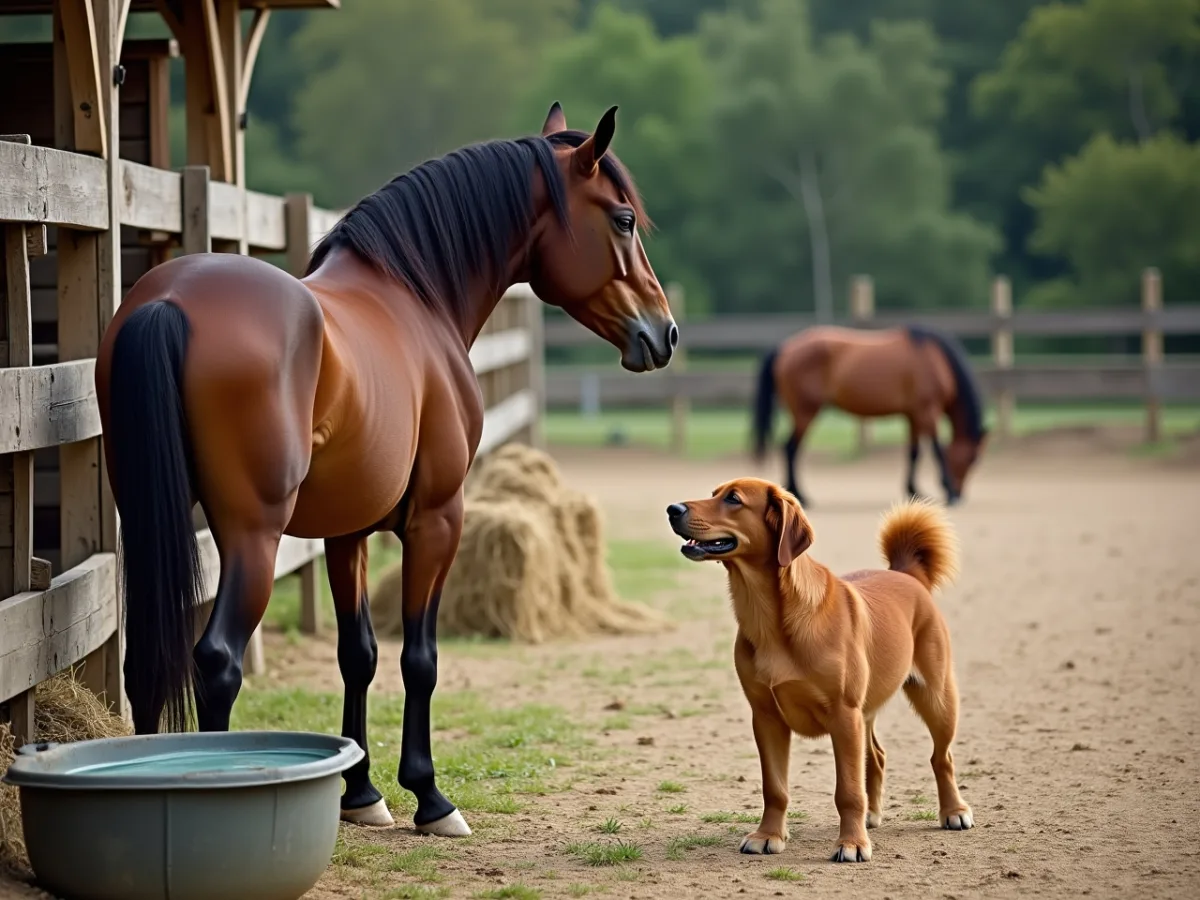
A horse can notice another animal long before a person does. A change in breath, a shift in ears, a small movement at the edge of the field, and the whole posture may change. That reaction can look mild, curious, tense, or surprisingly intense, depending on what the horse sees and how it feels in that moment.
Reactions to other animals are not random. They often come from a mix of instinct, past experience, routine, and the horse’s own sense of safety. A donkey in the next paddock, a dog trotting near the arena, a flock of geese near the gate, or a deer crossing a trail can all trigger different responses. Some horses simply look and continue eating. Others freeze, snort, sidestep, or become hard to settle until the other animal is gone.
Understanding these responses helps explain much more than a single startled moment. It shows how a horse reads its environment, how sensitive it is to movement and sound, and why the same animal may react calmly one day and strongly the next. In everyday handling, that difference matters.
How reactions to other animals show up in real life
In the stable, a horse may pin its ears, raise its head, or step away when another animal appears in the aisle. Some horses become alert the second they hear barking, and others only react when the dog moves too quickly or gets too close. The response may be quiet but clear: a paused chew, a tightened back, a tail swish, or a refusal to stand still.
At pasture, the behavior often looks different. A horse may arc its neck toward a strange animal at the fence, follow it along the line, or place itself behind a herd mate before deciding whether to continue grazing. Horses that live with predictable companions often react less dramatically than horses that are already on edge or have recently changed groups. Familiarity matters.
During riding, reactions can become more obvious because the horse has less freedom to move away. A distant cow on a trail may barely register to one horse and cause another to spook, rush, or suddenly drift sideways. In an arena, even a small animal near the rail can pull the horse’s attention away from the rider. The change is often in focus before it is in movement.
Transport adds another layer. Horses may react to horses in adjacent trailers, to livestock near loading areas, or to animals seen through windows and open doors. Because the horse is confined, even a mild alert state can become bigger than expected. What seems like a small distraction from the outside can feel like a meaningful event to the horse.
Reaction is often less about the other animal itself and more about what that animal represents: movement, unpredictability, unfamiliar scent, sound, or a break in the horse’s expected routine.
Why horses react this way
The most basic reason is survival. Horses are prey animals, so their first job is to notice changes quickly. Another animal can mean danger, competition, intrusion, or simply something unknown. A horse does not need to understand the full situation to respond. It only needs to decide whether the new input feels safe enough to ignore.
Sight plays a large role, but it is not the only sense involved. Dogs, cats, cattle, and wildlife all carry scents and sounds that may matter as much as their appearance. A horse that seems calm while watching a goat in a stall may become far more concerned when that goat suddenly bleats or moves toward the horse’s space. The reaction often happens after the first alert moment, not before it.
Past experience also shapes the response. A horse that was chased by dogs may react strongly to any dog, even a quiet one at a distance. Another horse may have learned that barn cats are harmless and barely lift its head when one passes under the door. The horse is not making a moral judgment. It is connecting current input with stored memory and body sensation.
Temperament matters too. Some horses are naturally more watchful, while others seem slower to react and quicker to settle. Neither type is automatically better. The more alert horse may notice every change in the environment, while the more easygoing horse may need a larger or more direct trigger before it cares. Both can be normal within their own range.
Common situations and what they often mean
In the stable
Stable reactions often involve hesitation. A horse may stop at the stall door when a dog barks nearby or refuse to walk past an unfamiliar animal at the far end of the aisle. The body can look still while the mind is clearly engaged. Some horses stretch their neck to inspect, then relax if nothing more happens.
When a horse repeatedly reacts in a stall setting, the issue may be more about confinement than the other animal alone. A horse with limited escape options may feel more vulnerable and therefore become more reactive. Even a harmless cat moving under the stall door can seem significant when the horse has nowhere to step away.
In the field
At pasture, reactions often depend on herd status and space. A new animal entering the area may draw attention fast, especially if fence lines are close or there is only one route for movement. The horse may approach to investigate, move away, or call to herd mates before deciding what to do.
Some horses become especially reactive to animals that enter their grazing space. A deer near the hay ring, a goose at the water trough, or a stray dog along the fence can trigger a defensive look or a quick run-off. That is not necessarily aggression. It can be a simple boundary response.
During riding
Under saddle, horses often reveal the earliest signs through body tension. The stride may shorten, the neck may stiffen, or the horse may lock onto the animal with one ear forward and one ear flicking back. A calm horse might look and continue. A more worried horse may speed up, hesitate, or try to turn away.
Trail settings usually bring the strongest reactions because the horse meets unfamiliar animals in unpredictable places. A horse that is quiet in the arena may still react to a bicycle, dog, llama, or loose farm animal on a trail. The environment matters as much as the animal itself, because the horse is reading both at the same time.
During transport
Loading areas can be busy, noisy, and full of strange movement. Horses may react to livestock trucks, dogs running nearby, or other horses waiting in close quarters. The confinement of the trailer makes it harder to choose distance, so the horse may show more intensity than usual. A horse that is normally tolerant may still become sharp and watchful here.
What the reaction may signal about the horse’s state
Not every reaction means fear, but fear is one common layer. A horse can also be curious, protective of its space, unsure of the sound, or simply overstimulated. The difference is often in how quickly the horse can recover. A curious horse looks, processes, and returns to normal. A worried horse stays fixed, tense, or reactive after the animal has already moved away.
Stress often shows up in small ways before it becomes dramatic. A horse may stop chewing, brace through the back, or keep scanning the area even when the other animal is gone. Some horses start to mouth the bit, swing the hindquarters, or breathe more quickly. These signs do not always point to danger, but they do show that the horse is not fully settled.
There are also moments when the response is social rather than defensive. Horses may watch another animal because it resembles a familiar barnmate, because it is moving within their herd space, or because it is simply interesting. A horse that stretches toward a neighbor horse across a fence is not necessarily nervous. It may just be engaged.
A useful question is not only “What animal is that?” but also “How fast does my horse recover once it has noticed it?” Recovery often says more than the first reaction.
Subtle signals that appear before a bigger reaction
- Ear movement that becomes fixed on the animal
- Head raising higher than normal
- Short, shallow breathing
- Stopped chewing or reduced licking and chewing
- Stiffening through the neck and topline
- Weight shifting onto the hindquarters or forehand
- Tail swishing that is sharper than usual
- Sudden scanning of the surroundings
These signs often appear before the horse moves its feet. That is why small changes are useful to notice early. A horse that seems “fine” can still be building tension one signal at a time. Once the body is fully braced, the reaction is usually harder to soften.
In some horses, the signs are extremely mild. They may only blink less, pause for a second, or angle one ear toward the other animal. In others, the reaction is open and visible right away. The difference often comes down to sensitivity, experience, and how close the animal is.
How different animals create different responses
| Other animal | Common reaction | Why it may happen |
|---|---|---|
| Dog | Watchfulness, startle, backing away | Fast movement and barking can feel threatening |
| Cat | Brief look, low-level alertness | Small size makes the cat seem less risky |
| Cattle | Focused attention, hesitation, sidestepping | Large size and direct movement can be intimidating |
| Wildlife | Freeze, snort, sudden flight | Unpredictable motion and unfamiliar scent |
| Other horses | Interest, social calling, tension | Herd behavior and social relationships matter |
The same horse may respond very differently depending on the animal and the setting. A dog inside a fenced yard may be easier to ignore than a dog that runs loose toward the arena. A horse may remain calm around a quiet pony but become reactive around a fast-moving calf. Movement style often matters more than species alone.
How environment changes the reaction
A horse in a familiar place usually settles more quickly. The same horse may be slower to relax in a new barn, a new pasture, or along an unfamiliar trail. When the environment is already full of new sounds and smells, another animal becomes one more thing to process. That extra load can push a normal alert response into a strong one.
Season and routine also play a role. Horses that are used to seeing birds, barn cats, or neighbor horses every day may treat them as background noise. When a seasonal change brings loose dogs, grazing wildlife, or new livestock nearby, reactions can increase simply because the pattern has changed. Horses like predictability more than people often realize.
Group dynamics matter as well. A confident herd companion can help another horse relax near strange animals. A tense herd mate can spread alertness quickly. One horse pinned to the fence may make the next horse feel there is reason to worry. This is especially noticeable in small groups or tight spaces.
When the reaction looks calm, neutral, or defensive
Calm
A calm reaction is usually brief. The horse notices, evaluates, and returns to its previous activity. The body stays loose, and there is little change in rhythm. This is often what people want to see, and it usually means the horse has enough confidence or familiarity to process the animal without escalating.
Neutral
Neutral can look almost like no reaction at all. The horse may glance once and continue grazing, walking, or standing quietly. This does not always mean the horse is unaware. It may simply mean the stimulus is not important enough to change behavior. Neutral responses are often easy to miss because they are so small.
Defensive
Defensive responses show up when the horse feels the need to create distance. It may back up, swing the hindquarters away, spin, or rush forward. The key sign is not just attention, but protective action. These reactions often happen when the animal is too close, moves too fast, or appears suddenly.
Defensive behavior is usually about distance, not “bad manners.” The horse is trying to manage what it thinks is a risky situation.
How people often misread these reactions
It is easy to mistake alertness for disobedience. A horse that stops moving because it sees a dog may look stubborn, when it is actually focused on assessing the situation. A horse that snaps its head up at a passing deer may seem dramatic, when the reaction is simply immediate and unresolved. The body often reveals the real story better than the first impression does.
People also sometimes assume that all reactions to other animals are fear-based. That is not always true. Some horses are deeply curious and want to inspect every movement. Others are territorial around feed, water, or space. A horse that drives a barn cat away from its hay pile may be expressing boundary behavior more than alarm.
Another common mistake is expecting the same response every time. Horses are not machines, and reactions shift with fatigue, hunger, weather, workload, and the horse’s general comfort level. A horse that ignored the neighbor’s dog yesterday may react strongly today if it is already tired or unsettled. Context changes everything.
What steady observation can reveal over time
Long-term patterns are often more useful than one-off moments. A horse that always reacts to loose dogs but never to barn cats is telling you something specific about movement, sound, or past experience. A horse that reacts only in one field may be responding to visibility, footing, or the way that area traps sound. Repeated reactions usually have a pattern, even when that pattern is subtle.
It helps to notice three things: what animal appeared, how close it was, and how quickly the horse returned to normal. Those details often explain more than the reaction itself. A quick glance and a return to grazing point to a very different state than a sustained freeze with elevated tension. Recovery time is especially useful because it shows how deeply the horse was affected.
Some horses grow quieter with experience. Others stay sensitive throughout life but learn how to settle more quickly. Neither path is unusual. The important part is not forcing a single response, but understanding what is ordinary for that horse and what is not.
Practical takeaways from everyday horse behavior
When a horse reacts to another animal, the first question is usually not whether the reaction is “right” or “wrong.” It is what the horse noticed, how strongly it affected the body, and whether the horse can return to a calm state without help. That sequence matters more than the momentary look on its face.
Some reactions stay small and pass quickly. Others repeat in the same places, with the same animals, or under the same conditions. Those repeated patterns are often the clearest clue. They can point to a horse that is sensitive to movement, worried about close approach, protective of its space, or simply not fully comfortable with the environment around it.
Watching those differences closely can make daily handling easier. A horse that quietly notices a cat walking by is showing one kind of response. A horse that locks up at the sound of barking or surges away from a loose goat is showing another. Both are understandable when the setting, the horse’s memory, and the immediate stimulus are taken together.
In ordinary barn life, this kind of awareness helps explain a lot of small moments: the pause at the fence line, the raised head in the trailer, the sidestep on the trail, the stare toward the pasture gate. Each one is part of how the horse sorts the world around it, one animal at a time.