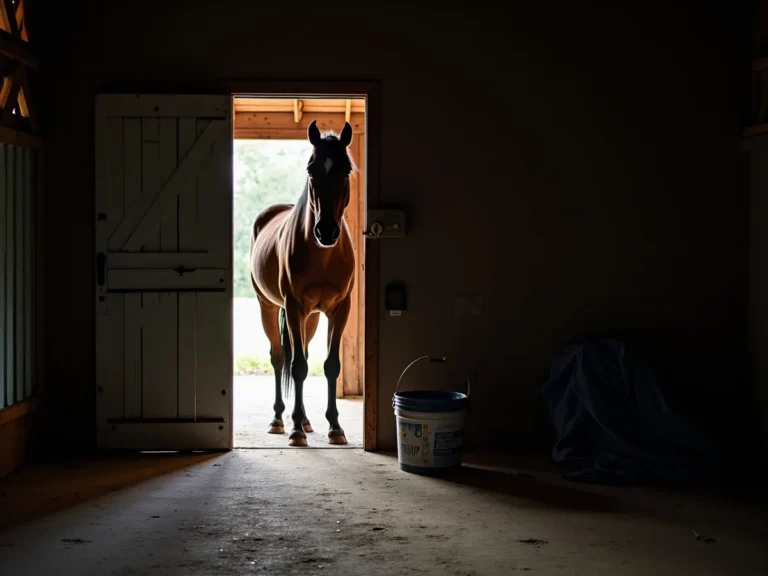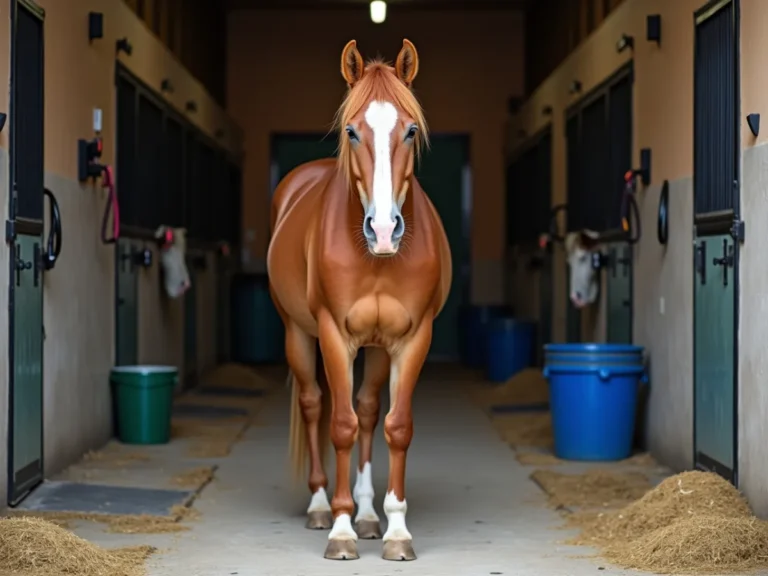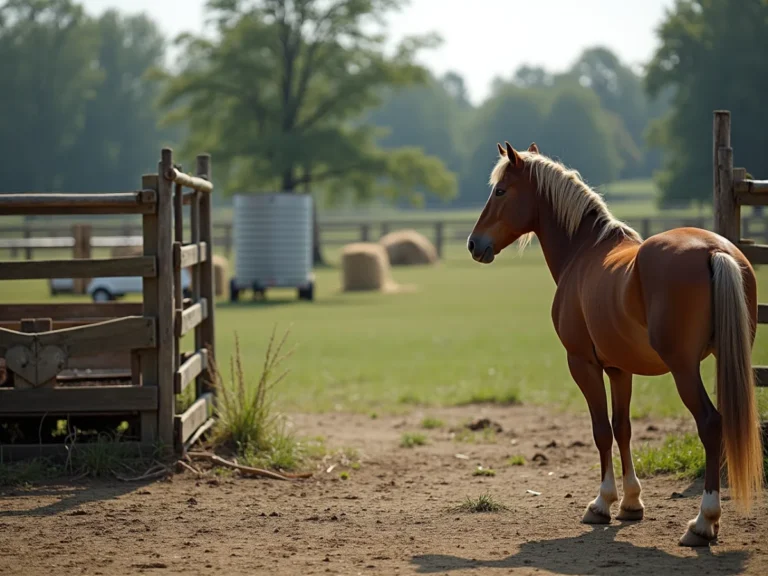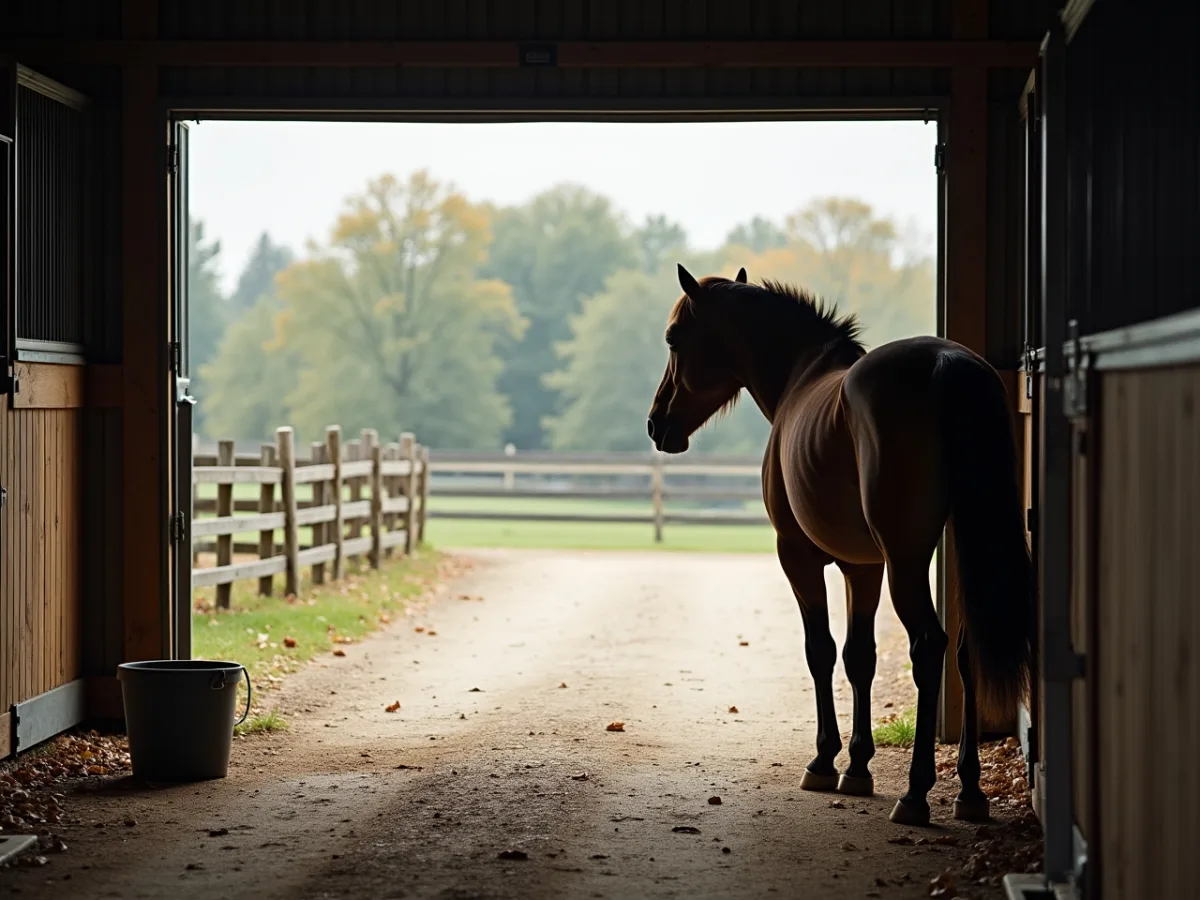
A horse notices things long before many people do. A shift in the wind, a new object near the fence, the sound of a gate latch, or a change in the smell of the barn aisle can all draw attention in an instant. What looks like simple curiosity is often a highly refined way of reading the world.
Small environmental details matter because horses live in a state of quiet readiness. They do not need dramatic changes to react. A bucket moved three feet, a shadow across the footing, or a missing companion in the next paddock may be enough to change posture, expression, and behavior. These small cues often reveal more than obvious reactions do.
People sometimes think of a horse as calm when it stands still, but stillness does not always mean the horse is unaware. Many horses are paying close attention to subtle environmental details even when they look relaxed. That awareness is part of how they stay safe, how they learn routines, and how they decide whether a place feels familiar or worth watching.
Noticing small changes is not a flaw. It is a normal part of how horses move through the world. The challenge is learning how to read that awareness without overreacting to every flick of an ear or glance toward the corner of the arena.
Why Horses Pay Attention to Small Details
Horses are prey animals, so noticing tiny changes is built into their nature. A slight difference in the environment can signal something harmless, but it can also be the first clue that something has shifted. That instinct does not disappear in domestic life. It simply shows up in barns, fields, trailers, and riding arenas instead of open plains.
This sensitivity is one reason horses can seem to “study” the world. They are often scanning for patterns. They remember where the hose usually hangs, which gate is open at feeding time, and which corner of the arena has been changed. Repeated exposure helps, but it does not erase their natural habit of checking details.
Small environmental changes do not automatically mean a horse is fearful. Often, the horse is simply gathering information before deciding whether the change matters.
That information-gathering can look subtle. A horse may pause at the barn entrance, lift its head slightly at a sound, or turn one ear toward an unfamiliar object. These are not always signs of distress. In many cases, they are signs of a horse doing exactly what horses are meant to do: observe first, respond second.
How This Shows Up in Daily Life
In everyday handling, noticing small environmental details can appear in ordinary moments. A horse may stop at the same patch of ground that now smells different after rain. It may hesitate near a new wheelbarrow, even if the object is parked well away from its path. A routine ride can feel different if a bird suddenly flies from the hedgerow or a tarp flaps near the fence line.
At the barn, horses often notice changes people barely register. A feed room door left open, a new stack of hay, a feed tub placed in another spot, or a dog resting near the aisle can all change how a horse moves through the space. Some horses continue calmly after a quick look. Others slow down, stretch their necks, or approach in small steps.
In the field, changes can be just as important. Horses may check whether herd members have moved, whether a fence line looks different after repairs, or whether a water trough has changed position. They may also notice weather-related details like shifts in wind, the smell of approaching rain, or the feel of wet ground underfoot.
Common signs in the stable
- Brief pauses near doors, corners, or unfamiliar equipment
- Repeated looking toward a sound or movement
- Sniffing a new object before relaxing
- Standing slightly more forward or braced than usual
- Watching handlers while also checking the environment
Common signs in the pasture
- Change in grazing pattern near a new object or sound
- Moving away and then circling back for another look
- Checking the herd more often than usual
- Standing with the head raised toward a distant disturbance
- Different use of space, such as avoiding one fence line
These behaviors can be so mild that they go unnoticed unless someone is paying close attention. Yet they often tell a useful story about what the horse has registered and how it is processing the setting.
What the Behavior May Be Saying
Noticing small environmental details can mean several different things. Sometimes it reflects simple curiosity. Other times it points to caution, uncertainty, or a need for more time to settle. The meaning depends on the whole picture, not one isolated gesture.
A horse that glances at a new object and then walks on may be showing healthy awareness. A horse that repeatedly revisits the same object, keeps tension in the topline, and avoids relaxing nearby may be less settled. Those two horses are both noticing details, but their internal states are different.
Look at patterns, not single moments. One ear flick or one pause may be nothing. Repeated attention in the same place often means the environment still feels important to the horse.
Some horses are naturally more observant than others. They may be the ones who notice when the grain bin is moved, when a new scent is in the aisle, or when someone changes their route through the barn. That attentiveness can be useful. It can also make them slower to accept changes that other horses ignore.
In other cases, strong attention to environmental details may reflect a higher state of alertness. A horse in a busy, noisy, or unfamiliar place often becomes more watchful. The behavior is not necessarily a problem. It is a response to uncertainty, and it usually softens as the horse gains information and feels less need to monitor every detail.
Subtle Signals That Often Accompany It
Small environmental awareness rarely appears alone. Horses often pair it with quiet body language that gives clues about how they feel. The ears, neck, eyes, feet, and breathing all help show whether the horse is simply interested or more concerned.
One horse may stand with soft eyes, loose skin around the muzzle, and only a brief ear turn toward the change. Another may raise the head, tighten the neck, and fix the stare. The difference can be easy to miss if you focus only on whether the horse moved or not.
Signals that often suggest calm attention
- Slow head movement toward the object or sound
- Relaxed breathing
- Ears that move but do not lock rigidly forward
- Feet that stay planted without extra tension
- Curiosity followed by a return to routine
Signals that may suggest discomfort or stress
- Rigid neck or elevated head carriage
- Repeated start-stop movement
- Tail tension or overall body stiffness
- Inability to settle after checking the stimulus
- Watching the environment while ignoring familiar cues
These signs do not always appear in the same order. A horse might first freeze, then sniff, then step away, then come back for another look. That sequence can be normal. What matters is whether the horse settles after gathering information or stays on edge.
How Routine Shapes Attention to Detail
Routine is one of the strongest influences on how a horse responds to its surroundings. Horses quickly learn what belongs in a place and what does not. When the daily pattern stays consistent, many small details become part of the background. When the pattern changes, the details become more noticeable.
A horse fed at the same time every morning may notice if the person arrives late. A horse turned out along the same path may react to a moved cone or freshly repaired section of fence. Even if the change is harmless, it stands out because the horse has a memory of how the space usually feels.
Predictability can reduce the intensity of this response, but it does not erase it. Horses still check things. They just tend to settle faster when the environment is familiar and the routine feels stable. That is why many owners see the strongest reactions after a schedule change, a storm, a new boarder, or a move to a different stall.
The horse is not necessarily being difficult. It is noticing that something in the pattern no longer matches expectation. In a species built around early detection, that matters.
When the Environment Makes Small Details More Noticeable
Some environments amplify a horse’s awareness more than others. Open fields, cluttered barn aisles, unfamiliar arenas, and transport situations can all make small changes stand out. Noise, movement, smells, and crowding create layers of input that the horse has to sort through.
Weather also plays a role. Wind can carry unfamiliar scents across a field. Rain can change footing, sound, and smell all at once. Bright sunlight, deep shadows, and reflective surfaces can make ordinary features look different enough to warrant a second look.
Transport is a good example. A trailer may seem ordinary to people, but it contains tight space, changing sounds, vibrations, and different visual cues than a horse gets in the stable. A horse that is already sensitive to small details may become even more attentive in that setting. It is checking everything because the normal reference points are gone.
New riding environments can do the same. The horse may notice footing texture, arena letters, arena borders, mirrors, banners, machinery, or nearby activity. Even a seasoned horse may need a few moments to process the scene before it is ready to work comfortably.
Different Reactions to the Same Detail
Two horses can notice the same thing and respond in very different ways. One may barely pause. Another may stop, stare, and refuse to move until the object has been checked more closely. Neither reaction is unusual. The difference often comes from temperament, experience, and current emotional state.
A horse that has seen many kinds of equipment, surfaces, and settings may treat new details as minor. A younger horse or one with fewer positive experiences may need more time. Some horses also have a naturally cautious style. They want more evidence before they commit to moving forward.
There are also horses that seem calm until a subtle detail changes. A bucket in the wrong place, a new odor, or a small sound from behind the stall can change their attention instantly. These horses may not be dramatic, but they are highly tuned in to their surroundings. People sometimes miss their sensitivity because the reaction is small and easy to dismiss.
What looks like “being spooky” is often a horse asking for more information. The reaction may be brief, thoughtful, or intense, but the process underneath is usually the same.
That perspective matters because it changes how people respond. If the horse is given a moment to look, breathe, and confirm what it sees, the reaction often softens. If pressure increases too quickly, the horse may become even more focused on the detail that first caught its attention.
What Changes With Age and Experience
Young horses tend to notice small environmental details with less filtering. Almost everything is new. A hose, a bucket, a jacket on the fence, or a sudden shadow can become important simply because the horse has not built a mental category for it yet. The world is full of first impressions.
As horses gain experience, many become better at sorting what matters from what does not. They still notice details, but they may recover faster. A mature horse often shows a more selective response. It checks the new thing, decides whether it matters, and then either moves on or keeps watching.
Experience does not always mean indifference. Some older horses remain quite alert to small changes. In fact, horses that have learned from repeated routines may become especially sensitive to anything that breaks those routines. Age can bring confidence, but it can also bring strong expectations about what the environment should look like.
Typical changes over time
- Less hesitation around familiar objects
- Faster recovery after a brief surprise
- Better ability to ignore background activity
- More consistent recognition of routine patterns
- Stronger notice of changes in preferred spaces
That long view is important because the same horse may show very different behavior depending on history. A horse with a solid record of being handled calmly around new things often pays attention and then relaxes. A horse with fewer chances to build trust in its surroundings may keep checking longer.
How Humans Misread Small Environmental Attention
People often confuse attention with anxiety. A horse that pauses at a new object may be labeled nervous when it is simply being careful. On the other hand, a horse that looks quiet may actually be working hard to process what is around it. Both misunderstandings happen often.
One common mistake is assuming that a calm face means a calm inner state. Horses can be watchful without looking dramatic. Another mistake is treating a brief startle as proof that a horse is generally unsafe or difficult. In many cases, the horse has already moved on after gathering enough information.
It helps to think in terms of context. What changed? How big was the change? Has the horse seen this before? Is the horse alone or with the herd? Is it hot, windy, late in the day, or close to feeding time? Small details matter more when the horse is already dealing with a lot of input.
Those questions give a better answer than guessing from one isolated behavior. They also prevent overcorrecting a horse that simply needs a moment to inspect the world.
What the Horse–Environment Relationship Looks Like
Horses are constantly building a map of their surroundings. That map includes sounds, smells, textures, movement patterns, and familiar routines. When a horse notices small environmental details, it is updating that map. The process is quiet, but it is always happening.
This is why thoughtful observation matters during normal care. A loose board, a different bucket position, a closed gate that is usually open, or a new pile of bedding nearby may all register as meaningful. The horse is not being picky for no reason. It is comparing what it sees now with what it expects.
That comparison can guide behavior in simple, practical ways. The horse may choose a different path through the paddock, stand nearer a herd mate, or take an extra moment before entering a trailer. These choices are part of how horses create safety for themselves in changing environments.
For owners, the value is not in eliminating every reaction. It is in understanding which details are part of normal awareness and which ones suggest the horse is still unsettled. A horse that checks the environment and then relaxes is using healthy judgment. A horse that cannot move past the same detail may need more space, more consistency, or a slower approach to change.
Reading the Difference Between Attention and Tension
Noticing small environmental details becomes easier to interpret when you compare curiosity with tension. Curious horses often look, listen, sniff, and then shift back into their usual rhythm. Tense horses keep returning to the same point and seem unable to let the issue go.
The same change can produce both responses depending on how it appears. A plastic bag fluttering on a fence line may be mildly interesting on a quiet day and deeply unsettling on a windy one. A new puddle in the arena may be ignored by one horse and studied carefully by another. Neither horse is wrong. They are responding to how the detail fits the bigger environment.
Body carriage helps make the difference clearer. A horse that is simply curious usually keeps a more fluid outline. One that is tense often shows a harder frame, less swing through the body, and sharper attention that is difficult to redirect. Those small distinctions matter more than the size of the reaction itself.
When a horse keeps checking the same detail, the question is not “Why is it overreacting?” The better question is “What about this environment still feels unresolved?”
That shift in thinking leads to better handling. Instead of pushing for instant acceptance, it allows the horse to work through the information at a more natural pace.
Everyday Examples That Show the Pattern
A horse in a quiet barn may notice that one stall door is slightly ajar and spend a moment looking before walking past. Another horse may notice a changed feed bin and sniff it carefully before reaching for hay. In a paddock, a horse may stop grazing because a tractor is moving far down the lane, even though the machine is not coming closer.
These moments can look minor from the outside. Yet each one shows the horse comparing current surroundings to remembered patterns. The horse is making tiny decisions all day long. Should I keep eating? Should I follow the herd mate? Should I wait? Should I investigate?
That ongoing decision-making is normal. In fact, it is part of why horses can adapt so well to domesticated life when they are given steady routines and clear, familiar surroundings. The more the environment makes sense, the less energy the horse has to spend checking every change.
Still, some level of vigilance never disappears. It shows up in a glance, a pause, a soft step, or a brief shift in attention. Those small responses are often the horse’s first language.
Closing Thought on Small Environmental Details
Small details are rarely small to a horse. A moved object, a new smell, a different sound, or a change in surface can all alter the way the horse moves and thinks for a moment. That response is part instinct, part memory, and part daily problem-solving.
When the reaction stays brief and resolves cleanly, it usually reflects healthy awareness. When it lingers, the horse may be telling you that the environment still feels incomplete or uncertain. Either way, the behavior is worth noticing because it reveals how the horse is reading its surroundings in real time.
In everyday care, that awareness becomes easier to work with when people stay consistent, observe quietly, and allow time for processing. The horse is already paying attention. The real skill is learning which details matter, which ones pass quickly, and which ones deserve a second look.