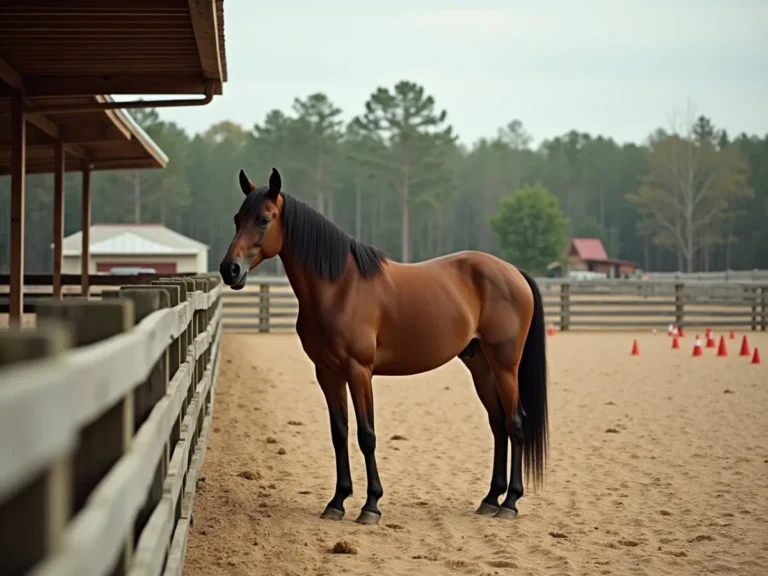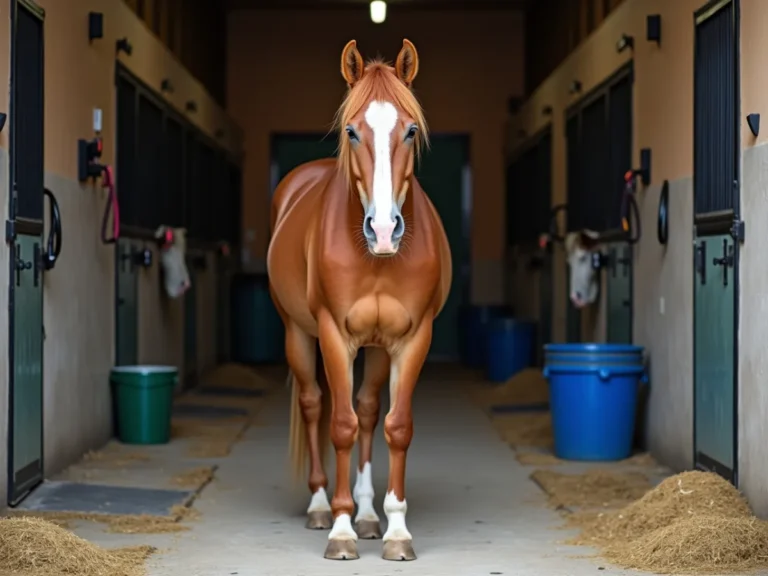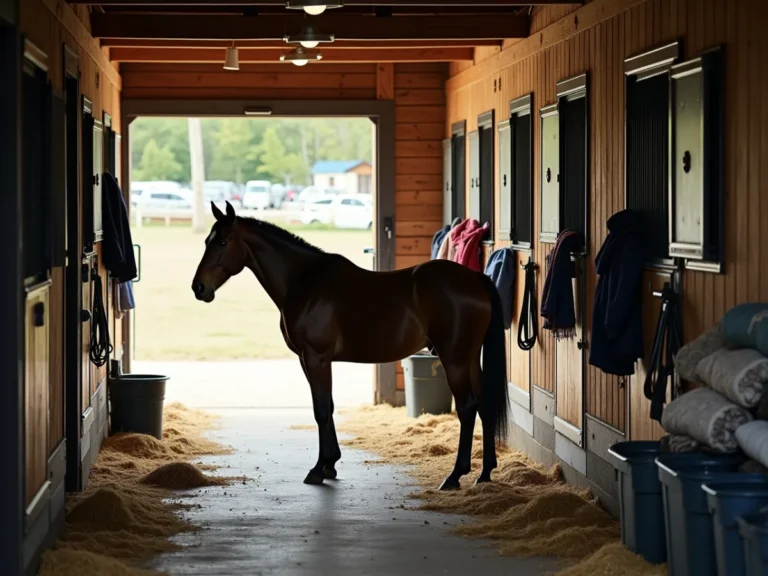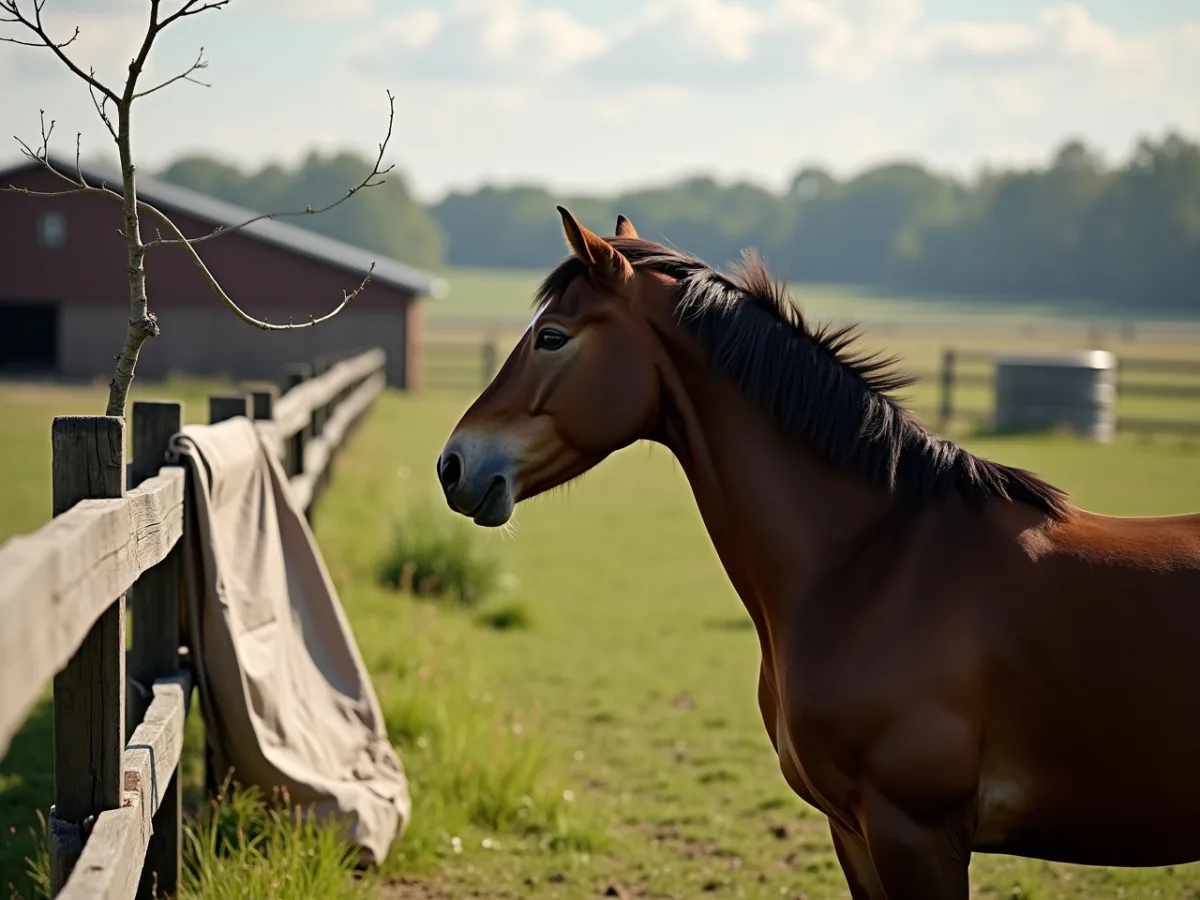
A horse can notice a change in the environment long before a person does. A rustle in the hedgerow, a plastic bag moving near the fence, a new sound from the arena, or even a shift in the wind can change the way a horse stands, listens, or moves. That reaction is not random. It is tied to survival, habit, memory, and the horse’s deep awareness of what is happening around them.
In daily life, movement in the environment often shows up in small but meaningful ways. One horse may simply pause and look. Another may lift the head, tighten the muscles through the neck, and step sideways. A third may suddenly become difficult to steer or refuse to pass an object that seemed harmless a day earlier. These reactions are easy to misread if you only look at the obvious behavior and not the surroundings that triggered it.
Understanding horse reactions to movement is useful because the environment is never just background. It is part of the conversation a horse is having every minute of the day. Some movements are familiar and safe. Others feel uncertain, sudden, or too close. The horse’s response depends on the type of movement, how fast it happened, whether the horse had time to assess it, and what else was going on in that moment.
How movement in the environment appears in real life
Horses respond to movement in ways that can seem subtle at first. A horse at rest may shift weight onto the hind legs when something catches the eye. The ears may lock forward, then flick back and forth. The nostrils may widen slightly, and the body may become still in a very focused way. Stillness is not always calmness. Sometimes it is the first sign that the horse is trying to understand what changed.
In handling situations, movement can influence a horse before anyone touches the lead rope. A person walking quickly behind the horse may create tension. A jacket flapping in the breeze can make a horse hesitate. Even the motion of another horse in the next stall may lead to pacing, calling, or shuffling. These reactions often happen because horses process motion as part of safety scanning.
Under saddle, the effect can be even more noticeable. A horse may spook at a bird lifting from the fence, drift away from a puddle that reflects movement, or become tense when tractors, bicycles, or flags are active nearby. Some horses react to large movement only. Others are sensitive to small, quick changes that people barely register. The difference usually reflects both temperament and experience.
Common reactions to environmental movement
- Head lifting and sharp attention toward the movement
- Brief freezing or slowing down
- Sideways stepping or drifting away
- Snorting or blowing out
- Calling, pawing, or showing signs of frustration when confined
- Loss of focus during riding or groundwork
These responses can look dramatic or mild, but they often come from the same root: the horse is trying to decide whether the movement matters. If the horse can quickly identify it as harmless, the reaction may fade. If not, the horse may stay alert for longer or continue to avoid the area.
Movement matters not only because it is seen, but because it changes the horse’s sense of predictability. Sudden or unusual motion is harder to ignore than steady, familiar motion.
Why horses react so strongly to motion
The horse is a prey animal, and that matters. In natural settings, motion can mean a predator, a herd mate, a challenge, or a safe opportunity. Horses evolved to notice shifts in the environment quickly, and that instinct still shapes behavior in barns, arenas, trailers, and fields. A horse that reacts fast is not being difficult by default. The response is part of how the animal gathers information.
Horse vision also plays a role. Horses have a wide field of view, which helps them detect movement from the side and from a distance. They are often better at noticing motion than at judging fine detail. That means a moving object may register immediately, while its actual shape or purpose takes longer to process. A bag tied to a fence, for example, may be treated as a threat at first simply because it moves in an unexpected way.
Experience can soften or sharpen the reaction. Horses that have seen many of the same sights repeatedly may become more tolerant. Horses with limited exposure to change may stay reactive longer. A horse kept mostly in a quiet routine may not have learned that tarps, umbrellas, wagons, or loose branches are ordinary parts of life.
Internal reasons behind the reaction
Not every response to movement is about fear alone. Some reactions are about curiosity. Some are about tension. Others come from confusion, fatigue, or a horse feeling trapped. A horse that cannot move freely may appear more reactive because the animal has fewer options for getting information or creating space.
Physical comfort also matters. If a horse is sore, overstimulated, or mentally tired, even small environmental changes can feel harder to handle. The horse may seem “spooky,” but the deeper issue may be reduced resilience. In those cases, the movement is the trigger, not the true cause.
A horse that reacts strongly to motion may be saying, “I need more information,” not always “I am in danger.” The body language around the reaction helps show which is more likely.
How surroundings shape the reaction
The same movement can produce very different reactions depending on the setting. A flapping banner in a quiet field may cause a horse to stop and stare. The same banner near a busy road may be overlooked because the horse is already processing other input. Context changes meaning.
In the stable, movement is often limited but more intense when it appears. A person opening a stall door quickly, another horse shifting in the aisle, or a feed cart rattling past can all create tension. The close quarters make it harder for the horse to escape the stimulus, so the horse may respond with head tossing, stepping back, or pinning the ears.
In the pasture, horses often have more freedom to move away from what concerns them. That freedom can make the response look calmer. Instead of exploding, the horse may simply travel to another part of the field and watch from a distance. Herd dynamics also matter. If one horse reacts to motion, the others may copy the alertness, even if they did not notice the original trigger right away.
During riding, the arena setting can magnify movement. Mirrors, shadows, banners, doors, gates, dogs, and other horses create a layered visual field. A horse may be handling the rider’s cues well until a sudden change in the environment breaks concentration. The result is often a brief interruption rather than a major problem, but that interruption still tells you the horse is reading the surroundings closely.
| Environment | Typical movement trigger | Common reaction |
|---|---|---|
| Stable | Door movement, carts, nearby horses | Startle, step back, tense neck |
| Pasture | Wildlife, vehicles, weather objects | Watch, move away, alert herd |
| Arena | Shadows, flags, people, equipment | Loss of focus, sideways movement, hesitation |
| Trail | Branches, bikes, water, animals | Spook, stop, detour, quick assessment |
What different reactions may mean
A horse reaction to movement does not always carry the same message. One horse may react once and settle immediately. Another may keep returning to the same object and remain tense. The difference matters. A brief response often reflects simple alertness. A lingering response can suggest uncertainty or discomfort.
Soft reactions usually include focused attention, ears forward, a pause in motion, and then a return to normal behavior. Stronger reactions may involve jumping sideways, bolting, sweating, breathing faster, or refusing to approach the area. In between, there are many mixed forms. A horse may act relaxed while still avoiding a certain corner of the arena or a noisy section of the barn aisle.
Some horses are highly reactive only in specific categories of movement. They may ignore wind in trees but worry about objects hanging overhead. Others dislike fast motion from the side but handle direct movement well. These patterns can reveal what kind of visual processing is most difficult for the horse. The details matter more than the label.
Signals that often accompany stronger concern
- Repeated head tossing or neck bracing
- Uneven breathing after the trigger passes
- Tail clamping or tail swishing without obvious irritation
- Difficulty lowering the head
- Hesitation to move forward
- Looking back at the same object again and again
When these signs show up together, the horse is likely still processing the situation. The movement itself may be over, but the horse has not yet fully settled. That can influence the rest of the ride or handling session if the environment stays busy or unpredictable.
Soft reactions usually pass quickly. Stronger or repeated reactions often mean the horse is not only noticing movement, but also carrying tension from it.
How people sometimes misread the behavior
It is easy to assume that a horse reacting to movement is being stubborn, rude, or distracted on purpose. In many cases, the horse is simply reading the environment differently from the human. What looks like resistance may actually be caution. What looks like overreaction may be the horse’s normal way of checking for safety.
People also sometimes miss the buildup before the bigger reaction. A horse may show the earliest signs of concern long before a spook happens. The ears may fix on the source. The gait may shorten. The back may stiffen. By the time the horse jumps sideways, the body has already been warning about discomfort.
Another common mistake is assuming that repeated reactions always mean the horse is untrained. Some well-trained horses still react to motion if it is unusual enough, sudden enough, or tied to a specific past experience. Training helps, but it does not remove instinct. It usually makes the response more manageable and quicker to recover from.
How emotion and memory affect the response
Motion becomes more significant when it connects to memory. A horse that once slipped near a moving hose may become tense around hoses in general. A horse startled by a trailer ramp moving unexpectedly may show concern every time similar metal movement appears. These associations are not always logical from a human point of view, but they are real for the horse.
Emotional state also changes how much movement the horse can handle. A calm, rested horse may shrug off a lot of environmental change. A horse that is fresh, isolated, hungry, or mentally overloaded may react sooner. The same object or motion can feel harmless one day and troubling the next because the horse’s internal state is different.
Routine plays a role here too. Horses often feel safer when the environment has predictable patterns. If motion usually happens in the same places and at the same times, the horse learns what to expect. When something changes without warning, the reaction is often stronger. A wheelbarrow that always stays in one spot may be ignored. The same wheelbarrow left in a new path may draw immediate attention.
Signs the horse is still processing the environment
- Watching an object even after it stops moving
- Touching or sniffing the area from a distance first
- Walking a curved path around the object
- Relaxing only after several seconds or minutes
- Changing the reaction depending on whether other horses are nearby
These details show that movement is not just about the object itself. It is about the horse’s ongoing interpretation of the whole scene. Size, speed, direction, sound, location, and prior experience all combine into one response.
Movement in different daily settings
In turnout, environmental motion is part of the day. Horses may respond to swaying branches, birds rising suddenly, deer in the distance, or equipment moving near the fence line. A quiet horse may keep grazing through mild changes, then react only when movement becomes sharp or unfamiliar. Others keep a standing watch on the far edge of the field, especially if they are naturally cautious.
In the barn, movement often feels more intrusive because the horse has less room to sort it out. A feed bin rolling, a door swinging, or a blanket being shaken out can all create tension. Horses that live in very active barns sometimes become more accepting over time, but they may also become more reactive if the schedule is chaotic and noisy.
On the trail, motion can be layered and unpredictable. Wind in the grass, moving water, shadows, and passing wildlife can appear in quick sequence. A horse may manage one trigger well and then struggle with the next one. This is one reason a horse that seems settled in the arena can behave differently outside. The environment offers fewer repeated patterns and more surprise.
Transport adds another layer. The movement of the trailer itself, traffic passing by, and shifting light through windows can all affect the horse. Some horses brace against motion in the trailer because the whole body is being asked to handle movement while also staying balanced. In that setting, a small outside disturbance can feel larger than it would on the ground.
Repeated exposure does not always create a bigger reaction. Sometimes it does the opposite, as long as the horse is able to stay within a comfortable range while learning.
What to notice in long-term patterns
Looking at one reaction rarely tells the whole story. The more useful question is how often the horse reacts, what kinds of movement trigger the response, and whether the horse recovers quickly. A horse that startles once a week and then settles is very different from a horse that remains tense throughout every outing.
Long-term patterns can show whether the issue is broad or specific. A horse may be fine with barn movement but uneasy around vehicles. Another may accept motion outdoors but worry in enclosed spaces. A third may react most when tired, alone, or asked to work in a new place. These patterns help explain what the horse finds hardest to process.
Consistency matters as well. Horses that get regular exposure to normal environmental change often become steadier. That does not mean they never react. It means the reactions usually become shorter and easier to manage. Horses that live with constant changes and little predictability may stay more vigilant, especially if they do not get enough time to settle.
What looks like “the same problem” is often several different reactions tied together. A horse that hates moving banners, rattling tarps, and fast shadows may be reacting to one general category: unpredictable motion. A horse that only avoids one specific corner may be reacting to a memory, a sound, or even the way light moves in that space. The pattern is the clue.
Reading the horse’s response with a practical eye
When movement in the environment sets off a reaction, it helps to look at the whole picture. Notice the horse’s body before, during, and after the event. Was the horse already tense? Was the movement sudden or repeated? Did the horse have room to move away? Was there other stimulation nearby? Each detail changes the meaning of the response.
It also helps to separate normal alertness from ongoing concern. A horse that notices the wind lifting a tarp and then carries on is doing a normal horse thing. A horse that cannot pass the tarp after several attempts may need more time, a quieter setup, or a different introduction to that kind of motion. The response should guide the next decision, not just be labeled as good or bad.
Over time, many horses become easier to read because their patterns stay fairly consistent. They may still react, but the style of the reaction remains familiar. One horse always checks with the ears first. Another prefers to step away and come back later. Another needs movement introduced slowly and from a distance. Those patterns are part of the horse’s language.
Movement in the environment never means just one thing. It may be a warning, a curiosity, a distraction, or a memory being reopened for a second. The horse’s reaction offers a clear clue, and the setting around it gives the rest of the answer.