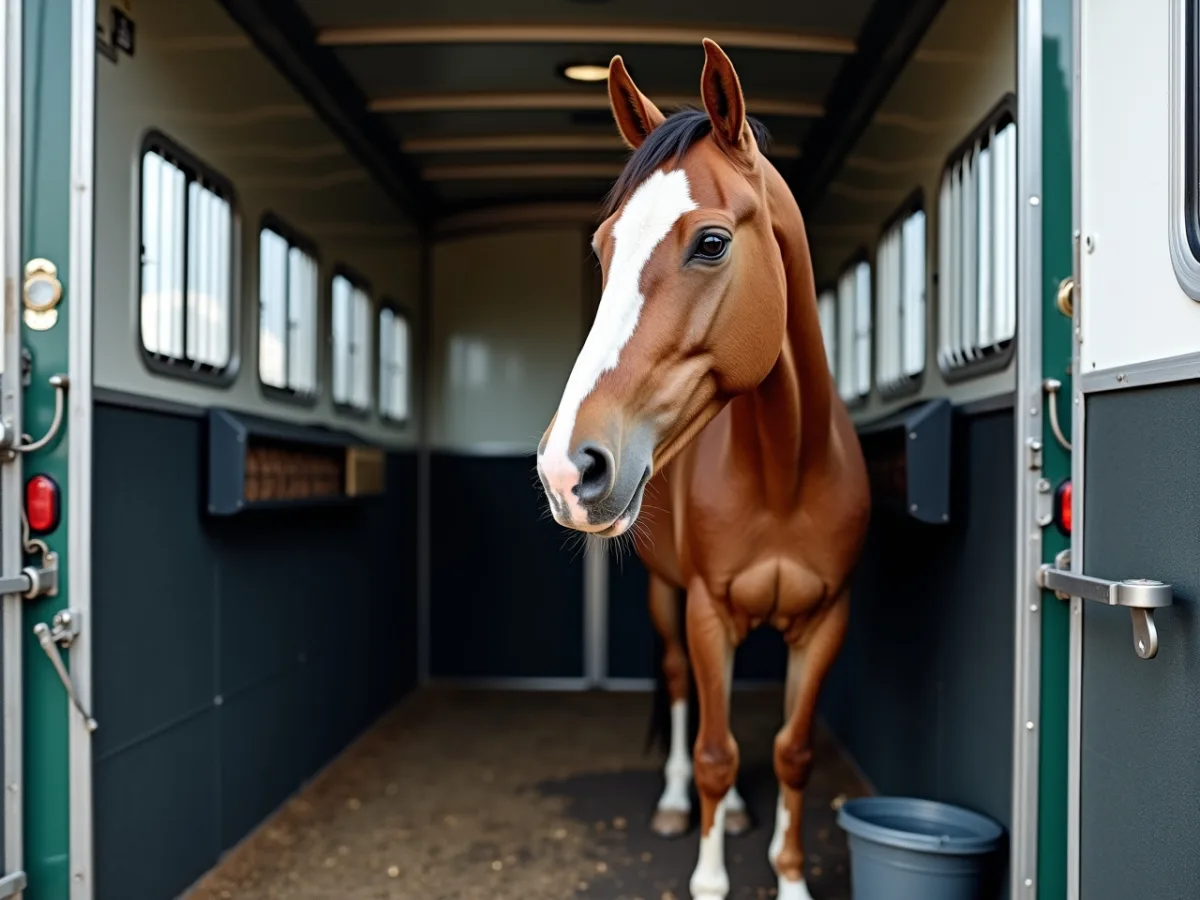
Transport changes everything a horse relies on: footing, balance, routine, sounds, smell, and the feeling of being in control. A horse that walks quietly in the barn aisle may become tense as soon as the trailer starts moving. Another may load with little fuss but sweat, brace, or lose interest in food once the road gets rough.
Those reactions are not random. They usually reflect how a horse reads movement, confinement, unfamiliar surfaces, and separation from what feels safe. Some horses show clear signs right away. Others keep those feelings tucked under a calm exterior until the journey gets longer or the environment becomes more demanding.
What happens during transport can look subtle at first. A horse may shift weight, brace the neck, pin the ears for a second, paw, or call out when the trailer door closes. In more settled horses, the changes can be small: steady breathing, a balanced stance, and relaxed chewing. In stressed horses, the body often tells the story before the behavior does.
Transport is also a place where experience matters. Horses that have traveled often tend to organize themselves more quickly, but even seasoned travelers can react to a new trailer, a different driving style, or a long delay. A horse does not need to be “bad at shipping” to struggle with it. Sometimes the setup is simply harder than it looks.
Why transport feels so different to a horse
Horses are built to stay aware of their surroundings. That awareness helps them survive in open spaces, but it also makes transport feel unusual. Inside a trailer, the horse cannot fully control speed, direction, or balance. Every turn, bump, and stop is something the body has to absorb and predict.
For many horses, the trailer is also a confusing mix of shelter and restriction. It is enclosed, narrow, and full of unfamiliar motion. Even if the horse has been loaded carefully, the experience can still feel like stepping into a moving box with limited room to adjust.
The result is often a blend of vigilance and tension. Some horses respond by freezing and staying very still. Others become restless and try to reestablish control by shifting, calling, or pushing against the space around them. Both responses can come from the same root: uncertainty.
Transport often reveals how a horse handles pressure when normal routines disappear. Calm behavior usually means the horse can stay organized under change. Tension usually means the horse is working harder than it appears.
How calm transport behavior usually looks
A calm horse during transport does not look perfectly still all the time. Small adjustments are normal. The horse may widen the stance slightly to stay balanced, lower the head between stops, or blink and chew while the trailer is moving. These are ordinary signs of a body that is adapting well.
Other calm signals can include:
- Relaxed nostrils and soft eyes
- Ears that move naturally without locking backward
- Even weight on all four feet
- Steady breathing without heavy flaring
- Quiet mouth and occasional chewing
- No repeated calling, pawing, or striking
A calm horse may still be alert. Alert does not always mean upset. Many horses listen carefully to the sounds of the road, feel the movement, and remain composed. The key difference is whether the horse can stay loose enough to balance without struggling.
Some horses also settle better when the trip becomes predictable. Once they understand the rhythm of travel, they may stand quietly, rest a hind leg, and conserve energy. That kind of behavior often shows up in horses that have had enough practice with short, uneventful trips.
Early stress signals people often miss
Stress during transport usually starts with small changes. A horse may not look dramatic at first. Instead, the body becomes more organized for defense than for rest. The head may rise, the neck may stiffen, and the horse may begin watching the environment more intensely.
These are easy details to overlook because they seem minor. But repeated tension is meaningful. A horse that keeps bracing through corners, constantly shifts weight, or refuses to lower the head may be working hard to stay balanced and alert. That effort can wear the horse out long before the trip ends.
Subtle warning signs may include:
- Frequent weight shifting
- Restless tail movement
- Short, quick breaths
- Tight jaw or lips
- Looking back or overreacting to noises
- Repeated attempts to spread the feet for balance
Some horses also stop showing normal curiosity. They may ignore hay they would usually eat or stand with a fixed, watchful expression. When a horse becomes less responsive to food, grooming, or familiar cues during loading or travel, the horse may be dealing with more tension than the surface behavior suggests.
How fear and balance work together
Transport stress is not only emotional. It is physical. A horse in motion must balance a large body on a shifting floor while the vehicle turns, slows, speeds up, and vibrates. Even a horse that is not especially frightened may still need to brace against instability. That physical effort can look like nervousness.
When fear is added, the reaction becomes stronger. The horse may brace the back, raise the head, and keep the body rigid in an effort to avoid losing footing. Rigid muscles help the horse feel ready for sudden movement, but they also make balance harder. This creates a loop: the more tense the horse becomes, the harder it is to travel comfortably.
Some horses express this by leaning. Others sway, step wide, or keep one foot half-lifted as they search for stability. These reactions are not always signs of panic, but they do show that the horse is paying close attention to movement and trying to manage uncertainty with the body.
When a horse looks stiff in a trailer, the problem may be both emotional and mechanical. Poor footing, sharp turns, or rough driving can make even an otherwise calm horse act guarded.
How horses react to loading before the trip starts
Loading is often the first place where a horse reveals how it feels about transport. Some horses walk in confidently, pause, and settle. Others hesitate at the ramp, rush forward, back out repeatedly, or plant their feet and refuse to step up. These reactions can have different causes, but they often reflect how safe the horse feels in the moment.
A horse that loads quickly is not always relaxed. Some are simply eager to move forward and want the process over with. Others have learned the pattern and trust it. A horse that loads slowly is not automatically difficult either. It may be unsure about the footing, the darkness inside the trailer, the noise, or the pressure of previous bad experiences.
Once inside, body language may change again. A horse that entered calmly may still become tense when the divider closes or the engine starts. This shift is common. The act of loading and the act of traveling are related, but they do not always trigger the same response.
Common loading-related reactions
- Pausing at the ramp and testing the surface
- Sniffing the entrance repeatedly
- Back-stepping after a few steps forward
- Refusing to enter when the space looks dark or narrow
- Entering quickly but standing rigid once inside
Loading behavior should be read as part of the whole picture. A horse that hesitates may need more confidence and better preparation. A horse that rushes in may need more control and a calmer pace. Both can benefit from a setting that feels consistent and low-pressure.
What the horse’s body may be saying during the ride
Once the trailer is moving, the horse often communicates through posture. The head position can change as the horse searches for balance. The neck may stretch out to help stabilize the body, or it may stay tight and high if the horse is uncertain. Neither posture alone tells the whole story. What matters is how easily the horse moves between them.
The legs also reveal a lot. A comfortable horse may stand square or shift quietly as needed. A less settled horse might spread the front feet, brace the hindquarters, or keep stepping in small circles if there is room. These actions help with balance, but they also show the horse is not fully at ease.
Breathing is another useful clue. Deep, regular breathing is a good sign. Rapid, shallow breaths or strong nostril flaring can mean the horse is under pressure. Sweating in the trailer, especially when the weather is not hot, can also point to stress rather than exercise.
Body language that often appears under pressure
- Head high and neck tight
- Hind legs camped out or braced forward
- Pawing at the floor
- Raising the tail or swishing sharply
- Repeated vocalizing
- Tension through the back and topline
These signs do not always mean danger, but they do suggest the horse is not settling. A horse that cannot soften over time may be using a lot of energy to cope with the journey. That can matter as much as the miles on the road.
How different horses react in different ways
Not all horses respond to transport the same way. Age, past experiences, temperament, and general confidence all shape the reaction. A young horse may be more reactive simply because the situation is new. An older horse may be quieter but more set in habits, making unfamiliar trailers or routes more challenging.
Some horses become vocal during transport. They call out to other horses, especially if they are separated from a companion or if the farm environment disappears from view. Others become inward and quiet, which can be mistaken for calm when the horse is actually concentrating hard on staying balanced.
Then there are horses that seem fine in the trailer but struggle after arrival. They may unload stiffly, move cautiously, or take time before eating and drinking. In those cases, the travel reaction may not show up as obvious resistance. It may appear as delayed recovery instead.
Two horses can travel the same route and react in completely different ways. One may vocalize and paw. Another may stay silent but sweat and brace. Quiet does not always mean comfortable.
The role of noise, motion, and unfamiliar surroundings
Transport is full of sensory changes. The sound of the engine, tires, metal doors, and traffic can be startling. So can the vibration of the floor and the visual flow of scenery outside the trailer windows. Horses notice all of it, even when they seem focused elsewhere.
A familiar trailer can help reduce worry because the horse knows the space. A different trailer may feel strange from the first step. Narrow stalls, bright reflections, low ceilings, or poor airflow can make the experience harder. Even small details, like a rattling partition or an unsteady mat, can keep a horse on edge.
Road conditions matter too. Smooth driving helps a horse keep balance without constant correction. Sudden braking, sharp turns, and quick lane changes can create repeated moments of strain. Horses often respond to the driver’s style more than people expect. A good route can still feel difficult if the ride itself is unstable.
Air quality also shapes behavior. If the trailer feels stuffy, dusty, or warm, the horse may grow restless faster. Horses need enough ventilation to stay comfortable and to avoid that heavy, trapped feeling that can build during long trips.
How transport reactions change over time
A horse’s response to transport is not fixed forever. Many horses get better with experience if the trips are short, calm, and predictable. They learn the routine, recognize the trailer, and settle more easily. The body remembers what happens next.
But improvement is not always linear. A horse that travels well for months may react strongly after a bad experience, a long break, a new vehicle, or a painful physical issue. Stress can return if the horse begins to expect discomfort. Once that expectation is in place, loading and traveling may become harder again.
Long-term patterns are often more useful than one isolated trip. A single sweaty trip does not prove a horse hates transport. A repeated pattern of calling, refusing feed, arriving tight, and needing a long time to recover points to a more consistent problem. That pattern deserves attention because it shows the horse is not just having a bad moment.
Patterns worth noticing over multiple trips
- Does the horse relax faster in some trailers than others?
- Does behavior change with trip length?
- Does the horse travel better alone or with a companion nearby?
- Does the horse arrive fresh, neutral, or exhausted?
- Do certain road conditions trigger stronger reactions?
Those details help explain whether the issue is the horse, the setup, or the combination of both. Often it is not one single factor. Transport brings many small pressures together, and the horse’s reaction reflects that mix.
What a composed horse often does after arrival
The trip does not end when the trailer stops. Arrival is another moment where reactions show clearly. A horse that has handled travel well may step out carefully, look around, and then begin walking with normal interest. It may drink, eat, or stand quietly while adjusting to the new place.
A horse that traveled with stress may unload more stiffly. It may hesitate at the ramp, step short, or walk as though the body needs a moment to reorganize. Some horses appear tired rather than frightened once they are out. Others are still highly alert and scan the area before settling.
How quickly the horse returns to its usual self can be just as important as the ride itself. A horse that loosens up within minutes is often coping reasonably well. A horse that remains tight, withdrawn, or difficult to feed after arrival may have had a harder time than the outside looked like.
Food and water behavior are especially useful here. A horse that drinks readily and takes hay soon after unloading is often adjusting in a steady way. One that stands away from the feed, refuses to drink, or acts too tense to lower the head may still be carrying the stress of travel in the body.
How owners can read the difference between concern and overload
Some reactions are normal caution. Others suggest the horse is overwhelmed. The difference is often in intensity and duration. A horse that looks around, shifts once or twice, and settles is showing a reasonable response to change. A horse that stays locked up, increasingly reactive, or unable to rest is likely under more pressure than it can comfortably manage.
That distinction matters because it changes what the horse needs. A horse with mild concern may only need familiar handling and a steady routine. A horse that is overloaded may need more careful preparation, better travel conditions, and possibly a veterinarian’s input if pain, respiratory issues, or another physical problem is part of the picture.
It also helps to remember that transport reactions can be linked to pain. A horse with sore joints, back discomfort, or balance problems may seem anxious in the trailer because the movement hurts. In those cases, the behavior is not just emotional. It may be the horse’s way of reacting to physical strain.
If a horse’s transport behavior changes suddenly, becomes more intense, or is paired with stiffness, poor appetite, or unusual recovery time, the cause may be more than nerves alone.
Reading the horse without overreacting to every signal
It is easy to focus on one sign and build a story around it. A pawing horse is not always dangerous. A quiet horse is not always fine. Real understanding comes from looking at the whole picture: posture, breathing, balance, unloading, and how the horse acts afterward.
That bigger view prevents confusion. It also keeps the owner from missing subtle stress just because the horse is not dramatic. Horses often communicate in layers. A small shift in the body, repeated over time, says more than a single loud reaction.
Transport is one of those situations where the horse’s natural caution becomes visible. Some horses show it with movement. Others show it with stillness. In both cases, the body is doing real work to adapt to motion, confinement, and uncertainty. Paying attention to that work makes the reaction easier to understand and the journey easier to read in the future.