Some horses step into a new place and seem to take everything in at once. Their ears move constantly, their neck lifts, and their eyes stay busy. The change can be subtle at first, then grow stronger as unfamiliar sounds, smells, and movement settle into the space around them.
Heightened alertness in new places is not unusual. A horse may look calm from a distance while still paying close attention to every small detail. That alert state can show up in a trailer, a new barn aisle, a different pasture, a show ground, or even a familiar field after one strange change in routine.
What matters most is not just that the horse notices the new environment. It is how long the alertness lasts, how intense it becomes, and whether the horse can relax after taking in the area. A horse that stays observant but settles is responding in a very different way from one that remains tense, worried, or reactive.
How heightened alertness appears in real situations
In a new place, horses often begin with a careful scan of the surroundings. They may pause before walking forward, hold their head higher than usual, or keep one ear fixed on every sound. This is often the first sign that the horse is evaluating the space before deciding whether it feels safe.
Some horses show their alertness in movement. They may walk with shorter steps, stop often, or keep shifting their weight as if they are ready to move again at any moment. Others stand still but remain highly tuned in, which can look relaxed from afar even when the horse is mentally working hard.
Riding in a new place can make the signs more obvious. A horse that usually tracks straight may drift, hesitate at corners, or glance toward gates, fences, banners, or parked equipment. The animal is not necessarily being stubborn. It is often trying to understand what belongs in the environment and what does not.
Why new places trigger extra attention
Horses are animals that rely on awareness. In nature, being too slow to notice a change can be risky. A new sound, odor, or movement could signal danger, so a horse’s brain is built to register change quickly and sort it out before relaxing.
That instinct carries into domestic life. A stable aisle that smells different, a field with new machinery nearby, or an arena with unfamiliar footing can all create a strong sense of change. Even if nothing harmful is present, the horse may still treat the situation as something worth watching closely.
Routine also shapes the response. Horses that thrive on predictable schedules often become more alert when that pattern shifts. A late turnout, a different handler, or a new neighbor in the next stall can be enough to raise attention. The horse is not only reacting to the place itself, but also to the disruption in what feels familiar.
A horse’s alertness in a new setting is often a sign of evaluation, not defiance. The question is usually, “Is this safe?” before it becomes “Should I move?”
What the body language can reveal
The clearest signals often appear in the ears, eyes, neck, and feet. Ears may flick rapidly from side to side, then lock forward toward a sound. The eyes may look wider, with a more focused expression. The neck may rise and the body may become less loose through the back.
Breathing can change too. Some horses take shallower breaths or breathe more quickly when they are taking in too much information at once. Others hold themselves in a tight frame, then suddenly exhale once they decide the environment is harmless enough.
It helps to watch the whole picture instead of one detail. A raised head alone does not always mean worry. But a raised head, tight topline, frequent startle responses, and difficulty lowering the head together usually show that the horse is still processing and not yet settled.
Common places where alertness becomes stronger
Stable and barn areas
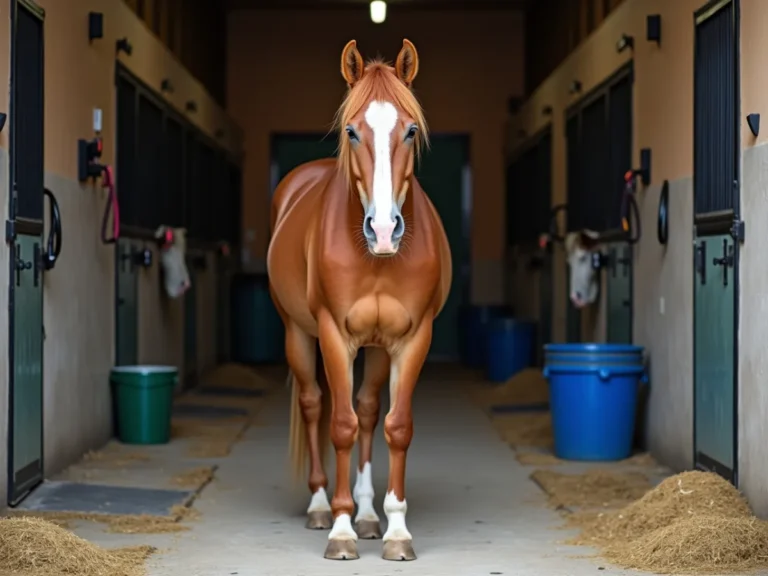
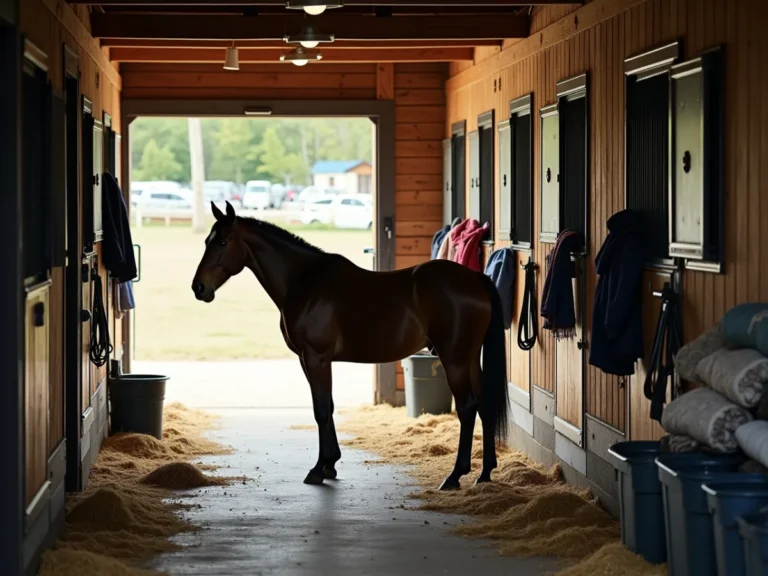
New stalls, unfamiliar aisle traffic, or a different feeding rhythm can all sharpen a horse’s attention. The smell of another horse, a door that squeaks, or a fan that turns on and off may be enough to keep the horse on edge for a while. Even horses that appear well adjusted can become careful in a new barn because the daily pattern has changed.
Pasture or turnout changes
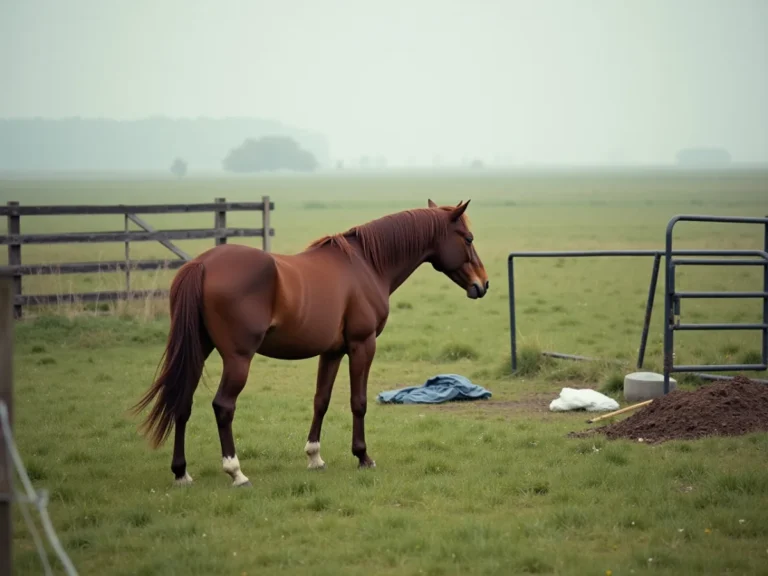
A horse moved to a new field may spend a long time looking around before grazing. Open land can be especially stimulating because there is little visual privacy and everything feels exposed. A horse may repeatedly check the fence line, watch distant motion, or stay close to a companion until the area feels more familiar.
Riding arenas and show grounds
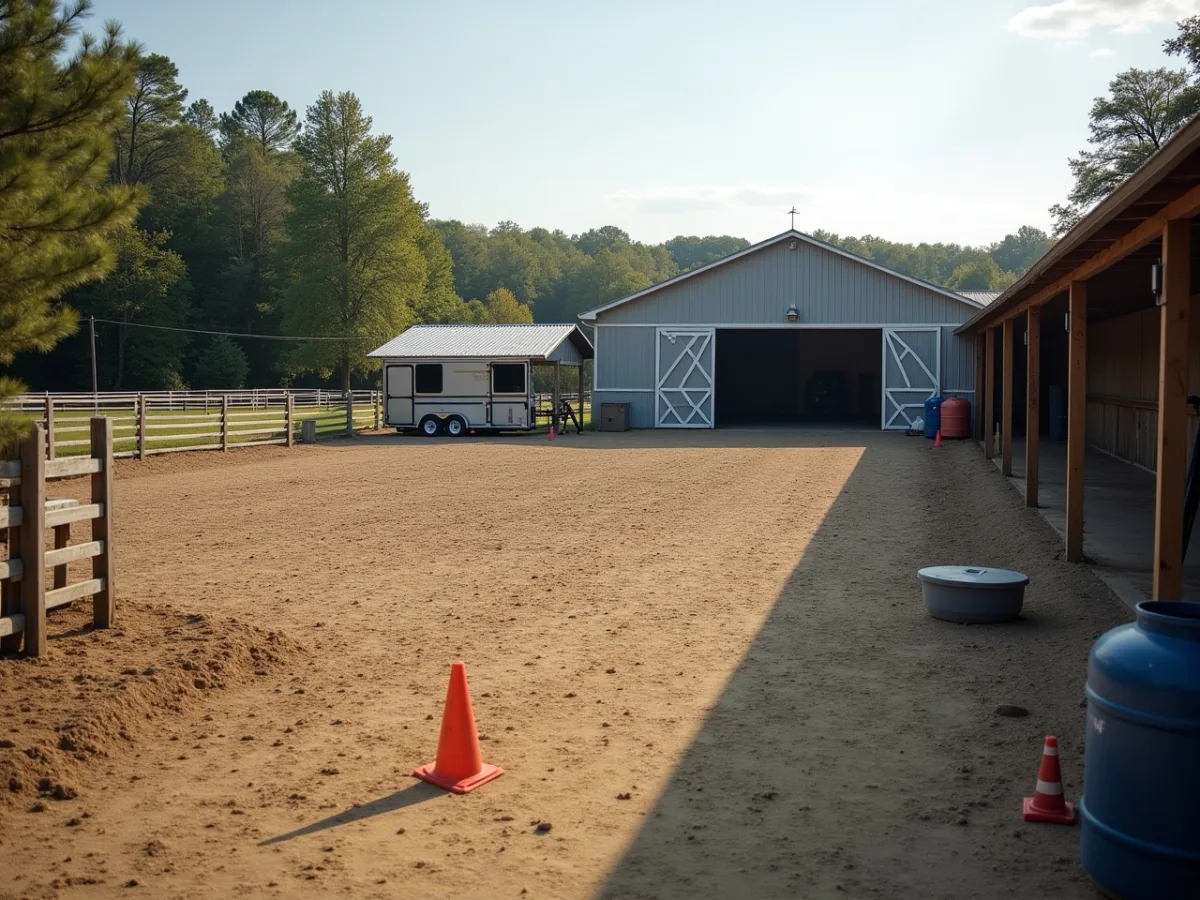
Bright banners, loudspeakers, strange footing, reflective walls, and groups of horses moving nearby can all increase alertness. A horse that usually works quietly may suddenly feel much more sensitive in this setting. The difference is often not about training alone. It is about how many unfamiliar details the horse has to sort through at once.
Transport and arrival
After unloading, many horses move through a period of high alertness. They may stand at the trailer ramp, sniff the ground, or look back and forth before stepping fully into the space. The new environment is coming in all at once, and the horse may need time before the body follows the mind.
How alertness differs from anxiety or reactivity
Not every horse that looks watchful is distressed. Some horses are simply observant and careful by nature. They notice more, but they still eat, rest, and respond normally once they understand the environment.
Anxiety often looks different because it tends to linger and spread. A horse that is anxious may have trouble settling even after a long time, may keep scanning without pause, or may react sharply to minor changes. Reactivity can come with quick jumps, bolting steps, or repeated avoidance of the same area.
There is also a middle ground. A horse can be alert without being overwhelmed, then slide into tension if the pressure from the environment keeps building. That shift matters. Early alertness may be manageable, while sustained tension can make ordinary handling harder.
Look for change over time: a horse that notices a new place and then settles is different from one that keeps escalating. Duration often tells more than the first reaction.
Internal reasons a horse may stay on guard
Some horses are naturally more sensitive than others. They pick up tiny shifts in sound, movement, and routine, which can make a new place feel like a lot to process. These horses are not necessarily difficult. They often just need more time to sort through the input around them.
Previous experiences can also shape the response. A horse that has had stressful travel, rough handling, or a bad memory linked to a particular setting may arrive already expecting trouble. In that case, the alertness is not only about the current place. It is also connected to what the horse remembers.
Physical discomfort can play a role as well. A horse that feels sore, tired, or unwell may have less tolerance for a busy new space. When the body does not feel fully comfortable, the brain has a harder time switching from caution to relaxation.
Herd awareness and separation
Horses are deeply social, and being away from the herd can make a new place feel more intense. A horse may keep searching for a companion or focus on nearby horses before engaging with the environment itself. That extra attention is often a form of safety checking.
Even in a familiar barn, a horse may become more alert if a key companion is missing. The environment has changed socially, not just physically. For many horses, that matters just as much.
How the surroundings shape the reaction
Some spaces are simply more demanding than others. A quiet paddock with good visibility gives a horse a chance to evaluate the area gradually. A crowded arena with multiple sounds and moving objects can overload the senses faster. The horse may be trying to stay calm, but the setting keeps feeding new information.
Visual clutter often matters more than owners expect. Wheelbarrows, tarps, cones, flags, jumping poles, or even a stack of feed bags can feel meaningful to a horse that is still learning the space. What seems ordinary to a person may be a point of concern to the horse until it has been examined.
Noise has a strong effect too. Sudden voices, clanging gates, barking dogs, tractors, or music can keep a horse’s attention elevated longer than expected. Some horses recover quickly after each sound. Others stay in a state of near-continuous readiness because new noises keep arriving.
Weather and light
Wind, rain, sharp shadows, or shifting light can make a new setting feel less stable. A horse may not react to the place itself but to what the weather keeps changing within it. Moving leaves, rattling tarps, and flickering reflections can all seem more important when the horse is already alert.
In lower light, horses sometimes become more careful because depth and distance are harder to judge. A path that looked clear earlier may now be approached slowly. That caution is often reasonable from the horse’s point of view.
What calm alertness looks like
Calm alertness usually has a sense of balance. The horse is interested, but not frantic. It notices the environment, checks what it needs to check, and gradually returns to softer behavior. The body may still feel lifted, but the horse can pause, breathe, and continue.
These horses often adapt in small steps. They may stand quietly after an initial scan, then start grazing, licking and chewing, or lowering the head to explore the ground. When ridden, they may keep an eye on the surroundings yet remain steerable and responsive.
That kind of response is often healthy. It shows the horse is not ignoring the environment, but it is also not trapped by it. The goal is not to eliminate awareness. It is to see whether awareness can coexist with comfort.
When alertness becomes a problem
Alertness becomes more concerning when the horse cannot move past it. A horse may keep bracing, refuse to eat, sweat more than expected, or avoid one area over and over. In riding, the horse may become difficult to guide because every new stimulus interrupts the conversation.
Repeated startle reactions can also build tension. If the horse keeps getting surprised, even by small things, the whole system stays switched on. Over time, that can make the horse harder to settle and less willing to explore on its own.
Sometimes the issue is not the new place itself, but the pace of exposure. If a horse is pushed too quickly, the alert response can grow stronger instead of fading. A slower introduction often works better than trying to insist that the horse “should be fine” right away.
How people can respond without adding pressure
Many owners help by giving the horse time to look before asking for action. A short pause at the entrance to a new area can be more useful than immediate forward motion. Once the horse has had a chance to register the space, the rest of the handling often becomes easier.
Simple repetition can help too. Returning to the same area in a calm, predictable way can reduce the intensity of the horse’s reaction over time. Familiarity matters. The second or third visit often tells a better story than the first.
Handler behavior has a strong effect. Quick movements, tension on the lead rope, or repeated correction can make the horse more alert than the environment already has. A quieter approach gives the horse room to sort out the new information without feeling rushed.
Useful ways to notice progress
- The horse lowers its head sooner after entering the area.
- Ears still move, but the body stays softer.
- The horse can eat, sniff, or stand quietly after a short pause.
- Steps become more regular and less rushed.
- Startle responses decrease with repeat visits.
How long alertness may last
For some horses, the heightened state lasts only a few minutes. They walk in, inspect the environment, and begin settling almost immediately. For others, it may take an hour, a day, or longer, depending on the setting and the horse’s history.
The timeline is not always linear. A horse may seem relaxed in the morning and tense again after lunch when more activity starts around the barn. New sounds, unfamiliar horses, or a change in weather can bring the alertness back even after a period of calm.
That is why consistency matters. A horse that is repeatedly introduced to a place in a steady, non-demanding way often shows a more predictable pattern over time. The alert state becomes shorter and less intense because the environment stops feeling entirely unknown.
Reading the difference between caution and discomfort
Caution often looks thoughtful. The horse pauses, looks, and then continues. Discomfort usually looks less settled. The horse may avoid, brace, or remain visibly tense even after plenty of time to observe.
Owners sometimes confuse bravery with speed. A horse that rushes through a new place is not always confident. Sometimes it is trying to get past the area before it has time to register everything in detail. A slower horse may actually be more settled because it is taking the space seriously.
Another useful clue is recovery. If the horse can return to a normal posture, normal breathing, and normal focus after checking the area, the alertness is likely within a manageable range. If those signs never return, the new place may still feel too demanding.
A natural response that changes with experience
Heightened alertness in new places often softens with time, but it rarely disappears completely. Horses remain observant by nature. A mature, experienced horse may still notice a new setup immediately, yet recover faster because it has learned that unfamiliar does not always mean unsafe.
That shift is useful to watch. The horse does not need to stop being aware. It only needs enough confidence to keep thinking, moving, and resting in the same environment. When that happens, the new place starts to feel less like a test and more like just another part of daily life.
Some horses will always be a little more watchful than others. That does not make the behavior wrong. It simply means the horse is bringing a careful mind into a changing world, one detail at a time.