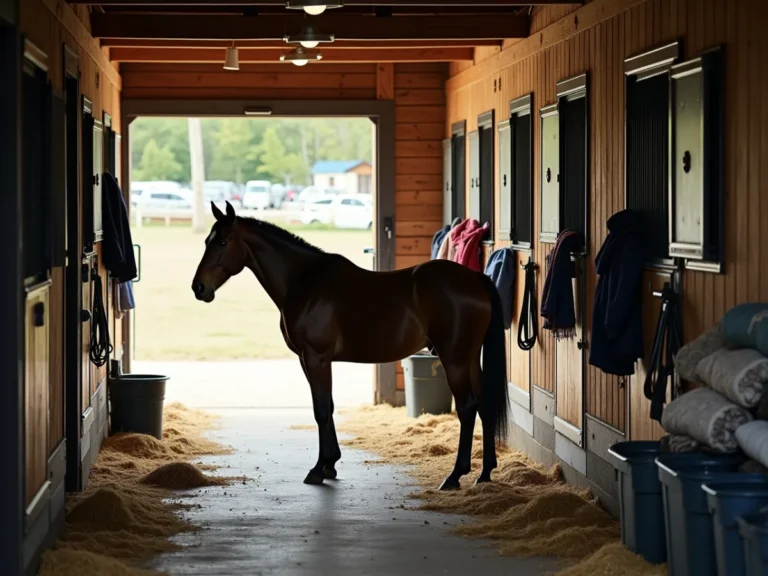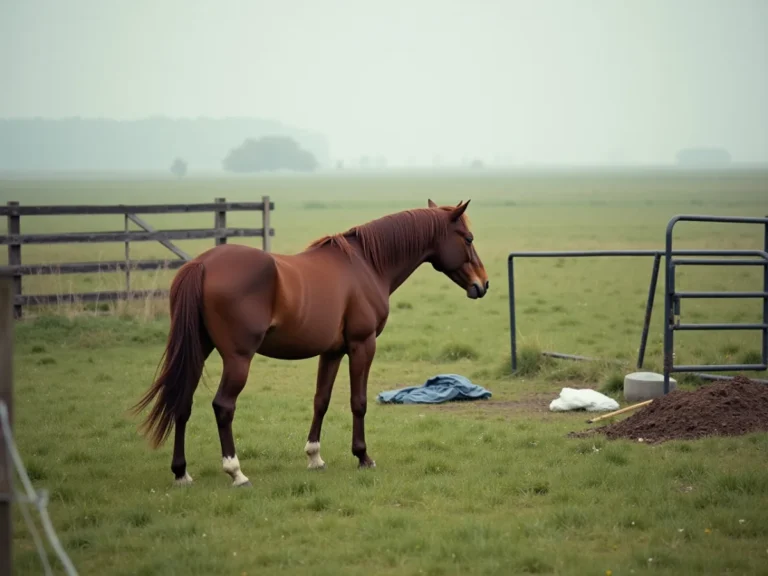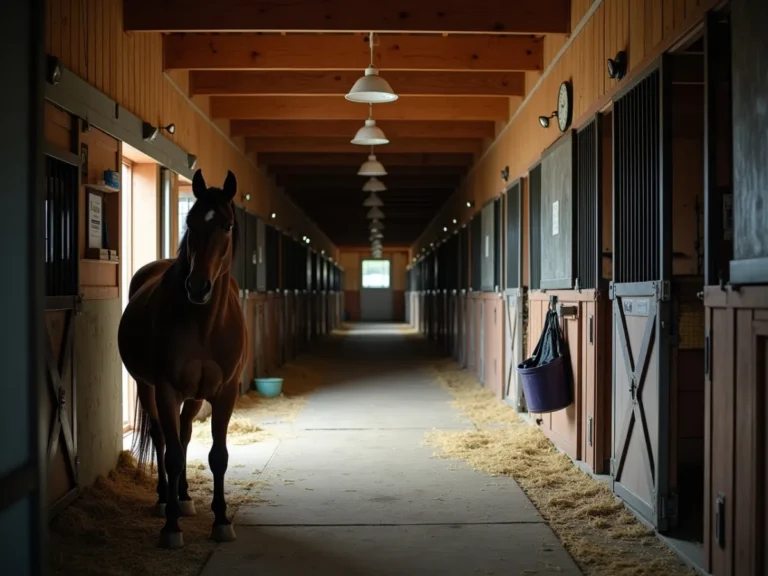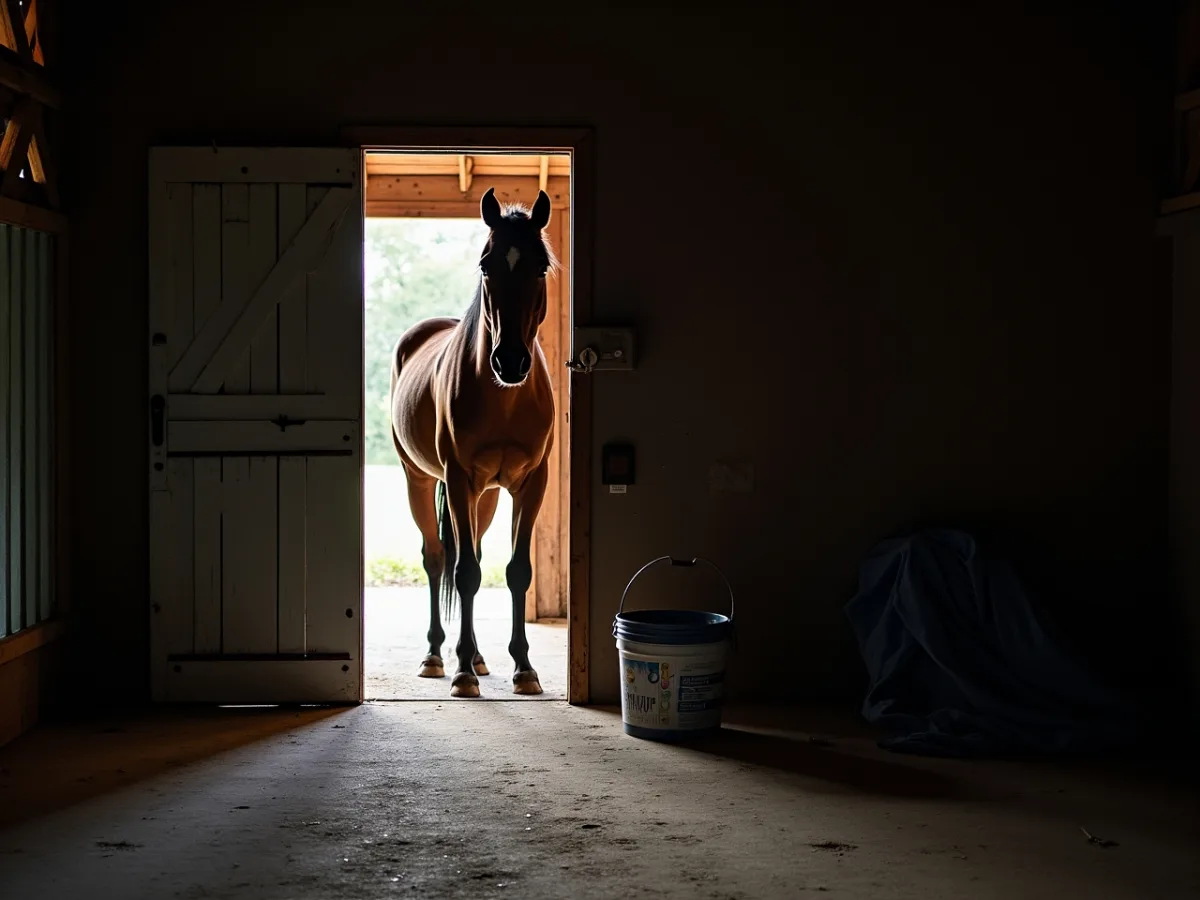
Fear of unfamiliar surroundings can show up in a horse as hesitation, alertness, tension, or a sudden need to move away from something that looks ordinary to us. A new trailer, a different corner of the arena, a strange tarp near the fence, or a change in turnout can all feel important to a horse that relies heavily on routine and familiarity.
What looks like stubbornness is often a response to uncertainty. Horses are built to notice small changes fast. That same sensitivity helps them stay safe in the wild, but in a modern setting it can make new places, surfaces, and objects feel overwhelming at first.
Some horses only glance at something new and keep going. Others freeze, snort, sidestep, or refuse to approach. The reaction is not always dramatic, and it does not always mean the horse is being difficult. Often it is simply trying to decide whether the unfamiliar thing is safe.
Why unfamiliar surroundings can trigger concern
Horses depend on pattern recognition. They learn the layout of a barn aisle, the sound of a gate latch, the shape of a familiar pasture line, and the feel of a riding ring under their hooves. When one of those patterns changes, the horse may slow down or become visibly cautious.
This response is tied to survival. A horse that notices change early has a better chance of avoiding danger. In a domestic environment, though, that same instinct can create a reaction to harmless things like cones, equipment, shadows, or a new bucket in an old stall.
Unfamiliar surroundings can matter even when nothing seems truly different. A horse may act uneasy because the place smells different, the footing feels different, or the normal routine was interrupted. The change does not need to be large to matter.
For many horses, uncertainty is less about one scary object and more about a whole setting that does not yet feel predictable.
How the reaction may appear in everyday handling
In hand, a horse may hesitate at a doorway, crowd the handler, or repeatedly turn its head toward the new space. Some horses stretch their necks forward and stop. Others become busy, tossing the head, stepping sideways, or trying to rush past the uncertain area.
At the stable, unfamiliar surroundings may show up after a stall change, a new neighbor, or a different turnout group. A horse that usually settles quickly may pace, call, pin and raise the head, or stay unusually alert. Even small changes in the barn can feel big to a sensitive horse.
In the field, a horse may stay close to herd mates when the pasture layout changes. A new water trough, a moved feeder, or freshly cut grass can all create a cautious response. Horses often check the environment first before relaxing into it.
Under saddle, this behavior is easy to see in a new arena, trail setting, or show environment. The horse may stare at the far end of the ring, avoid one direction, or struggle to soften through the body. Some horses become “looky” and distracted, while others become tight and quick in their feet.
Common signs owners notice
- Hesitation before entering a new area
- Head raised higher than usual
- Locked neck or stiff body
- Sideways steps or sudden stopping
- Snorting, staring, or repeated scanning
- Call-outs or increased dependence on herd contact
- Resistance to moving forward
These signs can appear one at a time or all at once. A horse does not need to be frightened to show caution. Sometimes the reaction is mild, but the message is still clear: the setting does not yet feel familiar.
What the horse may be feeling internally
Fear of unfamiliar surroundings usually starts with uncertainty, not panic. The horse may be trying to gather information. Is the ground safe? Is the object moving? Is there a reason to avoid this place? That mental checking can look like indecision from the outside.
A horse that feels unsure may also become physically tense. Muscles tighten, breathing changes, and the ears stay alert. The horse may not move freely until it has had time to observe the surroundings and decide there is no immediate threat.
Some horses are naturally more reactive than others. A highly sensitive horse can notice more details and react faster. A quieter horse may appear calm longer, then suddenly show concern once the unfamiliar thing becomes too close or too unavoidable.
Not every worried horse is trying to avoid work. Sometimes it is simply asking for time to understand the space.
How surroundings influence the reaction
Environment matters a great deal. A quiet barn with the same daily routine can help many horses feel steady, while a noisy show ground can make even a confident horse unsure. The more variables there are, the more the horse may rely on instinct instead of relaxation.
Lighting changes can matter more than people expect. Bright sun through a doorway, deep shadows in a corner, or a moving reflection on wet pavement can all alter how the horse sees the area. Horses often respond to what appears different in the visual field, even when nothing physical has changed.
Sounds also play a role. Clanging metal, barking dogs, loud speakers, tractors, and unfamiliar voices can all make a place feel less predictable. A horse that was fine in the barn aisle may become concerned outdoors if there is a new noise pattern nearby.
Footing is another major factor. A horse that trusts soft dirt may hesitate on gravel, synthetic footing, mats, or slick grass. If the ground feels strange, the horse may interpret the whole area as unsafe, especially if it cannot clearly judge the surface by sight alone.
Environmental triggers that commonly matter
- New stalls, paddocks, or turnout fences
- Changes in footing, such as mud, gravel, or arena sand
- Unusual objects placed in the horse’s path
- Weather changes, including wind and sharp shadows
- Noise from machinery, traffic, or nearby animals
- Different herd arrangements or isolation from companions
When these factors stack up, the reaction can become stronger. A horse may not fear one tarp by itself, but a tarp plus wind, echoing sounds, and an unfamiliar handler can be more than enough to create tension.
How routine shapes confidence
Routine is one of the strongest supports a horse has. Repeated patterns make the world easier to predict, and prediction lowers concern. Horses often settle faster when feeding, turnout, grooming, and exercise happen in a familiar order.
A predictable schedule helps a horse decide what comes next. When the day follows a familiar rhythm, unfamiliar surroundings stand out less. Without that routine, the horse may stay alert longer and take more time to relax.
Some horses show more concern after a change in daily rhythm than after a visual change. A late turnout, different feeding time, or a new person handling them can make the whole day feel off. The horse may respond to the overall disruption, not just to one object or place.
This is why a horse can seem fine in one setting and nervous in another even if both places look similar. Confidence is often tied to sequence as much as scenery. When the sequence changes, the horse may need time to rebuild trust in the environment.
How different horses express the same concern
Not all horses react in the same way. One horse may march straight toward a strange object, stop, and study it with a tense body. Another may swing away quickly. A third may act busy, moving its feet nonstop as if movement itself can reduce the uncertainty.
Older, experienced horses sometimes appear more settled, but experience does not erase sensitivity. A seasoned horse may still object to a new trail crossing or a strange noise near the trailer. The difference is often in how quickly the horse regains composure.
Younger horses often show a wider range of reactions because so much of the world is still new. They may need more repetition before a place becomes normal. Still, age alone does not determine the response. A quiet older horse can be deeply affected by an unfamiliar environment if the change is large enough.
Some horses are outwardly reactive, while others are subtle. A subtle horse may only tighten its lips, shift weight, or fix its gaze for a few seconds. Those small signals can be easy to miss, but they often come before more obvious avoidance.
Soft and strong signals can mean different levels of concern
| Signal | Possible meaning |
|---|---|
| Brief glance and pause | Notice and assess |
| Ears forward, body still | Focused attention |
| Head high, muscles tense | Growing uncertainty |
| Repeated sidestepping | Attempt to avoid or confirm safety |
| Refusal to move forward | Strong concern or overload |
These signs do not always follow a straight line. A horse may start with a simple pause and move into more serious resistance if the setting keeps demanding attention before the horse has settled.
What people often misunderstand
One common mistake is assuming the horse is being dramatic. Another is treating every reaction as disobedience. Both views miss the point. The horse may be responding to a real sense of uncertainty, even if the object or place seems harmless to a person.
People also tend to focus on the object instead of the context. A horse that reacts to a new bag in the arena may actually be responding to the whole picture: the bag, the wind, the sound of the arena door, and the fact that it has not worked in that ring before. The reaction is often broader than it first appears.
Another misunderstanding is that confidence should look the same every day. It usually does not. A horse may be relaxed in one environment and cautious in another, and both responses can be normal. The important part is noticing what changes the horse’s state and how long it takes to come back to balance.
Fear of unfamiliar surroundings is often less about the thing itself and more about the horse not yet knowing what to expect.
How the human relationship affects the response
Horses often borrow confidence from the handling around them. A calm, steady approach can make a new place feel less risky. Fast movements, tension on the lead, or repeated pressure can make the environment feel even less safe.
This does not mean the handler must be perfect. It means the horse pays attention to tone, body language, and timing. A horse that feels rushed may become more alert. A horse that is given space to observe may settle sooner.
Trust also matters. When a horse has learned that a person will not force it into overwhelm, it often becomes more willing to step toward unfamiliar surroundings. That trust does not remove instinct, but it can soften the reaction enough for the horse to think instead of panic.
Sometimes the best help is simple patience. Standing quietly, allowing the horse to look, and letting it move at a reasonable pace can make a large difference. Once the horse gets the chance to process the new environment, the tension often drops naturally.
When the reaction becomes more noticeable
Fear of unfamiliar surroundings often becomes clearer during transitions. Moving to a new barn, entering a trailer, starting work in a different arena, or switching turnout areas can all reveal how much a horse depends on familiarity. These moments ask the horse to reset its map of the world.
Weather can intensify the response. Wind moving objects, rain changing the smell of the ground, or a sudden storm can make a known place feel new again. Even a familiar field can become unsettling when it looks and sounds different.
The reaction may also become stronger when the horse is tired, underworked, or mentally overloaded. A horse that has already had a stressful morning may have less patience for one more change. In that state, even a small novelty can feel like too much.
Health can affect it as well. Discomfort, sore feet, or poor vision may make unfamiliar settings harder to handle. A horse that cannot move comfortably or see clearly may appear more nervous because it has less information to work with.
Long-term patterns to notice
Looking at the horse over time gives a clearer picture than watching one reaction in isolation. Some horses become more comfortable with repeated exposure. Others stay cautious in new places but handle predictable environments very well. Both patterns can be workable when understood properly.
If the horse consistently struggles with change, it may need more time to learn new environments in smaller steps. If the reaction appears only in certain situations, the trigger is often specific and easier to identify. The pattern matters more than the single moment.
Consistency also helps show whether the horse is simply alert or genuinely distressed. A horse that checks a new arena once and then settles is very different from one that remains tense for the entire session. Over time, the difference becomes easier to see.
Things worth observing over several days or weeks
- How quickly the horse settles in a new place
- Whether the same triggers appear again and again
- If the horse relaxes after looking once or stays guarded
- How routine changes affect behavior
- Whether herd contact changes the reaction
- How feeding, rest, and workload influence confidence
Those small details often reveal more than a single dramatic moment. A horse’s comfort with unfamiliar surroundings is usually built from many experiences, not one obvious event.
Quiet confidence in new places
Many horses do not become fearless in unfamiliar surroundings, and that is not the goal. The useful change is usually smaller: faster settling, less tension, more willingness to look and then move on. That kind of confidence shows up in practical ways.
A horse that can pause, assess, and continue without escalating is giving a useful answer to a new environment. The reaction may still be present, but it does not control the whole situation. Over time, that difference matters more than perfect calm ever could.
Unfamiliar surroundings will always ask something of the horse. Some settings ask only for attention. Others ask for patience, repetition, and a little more time. When the horse is allowed to learn the place at a reasonable pace, the world becomes less confusing and easier to trust.