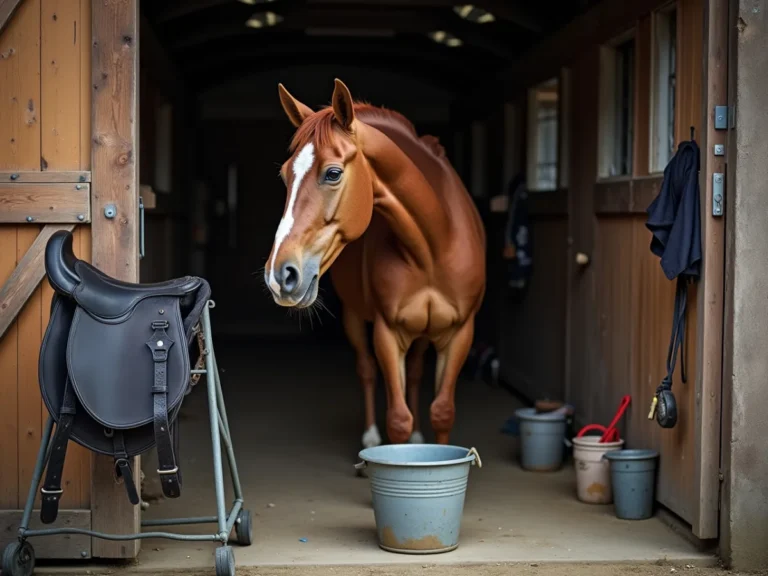
Some horses seem to notice everything. A small sound near the barn. A shift in the wind. A person walking too quickly across the aisle. Their head comes up, the ears move, and suddenly they are tuned in as if they have already read the whole scene.
This kind of steady awareness can look almost effortless. In one horse, it shows up as quiet watchfulness. In another, it appears as tension that never fully leaves the body. The difference matters, because being aware is not the same as being worried.
Horses are built to pay attention to their surroundings, and some simply do that more intensely than others. Breed, temperament, experience, routine, and even the quality of their environment all play a part. When a horse seems constantly aware, it often means that its senses are active and its mind is working hard to sort safe from unsafe.
Why some horses stay so alert
A horse’s first job in nature was not to relax deeply in the middle of a field. It was to stay alive. That background still shapes how horses respond today. Even domesticated horses keep a strong instinct to scan, listen, and react quickly.
Some horses have a naturally higher baseline of alertness. They notice movement faster, startle more easily, and track changes in their environment with more intensity. Others seem more settled from the start. Both are normal, but the more watchful horse can give the impression of being constantly on duty.
Temperament is a major factor. Just like people, horses vary in how strongly they react to new sights, sounds, and routines. A sensitive horse may be careful and thoughtful, while another may be bold and easygoing. The sensitive one is not necessarily difficult; it simply processes the world with more attention.
Constant awareness in a horse is often a sign of strong sensory processing, not automatically a sign of bad behavior. The question is not only whether the horse is alert, but whether that alertness looks calm, tense, or unsettled.
How this behavior appears in everyday handling
In daily life, an aware horse often reveals itself through small changes before anything dramatic happens. The ears may rotate repeatedly. The eyes stay wide and active. The horse may pause before stepping forward, especially if something in the environment has shifted.
At the barn, this can show up during feeding, grooming, tacking up, or turning out. A horse may watch every movement around the aisle and seem unwilling to let anything go unnoticed. Even if the body stays still, the mind appears to be following multiple things at once.
Under saddle, the same horse may feel unusually tuned in to the rider’s body and to outside distractions. It may react to distant dogs, a flapping tarp, a bird taking off from the fence, or a change in footing. Sometimes that awareness is helpful. The horse is quick to notice and adjust. Sometimes it is tiring, because the horse never fully settles into the task.
Common signs owners notice
- Frequent ear movement instead of resting ears
- A raised or still-held head
- Slow scanning of the surroundings
- Brief startle reactions to small changes
- Difficulty relaxing when the environment is busy
- Strong focus on one sound, object, or area
These signs do not always mean the horse is anxious. A horse can be highly aware and still feel safe. The body language tells the rest of the story.
Internal reasons behind the reaction
Some horses seem constantly aware because their nervous system is naturally quick to respond. They register movement and sound faster than others. That can be useful in a herd setting, where early warning matters. It can also make daily handling feel more intense.
Past experience plays a role too. A horse that has learned the world can change suddenly may remain on guard even when nothing seems wrong. For example, a horse that has had inconsistent handling, frightening transport experiences, or long periods of stress may stay ready for the next surprise.
There is also a difference between curiosity and vigilance. Curious horses look around because they want to understand. Vigilant horses look around because they feel they must. The outward behavior can resemble each other, but the emotional tone is different.
A horse that keeps checking the environment may be trying to create predictability. That does not always mean fear. It can also mean the horse has learned that paying attention helps it feel more in control.
Temperament, memory, and learning
Temperament affects how strongly a horse reacts in the moment. Memory affects what it expects next. Learning connects the two. A horse that has had enough time to build trust may still be alert, but it does not always carry the same edge.
That is why two horses in the same stable can look completely different. One may nap with a hind leg resting and ears soft. The other may watch every door opening. Their environments are shared, but their internal settings are not.
In some horses, awareness is linked to intelligence and problem-solving. These horses notice patterns fast. They remember routines, people, and small changes in the herd. Owners often describe them as sharp, bright, or highly tuned in. Those are useful traits, but they can become tiring when there is no real chance to settle.
How environment shapes constant awareness
The surroundings can either lower or raise a horse’s level of alertness. A quiet pasture with familiar companions usually helps a horse relax. A busy barn with frequent movement, loud gates, barking dogs, and changing horse traffic may keep the same horse on edge for much of the day.
Lighting, weather, and footing matter more than many people expect. A horse that feels comfortable on a clear, calm afternoon may seem much more aware on a windy night. Shadows shift. Sounds carry differently. The ground may feel unfamiliar underfoot. All of that can make the horse more watchful.
Even routines influence alertness. Horses often do best when daily patterns are consistent. Feeding at roughly the same times, handling in predictable ways, and keeping turnout routines stable can lower the amount of mental scanning a horse feels it needs to do.
Environmental triggers that increase alertness
- Sudden noise or repeated banging
- Unfamiliar horses nearby
- Open spaces with little visual cover
- Strong wind, heavy rain, or storm changes
- Frequent activity around the barn
- Inconsistent handling or changing routines
Some horses adapt quickly to these conditions. Others remain cautious. The important point is that the environment can bring a horse’s natural awareness to the surface or keep it there for much longer than usual.
What the horse may be signaling about its state
Constant awareness can mean several different things depending on the rest of the body. A horse that is alert with loose muscles, even breathing, and quiet feet is usually simply attentive. A horse that is alert with a tight jaw, shallow breathing, and a rigid neck may be holding tension.
People often focus on the eyes, but the rest of the body usually gives the clearer answer. If the horse keeps looking around but still eats, shifts weight normally, and responds easily to familiar handling, the alertness may be mild. If the horse cannot stay still, cannot settle after the trigger passes, or seems ready to bolt, the level of stress is higher.
Owners sometimes mistake intense awareness for respect or good manners. In reality, the horse may just be trying very hard to monitor everything at once. That effort can be useful for a moment, but exhausting over time.
Calm awareness versus stress-based vigilance
| Calm awareness | Stress-based vigilance |
|---|---|
| Ears move but soften again | Ears stay fixed or flick sharply |
| Body remains loose | Body stays tight or braced |
| Horse can refocus when asked | Horse struggles to settle |
| Interest in surroundings without panic | Scanning that looks restless or defensive |
| Normal eating and breathing | Interrupted eating, shallow breathing, or high tension |
This distinction helps owners avoid overreacting to every sign of attentiveness. Not every alert horse is stressed. But not every watchful horse is comfortable either.
How this shows up in pasture life
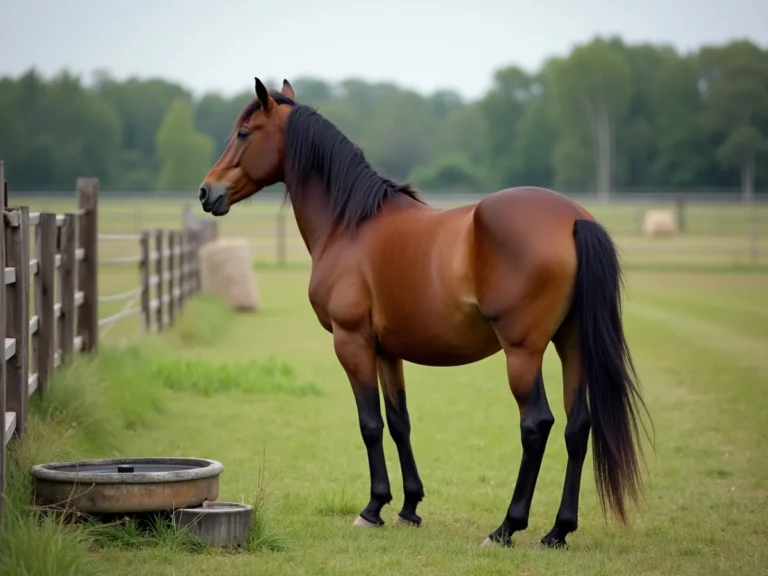
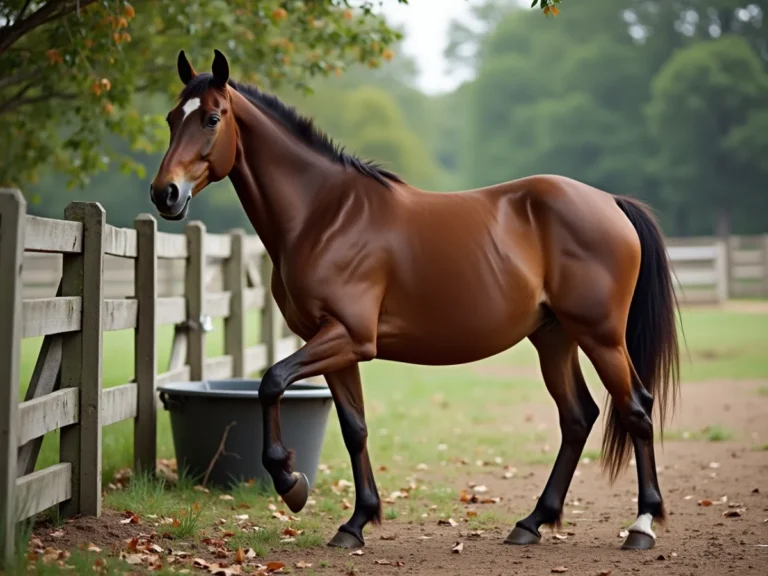
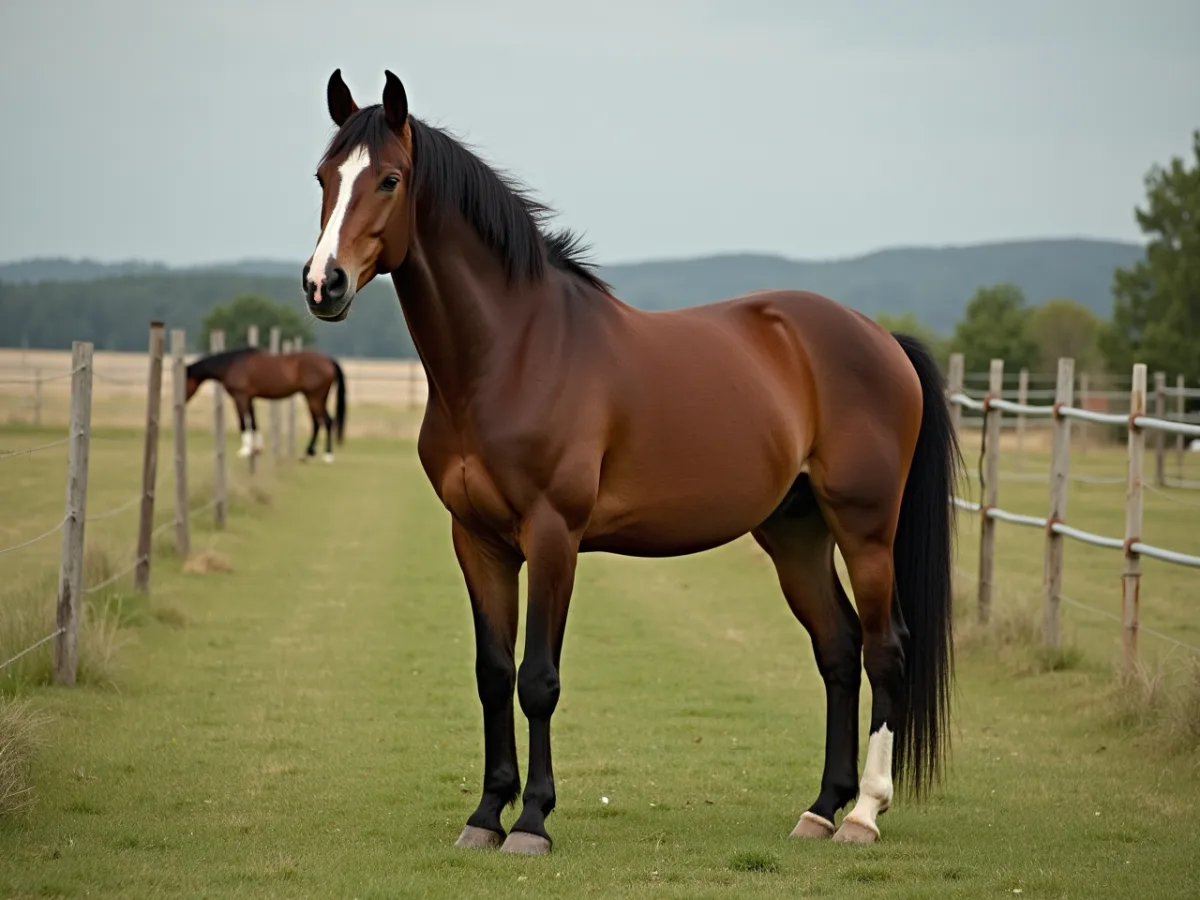
In the field, constant awareness often becomes part of herd behavior. One horse notices movement beyond the fence, and others may lift their heads in response. A horse with a naturally watchful temperament may act as an early observer for the group.
Some horses remain aware of the herd without seeming nervous. They keep track of where other horses are grazing, which direction the wind is moving, and whether anything new has entered the space. This can be perfectly normal herd behavior. It becomes more notable when the horse cannot seem to disengage from scanning, even during rest periods.
Pasture conditions matter here too. A larger field may encourage more monitoring because the horse has less immediate cover and more space to survey. Smaller turnout areas may feel either safer or more crowded, depending on the horses present. Herd dynamics also play a role. A horse that is lower in the group hierarchy may stay more alert to the actions of others.
Some horses seem to watch not because they are worried, but because they are socially aware. They notice who is moving, who is leaving, and who is approaching the fence. Herd life depends on that sensitivity.
How this appears during riding
Riding can make awareness more obvious because the horse has to manage its own instincts while also listening to the rider. A horse that seems constantly aware may feel light, quick, and responsive. It may also feel a little busy in the body, especially if the ride takes place in a new setting.
In the arena, the horse may stay highly tuned to the gate, to other horses passing by, or to anything moving outside the ring. On a trail, it may monitor the landscape constantly, especially in unfamiliar terrain. In either setting, the horse is often trying to stay prepared for the next change.
Riders sometimes interpret this as resistance, but that is not always accurate. A horse can be mentally full without being disobedient. If the horse is working hard just to stay oriented, simple requests may take longer to land.
When a horse feels aware of everything at once, clearer routines and softer transitions often help more than stronger pressure. The goal is not to shut down the awareness, but to make it easier for the horse to settle inside it.
Signs under saddle that may point to heightened alertness
- Difficulty stretching into contact
- Repeated spooking at small, changing stimuli
- Quick head movement toward sounds
- Short, choppy steps instead of swinging movement
- Strong focus on the outside environment
- Delayed relaxation after a distraction passes
These signs become more meaningful when they happen often and across different settings. A horse that only reacts in a new arena is showing a common response. A horse that stays keyed up everywhere may need more support in daily life.
The role of training, maturity, and trust
Young horses often appear more aware simply because the world is still new. They are learning what is normal and what can be ignored. Everything takes effort. Their attention shifts quickly because they have not yet built a deep library of safe experiences.
With maturity, many horses become more selective. They learn which things deserve attention and which do not. A well-seasoned horse may still notice every detail, but it often processes those details with less outward tension. That can look like confidence rather than hypervigilance.
Training influences this change, but only if it is built on trust and clarity. A horse that understands what is being asked and feels safe in the routine is more likely to settle. If training is confusing or inconsistent, the horse may remain on high alert even as it learns to perform tasks.
Long-term consistency matters. Horses remember how people approach, handle, and respond to them. A predictable, calm pattern can lower the need for constant scanning. The horse does not stop being aware. It just no longer has to treat every moment like a test.
When constant awareness becomes more noticeable
Many horses seem more aware at certain times of day or under certain conditions. Early morning, feeding time, turnout changes, trailer loading, and pre-ride preparations often bring out the behavior. The horse is not necessarily more anxious at those times. It may simply be expecting something to happen.
Awareness also becomes more visible during periods of change. A new boarding barn, a different turnout buddy, a change in hay schedule, or an unfamiliar riding pattern can all make a horse more watchful. Some horses adjust within hours. Others need days or weeks to feel settled again.
Seasonal changes can matter too. Horses often react to shifting weather patterns, more insects, frozen footing, or changes in turnout length. A horse that seems extra alert in spring may be responding to more activity, more noise, and more overall motion in the environment.
Routine changes that often stand out
- New stablemates or altered herd groupings
- Different feeding times
- Travel or transport days
- Outdoor work after a long stall period
- Weather shifts, especially wind or storms
- Unfamiliar people moving through the barn
These changes do not affect every horse the same way. Some adapt quickly and appear unfazed. Others become noticeably more watchful, and that reaction can last longer than owners expect.
How to read the difference between awareness and tension
The best clues usually come from consistency. A calm, aware horse may watch the world, then return to grazing, grooming, or resting without much trouble. A tense horse may keep circling back to the same point of concern, as if it cannot finish processing it.
Look at the whole picture: posture, breathing, movement, appetite, and ability to recover after a surprise. Recovery is especially telling. A horse that startles and then softens again is using its awareness normally. A horse that stays braced long after the trigger is gone may be carrying more stress than it can release on its own.
Owners do not need to solve every moment of alertness. Some horses are simply born observant. The useful task is learning which version of awareness is sitting in front of you: calm attention, cautious vigilance, or a horse that feels unable to stop monitoring the world.
What looks like a horse “always being aware” may actually be a mix of instinct, habit, memory, and current comfort level. Reading that mix well takes time and repeated observation, not a single moment.
A quiet, steady way of looking at it
Some horses keep a finger on the pulse of everything around them. They notice the barn door before it opens fully. They hear the shift in a nearby horse’s steps. They track people, sounds, and movement with a seriousness that can be impressive, and sometimes a little exhausting.
That watchfulness is not random. It grows from the horse’s species-level instincts, individual temperament, and daily experience. A horse that seems constantly aware is often doing what horses are meant to do: stay informed, stay ready, and keep reading the environment.
What matters most is whether that awareness leaves room for rest. When a horse can stay attentive without losing its ability to soften, graze, or settle, the behavior usually belongs to normal horse nature. When the alertness never seems to ease, the horse may be asking for a quieter routine, more predictability, or a closer look at what is making the world feel too active.