Horses often seem to freeze for a moment and stare toward something far away. It can happen in a pasture, at the end of an arena, or while standing quietly beside a barn aisle. The object may look unimportant to a person, but to the horse it can hold real meaning.
This habit is not random. Horses are built to notice distance, movement, and changes in their surroundings. A far-off shape, a sound carried by the wind, or a shift in another animal’s behavior can catch their attention quickly. What looks like simple staring is often a mix of caution, curiosity, and information gathering.
When a horse watches distant objects, it is usually trying to understand what is happening beyond its immediate space. That reaction can be calm or tense, brief or sustained. The details matter. Ears, posture, breathing, and whether the horse stays relaxed all help explain what the behavior means in that moment.
Why distance matters so much to horses
Horses are prey animals, and that shapes the way they use their eyes and attention. In the wild, seeing trouble early meant more time to react. A shape on the horizon, a moving shadow, or a shifting herd member could signal safety or danger. That instinct still lives in domestic horses today.
Distance gives horses a chance to process information before it reaches them directly. They may watch a tree line, a gate at the far end of a field, or a small movement across the property. The farther away the object is, the more the horse can observe without feeling forced into immediate contact.
For horses, distance is not emptiness. It is part of how they evaluate safety, movement, and change.
Their vision also contributes to this behavior. Horses have wide peripheral sight and are quick to notice motion at the edge of their view. They may turn one eye toward a distant object and hold still while they assess it. That stillness is often part of the process, not a sign that the horse has stopped paying attention.
What a horse may be noticing
People sometimes assume a horse is looking at “nothing,” but horses usually respond to something specific. It may be a vehicle far down a driveway, another animal moving in a neighboring pasture, a person walking where the horse does not expect one, or even a sound paired with a visual cue. The object itself matters less than the horse’s interpretation of it.
Several small details can draw attention from a distance:
- Movement against a still background
- Sudden changes in sound
- Unfamiliar shapes or colors
- Other horses reacting nearby
- Shifts in wind, smell, or weather
Sometimes a horse appears to be staring at a distant object when it is actually listening. Horses do not separate the senses the way people often do. A distant visual cue and a faint sound may be part of one message to them. That is why their response can seem stronger than the object seems to deserve.
How this behavior appears in everyday situations
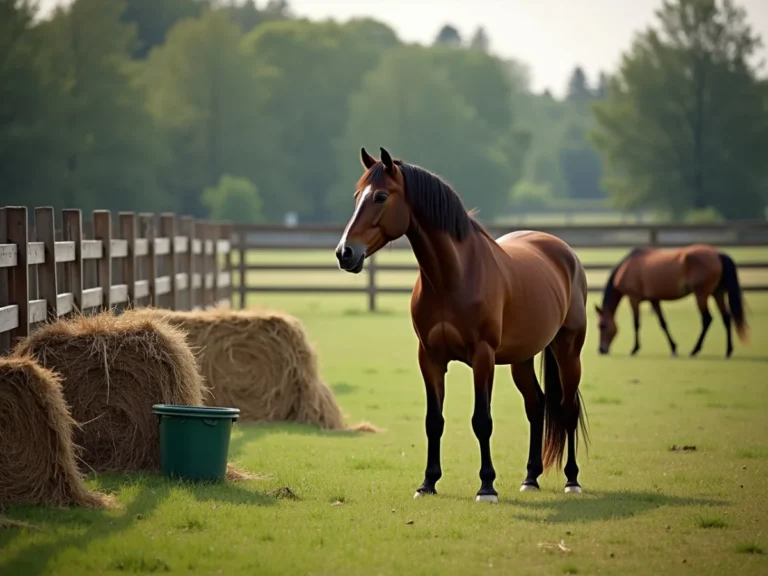
In a field, a horse may stop grazing and lift its head toward a far fence line. The body stays quiet, but the ears move forward or sideways. The eyes may stay fixed on the same point for a few seconds longer than expected. If the horse resumes eating, the moment may have simply been a quick check.
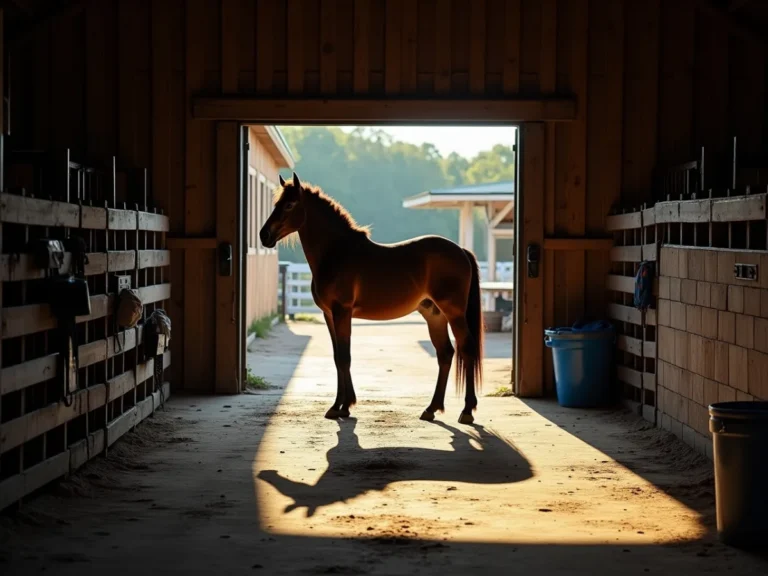
In a stable, the behavior often looks different. A horse may stand at the stall door and watch activity at the end of the barn, through a window, or across the yard. The reaction may be triggered by traffic outside, another horse calling, or a person approaching from an unusual direction. Stable environments are full of partial views, and horses spend a lot of time sorting through them.
Under saddle, watching distant objects can appear as hesitation, drifting attention, or a brief loss of focus on the rider’s cues. A horse may lock onto a trail opening, a parked machine, or a distant animal and become harder to redirect for a moment. That does not always mean disobedience. Often the horse is simply dividing attention between the rider and something that feels more urgent.
During transport, the behavior can become more pronounced. Horses in trailers may try to watch what is visible through openings, especially if the scenery changes quickly. New roads, strange vehicles, and unfamiliar stops all create layered input. A horse may stare out, then shift posture, then stare again as it continues to evaluate the situation.
Calm watching versus alert watching
Not every horse that watches distance is worried. Some simply observe with quiet interest. The difference is often visible in the body. A calm horse tends to keep an even rhythm in its breathing, loose muscles, and a steady stance. The head may be raised, but not rigidly.
An alert horse usually shows more tension. The neck may stiffen. The nostrils may widen. One foot might lift or brace. The ears often lock forward and stay fixed, as if the horse is trying to collect every detail at once. These signs matter more than the stare itself.
A horse that watches quietly is not always concerned. A horse that watches with a tense body may be preparing for action.
Owners sometimes confuse stillness with relaxation. But a horse can look motionless while feeling deeply alert. The key is to notice whether the horse is soft or braced. A soft horse may check the horizon and return to grazing. A braced horse may remain focused, unable to shift out of the reaction quickly.
How herd behavior shapes the reaction
Horses are deeply influenced by the group around them. If one horse notices something in the distance, others often follow its gaze. This is not copying for no reason. It is a practical herd habit that helps everyone stay aware of possible change.
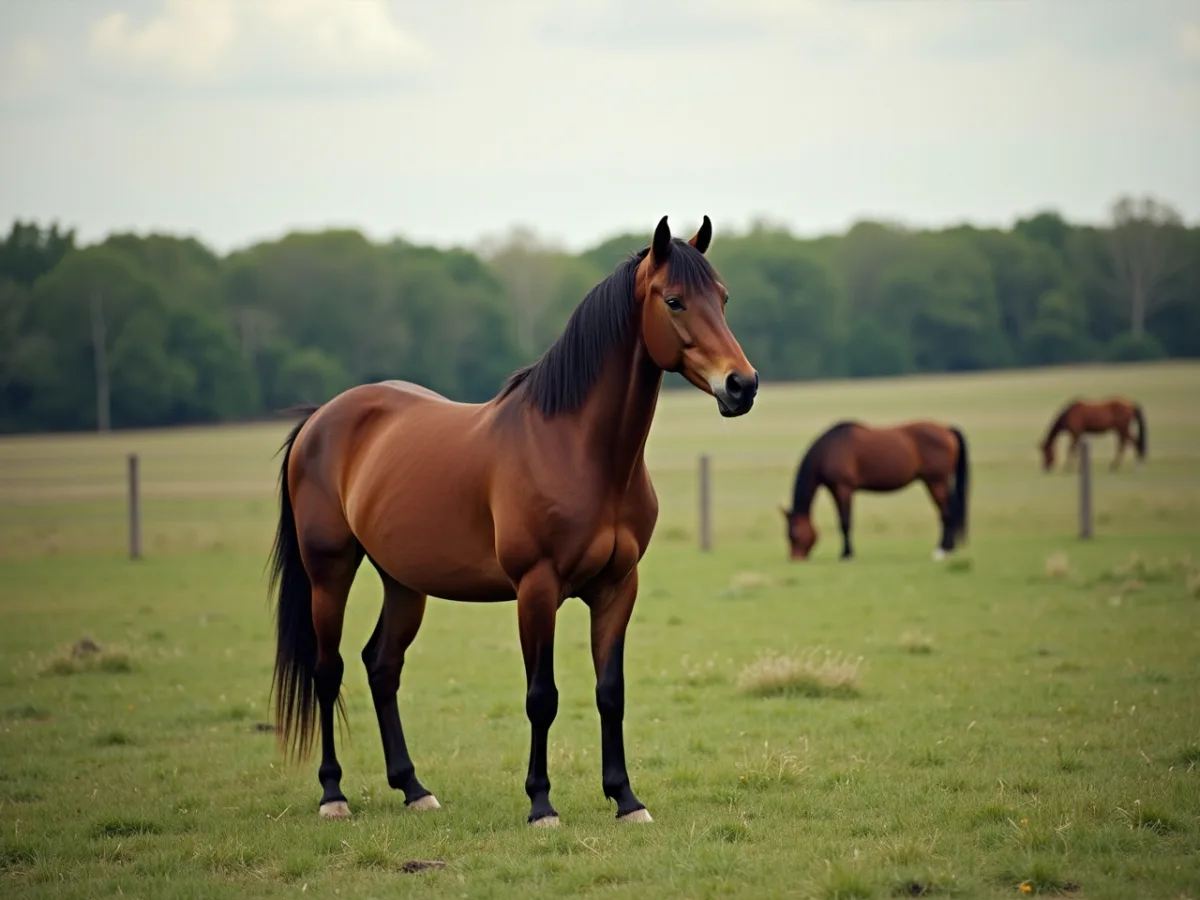
In a pasture, one horse staring at a far object can quietly change the whole group’s energy. Another horse may lift its head, then another. Soon the field may feel still and watchful. The event that started the chain may be small, but the group response increases its significance.
At the same time, a calm herd can help reduce tension. If the lead horse or the most confident companion glances at something and then goes back to grazing, others often relax too. Horses read each other constantly. The behavior of the group can either intensify a distant watch or shorten it.
How the environment influences distant watching
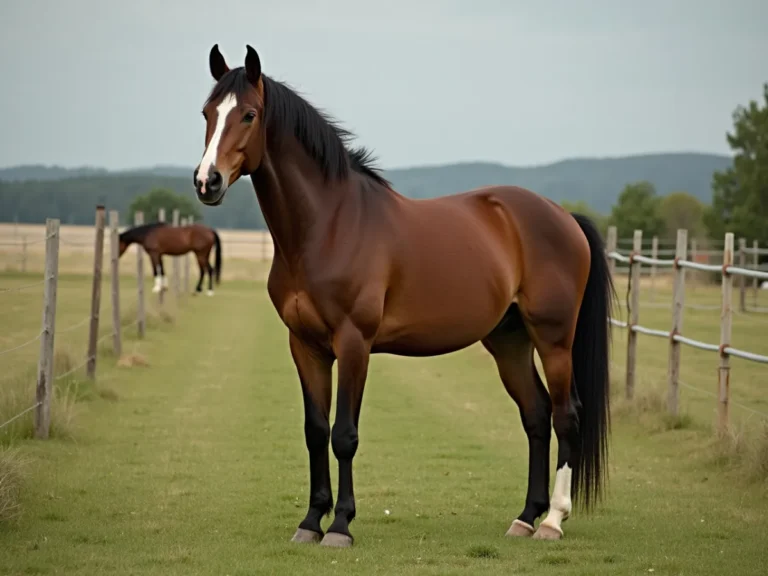
Some places naturally encourage this behavior more than others. Open pastures make faraway movement easy to notice. A horse can see vehicles, wildlife, weather shifts, and people coming from a long distance. In those settings, the horse may pause often to scan the horizon.
Enclosed spaces can create a different kind of focus. In an arena, a horse may watch the doorway, gate area, corner shadows, or activity beyond the fence. Because the view is limited, the horse may lock onto whatever visible detail seems most relevant. The small size of the space can actually make distant watching more intense.
Weather can change the pattern too. Wind, low light, rain, and sudden noise all make distant objects harder to interpret. A horse may stare longer when visibility is poor because the brain is filling in missing information. Fog, blowing branches, and flapping tarp material are common triggers for this kind of attention.
Season also matters. A horse in a quiet winter field may notice sounds and movement at greater distances because the landscape is open and sparse. In summer, tall grass, insects, and dense foliage change what the horse can see and what it expects to see. Familiar scenery becomes less predictable when the environment changes.
What it may signal about the horse’s state
Distant watching can point to several internal states, and context decides which one is most likely. Curiosity is one possibility. A horse may simply be gathering information. That is common in intelligent, attentive animals and does not need correction.
It can also signal uncertainty. Horses often look toward the source of something they do not fully understand. The behavior gives them a chance to decide whether to approach, wait, or move away. In many cases, the horse is doing a careful check rather than showing fear.
At other times, the behavior may reflect mild stress. A horse that becomes overly fixed on the horizon, especially if it is difficult to bring attention back, may be feeling uneasy. This is more likely if the horse also shows tension elsewhere in the body. Tail swishing, neck stiffness, and shallow breathing can all add context.
Rarely, the horse may be reacting to pain or discomfort that makes it harder to settle. A horse in physical discomfort may scan the environment more intensely, especially if something seems off and the body is already on edge. The behavior alone cannot tell the whole story, but it can be one part of a larger pattern.
Common signs that go with the behavior
Because the stare itself is only one piece, owners do better when they watch the full picture. Small signs often reveal whether the horse is calm, cautious, or genuinely uneasy. A few of the most useful ones include:
- Ear position and how often the ears shift
- Head height and whether it keeps rising
- Weight shifting between feet
- Changes in breathing
- Muscle tightness through the neck and shoulders
- Whether the horse returns to normal activity
A horse that looks once and moves on is different from one that freezes and remains locked onto the same point. Duration matters. So does recovery. A horse that can glance, assess, and then settle again is usually coping well with the stimulus.
Sometimes the body gives mixed signals. A horse may appear curious, yet hold the jaw tight. Or it may stand quietly, but the tail and hindquarters tell a different story. Mixed signals are common because horses often try to stay still while still tracking what feels important.
Why people misread this behavior
Many horse owners interpret distant watching as stubbornness or distraction. That is understandable, especially when a horse seems to ignore cues while staring outward. But the horse is not always choosing the distance over the rider or handler. It may be trying to process two things at once.
Another common mistake is assuming a calm-looking horse is safe simply because it is quiet. Horses can remain very still when they are highly alert. They may not look dramatic, but their attention can be fully absorbed. Stillness does not always equal relaxation.
People also sometimes think a horse is “spooking at nothing” when the trigger is actually far away and subtle. Horses notice details humans miss all the time. A moving figure half a field away, a machine sound from the road, or a shape changing in the corner of the eye may be enough to explain the reaction.
When a horse stares into the distance, the important question is not “Why is it looking?” but “What else is the body saying?”
How experienced horses differ from younger ones
Younger horses often watch distant objects with less filtering. They have less experience deciding what matters and what can be ignored. As a result, their attention may jump quickly from one thing to another. They can seem more dramatic, but they are also still learning the landscape of everyday life.
More experienced horses may be quicker to assess and move on. They have stored more memory of harmless sights and sounds, so they may not need as much time to decide. A seasoned horse may still stare, but the stare can be brief and efficient rather than prolonged.
That said, age and experience do not erase instinct. Even a mature horse may focus sharply on a distant object if something feels unusual. Experience changes the speed of interpretation, not the basic need to check.
When the behavior is completely normal
There are many moments when distant watching is just ordinary horse behavior. A horse may stand at the edge of a paddock and look toward the road at feeding time. It may lift its head when another herd is moved in the distance. It may pause mid-graze to watch a barn cat cross a far section of the property.
These moments are part of how horses stay oriented. They collect information constantly, even during rest. The behavior becomes more ordinary when the horse can easily shift back to grazing, walking, or standing quietly with no other signs of tension.
Routine often reveals what is normal for a particular horse. Some horses are naturally more observant and spend a lot of time scanning their surroundings. Others are more relaxed and only look up when something truly unusual happens. Neither pattern is automatically a problem.
When the behavior deserves closer attention
Distant watching may need more attention if it becomes repetitive, intense, or hard to interrupt. If the horse seems unable to settle, keeps scanning one area, or reacts strongly to small changes, the behavior may be tied to stress. A horse that cannot relax after the stimulus is gone may need a closer look at its environment or routine.
It is also worth paying attention if the behavior appears alongside other changes. Reduced appetite, restlessness, muscle tightness, or resistance to handling can suggest that the horse is not simply curious. The staring may be one visible sign of a larger issue.
In some horses, this behavior becomes more frequent after changes in turnout, companions, noise, or workload. A new neighboring animal, construction nearby, or a change in feeding schedule can make them scan the distance more often. Horses are creatures of habit, and disruptions can show up in subtle ways first.
What owners can learn from the pattern
Watching what a horse watches can reveal a lot about how it experiences the world. The same horse that calmly observes a truck from afar may become uneasy when the truck enters the driveway. Another may remain relaxed in the pasture but tense in the arena when sight lines are narrower. The pattern is often specific, not general.
Over time, the behavior can help owners identify triggers and comfort zones. Some horses prefer predictable movement in the distance. Others are bothered more by sudden still objects that appear unfamiliar. Some react more strongly when they are alone, while others settle better with a companion nearby.
Those differences are useful. They help explain why one horse barely notices a change while another tracks it for several minutes. The behavior is part of the horse’s own way of reading the environment, and the pattern often reflects personality, memory, and experience working together.
Subtle differences in the same moment
Two horses can watch the same distant object and mean very different things. One may stand loose and curious, then continue grazing. The other may remain high-headed, tight-backed, and reluctant to shift away. The outer behavior may look similar at first glance, but the internal experience is not the same.
Even one horse can show several stages in a few seconds. It may notice, focus, decide, and relax. Or it may notice, tense, and continue holding that tension. This is why one snapshot rarely tells the whole story. The sequence matters.
Owners who spend time observing these transitions often get better at reading their horse’s threshold for concern. They begin to notice the little pauses before a larger reaction, and the gentle return to normal when the horse feels secure again. That awareness is more useful than labeling the behavior too quickly.
In daily life, a horse watching a distant object is often doing exactly what horses are designed to do: scan, assess, and decide. The stare may last a second or several minutes. It may end in calm grazing, a shift of weight, a snort, or a quiet return to rest. The meaning lives in the details that surround it.