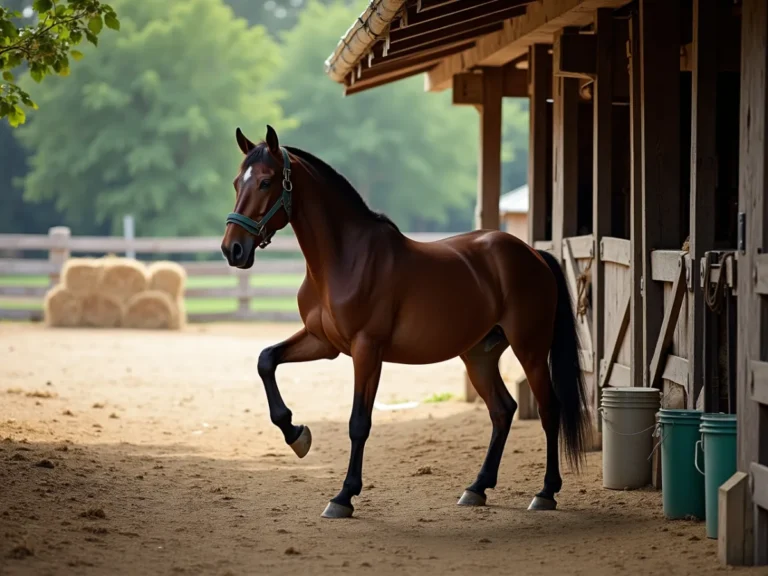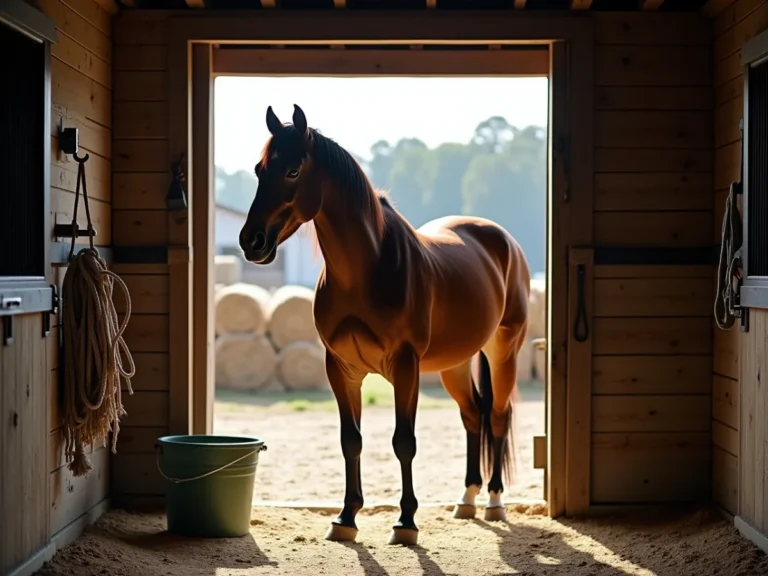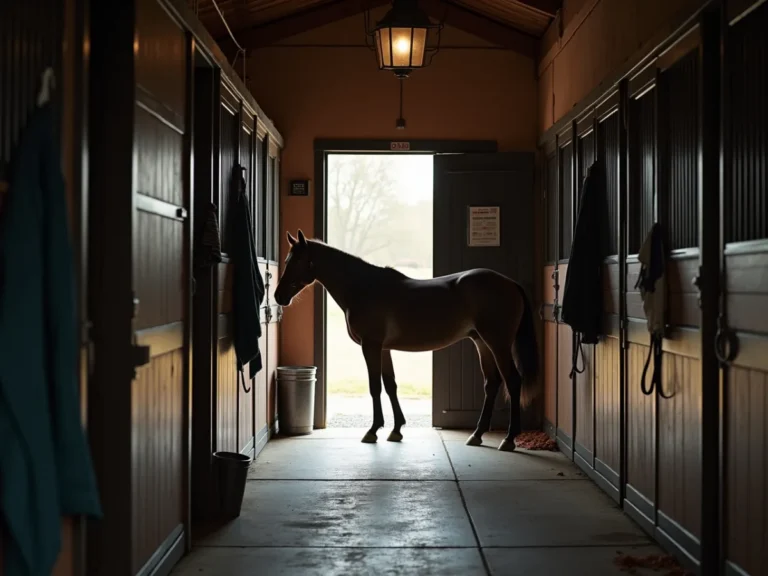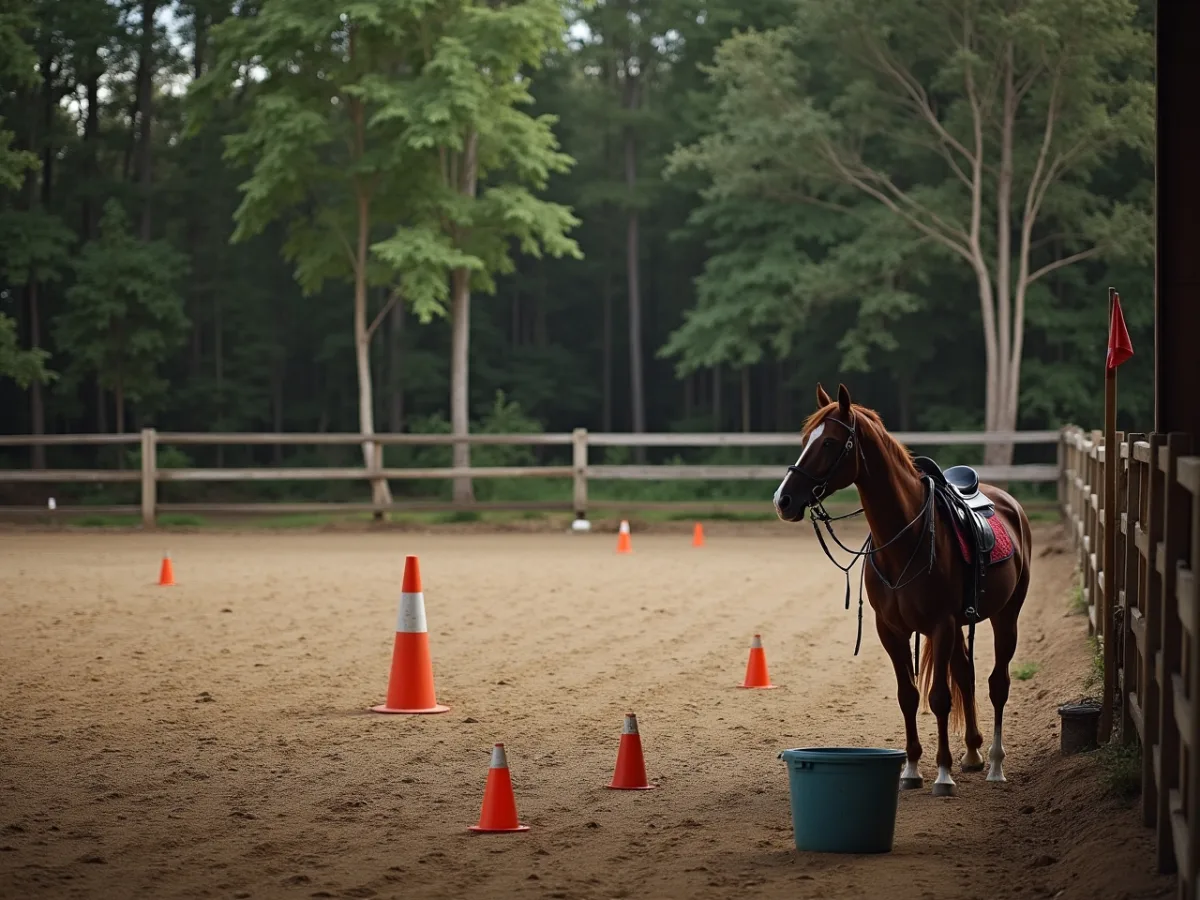
Tension rarely appears all at once. In horses, it often starts as a small change: a tighter jaw, a harder step, a flicking tail, or a body that seems ready to leave before anything has actually happened. If that tension stays in the background long enough, it can begin shaping behavior in ways that look disobedient, sharp, or difficult to manage.
What people call “behavioral issues” are sometimes the end result of a horse holding stress for too long. The horse may not be trying to be difficult. It may be trying to cope. That distinction matters, because the first signs are usually quieter than the final reaction. By the time a horse bolts, pins its ears, kicks at the wall, or resists handling, there may already have been many smaller moments of discomfort.
Tension can build for many reasons. Some are obvious, like pain or a sudden change in routine. Others are subtler, such as poor turnout, confusing handling, social stress in the herd, or repeated pressure that never quite gets released. The behavior people see is often only the last layer of a much longer story.
How Tension Shows Up Before It Becomes a Bigger Problem
Long before a horse refuses a task or reacts strongly, the body often gives clues. These signs can be easy to miss, especially when they are mild or inconsistent. A horse that used to stand quietly may begin shifting weight, calling more often, or seeming unable to settle. Another may stay “busy” all the time, with no real relaxation even when nothing is expected.
In everyday handling, tension may show up as:
- tight muscles along the neck, back, or jaw
- ears that keep locking backward or darting around
- a swishing tail without a clear fly-related reason
- restlessness during grooming or tacking up
- difficulty standing still for mounting, vet work, or hoof care
- reluctance to lower the head, bend, or yield softly
Some horses become dull when stressed, while others become sharp. Both patterns can point to the same underlying issue. A horse that seems “lazy” may actually be guarding against discomfort. A horse that seems overly reactive may be carrying too much internal pressure to stay composed.
Behavioral problems often begin as coping behaviors. When the horse’s system is under strain, the response may look like resistance, impatience, or refusal.
Why the Same Horse May React Differently on Different Days
Tension is not fixed. It changes with sleep, weather, workload, diet, social interactions, and how much pressure the horse has already absorbed that week. This is why a horse may seem perfectly manageable one day and unusually difficult the next. The horse is not necessarily being inconsistent on purpose. The environment around the horse has changed, even if it is easy to overlook.
Routine plays a large part. Horses rely on predictability more than many owners realize. Feeding time, turnout, exercise, and handling patterns help them organize the day. When those patterns shift often, the horse may stay on alert. A horse that cannot anticipate what comes next has less reason to relax.
Small disruptions can matter too. A new turnout neighbor, a change in bedding, a late feeding, or a different handler can add up. None of these things has to be dramatic to create pressure. Tension often builds through accumulation, not one single event.
How Environment and Surroundings Feed the Problem
The stable itself can be part of the issue. Some horses tolerate a busy barn with constant activity, while others find it hard to rest when there is too much noise or movement. Repeated exposure to stressful surroundings can leave a horse in a state of quiet vigilance. That state is tiring. Over time, it can spill into behavior.
Pasture life matters as well. Horses that are isolated may become anxious, but horses in unstable social groups can also develop tension. Constant changes in herd hierarchy, bullying at feed time, or limited space can make the horse feel trapped. When a horse cannot choose comfort, pressure tends to show up somewhere else.
Transport is another common trigger. Loading, traveling, and arriving at unfamiliar places can raise tension quickly. Some horses cope by freezing, while others rush, call, sweat, or become hard to handle. If those experiences happen often and are not followed by enough rest or recovery, the horse may start to anticipate stress before transport even begins.
Common Environmental Triggers
- limited turnout or long stall confinement
- constant start-stop changes in schedule
- crowded barns or frequent movement nearby
- social conflict in the herd
- unfamiliar arenas, trails, or show grounds
- repeated pressure without enough release
Not every horse will react to the same trigger in the same way. One may tighten when left alone. Another may become most reactive when the environment is loud and crowded. The reaction often reflects the horse’s individual sensitivity as much as the actual event.
What Tension Looks Like During Riding or Ground Handling
Under saddle, tension can appear as stiffness, rushing, resistance to contact, hollowing, or a feeling that the horse is always one step ahead of the rider’s aids. Some horses brace through the neck or back. Others become reluctant to go forward at all, especially if they expect correction instead of comfort. The outward picture can vary, but the common thread is the horse’s effort to protect itself.
On the ground, the signs may be just as clear. A horse that pulls back from the halter, rushes through the gate, or crowds the handler may be reacting to pressure it does not know how to release. Some horses become difficult to catch because the act of being approached predicts work, confinement, or unwanted handling. In that case, the problem is not only the halter or lead rope. It is the meaning the horse has attached to the interaction.
There are also horses that seem compliant but are actually deeply tense. They may stand still, move when asked, and perform familiar tasks without obvious protest. Yet their breathing stays shallow, their muscles remain rigid, and their expression looks fixed. This kind of quiet tension is easy to ignore because it does not interrupt the session in a dramatic way. Still, it often precedes more visible issues later.
A calm exterior does not always mean the horse is comfortable. Some horses show stress through stillness rather than movement.
Possible Internal Reasons Behind the Reaction
When behavioral issues develop from tension, there is usually an internal reason, even if it is not visible at first glance. Pain is one of the most important possibilities. A sore back, dental discomfort, ulcers, foot pain, or poorly fitting tack can all create tension that spills into behavior. The horse may begin by resisting certain movements and then generalize that discomfort to other situations.
Physical discomfort is not the only factor. Emotional stress matters too. Horses are highly sensitive to repeated experiences that feel confusing, restrictive, or unpleasant. If the horse cannot predict what a human will ask, or if the horse has learned that mistakes lead to pressure, tension can build quickly. The body becomes prepared for trouble before trouble happens.
Some horses are naturally more watchful than others. A more sensitive horse may need less stimulation to become tense. That does not make the horse “bad,” and it does not mean the horse cannot be reliable. It simply means the horse’s threshold is lower, so the environment and handling style matter more.
Internal Factors That Often Contribute
- pain or physical discomfort
- ulcers or digestive stress
- fatigue and poor recovery
- fear linked to prior experiences
- limited ability to move freely
- confusing or inconsistent handling
When several of these factors overlap, the horse may start displaying behaviors that seem unrelated. A horse with foot pain may become impatient during grooming. A horse with digestive discomfort may resent tacking up. A horse that is mentally overloaded may stop wanting to be caught. The behavior can shift, but the tension behind it often remains the same.
Soft Signals Versus Stronger Reactions
Not all tension looks severe. In many horses, the early signs are soft and easy to miss. They may breathe a little faster, chew less, blink less often, or stand with one hind leg resting in a way that still looks ready to leave. These are not dramatic signals, but they matter. They show the horse is not fully settled.
Stronger reactions usually come later, after the horse has had to carry that tension for a while. At that point the horse may spook more easily, refuse to cooperate, pin the ears, kick out, rear, or become difficult to catch. The behavior is often more noticeable in the moments where the horse feels trapped, misunderstood, or physically uncomfortable.
What makes this tricky is that the same situation can produce a soft response in one horse and a strong response in another. Two horses in the same barn may live under the same roof but experience the world very differently. One may shrug off routine changes. The other may build tension until a small trigger becomes a big one.
| Type of Signal | What It May Look Like | What It Can Suggest |
|---|---|---|
| Soft | tight face, small tail swish, reduced blinking | early stress, mild discomfort, alertness |
| Moderate | restlessness, resistance, uneven focus | growing pressure, confusion, anticipation |
| Strong | bolting, bucking, rearing, refusal, aggression | overload, fear, pain, or repeated stress |
How People Often Misread the Behavior
One common mistake is assuming the horse is being stubborn when the horse is actually tense. Stubbornness suggests choice. Tension often suggests limited capacity. A horse that cannot relax may not be refusing out of attitude at all. It may be reacting because the situation feels too hard, too fast, or too uncomfortable.
Another misunderstanding is treating every reaction as the same. A horse that pulls back from the cross-ties may not be trying to misbehave in the same way a horse that rushes through a gate does. The outward behavior may differ, but both can stem from a nervous system that is already loaded. If the cause is never identified, the reaction can keep returning in different forms.
It is also easy to overlook the role of history. Horses remember patterns. If handling often comes with confusion or discomfort, the horse can start preparing for trouble long before the human notices anything unusual. That is why repeated small episodes matter. The horse may not need one big frightening event to develop a problem. A steady stream of minor strain can be enough.
What looks like defiance is sometimes a horse trying to avoid more pressure, more pain, or more uncertainty.
What a Horse’s State May Be Saying Without Words
Tension-related behavior often reflects the horse’s current state more than its character. A horse that is explosive in one setting may be quiet in another where the pressure is lower. A horse that resists grooming may be perfectly willing to move comfortably in the pasture. These differences are useful clues. They point toward context rather than personality alone.
That is why observation matters so much. When did the behavior begin? Does it happen only in one place? Does it appear before feeding, after turnout, during saddling, or when certain people are nearby? Those details can show whether the tension is linked to physical discomfort, a routine pattern, social stress, or a specific handling issue.
Owners sometimes find that the horse’s behavior improves when one pressure point is removed. Better turnout, a more consistent schedule, a tack check, time off from heavy work, or a veterinary evaluation can change the whole picture. That change is not magic. It simply reduces the strain the horse has been carrying.
When Tension Becomes a Pattern
A single tense day does not define a horse. Patterns do. When the same signs keep returning, the horse may be telling a consistent story about what feels difficult or unsafe. That story can change with age, experience, and management, but it is still worth taking seriously early on.
Long-term tension can make a horse less flexible in daily life. The horse may become more reactive to small changes, more difficult to settle after work, or more selective about handling. Once that pattern is established, it is harder to ignore and easier to reinforce by accident if every interaction becomes rushed or corrective.
The most useful response is usually not to look for a single label. It is to notice what conditions make the horse more tense and which ones help the horse relax. A horse that has room to move, a steady routine, and clear, low-pressure handling often has fewer reasons to escalate. The behavior then becomes easier to read because the horse is no longer being pushed beyond its comfort level.
Natural Background Behind the Reaction
Horses are built to notice change. That sensitivity helps them survive, but it also means they can hold onto alertness longer than people expect. In the wild, staying ready matters. In modern life, that same readiness can become tension when the horse has too many demands and too little control over the surroundings.
Herd behavior also plays a role. Horses look to one another for safety, and isolation can be stressful. At the same time, competition within the herd can be stressful too. The horse is always balancing the need to stay connected with the need to protect itself. Behavioral issues often appear when that balance is interrupted for too long.
Modern barns ask horses to adapt to a world that is much less predictable than the one their instincts were designed for. They hear sudden sounds, encounter unfamiliar people, live by human schedules, and travel to strange places. Most horses handle parts of this well. Problems begin when the demands accumulate and no one notices the tension building underneath.
When a horse begins to show behavioral issues, the behavior is rarely random. It usually has shape, timing, and a trigger pattern. The more carefully those pieces are observed, the easier it becomes to understand what the horse has been carrying and why it finally started to show.