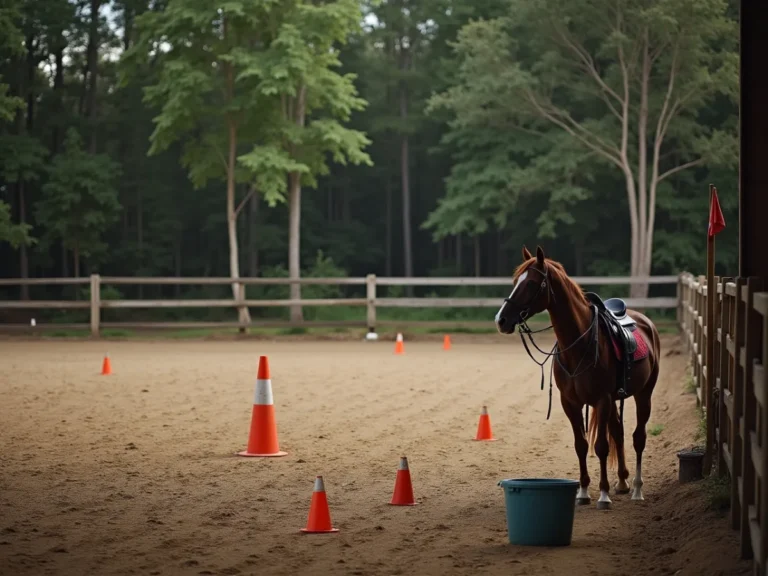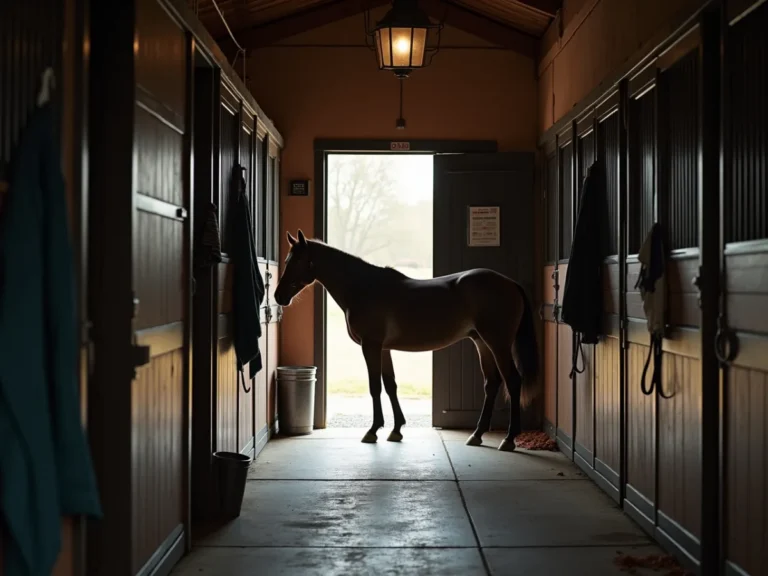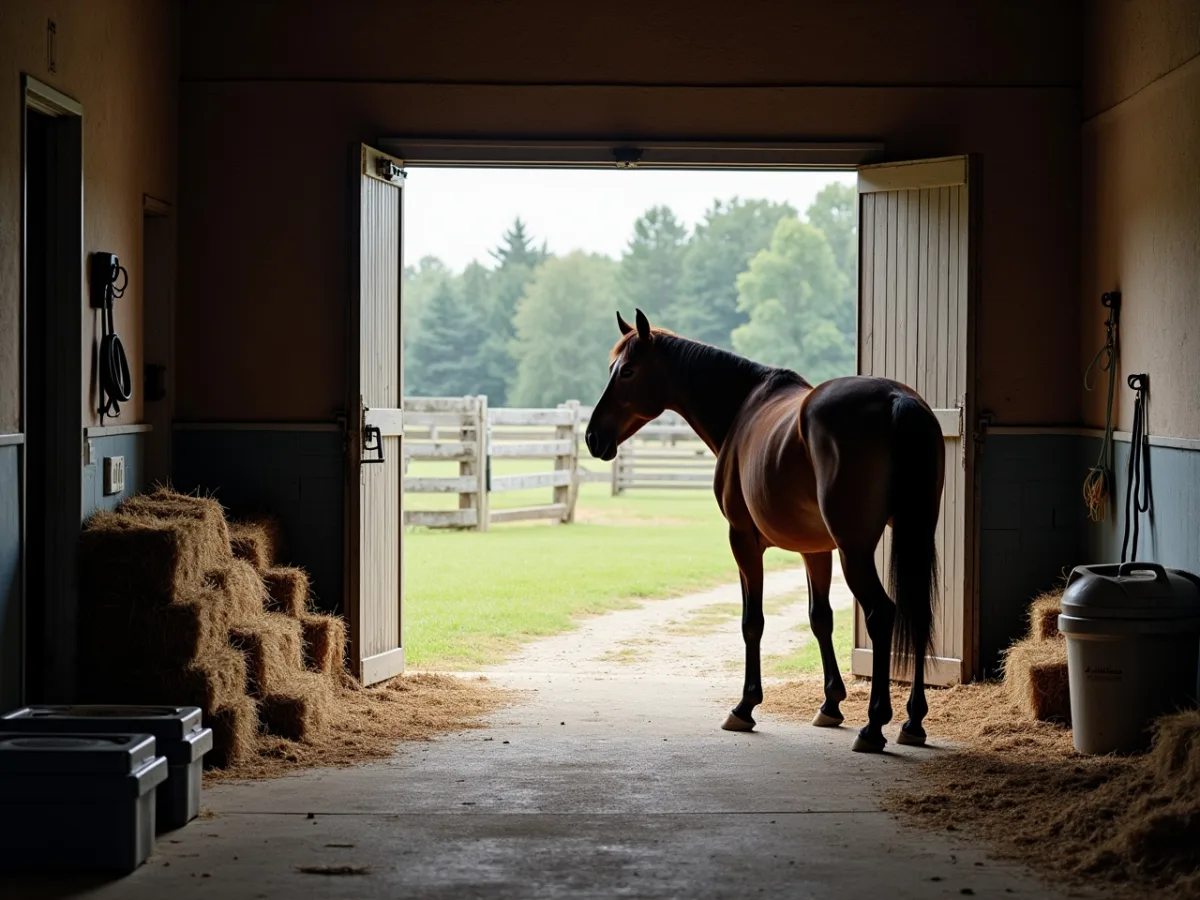
A horse can know a place well and still behave as if something there feels uncertain. The stall is familiar. The arena is familiar. The same paddock, the same gate, the same route to the barn have all been seen many times. Yet the horse may tense up, scan the area, or hesitate in a way that seems out of proportion to the setting.
This kind of nervous behavior often surprises owners because the environment looks safe from a human point of view. But horses do not read familiarity the same way people do. A place can be known and still carry specific cues that make a horse uneasy, whether those cues are visual, social, physical, or linked to a past experience.
What looks like simple nerves may actually be a mix of vigilance, habit, anticipation, and sensitivity to small changes. A horse might not be reacting to the whole environment. It may be reacting to one sound, one shadow, one object moved a few inches from its usual spot, or one pattern in the daily routine that feels off.
Why a Familiar Place Can Still Feel Unsettling
Horses are built to notice details. Their survival depends on watching for change, not on assuming that yesterday’s safety guarantees today’s safety. That means a familiar environment is never entirely “neutral” to them. It is a collection of remembered cues, and some of those cues can become linked to tension.
A stable aisle may be familiar, but if something once startled the horse there, the aisle can become a place of expectation. The horse may not be afraid of the building itself. It may be waiting for the next noise, the next person appearing suddenly, or the next piece of equipment shifting nearby.
Even without a clear past incident, horses can develop nervous habits around environments that feel busy or inconsistent. If feed timing changes, turnout is delayed, or handling varies from one day to the next, the horse may stay on alert. Repetition matters, but so does predictability.
Familiarity does not always create comfort. In horses, repeated exposure can build confidence, but it can also strengthen a nervous expectation if the environment has felt unpredictable.
How the Behavior Appears in Everyday Situations
Nervous behavior in familiar settings can look subtle at first. Some horses do not spook or bolt. They simply stop relaxing. Their body becomes harder to read because they are still, but not settled.
In the barn, this may show up as standing with weight shifted forward, neck braced, nostrils slightly flared, or eyes moving quickly from one area to another. A horse may pin and unpin its ears, call softly, paw once or twice, or keep looking toward a doorway. These signs may come and go within minutes.
Under saddle, the same horse may drift from one side of the arena to the other, rush through transitions, or resist standing quietly at the mounting block. It might feel as if the horse is “checking out” of the rider’s cues because attention is divided. But often the horse is highly attentive, just not to the rider alone.
In the pasture, nervousness may appear as reluctance to separate from herd mates, repeated movement along the fence line, or sudden attention toward sounds outside the field. A horse can be standing in a place it uses every day and still show signs that it is braced for something unfamiliar.
Transport can bring out this pattern too. Some horses load fine at home but become tense when the trailer is parked in a different place, even if they have entered the same trailer before. The location around the trailer, not just the trailer itself, matters more than many owners realize.
Common visible signs
- Raised head and tight neck
- Frequent scanning with the eyes
- Tension around the muzzle and jaw
- Uneven breathing or quick nostril movement
- Shifting feet, pawing, or repeated stepping
- Hesitation at gates, doors, or corners
- Difficulty settling during normally routine tasks
Internal Reasons Behind the Reaction
A nervous response in a familiar environment is not always about the environment itself. Sometimes the horse is bringing an internal state into that place. Tiredness, discomfort, poor sleep, hunger, digestive upset, or mild pain can make an ordinary setting feel harder to manage.
A horse with sore feet may become edgy on a familiar hard surface. A horse with a mild stomach issue may seem restless in the stall. A horse that has not had enough turnout may build energy that comes out as tension rather than movement. In these cases, the familiar setting becomes the stage where the problem is easiest to see.
Emotional memory matters too. Horses remember not only events but the feeling attached to them. If grooming, saddling, loading, or arena work repeatedly leads to pressure, confusion, or discomfort, the horse may start anticipating that pattern. The room or routine then becomes a cue for unease.
Some horses are naturally more alert than others. A sensitive horse may notice tiny environmental shifts that another horse ignores. This does not mean the horse is difficult. It means its threshold for change is lower, so the same environment can feel more intense to it.
When a horse becomes nervous in a place it already knows, the cause is often a combination of memory, physical state, and what the horse expects to happen next.
How Surroundings and Small Stimuli Influence the Reaction
Horses do not experience a space as one big picture. They take it in piece by piece. A loose tarp, a bucket in a new spot, a truck idling nearby, or wind moving through trees can matter more than the overall setting.
Familiarity can be disrupted by things people barely notice. A different scent in the barn aisle, an unusual echo, a new horse in a nearby stall, or a change in the footing can all shift the horse’s sense of security. If the horse has a strong preference for routine, these details can produce visible nerves.
Lighting changes also play a role. Morning sunlight through a doorway may create shadows that move across the floor. Evening light can make the same corner seem deeper or narrower. Even a horse that has walked past that corner for years may hesitate if the visual pattern changes enough.
Noise is another major factor. Horses are often calmer around sounds they can predict. But banging gates, clanking tools, loud voices, barking dogs, or machinery can make them stay tense long after the sound ends. Some horses act nervous not during the noise, but in the waiting before it happens.
Environmental triggers that are easy to miss
- New objects placed in a regular path
- Different footing texture or depth
- Shadows from changing daylight
- Activity from neighboring horses
- Strong smells from paint, cleaning products, or feed changes
- Wind, weather shifts, or sudden temperature drops
- Altered feeding, turnout, or exercise timing
How Routine Shapes Calm or Nervous Responses
Routine is not just a convenience for horses. It is part of how they organize the world. The more consistent the daily pattern, the easier it is for many horses to predict what happens next. That predictability often lowers tension.
When routine changes, even slightly, some horses become more watchful. A horse that usually goes out first may become irritated when turnout is delayed. A horse that expects work after breakfast may seem edgy if the order changes. These reactions can look behavioral, but they often reflect uncertainty rather than defiance.
Over time, repeated inconsistency can make the horse more nervous in places that should feel safe. If the horse never knows whether it will be handled gently, rushed, or left waiting, the stable itself can become a place where anticipation runs high. Familiarity remains, but relaxation drops.
On the other hand, steady habits can help a horse settle faster. Not because every issue disappears, but because the horse has less to guess about. A consistent approach in feeding, turnout, handling, and exercise gives the horse a cleaner picture of the day.
What the Behavior May Signal About the Horse’s State
Nervous behavior in a familiar environment can mean several different things, and the details matter. A horse that looks alert but still eats, drinks, and moves normally may simply be uneasy about a stimulus. A horse that cannot settle at all may be carrying a deeper physical or emotional issue.
If the horse is tense only in one specific area, such as the grooming cross-ties or the mounting block, that points toward a targeted association. If the behavior spreads across multiple familiar places, the cause may be broader. It could involve health, pain, social stress, or a recent change in the horse’s overall confidence.
Some horses show nervousness as increased sensitivity rather than obvious panic. They may startle more easily, react sooner to cues, or seem “on edge” during tasks they used to accept calmly. That shift can be important even when the horse still appears manageable.
The key is not to judge by one moment alone. A horse that is briefly unsettled after a loud truck passes through is different from a horse that stays tight all day in the barn, the paddock, and the arena. Duration and pattern tell a lot.
| What it looks like | Possible meaning |
|---|---|
| Brief hesitation in one spot | Likely a local trigger or memory |
| Tension across several familiar areas | Broader stress or discomfort |
| Reactive but settles quickly | Alertness without long-lasting fear |
| Persistent restlessness | May warrant attention to routine, pain, or environment |
When Nervousness Is Easy to Misread
People often describe these horses as stubborn, lazy, dramatic, or disrespectful. Those labels can miss the real issue. A horse that balks at the arena gate may not be refusing work. It may be unsure about what will happen once it crosses the threshold.
Likewise, a horse that looks fine in the stall but becomes fidgety when tacked up may not dislike the saddle itself. It may be reacting to anticipation, physical discomfort, or a memory tied to the routine that follows saddling. The context matters more than the surface behavior.
Another common mistake is assuming that confidence should look the same every day. In reality, horses vary. Weather, social tension, appetite, workload, and body comfort can all change how safe a familiar place feels. A horse that seems “off” may simply be telling the truth about its current state.
That is why looking at the whole picture helps. One nervous habit may be harmless on its own, but when several signs line up, the horse may be asking for a closer look at its environment or condition.
What looks like resistance is sometimes uncertainty. What looks like habit may actually be a response to pressure, discomfort, or expectation.
How Horse-Human Interaction Shapes the Response
Horses learn from people just as much as from places. A familiar environment can feel different depending on who is handling the horse in it. Calm, consistent handling tends to reduce tension. Rushed, uneven, or unpredictable handling can do the opposite.
A horse that is usually relaxed with one person may seem nervous with another, even in the same stall. The difference may lie in timing, body language, pressure, or tone. Horses pay close attention to these details. They often notice a tense hand or hurried step before a person realizes it is happening.
Some owners also unknowingly reinforce nervous habits. If the horse is allowed to rush out of the stall when anxious, avoid specific spots, or leave work every time it becomes worried, the horse may learn that nervousness changes the situation. That does not create the original fear, but it can strengthen the pattern.
At the same time, pushing too hard can make things worse. A horse already on edge may need more clarity, not more intensity. A slower reset, a quieter approach, or a return to simple, familiar steps can help the horse come back into itself without building more tension.
Long-Term Patterns Worth Noticing
When nervousness appears in familiar environments over and over, pattern matters more than any single episode. Some horses only react during certain seasons, when weather or turnout changes. Others become tense at specific times of day, especially if their feeding or work schedule is tied to that time.
Long-term observation often reveals practical clues. A horse that is calm in the morning but restless in the evening may be affected by fatigue, hunger, or barn activity. A horse that is easy in the arena but tense near the wash rack may be responding to the feel of being confined or handled in one place for too long.
These patterns are useful because they show where the horse feels stable and where uncertainty starts to build. The goal is not to force a horse into looking relaxed. It is to understand what changes when the horse stops feeling secure.
Some horses become more confident with age. Others remain inherently watchful but learn how to recover faster. That difference matters. A horse does not have to become dull to become manageable. It only needs enough comfort to think clearly and move through daily life without constant tension.
A Quiet Closing Thought
Nervous behavior in familiar environments often carries more information than people expect. It can point to memory, routine, pain, sensory overload, social stress, or a small change that the horse noticed before anyone else did. The setting may be known, but the horse’s experience of it can shift from day to day.
Watching the details helps. So does remembering that a familiar place is not always a comfortable one. A horse that keeps checking, hesitating, or bracing in the same setting is often responding to something specific, even if the signal is subtle.
Over time, the most useful approach is careful attention to patterns, not quick labels. The horse’s body usually shows the answer before the situation becomes obvious.