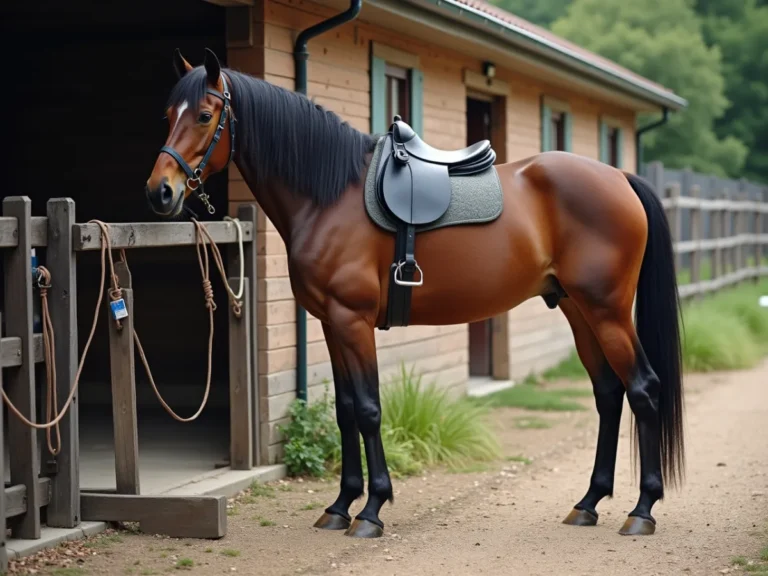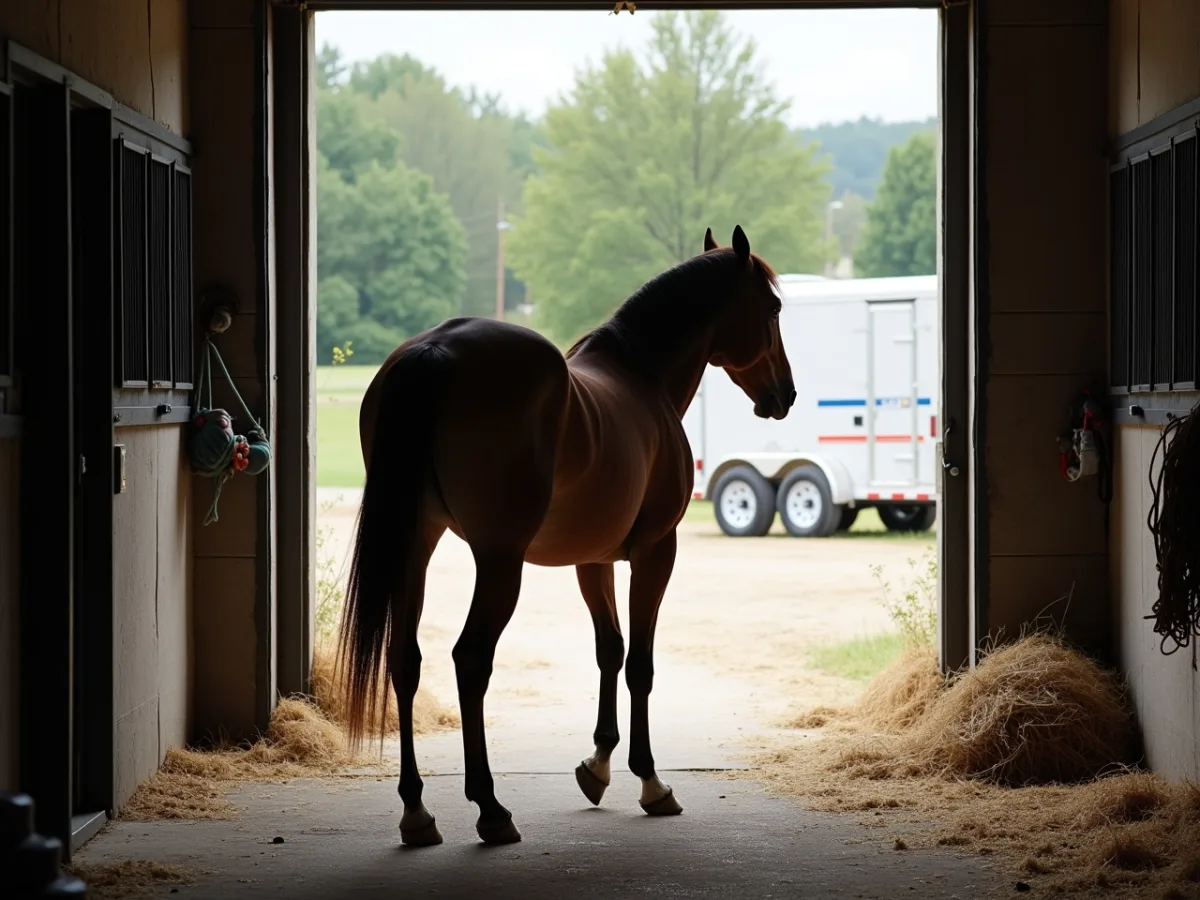
A horse that refuses to move forward can look stubborn on the surface. It may plant its feet, slow down near a doorway, hesitate at the arena gate, or stop altogether when asked to walk on. Sometimes the pause is brief. Sometimes it feels absolute, as if the horse has drawn a line and will not cross it.
That moment often creates frustration for the person leading, riding, or handling the horse. It is easy to label the behavior as disobedience, but the reason is not always so simple. Refusing to go forward can be a response to fear, pain, confusion, pressure, fatigue, or a habit that has been reinforced over time.
In many cases, the horse is saying something long before the feet stop moving. The ears change. The body tightens. The head lifts or drops. The breathing pattern shifts. When the horse begins to resist forward movement, it helps to look at the whole picture instead of only the final refusal.
What Refusing to Move Forward Can Look Like
This behavior does not always appear in the same way. Some horses hesitate for just a few seconds before stepping on. Others become rooted in place and will not budge without repeated pressure. A few appear willing at first, then slow to a crawl when they reach a specific spot, object, or direction.
The form it takes often depends on the cause. A horse that is worried about an unfamiliar surface may stop, look, and test the ground. A horse that is physically uncomfortable may shorten its stride, drag a hind foot, or refuse to lengthen the walk. A horse that feels mentally overwhelmed may become rigid and shut down rather than openly react.
Common visible signs
- Stopping suddenly when asked to walk or trot on
- Planting the front feet and leaning back
- Walking a few steps, then freezing again
- Refusing near certain places, objects, or sounds
- Backing up instead of going ahead
- Showing tension in the neck, jaw, or hindquarters
These signs matter because they help separate a simple pause from a stronger internal problem. A horse that is alert but relaxed often recovers quickly. A horse that stays tense or repeats the behavior in the same setting may be dealing with a deeper issue.
Physical Discomfort Is Often the First Thing to Rule Out
When a horse does not want to move forward, pain should be high on the list of possibilities. A horse with sore feet, joint discomfort, back pain, muscle tightness, or dental problems may resist forward motion because stepping out is uncomfortable. In riding situations, the horse may seem lazy one day and resistant the next, depending on how the body feels.
Even small discomfort can change willingness. A saddle that pinches, a girth that feels too tight, or a bit that causes mouth pain may not create dramatic drama, but it can make the horse brace against going ahead. Under saddle, that resistance often shows up as shortened steps, tail swishing, head tossing, or repeated stopping.
When a horse suddenly becomes reluctant to move forward, especially if the behavior is new or inconsistent, a physical cause should be considered before assuming it is only a schooling issue.
It is especially important to pay attention if the horse refuses to move more on one side than the other, struggles on harder ground, or changes behavior after work begins. Those clues can point to soreness that becomes more noticeable once the horse is asked to carry weight or travel in a more demanding way.
Fear and Uncertainty Can Shut Down Forward Motion
Horses are naturally cautious animals. They notice changes in footing, shadows, noises, movement, and unfamiliar objects far more quickly than people often do. If something ahead feels strange or unsafe, a horse may stop rather than step into it. That pause is not always defiance. It can be a simple attempt to evaluate risk.
This is common near trail obstacles, arena corners, trailers, puddles, metal grates, banners, barking dogs, tarps, or even a patch of ground that looks different from the rest. A horse may be willing to go forward once, then refuse the second time if the environment changes slightly. The trigger may be subtle, and that makes the reaction easy to misunderstand.
Fear-based refusal often comes with alert body language. The horse may fix its attention ahead, widen the eyes, tense the topline, or hesitate with the neck stretched forward. Some horses become motionless before deciding whether to flee, and the stillness can be mistaken for calm when it is really a pause filled with uncertainty.
Situations that often trigger hesitation
- Entering a trailer or moving away from the barn
- Crossing unusual footing such as gravel, mud, or rubber mats
- Passing through narrow gates or unfamiliar doorways
- Working alone when the horse prefers herd company
- Approaching new equipment, blankets, flags, or noise sources
In these cases, the horse may be trying to protect itself from a threat it does not understand. For many horses, the answer is not more force but more time to process, observe, and build trust in the situation.
Pressure, Confusion, and Learned Resistance
Some horses stop going forward because the request itself has become unclear or unpleasant. If the rider or handler keeps increasing pressure without giving the horse a clear path to succeed, the horse may begin to brace against the aid rather than respond to it. Over time, this can become a habit.
A horse may learn that stopping briefly changes the pattern. If the pressure disappears, even for a moment, the horse may repeat the behavior. That does not mean the horse is being difficult in a human sense. It means the horse has learned a pattern that works, at least temporarily, in its own mind.
Confusion can create a similar effect. A horse may not understand what is being asked, especially if the signal is inconsistent. Mixed cues from the seat, hands, legs, or lead rope can leave the horse unsure of the safest answer. When a horse feels unsure, it may choose immobility rather than risk the wrong move.
Resistance often becomes stronger when the horse cannot predict what comes next. Clear handling matters because uncertainty can feel safer to a horse than trying and getting it wrong.
Routine, Energy, and Mental State Shape the Response
Daily life affects how willing a horse feels to move ahead. A horse that spends long hours in a stall may build up energy and impatience, then stop out of tension rather than lack of motivation. Another horse may be mentally tired after a demanding training schedule and simply not want to offer more effort.
Routine changes can also matter. A different rider, a new work area, a later feeding time, or a change in turnout can alter the horse’s mood and attentiveness. Some horses are comfortable with variation. Others need predictability to stay relaxed and forward-thinking.
When the behavior appears at the same time each day, routine may be involved. A horse that refuses to go forward near the end of a long session might be tired. A horse that becomes sticky before turnout may be anxious about leaving the barn or frustrated by separation from herd mates. The pattern itself is useful information.
Daily factors that may influence willingness
- Length of stall time or turnout time
- Feeding schedule and hunger or anticipation
- Weather changes, especially wind, heat, or cold
- Workload intensity over several days
- Recent changes in riders, handlers, or locations
These factors do not act alone. They layer on top of physical comfort and emotional state. A horse that seems only mildly reluctant may be telling you that the environment has made its threshold lower than usual.
How Refusal May Appear in Different Handling Situations
The meaning of not moving forward changes with context. At the barn door, the refusal may be tied to separation, location, or habit. In the pasture, it may reflect curiosity, social tension, or concern about being led away. Under saddle, it may involve discomfort, balance, or fear of the task ahead.
During leading, the horse may stop because the handler’s pace is awkward or because the rope pressure feels too strong. Under riding conditions, the same horse might respond well to leg aids in one setting and freeze in another, especially if the arena fence, other horses, or a noisy corner create mental pressure.
Transport is another common place where forward movement becomes complicated. A horse that refuses to step into a trailer is not only reacting to the trailer itself. The horse is also responding to confinement, footing, darkness, vibration, and the loss of control that comes with entering an enclosed space.
| Situation | Possible reason | Common sign |
|---|---|---|
| Leading from the barn | Herd attachment, routine, hesitation | Stops at gate or doorway |
| Under saddle | Pain, confusion, fear, fatigue | Short steps, bracing, repeated stopping |
| Trail riding | New stimulus, footing, separation anxiety | Freezes near object or obstacle |
| Trailer loading | Claustrophobia, uncertainty, bad memory | Plants feet, backs away, refuses ramp |
Looking at the setting helps narrow the cause. A horse that only refuses in one place is telling a more specific story than a horse that resists in nearly every forward request.
What the Body Language Often Says Before the Stop
The refusal is usually preceded by a buildup. That buildup can be easy to miss if the handler is focused only on the outcome. A horse often shows small signals first, and those signals tell you whether the horse is thinking, worrying, or bracing.
A soft hesitation may come with a lowered neck, a blink, and a brief pause to assess. A more defensive response may include locked muscles, fixed ears, a raised head, or a tail that swishes with irritation. If the horse begins to feel trapped, the body may become increasingly rigid before the feet stop completely.
Some horses also use their hind end to express resistance. They may swing away from pressure, step sideways, or back up instead of going ahead. Others simply become still, which can be the hardest form to read. Stillness is not always calmness. Sometimes it is the quiet before a larger reaction.
Signs that the refusal may be growing stronger
- Increasing stiffness through the back and neck
- Repeated nostril flaring or shallow breathing
- Loss of forward rhythm before the stop
- Swiveling ears with a fixed gaze ahead
- Back steps, sidesteps, or spinning away from pressure
When these signals appear, the horse is usually not being dramatic. It is reaching a threshold. That threshold may come from pain, stress, or pressure that feels too confusing or too intense to solve in the moment.
The Difference Between Calm Hesitation and Stress-Driven Refusal
Not every stop means the same thing. A calm horse may pause to think, then step forward with a light cue or a bit of patience. A stress-driven horse often shows a stronger pattern: tension, resistance, and a quick return to the same stop point if asked again too soon.
A calm hesitation often looks deliberate but loose. The horse may sniff the ground, look ahead, and then move on without much conflict. Stress-driven refusal tends to look heavier. The horse may brace the neck, set the feet, or breathe faster. Even if the horse does not react loudly, the whole body can feel resistant.
The difference matters because the response should match the state of the horse. A calm thinker needs room to process. A stressed horse needs the pressure lowered, the cause examined, and the situation made easier to understand. Treating both cases the same can make the resistance stronger.
Two horses can refuse in the same place for very different reasons. One may need patience. The other may need a health check, a better setup, or a less stressful approach.
Why Some Horses Seem More Prone to It Than Others
Individual temperament plays a role. Some horses are naturally bold and step into new situations without much hesitation. Others are more careful by nature. They notice details, pause longer, and take more time to decide. That does not make them difficult. It makes them observant.
Past experiences matter too. A horse that once had pain during saddling, a frightening trailer ride, or a rough handling experience may remember the emotional pattern even when the exact cause is no longer present. The horse may refuse forward movement in places that feel similar, even if nothing obvious has happened that day.
Younger horses are especially likely to show inconsistency because they are still learning how to handle pressure, balance, and new environments. Older horses may become more set in their responses. Some become steady and dependable. Others develop predictable stopping points if a habit has gone uncorrected or if comfort has changed over time.
When the Behavior Becomes a Pattern
A one-time refusal is not the same as a repeating pattern. If the horse regularly stops in similar settings, the behavior is likely tied to a consistent trigger. That trigger may be physical, emotional, environmental, or learned. Patterns give valuable clues because they show what the horse expects.
For example, a horse that consistently refuses to leave the barn may be attached to herd members or anxious about separation. A horse that stops only at the far end of the arena may dislike that section because of sound, lighting changes, footing, or memory. A horse that quits after a certain amount of work may simply be reaching fatigue.
Consistency matters. If the refusal happens when the horse is fresh, rested, and comfortable, the cause may be more about fear or habit. If it happens after long work or on difficult ground, physical strain becomes more likely. Looking at when the horse says no can be as useful as looking at where.
What Refusing to Move Forward May Be Telling You
This behavior can signal more than one thing at once. A horse may be mildly sore and also unsure. It may be anxious and also tired. It may have learned that stopping changes the pressure, while at the same time feeling physically less willing to work. The message is not always single-layered.
That is why the behavior should be read in context. A horse that stops once in a strange place and then walks on after a moment is communicating something very different from a horse that repeatedly freezes, backs up, or becomes harder to move with every attempt. The details help separate caution from distress.
It also helps to ask whether the horse is becoming less willing over time. A slow change often means something is building. Maybe the tack no longer fits as well as it used to. Maybe the work has become demanding. Maybe the horse has started to expect discomfort at a certain point in the routine. Those changes can be subtle before they become obvious.
Paying Attention Without Escalating the Moment
When a horse refuses to move forward, the immediate goal is not to win the argument. It is to understand the cause well enough to respond wisely. Pushing harder without reading the horse can increase stress, especially if pain or fear is involved. On the other hand, ignoring the pattern can allow a real problem to grow.
Careful observation often reveals more than quick correction. Watch the ears, the back, the feet, and the rhythm of breathing. Notice whether the refusal is linked to a place, a surface, a task, or a certain part of the day. The horse’s consistency or inconsistency is part of the message.
Sometimes the answer is practical and straightforward. The horse needs a better-fitting saddle, less demanding work, or more time to look at a scary object. Sometimes it needs a veterinary or dental evaluation. Sometimes it needs a better routine, clearer cues, or a calmer setting. The refusal itself is only the visible part. The real reason is usually sitting just under it.
Once that reason becomes clearer, the horse’s willingness often becomes easier to read. The stop is no longer just a problem. It becomes information about comfort, confidence, and the conditions that help the horse stay willing to move ahead.